Perforated Metal Facade Procurement Guide for Solid Aluminium Cladding Contractors
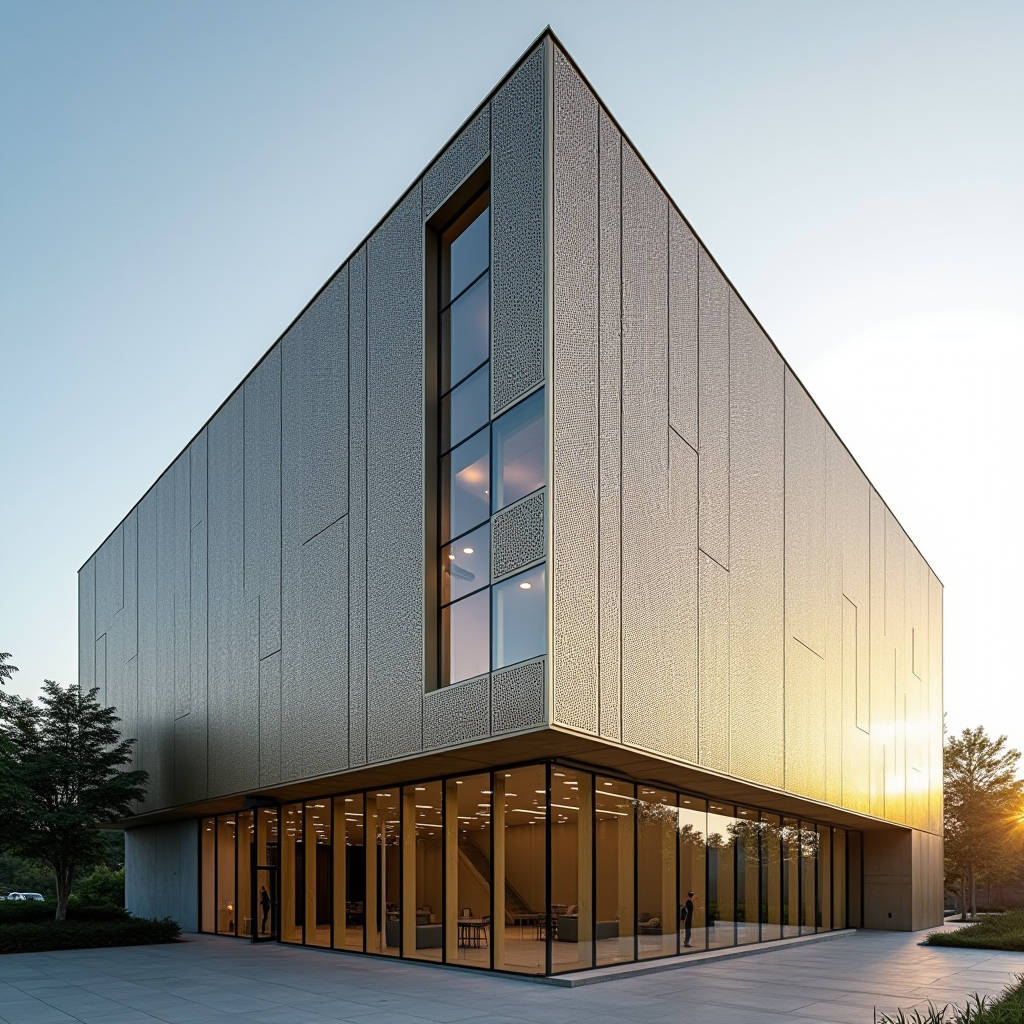
When a project spec calls for a perforated metal facade, the first question from the procurement side rarely changes: what thickness actually holds up across a 40-meter elevation without oil-canning, and who can deliver 2,000 square meters of custom-perforated panels in 35 days without the perforation pattern drifting 2mm off-grid by row three. These are not hypothetical concerns. We've seen submittals rejected at the shop drawing stage because the perforation open area percentage didn't match the structural engineer's wind-load calc, or because the fabricator couldn't hold a ±0.5mm tolerance on hole diameter across 800 identical panels. A perforated metal facade sits at the intersection of architectural intent, structural performance, and manufacturing precision. Getting it right means controlling variables that most generic cladding suppliers never think about: punch tool wear rates, PVDF cure oven dwell time on perforated edges, and the stiffener layout changes when 30% of the panel surface is missing.
What a perforated metal facade actually demands from solid aluminium
Perforated cladding panels are not standard flat sheets with holes punched through as an afterthought. The perforation process removes material, which directly alters the panel's flexural stiffness. A 2.5mm solid aluminium panel with 35% open area behaves structurally closer to a 1.6mm solid sheet in terms of deflection under wind load. This is why thickness selection for a perforated metal facade cannot simply mirror what you'd specify for a standard rainscreen on the same building.
Solid aluminium (EN AW-5005 or 5052 alloy, temper H14 or H34) remains the substrate of choice for perforated facade work. The alloy selection matters because 5005 offers better anodizing response while 5052 provides higher tensile strength — roughly 210-260 MPa versus 145-185 MPa for 5005. When you're perforating 40% of the surface away, that extra strength in 5052 can mean the difference between passing deflection limits at 2.5mm versus needing to step up to 3.0mm.
Futeng® has supplied perforated solid aluminium panels to projects across Southeast Asia and the Middle East where the spec explicitly prohibited composite materials. In those cases, the engineering submittal included finite element analysis showing deflection under the project-specific wind load (often 1.5-2.5 kPa depending on zone) with the exact perforation pattern modeled — not just an equivalent solid-sheet approximation.
Field Note: When reviewing perforated panel shop drawings, check whether the fabricator has accounted for "edge distance" — the minimum material between a perforation hole and the panel fold line. We recommend no less than 1.5× the hole diameter. Tighter than that and you risk micro-cracking at the bend radius, especially on 3.0mm 5052 alloy. We've rejected incoming material where the perforation pattern ran too close to the brake line, and the fabricator had to re-nest the entire sheet layout.
Perforation pattern engineering: open area, hole geometry, and structural trade-offs
The perforation pattern on a perforated metal facade is rarely just an aesthetic choice. Open area percentage — the ratio of removed material to total panel surface — directly affects three things: wind load transmission to the substructure, solar heat gain behind the facade, and acoustic performance if the cavity includes insulation. Most architectural specs land between 20% and 45% open area, but the number must be verified against the structural engineer's calculations for the specific project elevation and wind zone.
Hole geometry introduces another layer of manufacturing complexity. Round holes are the most common and most cost-effective — standard tooling exists for diameters from 3mm to 50mm, and punch press programming is straightforward. Square, hexagonal, or custom-shaped perforations require dedicated tooling and slower production speeds. A staggered 60° pattern packs more holes per square meter than a straight 45° grid, which means higher open area for the same hole diameter but also more tool strikes and longer machine time.
Edge quality on perforated holes matters more than many architects realize. A dull punch tool leaves a burr on the exit side of the hole. That burr becomes a corrosion initiation point if the PVDF coating doesn't fully encapsulate it. For coastal or high-humidity installations, we specify that the perforation burr height must not exceed 0.1mm, measured with a profilometer on random samples from each production batch. This is not a standard requirement on most architectural specs, but any experienced facade contractor working within 500 meters of a coastline will understand why it matters.
Stiffener placement when the panel is full of holes
Standard solid aluminium panels typically use aluminum stiffeners (extruded profiles or bent channels) bonded to the rear face with structural adhesive. On a perforated panel, the stiffener layout needs rethinking. You can't bond a stiffener across a row of 10mm holes and expect the adhesive to perform. The stiffener grid must be designed around the perforation pattern, which often means custom stiffener lengths and off-center placement. This adds engineering time during the shop drawing phase but prevents field failures where a stiffener detaches because only 40% of its surface actually made contact with the panel substrate.
Coating perforated panels: why PVDF behaves differently on edges
PVDF (polyvinylidene fluoride) coating systems — typically 70% Kynar 500® or Hylar 5000® resin content — are the industry standard for exterior architectural aluminium. On a solid flat panel, achieving a 30-35μm average dry film thickness (DFT) is straightforward with a properly calibrated spray line. On a perforated metal facade panel, the story changes.
Every hole edge represents a surface that must be coated. Spray application tends to build up on the face surface while leaving hole interiors with thinner coverage. The solution is a combination of spray plus electrostatic application, or in some cases a pre-coat dip process before perforation (though this introduces handling challenges). The spec should require cross-section measurement of DFT at the hole edges, not just on the flat surface. A minimum of 25μm at the thinnest point on any cut edge is a defensible requirement based on AAMA 2605 guidelines for high-performance architectural coatings.
Color consistency across perforated panels introduces another variable. The human eye perceives color differently on a perforated surface versus a solid one because the shadow depth within each hole shifts the apparent color darker. A panel with 40% open area in RAL 9006 (white aluminum) will read noticeably darker from 20 meters than a solid panel in the same color. This needs to be communicated during the mock-up phase. We've seen architects reject entire batches because the perforated panels "looked like a different color" compared to the solid spandrel panels, when in fact the spectrophotometer readings were within Delta E ≤ 1.0.
| Specification Parameter | Solid Aluminium Panel | Perforated Metal Facade Panel | Procurement Impact |
|---|---|---|---|
| Standard Thickness Range | 2.0mm / 2.5mm / 3.0mm | 2.5mm / 3.0mm (rarely 2.0mm due to stiffness loss) | Material cost +15-20% for 3.0mm vs 2.5mm |
| PVDF Coating DFT | 30-35μm average, face only | 30-35μm face + ≥25μm at hole edges | Coating consumption +10-25% depending on open area |
| Stiffener Bonding Surface | 100% continuous contact | 60-80% contact (varies by pattern) | Additional engineering hours for stiffener layout |
| Production Rate (per shift) | 80-120 m² | 40-70 m² (round hole, 30% open area) | Lead time +40-60% vs solid panels |
| Packaging Requirements | Standard PE film + pallet | PE film + interleaving + reinforced edge protection | Packaging cost +30%; freight volume +15% |
| Typical MOQ (Custom Pattern) | 300-500 m² | 500-800 m² (tooling amortization) | Smaller projects may face surcharges |
Supply chain realities: lead times, tooling, and packaging for export
Ordering a perforated metal facade for a project in Dubai from a fabricator in China involves more than comparing square-meter prices. The tooling setup alone can consume 7-10 working days before the first production panel is punched. If the perforation pattern requires custom punch tools (non-circular holes, or diameters not in the fabricator's standard tool library), add another 10-14 days for tool manufacturing and trial runs.
A realistic production timeline for 2,000 m² of custom-perforated solid aluminium panels looks like this: 7 days for shop drawing approval, 10 days for material procurement (5005/5052 coil stock in the required thickness), 7 days for tooling setup and first article inspection, 18-22 days for production (punching, cutting, bending, welding stiffeners, PVDF coating, curing), and 5 days for quality control and packaging. That's roughly 47-51 working days, or 9-10 calendar weeks. Rush orders can compress this to 6-7 weeks, but the overtime premium and air-freight risk for out-of-spec panels usually make it a false economy.
Packaging for ocean freight deserves more attention than it typically gets in project specs. Perforated panels have exposed hole edges that can abrade adjacent panels during container transit. Standard practice is to interleave panels with foam or PE film, but for perforated work we add edge protectors along all four sides and specify that panels be stacked face-to-face and back-to-back in alternating orientation. A 40-foot HQ container can hold approximately 800-1,000 m² of perforated panels depending on panel dimensions and packaging configuration. CIF shipments to Middle Eastern ports typically run 18-25 days from Shanghai, plus 3-5 days for customs clearance and inland transport.
Pro Tip: If your project is in the GCC region, request that the fabricator apply a light coat of protective oil on the PVDF surface before packaging. This prevents salt-spray residue from etching the coating during the 3-week sea transit through high-humidity tropical waters. The oil is easily removed on-site with a mild detergent wash — far cheaper than replacing panels with salt-damaged clear coat.
Installation tolerances and substructure coordination
A perforated metal facade amplifies installation errors that would be invisible on a solid panel system. If the aluminium substructure is out of plane by 3mm, a solid panel will absorb that deviation across its continuous surface. A perforated panel with 35% open area will show the same 3mm deviation as visible waviness because the eye tracks the perforation grid lines and detects any interruption in the pattern continuity.
The substructure tolerance for perforated panel installation should be tightened to ±1.5mm across any 3-meter span, compared to the ±3mm that many curtain wall specs allow for solid cladding. This means the supporting steel or aluminium framework needs to be surveyed and adjusted before panel installation begins. Laser scanning the substructure and comparing it to the BIM model is becoming standard practice on high-end projects — the scan data identifies high spots and low spots that the installer can shim before the first panel goes up.
Panel joint width is another detail that shifts with perforation. A 20mm open joint on a solid rainscreen reads as a clean shadow line. On a perforated facade, that same 20mm joint can look irregular if the perforation pattern terminates inconsistently at the panel edges. The shop drawings should specify whether the perforation pattern is "edge-to-edge" (holes run to within 5mm of the panel perimeter) or "framed" (a solid border of 15-25mm is left unperforated around each panel). The framed approach is more forgiving during installation but changes the visual rhythm of the facade.
Cost structure: what drives the square-meter price
The cost of a perforated metal facade breaks down differently than solid cladding. Material cost for the aluminium substrate is actually lower per square meter — because you're buying metal that's partially removed — but the fabrication cost more than offsets this. Punching 30% open area on a 2.5mm panel might take 3-4 minutes per square meter on a CNC turret punch press, compared to near-zero processing time for a solid panel that goes straight to cutting and bending.
Key cost drivers in descending order of impact: open area percentage (higher = more machine time), hole geometry complexity (round < square < hexagonal < custom), panel size (larger panels reduce the number of handling steps per square meter), PVDF color (metallic and bright colors require heavier coating to achieve hiding power), and order volume (the tooling cost amortizes across the total square meterage). For a typical 2,000 m² order of 2.5mm solid aluminium with 30% round-hole perforation and standard PVDF in RAL 9006, the FOB price range from established Chinese fabricators runs approximately 15-25% above the equivalent solid panel price, depending on the factors above.
According to industry data from Statista, the global architectural metal cladding market continues to grow at roughly 5-6% annually, with perforated and decorative metal panels representing one of the fastest-growing segments due to demand from commercial office and cultural building projects in the Middle East and Asia-Pacific regions.
Specifying perforated metal facade panels: what to put in the tender document
A well-written perforated panel spec prevents disputes during the submittal and production phases. Beyond the standard requirements for solid aluminium cladding (alloy grade, temper, thickness tolerance per ISO 6361 or ASTM B209, PVDF coating per AAMA 2605), the perforation-specific clauses should address:
- Open area percentage with a tolerance band (e.g., 30% ±2%, not "approximately 30%")
- Hole diameter tolerance (typically ±0.2mm for holes ≥5mm diameter)
- Hole spacing tolerance (center-to-center distance ±0.3mm across any 1-meter measurement)
- Burr height limit on hole exit side (0.1mm maximum)
- Edge distance minimum from hole center to panel fold line
- Stiffener layout drawing required as part of shop drawing submittal
- First article inspection: one full-size panel to be produced and approved before batch production
- Packaging specification: interleaving material, edge protection, and stacking orientation
The Metal Building Manufacturers Association (MBMA) and The Aluminum Association both publish technical resources that can inform spec writing, though neither has a dedicated perforated panel standard — which is precisely why the project spec needs to fill that gap with explicit requirements.
Quality control checkpoints before shipment
If you're sourcing from an overseas fabricator, the pre-shipment inspection is your last chance to catch problems before panels hit the job site. For a perforated metal facade order, the inspection checklist should go beyond the standard visual and dimensional checks. We recommend the following additional QC points:
Randomly select 5% of panels (minimum 10 panels) and measure hole diameter at 10 points per panel using a digital caliper. Record all readings and flag any panel where more than 5% of measurements fall outside the specified tolerance. Check perforation pattern alignment by laying two adjacent panels on a flat surface with the design joint gap and verifying that the hole rows align across the joint within ±1mm. Measure PVDF dry film thickness at three locations per panel: flat surface, hole edge (using a cross-section microscope on one sacrificial panel per batch), and panel fold line. The fold line is a common failure point because bending can micro-crack the coating if the bend radius is too tight for the material thickness.
Futeng®'s QC protocol for export perforated panels includes all of the above plus a 24-hour salt spray test (per ASTM B117) on coated perforated samples from each production batch. This is above and beyond what most architectural specs require, but for projects in coastal environments, it provides an additional layer of confidence that the coating system will perform as specified over the building's service life.
Getting a perforated metal facade right means treating it as an engineered product, not a decorative afterthought. The fabricator you choose needs to understand the structural implications of material removal, the coating challenges of perforated edges, and the logistics of shipping hole-punched panels across an ocean without damage. Ask for their perforation-specific QC data from previous projects. If they can't produce it, keep looking.