Decorative Aluminum Sheet Procurement Guide for Façade Contractors and Curtain Wall Specifiers
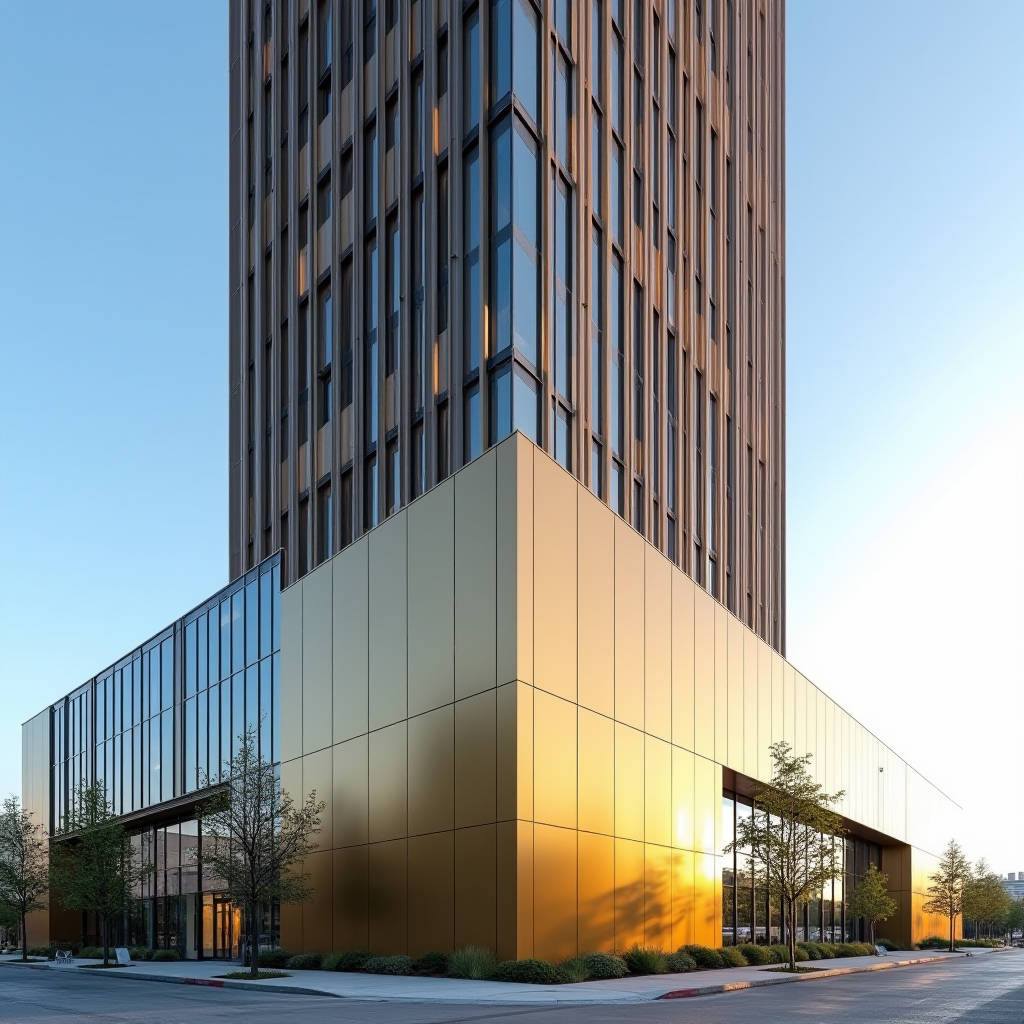
When a façade contractor specifies "decorative aluminum sheet" in a tender package, what they're actually asking for is a solid aluminium cladding panel that can hold a 20-year PVDF finish, resist wind load deflection, and arrive on site without a single scratch across 2,000 square meters. That's a procurement problem, not a design problem. And it's the kind of problem that separates manufacturers who understand jobsite reality from those who just ship metal. This article lays out the technical and commercial criteria that matter when sourcing decorative aluminum sheet for mid-to-large-scale building envelopes — from alloy selection and coating chemistry to packaging protocols and factory audit checkpoints.
What a decorative aluminum sheet actually is in façade engineering terms
In the cladding supply chain, the term "decorative aluminum sheet" gets thrown around loosely. But in a technical specification, it refers to a solid aluminium panel — typically 1100, 3003, or 5005 alloy — rolled to a thickness of 2.0mm, 2.5mm, or 3.0mm, then cut, routed, folded, and coated for exterior wall installation. This is not a composite. There is no polyethylene core. The panel carries its own structural capacity through the aluminum substrate alone, which is why engineers can specify it for open-joint rainscreen systems, unitized curtain wall spandrels, and column covers where fire performance and flatness under thermal cycling are non-negotiable.
The distinction matters because procurement teams occasionally receive ACP pricing when they've specified solid aluminum. The two product categories sit on different ASTM standards, different fabrication tolerances, and different fire-testing regimes. A 2.5mm solid 3003-H14 panel with a PVDF coating will behave completely differently from a 4mm ACP in a corner-extrusion detail or a cassette panel system. Knowing which one you're bidding is step one.
Alloy grades that actually show up on curtain wall shop drawings
Walk through any curtain wall contractor's fabrication office and you'll see three alloy designations recurring on cutting lists:
- AA1100-H14 — Commercially pure aluminum with excellent formability. Used for complex geometric panels, 3D folded elements, and interior decorative screens where structural load is minimal. Tensile strength around 110–130 MPa. It's the softest of the three, which means tighter bend radii but lower wind-load resistance.
- AA3003-H14 — The workhorse. Manganese-alloyed for roughly 20% higher strength than 1100, with tensile in the 150–170 MPa range. This is what most rainscreen cladding projects end up specifying because it balances formability, cost, and the structural performance needed for 1.2m × 3.0m panels on a carrier system.
- AA5005-H14 — Magnesium-alloyed, tensile strength hitting 170–200 MPa. Preferred for large-format panels (think 1.5m × 4.0m) where deflection under wind suction is the controlling design criterion. The higher magnesium content also improves the anodized finish quality, though most exterior projects opt for PVDF over anodizing.
Procurement managers should cross-check the alloy grade against the project's wind-load report. A specification that calls for 3003 but gets bid as 1100 can save 8–12% on material cost — and create a deflection problem that the façade consultant will flag during submittal review. That's a delay nobody needs.
Coating systems: where the "decorative" part gets engineered
The decorative value of a decorative aluminum sheet lives in its coating. But from a procurement standpoint, the coating is also the single largest cost driver after the aluminum substrate itself. Understanding the chemistry and the application process prevents overpaying for a specification you don't need — or under-specifying a finish that will chalk in year three.
PVDF fluorocarbon: the 20-year benchmark
For exterior façades, the industry standard is a PVDF (polyvinylidene fluoride) coating system based on Kynar 500® or Hylar 5000® resin. The specification typically reads: "70% PVDF resin by weight in the color coat, minimum 30–35μm total dry film thickness for a 3-coat system, applied over a chromate conversion coating on a chromate-free pre-treatment."
The 3-coat system breaks down as: primer (5–10μm) for adhesion and corrosion resistance, color coat (20–25μm) carrying the pigment and the bulk of the PVDF resin, and clear topcoat (10–15μm) for UV shielding and gloss retention. Some manufacturers push a 2-coat option for budget projects, but we've seen gloss fade on 2-coat metallic finishes within 5–7 years on south-facing elevations in the Middle East. Those savings aren't real.
PE (polyester) and FEVE: when to use what
Polyester coatings — typically SMP (silicone-modified polyester) or full polyester — run 25–30μm DFT and cost roughly 40–50% less than PVDF. They're suitable for interior cladding, soffits, and sheltered applications where UV exposure is limited. Do not spec PE for exterior walls in high-UV climates. The chalk-and-fade timeline is 3–5 years, and the warranty won't cover it.
FEVE (fluoroethylene vinyl ether) coatings occupy a middle ground. They offer fluoropolymer-level weatherability in a formulation that can air-cure, which enables field touch-up and brighter color saturation than PVDF. The trade-off is that FEVE systems are less widely available and typically carry a 10–15% cost premium over PVDF. They're worth considering for high-chroma architectural statement façades where the color is the entire design concept.
Field Note: When reviewing coating submittals, ask for the batch-specific Delta E values on the color match, not just the generic "≤1.5 ΔE" claim. A quality line will provide spectrophotometer readings against the RAL/NCS/BS master standard for each production batch. We've rejected panels at 1.8 ΔE because the architect caught the shift under site lighting. The cost of re-coating 600m² is not something you want to absorb.
Fabrication tolerances that affect installation productivity
Installation crews don't care about your factory's ISO certificate. They care whether the panel fits the carrier rail the first time. Here are the fabrication tolerances that actually show up in installation disputes:
| Parameter | Industry Standard | What to Specify for Unitized Systems |
|---|---|---|
| Panel diagonal deviation | ≤ 2.0mm for panels ≤ 2m² | ≤ 1.0mm |
| Flatness (oil-canning) | ≤ 0.5% of panel dimension | ≤ 0.3% with stiffener ribs |
| Fold angle tolerance | ± 1.0° | ± 0.5° |
| Bend radius (3003 alloy) | 1.5× material thickness | 1.0× with CNC folding |
| Slot/notch position | ± 0.5mm | ± 0.3mm |
| Coating thickness variation | ± 5μm across panel face | ± 3μm |
Unitized curtain wall systems demand the tighter tolerances because the panel interfaces with extruded aluminum mullions that are themselves fabricated to ±0.5mm. A decorative aluminum sheet that's 1.5mm off on the diagonal won't seat properly in the gasket pocket, and the installer will either force it (risking coating damage) or flag it (delaying the floor cycle). Either outcome costs the GC money.
Packaging and logistics: what happens between the factory and the hoist
You can manufacture a perfect panel and still have it rejected on site because of transit damage. For decorative aluminum sheet, the packaging spec is part of the procurement spec. Here's what to require:
- Interleaving: Each panel face separated by PE foam sheet (minimum 0.5mm thickness) or acid-free kraft paper. No direct aluminum-to-aluminum contact.
- Edge protection: Pre-formed cardboard or foam edge protectors on all four corners. Folded return legs are particularly vulnerable to impact damage during container stuffing.
- Crating: Export-grade plywood crates with internal bracing at 600mm intervals. Pallets alone are insufficient for sea freight — the container will sweat, and condensation trapped between stacked panels causes water staining that PVDF won't hide.
- Orientation: Panels shipped vertically in crates, not flat-stacked. Flat stacking over 15–20 panels creates enough pressure on the bottom panel's coating to leave compression marks visible under raking light.
- Container loading: For FOB/CIF shipments, specify that crates be loaded with the panel faces oriented away from container walls. The temperature differential between the container skin and the interior air creates condensation on the walls, not the panels.
Pro Tip: On a 4,000m² project shipped from China to the Gulf, we budget 1.5–2% material overage for transit and handling damage. If the packaging spec is tight, actual wastage runs under 0.5%. The difference is roughly 60m² of panels you don't have to re-order and wait 4 weeks for.
Fire performance: solid aluminum doesn't need a core to pass
One of the quiet advantages of decorative aluminum sheet as a solid panel is its inherent fire performance. Solid aluminum is non-combustible — classified as A1 under EN 13501-1 or Class A under ASTM E84, depending on the coating contribution. There is no polyethylene core to melt, drip, or propagate flame across floor levels. This matters enormously in jurisdictions that have tightened cladding regulations post-2017.
For projects in the UK, Australia, and the UAE, specifying solid aluminum panels eliminates the fire-engineering gymnastics required for ACP. The panel itself is a known quantity. The variables that remain are the insulation layer behind the rainscreen and any sealants or gaskets in the joint system — and those are the façade engineer's scope, not the panel supplier's.
Cost structure: what you're actually paying for
When a procurement manager receives a price of $38–$55 per square meter FOB for a 2.5mm PVDF-coated decorative aluminum sheet, that number breaks down into roughly:
- Aluminum substrate (2.5mm 3003-H14 coil): 40–50% of total cost
- PVDF coating (3-coat, Kynar 500): 20–25%
- Fabrication (cutting, routing, folding, reinforcing): 20–25%
- Packaging and factory overhead: 5–10%
The aluminum substrate cost tracks the LME (London Metal Exchange) aluminum price plus a conversion premium. This is a commodity input, and any supplier quoting a fixed price beyond 30 days should be hedging. The coating cost varies by color — bright reds, oranges, and yellows use expensive organic pigments that can push the coating cost up by 30–40% compared to standard greys and off-whites. Metallic and pearlescent finishes add another 10–15%.
Fabrication complexity is the third variable. A simple flat panel with four folded returns costs less than a panel with perforations, embossing, or 3D geometric folds. The fabrication cost scales with machine time, not material — a CNC turret punch running a custom perforation pattern on 2,000 panels will clock significantly more hours than a shear-and-brake operation on the same quantity.
Factory audit: what to check before you place the PO
If you're sourcing decorative aluminum sheet from a supplier you haven't worked with before, a factory audit — in person or via a third-party inspection service — is non-negotiable. Here's what to look for:
- Coating line: Is it a vertical or horizontal line? Vertical lines produce more consistent film thickness on both faces. Check whether the pre-treatment tanks are monitored for pH and conductivity daily. Ask to see the oven temperature logs for the last 30 days — PVDF curing requires a peak metal temperature of 230–250°C, and under-cured panels will fail adhesion tests within 12 months.
- CNC capacity: Count the turret punch and press brake stations. A factory running two CNC punches and three press brakes can realistically output 800–1,200m² of fabricated panels per day. If they claim 3,000m²/day from the same equipment, the math doesn't work.
- Quality lab: They should have a spectrophotometer, a DFT gauge, a cross-hatch adhesion tester, a salt-spray cabinet, and a gloss meter. If they don't have a salt-spray cabinet, they're outsourcing corrosion testing — which means they're not testing every batch.
- Reference projects: Ask for projects completed 5+ years ago, not just recent ones. A PVDF coating that looks good at handover and looks good at year five are two different things. Contact the contractor, not the architect — the contractor will tell you about delivery delays, packaging failures, and how the factory handled claims.
Suppliers like Futeng® that have invested in vertical coating lines and automated CNC routing cells tend to produce more consistent output than factories running manual spray booths and hand-folding operations. The capital equipment tells you something about their commitment to the cladding business specifically, not just aluminum fabrication generally.
Lead times and project scheduling
Realistic lead times for a custom decorative aluminum sheet order run:
- Sample approval and color matching: 2–3 weeks (longer if the architect requests multiple rounds of color adjustment)
- Material procurement (coil ordering): 2–4 weeks, depending on alloy and thickness availability
- Production: 3–5 weeks for 2,000–5,000m², scaling roughly linearly with quantity
- Packaging and container loading: 3–5 days
- Sea freight (Asia to Middle East/Europe): 3–5 weeks; to North America: 4–6 weeks
Total timeline from PO placement to site delivery: 10–16 weeks. Procurement teams should factor this into the construction schedule during the submittal phase, not after the approval is signed. The single biggest cause of cladding delays is the color-matching loop — the architect wants three rounds of samples, each round takes 7–10 days, and suddenly the panels are shipping 4 weeks later than the baseline schedule assumed.
Specification checklist for tender documents
When writing a specification for decorative aluminum sheet, include these data points explicitly. Ambiguity in the spec leads to variance in the bids, and variance in the bids makes tender evaluation a nightmare:
- Alloy and temper: e.g., EN AW-3003 H14 (or ASTM B209 equivalent)
- Panel thickness: 2.0mm / 2.5mm / 3.0mm (state which, and whether it's minimum or nominal)
- Coating system: PVDF (Kynar 500 or Hylar 5000), 3-coat, 30–35μm DFT
- Color standard: RAL, NCS, BS, or custom — provide the exact code and finish (matte/gloss)
- Color tolerance: ΔE ≤ 1.5 (or tighter, but be aware that ≤1.0 costs more)
- Gloss level: Measured at 60° geometry, specify the range (e.g., 25–35 GU for matte)
- Fabrication tolerances: Reference a specific standard or provide your own table
- Packaging: Export-grade crating with interleaving and edge protection
- Warranty: 20-year film integrity and color retention for PVDF; 10-year for PE
- Testing: Adhesion (ASTM D3359), impact resistance (ASTM D2794), salt spray (ASTM B117, 3,000+ hours for PVDF)
A spec that covers these ten points will attract bids from qualified decorative aluminum sheet manufacturers and filter out suppliers who are guessing at what the project needs.
Common procurement pitfalls and how to avoid them
After years of watching cladding packages go sideways, a few patterns repeat:
Pitfall 1: Buying on price alone. A $34/m² FOB quote for 2.5mm PVDF decorative aluminum sheet is below the raw material cost for a legitimate factory using Kynar 500 resin. Either the coating is not 70% PVDF, or the thickness is under-spec, or the alloy is substituted. The cheapest bid is almost never the cheapest installed cost once you account for rejection rates, remedial work, and schedule delay.
Pitfall 2: Ignoring the coating warranty fine print. A 20-year PVDF warranty is only as good as the applicator's certification. Kynar 500 warranties are issued by the resin manufacturer, not the panel fabricator, and they require that the coating be applied by a licensed applicator. Ask for the applicator license number and verify it with the resin supplier.
Pitfall 3: Ordering without a mock-up. A full-scale mock-up — even just 2–3 panels on a section of carrier rail — reveals fit issues, color perception under natural light, and installation sequencing problems that shop drawings miss. The mock-up cost ($2,000–$5,000) is cheap insurance against a $50,000 site rectification.
Pitfall 4: Forgetting about spare panels. Order 3–5% spare panels in the same production batch. Color matching a single replacement panel 18 months later is nearly impossible — the coating batch will be different, the aluminum coil will be from a different cast, and the Delta E will be visible. Spare panels from the original batch solve this.
The procurement of decorative aluminum sheet is ultimately a risk-management exercise. The panel itself is a straightforward product — aluminum, coating, fabrication. But the supply chain variables around alloy integrity, coating quality, dimensional accuracy, and logistics are where projects succeed or fail. A specification that is precise, a factory that is audited, and a contract that defines tolerances and remedies — those three things do more for project outcomes than any amount of design intent.