Decorative Metal Panels What Façade Contractors Must Verify Before Procurement
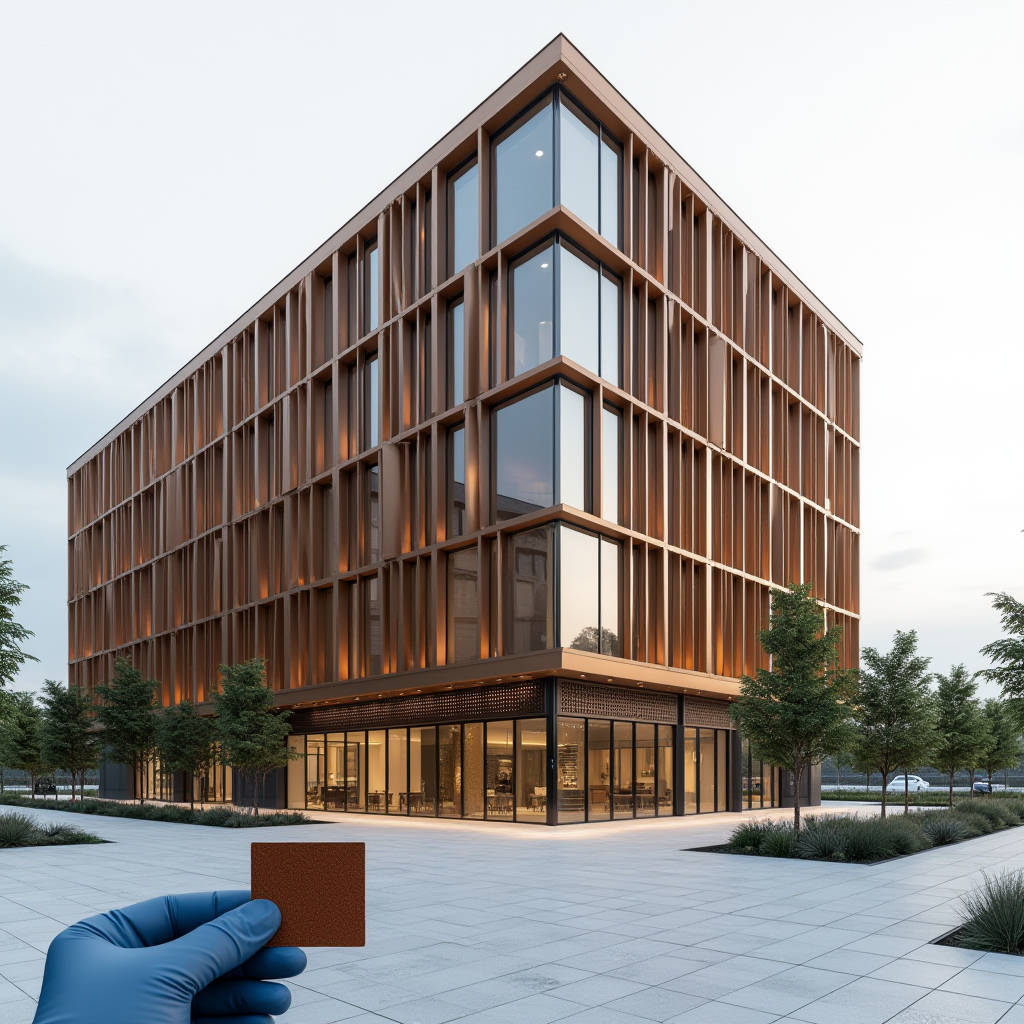
When a façade tender lands on your desk, decorative metal panels usually sit at the top of the specification list. Architects love them for the visual language. Contractors have to live with them for the next 18 months of installation, coordination, and snagging. The gap between what the render shows and what actually arrives on site in crates is where procurement decisions get tested. This piece walks through the engineering and supply-chain realities of specifying solid aluminium cladding panels for commercial building envelopes, with a focus on what procurement managers and façade contractors actually need to verify before signing off a purchase order.
What Counts as a Decorative Metal Panel in Commercial Façade Work
The term "decorative metal panels" gets thrown around loosely in project specs. In the solid aluminium cladding world, we are talking about single-skin panels fabricated from alloy sheets — typically 2.0mm, 2.5mm, or 3.0mm gauge — that carry both the weather barrier function and the aesthetic finish in one layer. This is not a rainscreen cassette system with a separate backing wall, though the two often get confused in early-stage drawings.
What separates a properly engineered decorative metal panel from a generic sheet metal product comes down to three things: the alloy grade, the fabrication method, and the coating system. Most commercial projects across the Middle East, Southeast Asia, and Europe default to 1100 or 3003 series aluminium for cladding. The 3003 alloy offers better tensile strength (around 130–170 MPa depending on temper) and is the workhorse for perforated panels, curved profiles, and large-format installations where flatness under thermal cycling matters.
Fabrication involves CNC routing, folding, and welding rather than simple bending. A 2.5mm panel with return edges on all four sides, welded corners, and reinforcement ribs on the back is a completely different product from a flat sheet screwed onto a subframe. The reinforcement rib layout — typically spaced every 500mm to 600mm depending on wind load calculations — is what keeps a 3m x 1.5m panel from oil-canning under direct sunlight. This is the kind of detail that separates a decorative metal panel that still looks flat after five summers from one that develops visible distortion by year two.
Field Note: When reviewing shop drawings, always check the reinforcement rib spacing against the project's wind load report. We have seen cases where the fabricator defaulted to 600mm spacing, but the corner zones of a 40-storey tower in Manila required 400mm spacing to meet the ±2mm flatness tolerance after installation. The fix cost six weeks of re-fabrication because nobody cross-checked the structural engineer's notes during the submittal phase.
The Coating Decision That Determines 20-Year Performance
Decorative metal panels live or die by their coating. The aluminium substrate itself will survive decades. The paint system on top of it is what fails first — and the failure mode is almost always visible before it becomes structural. Chalking, fading, and delamination show up on the south-facing elevation first, and once they appear, the building owner starts asking questions that nobody wants to answer five years after practical completion.
PVDF: The Baseline for Architectural Exteriors
For any decorative metal panel specified on an exterior façade, the coating should be a PVDF (polyvinylidene fluoride) system based on Kynar 500® or Hylar 5000® resin. The standard is a 70% PVDF resin ratio in the topcoat, applied as a three-coat system: primer, colour coat, and clear coat. Total dry film thickness (DFT) should land between 30μm and 40μm, measured with a calibrated DFT gauge on the flat surface — not the edges, where thickness naturally drops off.
The ASTM D4214 test method for exterior weathering is the reference point most specifiers use. Panels coated with a proper 70% PVDF system should retain over 50% of their gloss after 10 years of South Florida exposure at 45° south. In real building terms, that translates to a façade that still looks acceptable after 15 to 20 years in most climates, barring extreme coastal or industrial environments.
FEVE and Powder Options
FEVE (fluoroethylene vinyl ether) coatings offer an alternative route, particularly for projects pushing for higher gloss levels or special-effect finishes that PVDF struggles to deliver. FEVE can hit 90+ gloss units and holds colour better in bright reds and oranges — colours where PVDF historically fades faster. The trade-off is that FEVE systems are less common in the supply chain, and not every fabricator has the curing line set up for them.
Polyester powder coating shows up on decorative metal panels for interior applications or sheltered exterior areas. The cost is roughly 40–50% lower than PVDF, but the exterior durability window drops to 5–7 years before noticeable chalking sets in. For any panel that faces direct rain and UV, polyester is a value-engineering decision that the client should sign off on with full awareness of the maintenance implications.
Perforation, Pattern, and the Engineering Behind the Look
Decorative metal panels earn their name when the design moves beyond flat colour into texture, perforation, and three-dimensional profiling. Perforated panels are the most common request — circular holes, slotted patterns, or custom shapes punched through the aluminium before folding and coating. The engineering challenge here is not the punching itself but what happens to the panel's structural stiffness after you remove 30% or 40% of the material.
A panel with 35% open area through perforation loses roughly 50–60% of its bending stiffness compared to a solid panel of the same gauge. The fix is usually a step-up in material thickness or a denser reinforcement rib layout. We have seen projects where the architect specified 2.0mm perforated panels with a 40% open area, and the fabricator had to go back and re-engineer the subframe because the panels were deflecting more than 3mm under the design wind load. The solution was switching to 2.5mm base material, which added about 18% to the panel cost but avoided a complete redesign of the support system.
Custom patterns — geometric cutouts, embossed textures, or multi-layer panel assemblies — require CNC programming time that directly impacts lead times. A standard flat panel order might ship in 4–5 weeks from drawing approval. A project with 15 different panel types, each with unique perforation patterns and folding profiles, can easily push to 8–10 weeks. Procurement managers should factor this into the programme from day one.
Supply Chain Realities: Lead Times, Packaging, and What FOB Actually Means
For international buyers sourcing decorative metal panels from manufacturing hubs in China, the supply chain variables are just as important as the technical specs. A well-engineered panel that arrives with scratches, dents, or missing corner protection is a site headache that no amount of factory-side quality control can fix retroactively.
Production Lead Time Breakdown
A typical order of 2,000–5,000m² of decorative metal panels follows this timeline:
- Drawing approval and sample sign-off: 7–10 working days. This includes colour matching to a Delta E ≤ 1.0 against the architect's reference swatch and producing a physical A4 sample panel for courier approval.
- Material procurement: 5–7 working days. 3003-H14 aluminium coil in standard widths (1,220mm, 1,500mm) is normally in stock at major mills. Custom widths or 5052 alloy for marine environments may add 10–15 days.
- Fabrication: 10–15 working days depending on complexity. Perforated panels, curved panels, and panels requiring welding of corner joints all add time versus simple flat panels with folded returns.
- Coating and curing: 5–8 working days. PVDF lines run in batches by colour. A project with 3–4 colours will take longer than a single-colour order because of line cleaning between colours.
- Quality inspection and packing: 3–5 working days. Each panel should be checked for dimensional tolerance (±1mm on length and width, ±0.5mm on diagonal difference), coating thickness, and visual defects before packing.
Total realistic lead time from order confirmation to FOB shipment: 30–40 working days for standard panels, 45–60 days for complex projects with multiple panel types and finishes.
Packaging That Survives 6,000km of Shipping
Decorative metal panels travel badly if packed carelessly. The standard export pack involves wrapping each panel in PE film, applying edge protectors on all four corners, and loading panels vertically into plywood crates with internal foam separators. Panels should never be stacked flat for sea freight — the vibration and pressure will cause abrasion between panels even with protective interleaving.
A proper crate for a 3m x 1.2m panel shipment weighs about 80–100kg fully loaded and holds 20–30 panels depending on thickness. The crate exterior should carry handling instructions in English and the destination language, plus a packing list envelope. For projects in the Gulf region, where summer temperatures inside containers can exceed 60°C, the PE film should be UV-stabilised to prevent it from baking onto the panel surface during transit.
Pro Tip: Always request a pre-shipment inspection report with photographs before the balance payment is released. A reputable fabricator — and companies like Futeng® operate this way as standard — will photograph every crate from multiple angles, including close-ups of the panel surfaces and edge protection, and send the file alongside the bill of lading. This single document has resolved more disputes than any contract clause ever written.
Comparing Panel Types: A Procurement Decision Matrix
The table below maps out the key decision factors for four common decorative metal panel approaches. This is not a theoretical comparison — it reflects actual project data from commercial façade work across Asia-Pacific and Middle Eastern markets.
| Parameter | Solid Aluminium (2.5mm PVDF) | Solid Aluminium (3.0mm PVDF) | Perforated Aluminium (2.5mm) | Curved/3D Aluminium (2.5mm) |
|---|---|---|---|---|
| Typical panel size | Up to 1,500mm x 4,000mm | Up to 1,500mm x 4,500mm | Up to 1,200mm x 3,000mm | Up to 1,200mm x 3,000mm |
| Weight per m² | 6.75 kg | 8.10 kg | 4.4–5.4 kg (varies by open area) | 6.75 kg (before curvature) |
| Flatness tolerance | ±2mm over 1,500mm span | ±1.5mm over 1,500mm span | ±3mm (perforation reduces stiffness) | ±3mm (complex geometry) |
| Coating system | 3-coat PVDF, 30–40μm DFT | 3-coat PVDF, 30–40μm DFT | 3-coat PVDF, 30–40μm DFT | 3-coat PVDF or FEVE, 30–40μm DFT |
| Lead time (FOB) | 30–35 working days | 30–35 working days | 40–50 working days | 45–60 working days |
| Approx. FOB price range (USD/m²) | $38–$55 | $45–$65 | $55–$80 | $70–$110 |
| Best suited for | Standard commercial façades | High-wind zones, large spans | Sun shading, feature walls | Signature architectural elements |
Price ranges reflect FOB China port pricing for orders of 2,000m² and above, based on 2024–2025 market data. Smaller orders below 1,000m² typically attract a 15–25% premium due to production line setup costs. Projects specifying custom colours outside the standard RAL palette should budget an additional $3–$8/m² for colour matching and dedicated production runs.
Installation Tolerances and the Interface Between Panel and Substructure
The best decorative metal panel in the world will look average if the substructure is out of tolerance. The panel-to-substructure interface is where responsibility splits between the panel fabricator and the installation contractor, and it is the source of most on-site disputes.
The substructure — typically aluminium extruded profiles or galvanised steel channels — should be installed to a tolerance of ±3mm in plane across any 3m bay. If the substructure is out by 5mm or more, the panel joints will show visible stepping, and the gasket seals between panels may not compress evenly. This is a waterproofing risk as much as an aesthetic one.
Panel joint width is another detail that gets under-specified. For decorative metal panels with a PVDF finish, the minimum joint width should be 12mm to allow for thermal expansion. Aluminium expands at roughly 2.4mm per linear metre per 100°C temperature change. A 3m panel on a black façade in Dubai can see surface temperatures swing from 15°C at night to over 80°C in direct afternoon sun. That is a 65°C delta, translating to about 4.7mm of expansion. A 10mm joint would be too tight; 12mm gives a safe margin.
Sealant selection matters too. Neutral-cure silicone is the standard for joints between decorative metal panels. Acetoxy-cure silicones can corrode the aluminium edge over time, particularly in humid environments. The spec should call out a neutral-cure, low-modulus silicone with a movement capability of at least ±25%, tested to ASTM C920 or ISO 11600.
Quality Verification: What to Check Before the Panels Leave the Factory
Third-party inspection is not an optional extra for international procurement of decorative metal panels — it is the cheapest insurance policy available. A factory visit or an independent inspection report covering the following points will catch 90% of issues before they leave the loading dock:
- Coating thickness: Measure DFT on at least 5 points per panel across a random sample of 10% of the order. Acceptable range: 30–40μm for PVDF. Individual readings below 25μm are a reject.
- Colour consistency: Use a spectrophotometer to measure Delta E against the approved sample. A Delta E ≤ 1.0 is the industry standard for architectural work. Anything above 1.5 will be visible to the naked eye under daylight.
- Dimensional accuracy: Check length, width, diagonal, and flatness on a calibrated granite table. Tolerances: ±1mm on length/width, ±0.5mm on diagonal difference, ±2mm on flatness per 1,500mm span.
- Adhesion: Cross-hatch test per ASTM D3359. A rating of 4B or 5B is acceptable. Anything less indicates poor surface preparation before coating.
- Impact resistance: ASTM D2794 or ISO 6272. The coating should withstand a minimum of 1.8 kg·m (18 in-lb) direct impact without cracking or delamination.
For projects requiring formal certification, the key standards to reference are ASTM B209 for aluminium sheet specification, AAMA 2605 for high-performance PVDF coatings, and ISO 12944 for corrosion protection in atmospheric environments. A fabricator that can provide mill test certificates and coating system compliance reports aligned with these standards is operating at the level commercial projects require.
When Decorative Metal Panels Make Sense — and When They Don't
Decorative metal panels are not the right answer for every building envelope. The decision tree should account for the project's budget, programme, and long-term maintenance expectations.
For a 20,000m² commercial tower façade, solid aluminium panels with PVDF coating represent a proven, durable solution with a 20+ year service life and minimal maintenance beyond periodic cleaning. The upfront cost is higher than some alternatives, but the lifecycle cost — factoring in zero repainting for at least 15 years — is competitive. Industry data from construction cost databases consistently shows that façade replacement or major refurbishment costs 3–5 times the original installation cost, so durability at the front end matters disproportionately.
For a 500m² retail façade with a 5-year lease, the calculus changes. A polyester-coated panel might be the commercially rational choice, accepting that the coating will need attention or replacement within the lease term. The key is making the decision consciously rather than discovering the compromise after the warranty period ends.
For projects in aggressive environments — coastal sites with salt spray, industrial zones with sulphur dioxide exposure, or locations within 5km of a volcano — the coating specification should be upgraded. A 4-coat PVDF system with a thicker primer layer, or a switch to 5052 marine-grade aluminium, adds cost but prevents the kind of premature coating failure that becomes a legal liability for the contractor.
The procurement of decorative metal panels ultimately comes down to aligning the technical specification with the commercial reality of the project. A panel that meets every ASTM standard but ships three months late is a problem. A panel that ships on time but chalks after three years is a bigger problem. The suppliers worth building relationships with — and Futeng® has demonstrated this across multiple international project deliveries — are the ones that deliver both technical compliance and supply chain reliability without making excuses for either.