Metal Wall Panel Procurement Guide for Façade Contractors and Commercial Specifiers
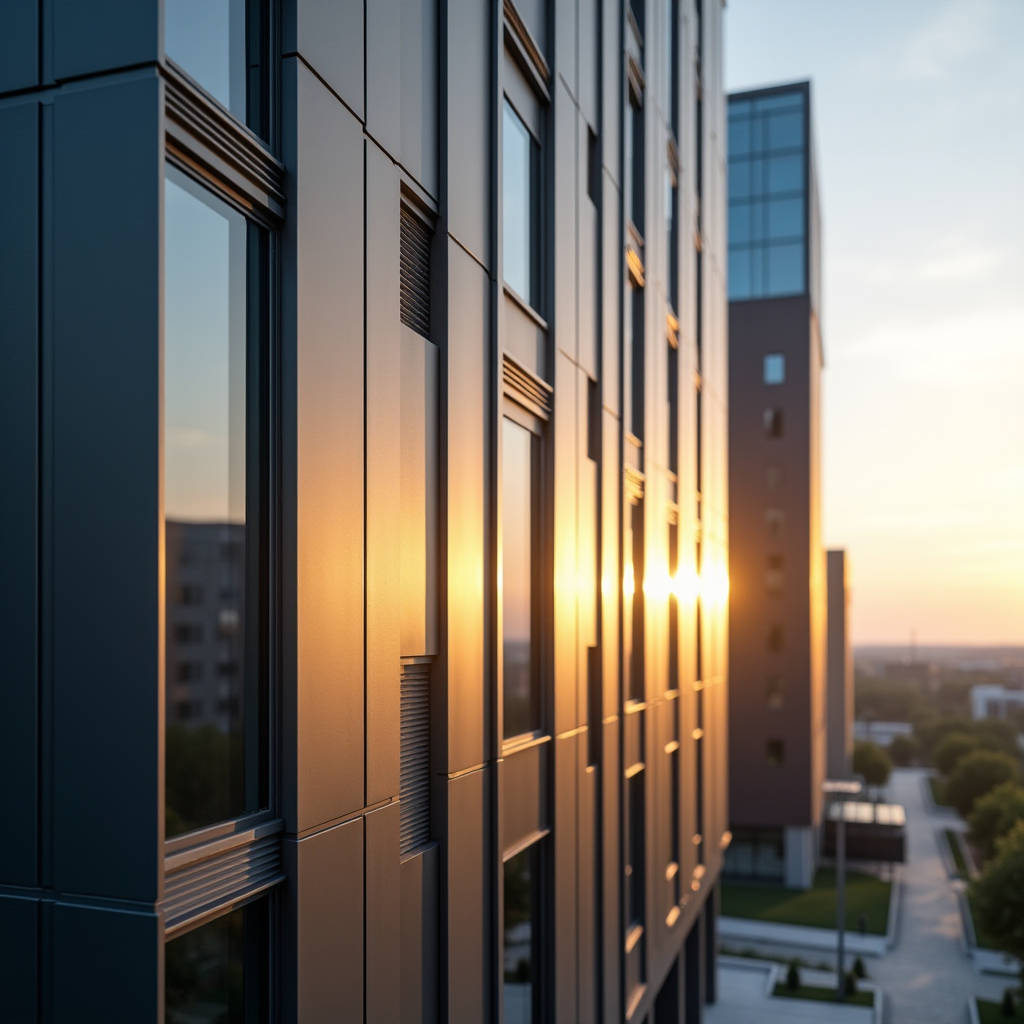
When a façade contractor in Dubai or a procurement manager in Frankfurt evaluates cladding for a 30-storey commercial tower, the conversation rarely starts with aesthetics. It starts with numbers: wind load calculations, thermal movement tolerances, and whether the specified 2.5mm solid aluminium panel can survive 50 years of UV exposure without delaminating. That last point eliminates a whole category of materials before the first sample ships. Solid aluminium cladding — what much of the industry simply calls a metal wall panel — carries no polyethylene core, no glue layer, and no risk of the kind of catastrophic failure that rewrote fire codes across multiple continents after 2017.
This piece cuts through the catalogue claims. We look at what actually matters when you are sourcing metal wall panel systems for large-scale commercial envelopes: alloy selection, coating chemistry, flatness tolerances, and the supply chain logistics that determine whether your panels arrive on-site ready to install or wrapped in a claims dispute. No fluff. Just the parameters that separate a 30-year façade from a 5-year liability.
What a Metal Wall Panel Actually Is — and What It Is Not
A metal wall panel in the architectural cladding context is a factory-fabricated aluminium sheet — solid, homogeneous, typically 2.0mm to 3.0mm thick — formed into a specific profile (cassette, tray, hook-on, or interlocking plank) and finished with a high-performance coating system. The key word is solid. The entire cross-section is aluminium alloy, usually 3003-H14 or 5005-H14, with no composite layers, no mineral fillers, and no thermoplastic core.
This distinction matters because the global cladding market still moves enormous volumes of aluminium composite material (ACM/ACP). Those products serve a different segment — signage, low-rise retail, interior feature walls — and carry fundamentally different fire performance characteristics. Confusing the two during specification leads to substitution risks that no contractor wants to explain to a building control officer.
Standard Alloys and Thickness Ranges
For exterior metal wall panel applications, the workhorse alloys are:
- 3003-H14: Manganese-alloyed. Good formability, moderate strength. The default choice for most rainscreen and curtain wall panel systems where complex bending or perforation is not required.
- 5005-H14: Magnesium-alloyed. Slightly higher tensile strength, better anodizing response. Preferred when the specification calls for a specific anodized finish rather than PVDF liquid coating.
- 5052-H32: Higher magnesium content. Used in coastal or high-corrosion environments where the additional salt-spray resistance justifies the material cost premium.
Thickness selection is driven by panel dimensions and wind load, not by cost-cutting instinct. A 2.0mm metal wall panel can work for a 600mm × 1200mm cassette on a mid-rise building in a moderate wind zone. Push that same thickness to a 1200mm × 3000mm panel on a 40-storey tower in a typhoon-prone region, and you will see oil-canning — visible waviness across the panel face — the moment the sun hits the façade. The engineering rule of thumb: larger spans and higher wind pressures demand 2.5mm or 3.0mm stock. The material cost difference between 2.0mm and 2.5mm is roughly 18–22%, but the rework cost of replacing oil-canned panels after installation can run 5–8× that figure.
Field Note: We have seen contractors try to solve oil-canning with thicker stiffener profiles on the rear face. That helps, but it does not replace adequate face-sheet thickness. If the project architect specifies a Class A flatness finish (maximum deviation of 0.5mm per 300mm span), you need the right base material gauge from the start. Stiffeners are insurance, not a cure.
Coating Systems: Where Long-Term Performance Lives or Dies
The aluminium substrate gives a metal wall panel its structural integrity. The coating gives it weather resistance, colour stability, and — in the case of high-end commercial projects — the specific gloss level and texture that the architect spent six months selecting. Get the coating wrong, and even 3.0mm 5005 alloy will look tired within five years.
PVDF (Kynar 500® / Hylar 5000®)
For exterior metal wall panel applications, 70% PVDF resin-based coatings remain the benchmark. The specification language typically reads: "PVDF coil or spray coating with minimum 70% Kynar 500® or Hylar 5000® resin, total dry film thickness (DFT) 30–40μm for a 2-coat system, 40–50μm for a 3-coat system."
Why 70% resin content? Because the remaining 30% is pigment and additives. Drop below 70% PVDF resin, and you are effectively buying a cheaper acrylic-modified system that will chalk and fade faster. The difference is measurable: a proper 70% PVDF coating on a metal wall panel should show Delta E (colour change) of less than 5 after 10 years of Florida-equivalent exposure per AAMA 2605. An acrylic-modified system might hit Delta E 8–12 in half that time.
FEVE and Polyester Options
FEVE (fluoroethylene vinyl ether) coatings offer an alternative to PVDF, particularly in markets where solvent-emission regulations push toward water-based systems. FEVE can achieve comparable weatherability and supports brighter, higher-gloss colours that PVDF struggles to deliver. The trade-off: FEVE is less common in global supply chains, so colour-matching for phased projects can become a headache.
Polyester powder coating (PE/SMP) sits at the value end. Suitable for interior metal wall panel applications, soffits, or sheltered exterior areas. Not recommended for full-sun exposed façades on buildings with a design life beyond 15 years. The cost savings are real — roughly 30–40% less than PVDF — but so is the performance gap.
| Coating Type | Resin System | Typical DFT (μm) | Colour Retention (10 Yr) | Best Application |
|---|---|---|---|---|
| PVDF 70% | Kynar 500® / Hylar 5000® | 30–50 | Delta E ≤ 5 | High-rise exterior, coastal, prestige commercial |
| FEVE | Fluoroethylene vinyl ether | 30–45 | Delta E ≤ 5 | Bright colours, high-gloss, VOC-regulated markets |
| PE/SMP Powder | Polyester / Silicone-modified polyester | 60–80 | Delta E 8–15 | Interior, soffits, sheltered low-rise |
| Anodized | Electrolytic oxide layer | 10–25 (AA20–AA25) | Variable (alloy-dependent) | Premium architectural, uniform metallic appearance |
Fabrication Tolerances That Show Up on Site
Drawing-board dimensions and as-built dimensions diverge the moment the first bracket is bolted to the substrate. A metal wall panel system needs to accommodate three types of movement: thermal expansion of the aluminium skin, deflection of the supporting structure under wind load, and construction tolerance in the backing wall or steel frame.
For a typical 3mm thick aluminium cassette panel measuring 1000mm wide, the thermal expansion from a 20°C fabrication shop to a 70°C sun-soaked façade is approximately 1.2mm. That might sound trivial, but multiply it across a 200-panel run with tight joints, and you have a buckling problem if the joint design does not absorb the movement. The industry standard per AAMA 508 and 509 guidelines calls for panel flatness within 0.5mm per 300mm for Class A finishes, and joint width consistency of ±1.5mm across the installation.
Pro Tip: When reviewing shop drawings, check the panel joint dimension at the corner zones — not just at mid-span. Wind tunnel testing often reveals higher negative pressure at building corners, and the joint design there needs to accommodate both movement and pressure equalization. A rainscreen metal wall panel that works perfectly at the building centre can fail at the corner if the pressure-equalization cavity is undersized.
Supply Chain Realities: Lead Times, Packaging, and What MOQ Actually Means
For international procurement, the metal wall panel supply chain has several choke points that project planners need to map early. A typical order flow looks like this:
- Material procurement: Aluminium coil or sheet from mills (2–4 weeks, depending on alloy and gauge availability).
- Fabrication: Cutting, punching, bending, welding stiffeners, pre-treatment (1–3 weeks, volume-dependent).
- Coating: PVDF spray or powder line (1–2 weeks, colour-dependent; custom-matched colours add 5–7 days for lab approval).
- QC and packaging: Dimensional check, coating thickness verification, protective film application, crating (3–5 days).
- Shipping: FOB port to destination port (sea freight 15–35 days depending on route; air freight on request for urgent shortfalls).
Total lead time from order confirmation to FOB readiness: typically 4–6 weeks for standard colours and volumes under 5,000m². Large-scale projects (10,000m²+) with custom colours and complex perforation patterns can push to 8–10 weeks. Smart procurement managers lock in the coating colour approval before the main order is placed, because that single step is the most common cause of delay.
Minimum order quantity (MOQ) varies by factory setup. For a standard 2.5mm PVDF metal wall panel in a stock colour, some manufacturers — including mills like Futeng® — can accommodate smaller runs of 200–300m² for custom projects, though the per-unit price will reflect the setup cost amortization. For bespoke colours and non-standard panel sizes, MOQs of 500–1,000m² are more typical.
Packaging for Export: What Prevents Freight Damage
Sea containers are humid, rough-handled environments. A metal wall panel that leaves the factory in perfect condition can arrive with scratches, edge dents, or — worse — moisture trapped under the protective film, causing filiform corrosion. Proper export packaging includes:
- Individual panel separation with foam or PE interleaving
- Edge protectors on all four corners of each panel stack
- VCI (volatile corrosion inhibitor) paper inside sealed crates for ocean freight
- Plywood crates with steel banding, not cardboard over-wraps
- Protective film rated for 90-day outdoor exposure (not indoor-grade film that degrades and bonds to the coating)
Expect to pay an additional 3–5% of the material value for export-grade packaging. It is cheaper than a 15% rejection rate at the destination port.
Fire Performance and Building Code Compliance
The global regulatory landscape for exterior cladding shifted dramatically after the Grenfell Tower fire in 2017. Multiple jurisdictions — including the UK (Approved Document B), Australia (NCC 2019 Amendment 1), and the UAE (UAE Fire and Life Safety Code) — tightened requirements for external wall materials on buildings above 18m.
A solid metal wall panel made from aluminium alloy carries a Euroclass A1 or A2-s1,d0 rating (depending on the coating system and any rear insulation layer), because the panel itself is non-combustible. This is not a marketing claim — it is a material property of aluminium. The panel does not burn, does not produce flaming droplets, and does not contribute to fire spread. The critical compliance path runs through the system, not just the panel: the complete wall assembly — including insulation, vapour barrier, fixing brackets, and cavity fire stops — must be tested or assessed as a whole per ISO 13785-2 or NFPA 285.
For specifiers in markets where code compliance documentation is non-negotiable, request the following from your metal wall panel supplier:
- Material test certificates (mill certs) for the aluminium alloy, confirming grade and temper
- Coating system test reports per AAMA 2605 (for PVDF) or equivalent
- System-level fire test or assessment report for the specific wall build-up
- Third-party fabrication audit report (if the project requires certified fabrication per ISO 9001)
Cost Structure: Where the Money Goes
A metal wall panel procurement budget breaks down into roughly these proportions for a typical 5,000m² PVDF-coated project:
- Aluminium raw material: 40–50% of ex-works panel cost. This fluctuates with LME aluminium pricing, which has ranged from $2,100 to $2,800 per metric tonne over the past three years.
- Coating: 15–20%. PVDF commands a premium; custom colours add 8–12% over standard RAL colours.
- Fabrication labour and overhead: 20–25%. Complex geometries (folded returns, perforations, curved panels) increase this share.
- Packaging and logistics: 10–15%. FOB versus CIF terms shift this allocation between supplier and buyer.
Total installed cost — including the metal wall panel, substructure, fixings, insulation, and installation labour — typically lands between $120 and $220 per square metre for a mid-spec PVDF rainscreen system, with significant regional variation based on labour rates and local code requirements. The panel itself represents roughly 30–40% of that installed cost. Trying to save 10% on the panel by downgrading thickness or coating is a false economy when the installation labour and substructure costs are fixed.
Specification Checklist for Procurement Managers
When you issue an RFQ for metal wall panel supply, include these data points to get comparable quotes:
- Alloy and temper: 3003-H14, 5005-H14, or 5052-H32 — specify exactly.
- Thickness: Nominal in mm, with tolerance (e.g., 2.5mm ±0.1mm).
- Coating system: PVDF 70% Kynar 500®, 3-coat, DFT 40–50μm, colour reference (RAL, Pantone, or custom sample).
- Flatness class: Reference AAMA 508/509 or project-specific tolerance.
- Panel dimensions and joint design: Include drawings showing joint width, return depth, and stiffener layout.
- Packaging specification: Export-grade crating with interleaving and edge protection.
- Documentation: Mill certs, coating test reports, factory QC checklist per batch.
- Incoterms: FOB, CIF, or DAP — clearly stated.
For projects in markets with strict local content rules or fast-track timelines, working with a supplier that maintains both in-house fabrication and coating lines — such as Futeng® — reduces the coordination overhead and the finger-pointing that happens when the fabricator blames the coater and vice versa. Single-source responsibility has real value when the project schedule has zero float.
The metal wall panel market is mature, competitive, and technically well-documented. The difference between a smooth procurement and a dispute-ridden one comes down to specification clarity, realistic lead time planning, and a supplier who understands that an export crate is not just a box — it is the first 30 days of the panel's journey to the building. Get those fundamentals right, and the rest is just aluminium.