Reverse Side Coating Failure on Aluminium Ceiling Panel Malaysia Outdoor Soffits
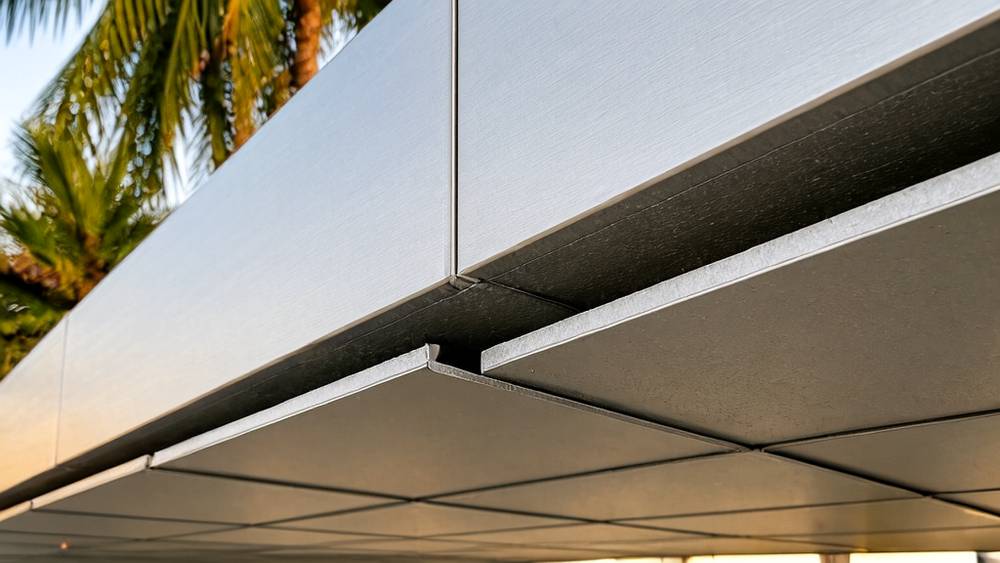
When a project team in Penang or Johor Bahru specifies an outdoor ceiling system, the conversation usually starts with a simple question: can the panels handle the rain? But after a decade of watching aluminium ceiling panel malaysia installations across shopping malls, transit stations, and waterfront F&B pavilions, the smarter question is different. It is not whether aluminium survives moisture — it does. The real variable is what happens to the coating after 18 months of equatorial UV, salt-laden air, and monsoon-driven water pooling in the ceiling cavity.
This article zeroes in on one specific, under-discussed failure mode that general contractors and QS teams consistently underestimate: coating degradation on the reverse side of solid aluminium ceiling panels in semi-enclosed outdoor soffits. We cover why it matters, how Malaysian humidity and coastal chloride levels accelerate the problem, which coating specifications actually hold up, and what to write into your tender documents so the installed ceiling still looks factory-fresh at the 5-year mark. The focus throughout is solid aluminium cladding panels — not composite sandwich products — with thicknesses from 1.5 mm to 3.0 mm and factory-applied PVDF or polyester powder coatings.
The Reverse-Side Problem Most Specifiers Overlook
Walk through any multi-storey car park or open-air corridor in Kuala Lumpur and look up. The visible ceiling face usually looks fine — uniform colour, no peeling, minimal chalking. But ask the facility manager to drop a panel and inspect the back side. That is where the trouble hides.
In a typical aluminium ceiling panel malaysia installation for semi-exposed soffits, the panel front faces downward toward the public. The reverse side faces upward into a ceiling plenum that is ventilated but not sealed. Humidity cycles through this cavity daily. Condensation forms on the back of the panel during pre-dawn hours, sits there for three to four hours, then evaporates as ambient temperature climbs past 28 °C by mid-morning. This cycle repeats roughly 300 days per year in the Klang Valley. Over five years, that is 1,500 wet-dry cycles on a surface that was never specified to handle them.
The industry has an unspoken assumption: if the visible face carries a PVDF coating, the reverse side is adequately protected with a standard wash coat or thin polyester backing layer. That assumption fails in Malaysia's humidity regime. A wash coat — typically 5 to 8 microns of unpigmented resin — provides corrosion resistance during transit and storage. It was never designed for cyclic condensation exposure inside a ceiling cavity that hovers at 75 to 90% relative humidity for eight months of the year.
Malaysia's Climate Data and What It Means for Ceiling Coatings
To understand why reverse-side coating matters, you need the numbers. Malaysia's equatorial climate is not just "hot and humid" in a generic sense. The specific combination of temperature, humidity, rainfall, and coastal chloride creates a microenvironment inside ceiling cavities that is materially different from what a ceiling panel in temperate Europe or dry Middle Eastern climates experiences.
The Malaysian Meteorological Department records average annual rainfall between 2,000 mm and 4,000 mm depending on region. Relative humidity rarely drops below 60% even during dry spells, and routinely sits at 80 to 95% from pre-dawn through mid-morning. Mean daily temperatures range from 26 °C to 32 °C year-round. For a ceiling cavity above an outdoor soffit, this translates to constant moisture presence and zero opportunity for passive drying during "winter" — because there is no winter.
Now layer in coastal exposure. Major Malaysian construction markets — Penang, Johor Bahru, Kota Kinabalu, and substantial portions of the Klang Valley within 30 km of the Strait of Malacca — are classified under ISO 9223 as C3 to C4 corrosivity categories. Airborne chloride deposition rates in these zones range from 30 mg/m²/day to over 60 mg/m²/day during the northeast monsoon. Chloride ions accelerate aluminium oxidation and attack polyester resin systems through hydrolytic degradation. The back of a ceiling panel in a Johor waterfront development faces a fundamentally different chemical environment than the same panel installed 80 km inland in Rawang.
What this means for specifiers: a reverse-side coating specification that works in Singapore's sheltered MRT stations may not hold up in an open-air car park ceiling in Port Dickson. The distance from the coastline, ceiling cavity ventilation design, and panel orientation all interact with coating chemistry in ways that generic specifications do not capture.
Coating Chemistry: PVDF, FEVE, Polyester, and the Back-Side Reality
The front face of a solid aluminium ceiling panel is typically coated with a 70% PVDF (polyvinylidene fluoride) system meeting AAMA 2605, applied at 25 to 35 microns dry film thickness over a chromate or chrome-free conversion coating. This is a known quantity. PVDF resin is inherently resistant to UV degradation, hydrolysis, and most chemical attack mechanisms relevant to outdoor exposure. The carbon-fluorine bond energy (approximately 485 kJ/mol) exceeds the energy of UV photons in the 290 to 400 nm range, meaning the polymer backbone does not break down from sunlight alone.
The reverse side is a different story. Standard practice across many aluminium ceiling panel malaysia suppliers is to apply a "backer coat" — typically a thin polyester or epoxy layer of 5 to 15 microns. Some fabricators use a simple wash coat with minimal pigmentation. The problem: polyester resins contain ester linkages that are susceptible to hydrolysis. In the presence of water and heat — exactly the conditions inside a Malaysian ceiling cavity — these ester bonds cleave, the polymer chain shortens, and the coating loses adhesion and barrier properties. Once the coating micro-cracks, moisture reaches the aluminium substrate. Oxidation begins. White rust (aluminium oxide) forms, then spalls, taking more coating with it.
There are three practical pathways to address this:
- Full PVDF back coat (25+ microns, 70% resin): The gold standard. Same chemistry as the face coat. Provides equivalent hydrolysis resistance and barrier performance. Adds roughly 8 to 12% to panel cost but eliminates the reverse-side degradation failure mode entirely for C3/C4 environments.
- FEVE-based back coat (20+ microns): Fluoroethylene vinyl ether resins offer hydrolysis resistance comparable to PVDF with slightly different application characteristics. FEVE coatings can be cured at lower temperatures and provide good flexibility. Relevant standard: AAMA 2605 (FEVE formulations can qualify under this standard).
- High-performance polyester with hydrolysis-resistant formulation (20+ microns): Some polyester manufacturers now offer grades specifically formulated for high-humidity environments, incorporating hydrolysis stabilisers. These are adequate for C2 environments or inland installations with good cavity ventilation but remain a compromise for coastal C3/C4 sites.
Engineering Specification: What to Write into the Tender
Most Malaysian tender documents for aluminium ceiling systems specify the face coating in detail — PVDF type, colour, gloss level, film thickness — and treat the reverse side with a single line: "back coat to manufacturer's standard." That single line is the root cause of most coating failures on ceiling panel reverse sides within 3 to 5 years of installation.
Here is what a defensible reverse-side coating specification should include for aluminium ceiling panel malaysia projects in C3 or C4 corrosivity zones:
The reverse (non-exposed) side of all solid aluminium ceiling panels shall receive a factory-applied liquid coating system meeting the following minimum requirements: (a) Resin system: 70% PVDF (Kynar 500® or Hylar 5000®) or FEVE resin system qualified under AAMA 2605; (b) Minimum dry film thickness: 25 microns; (c) Pretreatment: Chromate conversion coating per ASTM B449 Class 1A, or chrome-free conversion coating qualified to AAMA 2605 Appendix B with documented 3,000-hour neutral salt spray performance on aluminium alloy 3003/5005; (d) Colour: to match face coat or manufacturer-approved near-match; (e) Quality verification: coating supplier to provide batch certification of resin content and film thickness for both face and reverse sides.
For C2 environments or fully internal ceiling cavities with mechanical ventilation, a high-performance polyester back coat at 20 microns minimum with documented QUV-B and humidity resistance testing may be accepted as an alternative, but the specifier should require the coating manufacturer's written confirmation of suitability for the specific installation conditions.
Cost-Benefit Analysis: What Full PVDF Back Coating Actually Costs
QS teams often resist specifying full PVDF back coating because of perceived cost impact. The numbers tell a different story when you factor in the lifecycle. Below is a cost comparison based on actual project data from Malaysian aluminium fabricators for a typical 1,000 m² ceiling package:
| Coating Specification | Incremental Cost vs. Standard Back Coat (MYR/m²) | Expected Service Life in C3 Environment | 5-Year Maintenance Risk |
|---|---|---|---|
| Standard wash coat (5–8 µm, no pigmentation) | Baseline | 2–4 years before visible oxidation | High — panel replacement likely |
| Polyester back coat (15 µm, standard grade) | +12 to 18 MYR/m² | 4–6 years | Moderate — spot repairs possible |
| High-performance polyester back coat (20 µm, hydrolysis-resistant) | +20 to 28 MYR/m² | 6–10 years | Low in C2; moderate in C3 |
| Full PVDF back coat (25 µm, 70% resin) | +35 to 50 MYR/m² | 15–20 years (matching face coat) | Very low — full system warranty viable |
At 1,000 m², the premium for full PVDF back coating is approximately MYR 35,000 to 50,000. Compare that to the cost of scaffolding, access equipment, labour, and replacement panels for a reverse-side remediation at year 4 or 5 — easily MYR 80,000 to 120,000, not counting the operational disruption to a functioning retail podium or car park. The lifecycle case is straightforward when the comparison is framed properly.
Ventilation Design: The Often-Ignored Complement to Coating Specs
Coating specification addresses the chemical resistance side of the equation. Ventilation design addresses the moisture load side. They are complementary, and neglecting either one undermines the other.
In a fully sealed ceiling cavity, moisture that enters during installation or through building envelope leaks has no escape path. Even a PVDF-coated reverse side will eventually face problems if the cavity stays saturated. The solution is passive ventilation — designed openings that allow air exchange with the exterior while preventing direct rain ingress.
For aluminium ceiling panel malaysia installations over outdoor soffits, aim for a minimum net free ventilation area of 1/150 of the ceiling plan area, distributed across both high and low points of the cavity to enable stack-effect airflow. This aligns with general guidance in ASHRAE and local building practice for ventilated facade and soffit assemblies. Where the cavity depth exceeds 300 mm, consider increasing to 1/100 to compensate for reduced airflow velocity.
Practical detailing points:
- Perforated aluminium infill panels at the cavity perimeter can double as ventilation openings while maintaining the visual line of the ceiling.
- Insect mesh (stainless steel, 1.5 mm aperture) behind ventilation openings prevents pest ingress without significantly restricting airflow.
- Gaps between individual strip ceiling panels — common in Malaysian strip ceiling designs — provide inherent ventilation, but only if the supporting framework does not block the airflow path.
Alloy Selection and Pretreatment: The Foundation Beneath the Coating
Coating adhesion depends on substrate preparation. For solid aluminium ceiling panels, the alloy choice and pretreatment process set the baseline that the coating builds upon.
Most aluminium ceiling panels in Malaysia are fabricated from AA 3003, AA 3005, or AA 5005 alloys. AA 3003 (manganese-alloyed) offers good corrosion resistance and formability at lower cost. AA 5005 (magnesium-alloyed) provides better strength and slightly improved corrosion resistance in marine environments. For coastal C4 installations, AA 5005 or AA 5052 is the safer choice, with a cost premium of approximately 8 to 12% over AA 3003.
Pretreatment is non-negotiable. A chromate conversion coating per ASTM B449 Class 1A provides the benchmark for coating adhesion and under-film corrosion resistance. Where project sustainability requirements prohibit hexavalent chromium, chrome-free conversion coatings qualified under AAMA 2605 Appendix B are the alternative, but require more rigorous quality control. The specifier should require the pretreatment chemical supplier's documented performance data for the specific aluminium alloy and coating system combination being used.
One detail worth checking during factory audits: the dwell time between pretreatment and coating application. In high-humidity Malaysian factory environments, aluminium that sits for more than 4 hours after pretreatment can develop a thin oxide layer that compromises coating adhesion. Reputable fabricators — including Futeng® with its controlled-environment coating lines — manage this through production scheduling that keeps the pretreatment-to-coating window under 2 hours.
Field Verification: What to Inspect During Installation
Factory certificates and coating supplier batch reports are necessary but not sufficient. Someone needs to verify that what was specified is what arrives on site. For the reverse-side coating specifically, here is a practical field checklist:
- Dry film thickness (DFT) gauge: Use a calibrated eddy-current DFT gauge (e.g., Elcometer 456 or equivalent) to spot-check reverse-side coating thickness on 5% of delivered panels, with a minimum of 10 panels per batch. Target: not less than 80% of specified DFT at any single point.
- Visual inspection under bright light: Check for thin spots, rub marks, or areas where the substrate metal is visible. The reverse side should have uniform coverage with no bare aluminium exposed.
- Colour consistency: The back coat colour should be reasonably consistent across panels. Significant variation suggests inconsistent application and warrants further investigation.
- Edge coverage: Panel edges — including cut edges from fabrication — should show coating wrap. Bare edges are initiation points for corrosion.
- Handling damage: Scratches or gouges on the reverse side that penetrate the coating must be addressed with a field-applied touch-up kit approved by the coating manufacturer.
Procurement Strategy: Aligning Supplier Capability with Project Requirements
Not all aluminium ceiling panel malaysia suppliers have the coating capability to execute a full PVDF back coat specification. Many smaller fabricators rely on outsourced coating applicators, which introduces variability in quality control and traceability. When evaluating suppliers for projects requiring reverse-side coating specifications, ask these questions:
- Does the supplier operate an in-house PVDF coating line, or is coating outsourced? In-house lines provide better process control and single-point accountability.
- Can the supplier provide coating supplier certification (e.g., PPG, AkzoNobel, Sherwin-Williams) confirming the specific resin system and film thickness for both face and reverse sides?
- What is the supplier's documented track record for projects in C3/C4 corrosivity zones within Malaysia? Request project references with at least 5 years of service history.
- Does the supplier's factory quality control include DFT measurement on both face and reverse sides as a standard procedure, or only on request?
The answers to these questions separate fabricators who understand the reverse-side coating challenge from those who treat it as an afterthought. For projects in coastal Penang, Johor, or Sabah, this due diligence is not optional — it is the difference between a 5-year ceiling and a 20-year ceiling.
Summary: A Specification That Survives the Malaysian Climate
The reverse side of an aluminium ceiling panel in a Malaysian outdoor soffit faces a microclimate that is more aggressive than the visible face in many respects — constant high humidity, cyclic condensation, and, in coastal zones, chloride deposition. The industry's default approach of a thin wash coat or standard polyester backer is demonstrably inadequate for this environment. The fix is not expensive relative to the cost of premature failure: specify a full PVDF or FEVE back coat at 25 microns minimum DFT, require documented coating supplier certification, pair it with adequate cavity ventilation, and verify coating thickness during incoming inspection. For solid aluminium ceiling panels — whether 1.5 mm pressed profiles or 3.0 mm fabricated panels — the coating on the side nobody sees determines the service life of the side everybody sees.