External Wall Panel 30 Year Maintenance Cost Comparison Aluminium WPC Fibre Cement Stone
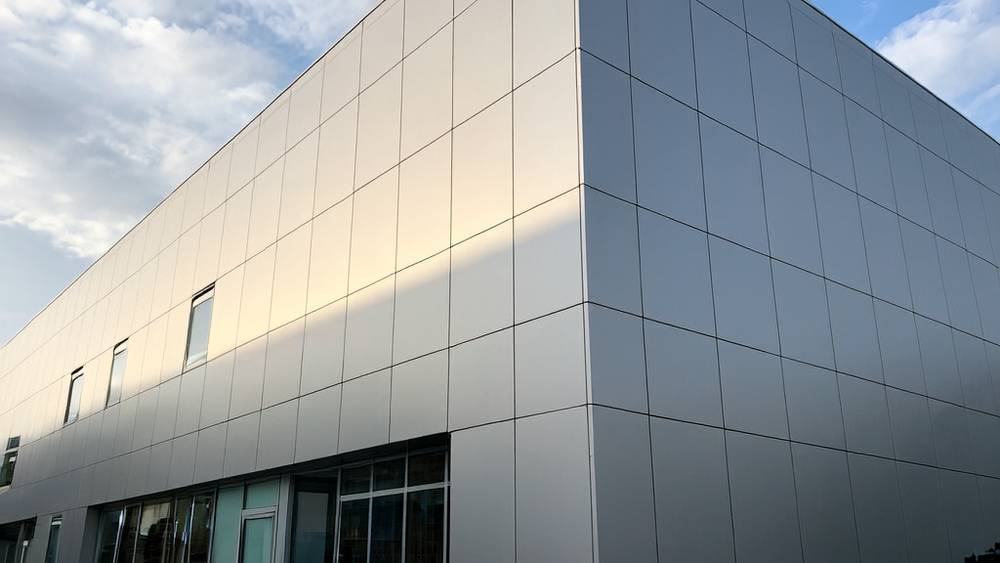
When procurement managers and facade engineers sit down to compare exterior cladding options, the conversation almost always lands on one question: how long will it hold up before someone has to pick up a pressure washer or a paintbrush? For commercial and institutional buildings with 30-plus-year design lives, maintenance cost is not a footnote in the budget — it often becomes the single largest line item in the building envelope lifecycle. Selecting the right external wall panel system means looking past the square-metre supply price and calculating the total cost of ownership over two or three decades. Among the available materials, solid aluminium cladding panels stand apart because they demand almost nothing from facility managers once the scaffolding comes down. This article examines the real maintenance burden across five common external wall panel material categories — solid aluminium, WPC, fibre cement, HPL, and natural stone — and provides a lifecycle cost framework that general contractors and architects can use during specification.
What Drives Maintenance Cost in External Wall Panel Systems
Maintenance costs in facade engineering break into three buckets: cleaning, recoating or refinishing, and component replacement. Each of these is influenced by the material's inherent resistance to UV degradation, moisture absorption, freeze-thaw cycling, and surface soiling behaviour. A panel that looks pristine on day one but requires chemical cleaning every two years in a coastal or industrial exposure zone will burn through the installation budget many times over before the building reaches its first major renovation cycle.
The ASTM International standard ASTM D3273 for mould resistance and ASTM G154 for accelerated weathering provide benchmarks that specifiers can reference when comparing external wall panel durability claims. However, laboratory data needs to be cross-referenced with field performance data from buildings that have weathered real conditions for 15 to 25 years. The gap between accelerated test results and actual facade degradation is where maintenance budgets get blindsided.
The Three Cost Buckets
- Routine Cleaning: Pressure washing, soft-brush cleaning with mild detergents, or dry-ice blasting for stubborn atmospheric soiling. Frequency depends on surface porosity and electrostatic charge.
- Recoating and Resealing: Repainting or re-applying clear sealers after the original coating system degrades. This is the big-ticket recurring expense.
- Panel Replacement: Triggered by warping, delamination, impact damage, or fastener corrosion. Replacement also carries logistical costs — matching colour batches, accessing upper floors, and downtime.
Maintenance Profiles of Five External Wall Panel Materials
The table below draws on manufacturer technical datasheets, facade consultant reports, and feedback from facility management teams in North America, Europe, and Southeast Asia. The cost estimates assume a 2,000-square-metre facade on a mid-rise commercial building in a temperate climate with moderate urban pollution.
| Material | Typical Cleaning Interval | Recoating / Resealing Cycle | Estimated 30-Year Maintenance Cost (USD/m²) | Major Failure Modes |
|---|---|---|---|---|
| Solid Aluminium (PVDF Coated) | 5–8 years (rain-assisted self-cleaning reduces frequency) | 25–30 years (PVDF Kynar 500) | 18–35 | Scratch damage from impact; fastener galvanic corrosion if stainless steel not used |
| WPC (Wood-Plastic Composite) | 2–4 years | 8–12 years (colour fading, surface chalking) | 55–95 | UV-induced colour shift; thermal expansion causing joint gaps; moisture swelling at cut edges |
| Fibre Cement Board | 3–5 years | 10–15 years (paint system dependent) | 65–110 | Moisture ingress at unsealed penetrations; freeze-thaw cracking; efflorescence |
| HPL (High-Pressure Laminate) | 3–5 years | 12–18 years (surface fading; no field recoating — full replacement often required) | 80–140 | Delamination at panel edges; UV bleaching; limited colour recovery options |
| Natural Stone (Granite / Limestone) | 5–10 years (but specialised cleaning for biological growth) | 20–30 years for sealers; stone itself is permanent | 30–60 | Spalling in freeze-thaw; staining from atmospheric pollutants; anchor corrosion |
The numbers tell a clear story. Solid aluminium external wall panel systems sit at the very bottom of the maintenance cost curve, challenged only by uncoated granite — which carries a significantly higher upfront material and structural support cost. The critical difference is that aluminium panels with PVDF coatings based on Kynar 500 resin chemistry have a documented 30-year track record of colour retention and gloss stability, as verified by AAMA 2605 compliant coating systems.
Why PVDF-Coated Solid Aluminium Demands So Little
The low maintenance profile of solid aluminium cladding is not accidental. It is engineered into the material at three levels: the metallic substrate, the pretreatment layer, and the fluoropolymer topcoat.
Substrate Stability
Solid aluminium panels — typically 2.0 mm, 2.5 mm, or 3.0 mm thick 3003-H14 or 5052-H32 alloy — do not absorb moisture. There is no swelling, no rot, no freeze-thaw expansion. The coefficient of thermal expansion for aluminium is approximately 23 × 10⁻⁶ per °C, which is predictable and accommodated by standard joint design. Unlike wood-based or cementitious external wall panel products, aluminium does not provide a food source for mould or algae, so biological staining is limited to surface deposition that rain can largely handle.
The PVDF Barrier
Polyvinylidene fluoride (PVDF) coatings, applied at a minimum dry film thickness of 30–35 microns for two-coat systems and 40–45 microns for three-coat metallic finishes, are chemically inert in the face of UV radiation. The carbon-fluorine bond that defines PVDF chemistry is one of the strongest in organic chemistry, which is why AAMA 2605-qualified coatings show colour change of no more than 5 Delta E units after 10 years of South Florida exposure at 45° facing. In practical terms, a silver metallic or anodised-look PVDF external wall panel will look essentially the same at year 20 as it did at year two — assuming occasional rain rinsing.
Cleaning Reality
Most PVDF-coated aluminium facades in urban environments require nothing more than natural rainfall for maintenance of appearance. In sheltered areas such as deep soffits or undercrofts where rain does not reach, a simple low-pressure water wash every four to six years removes accumulated dust. No chemicals, no scaffolding for cleaning alone. This stands in stark contrast to WPC panels, where even manufacturers with 10-year warranties recommend biannual cleaning with specialised wood-safe detergents.
The Hidden Cost: Colour Matching During Recoating
A maintenance cost factor that rarely appears in initial procurement spreadsheets is colour matching when only part of a facade needs recoating or replacement. With solid aluminium PVDF panels, batch-to-batch colour consistency from a single coil-coating line is excellent, but if a panel is damaged and replaced five years later, the new panel will likely come from a different production run.
For WPC and fibre cement, the problem compounds. These materials absorb UV and fade unevenly across different elevations depending on sun exposure. A south-facing wall in the northern hemisphere will be several shades lighter than a north-facing wall after eight years. When a damaged external wall panel needs replacement, the facility manager faces two unappealing choices: live with a visible mismatch, or repaint the entire elevation. That second option can cost USD 40–80 per square metre in access equipment and labour alone.
Aluminium panels with PVDF finishes fade so slowly and so uniformly that colour matching across production batches is far less problematic. Suppliers such as Futeng® maintain detailed colour records linked to project references, allowing close matching even years after original installation — a practical advantage that experienced facade contractors factor into specification decisions.
Environmental Exposure and Maintenance Frequency Multipliers
The baseline maintenance intervals in the table above assume a temperate urban environment. Real-world conditions multiply those numbers. The ISO 12944 corrosion classification system defines atmospheric corrosivity categories from C1 (very low) to CX (extreme offshore). Each category has a measurable impact on external wall panel maintenance scheduling.
- Coastal (C4–C5): Chloride deposition accelerates coating degradation. PVDF survives well; WPC and fibre cement require more frequent sealing. Solid aluminium in marine-grade 5052 alloy with chromate pretreatment handles salt spray without substrate corrosion.
- Industrial (C3–C4): Acidic pollutants — sulphur dioxide, nitrogen oxides — attack organic binders in WPC and paint systems on fibre cement. PVDF is chemically resistant to these species.
- High-UV (tropical/subtropical): The UV index in Singapore, Dubai, or Brisbane runs 10–12 year-round. WPC colour shift accelerates dramatically. PVDF-coated aluminium panels maintain their AAMA 2605 performance envelope even under these conditions.
Fastener and Subframe: The Other Maintenance Story
Even the best external wall panel material will create maintenance headaches if the supporting subframe and fasteners are specified incorrectly. Aluminium panels mounted on a galvanised steel subframe with carbon steel screws will develop galvanic corrosion at every fastener point within three to five years in coastal exposure. The panels themselves remain intact, but rust streaks from fasteners stain the facade and require intervention.
The fix is straightforward: specify 316-grade stainless steel fasteners and aluminium subframes, with a thermal break where aluminium contacts dissimilar metals. This adds roughly USD 2–4 per square metre to the initial install but eliminates an entire category of maintenance callbacks. The AAMA TIR-A9 technical information report covers metal wall panel fastener selection in detail.
Lifecycle Cost Model: 30-Year Comparison
Putting upfront supply cost and maintenance together gives a total cost of ownership figure. The following model uses mid-range material supply prices (2025 estimates for a 2,000 m² project in a C3 urban environment) and adds maintenance costs from the table above.
| Material | Supply + Install (USD/m²) | 30-Year Maintenance (USD/m²) | Total 30-Year Cost (USD/m²) |
|---|---|---|---|
| Solid Aluminium (PVDF) | 180–260 | 18–35 | 198–295 |
| WPC | 90–150 | 55–95 | 145–245 |
| Fibre Cement | 110–170 | 65–110 | 175–280 |
| HPL | 130–200 | 80–140 | 210–340 |
| Natural Stone (Granite, 30 mm) | 300–500 | 30–60 | 330–560 |
The numbers reveal a counterintuitive finding. WPC and fibre cement look cheaper on the supply-only line of the bill of quantities, but by year 15 their total cost has caught up with or exceeded solid aluminium. The crossover point — where the lower-maintenance external wall panel becomes the cheaper option — typically falls between years 8 and 14, depending on exposure severity. For institutional buildings with 50-year design lives (hospitals, university buildings, government offices), the lifecycle argument for aluminium is overwhelming.
Specification Language That Protects the Maintenance Budget
Facade consultants and architects can lock in low-maintenance performance through precise specification language. Rather than generic references to "aluminium cladding," the spec should call out:
- Coating system compliance with AAMA 2605 (not the less stringent AAMA 2604, which allows greater colour fade and gloss reduction). AAMA 2605 requires a minimum of 70% gloss retention after 10 years Florida exposure.
- Resin chemistry: explicitly name Kynar 500 or Hylar 5000 PVDF resin, minimum 70% PVDF content in the coating solids.
- Pretreatment: chromate conversion coating per ASTM B449 or chromium-free alternatives that meet AAMA performance standards.
- Alloy grade: 3003-H14 for general applications, 5052-H32 for coastal or high-stress zones.
- Fastener material: A4 (316) stainless steel throughout.
A well-written performance spec for an external wall panel system shifts the maintenance risk from the building owner to the supplier — and solid aluminium with PVDF is one of the few material categories where suppliers routinely accept 20-to-30-year coating warranties without hesitation.
What Facility Managers Report After 15 Years
Field feedback from facility management teams paints a consistent picture. Solid aluminium external wall panel facades on buildings completed in the early 2000s — including airports, corporate headquarters, and healthcare facilities — remain in service with no recoating and only occasional cleaning. The primary maintenance action reported is not panel-related at all: it is perimeter sealant replacement at window and louvre interfaces, which is a universal requirement regardless of cladding material.
By contrast, WPC facades of similar vintage in high-UV locations show noticeable colour shift between sheltered and exposed areas, and fibre cement installations in freeze-thaw climates have required spot repainting at joint lines where micro-cracking allowed moisture ingress. These are not catastrophic failures, but they are predictable maintenance events that should be budgeted from day one.
The decision tree for a general contractor or architect specifying an external wall panel system therefore comes down to this: if the project has a design life beyond 15 years and the client is sensitive to ongoing maintenance expenditure, solid aluminium with PVDF coating is the reference standard against which other materials should be benchmarked. The square-metre supply price tells less than half the story. The maintenance line items — or the absence of them — tell the rest.