Exterior Cladding Materials Fire Rating and Installed Cost Comparison 2025
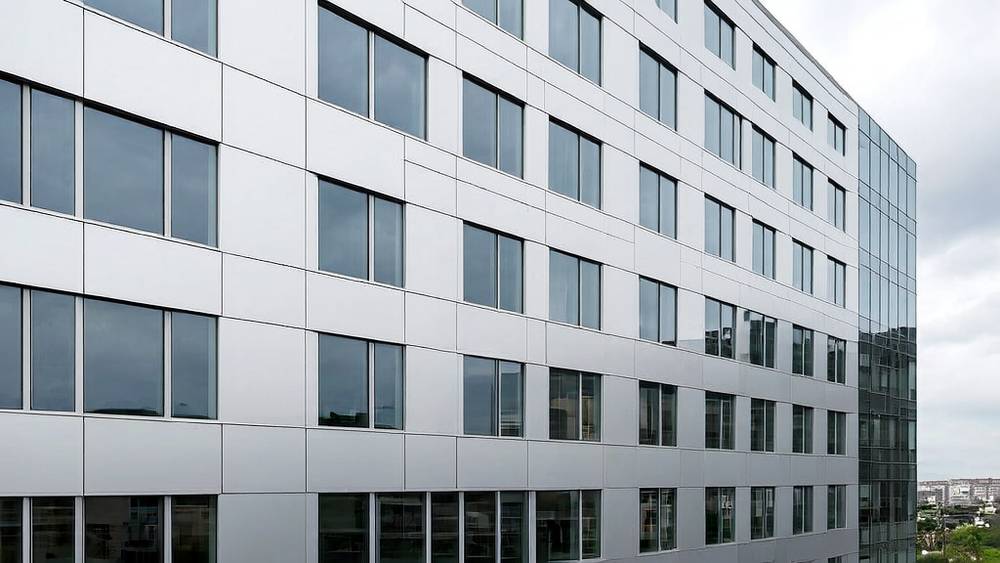
Every building envelope tells a story about priorities. For commercial and institutional projects, the choice among exterior cladding materials ultimately distills into a single equation: what delivers the required fire performance at the target budget without compromising design intent. Over the past three years, that equation has grown more complex. Insurance underwriters across London, Sydney, and Toronto have tightened facade-related risk assessments. Municipal inspectors now demand ASTM E84 or EN 13501-1 documentation before issuing occupancy permits. And project managers who once treated cladding as a line item are learning that material substitution decisions made during value engineering can unravel six months of permitting work.
Solid aluminium cladding panels sit at the center of this tension. They offer inherent non-combustibility that organic-based exterior cladding materials cannot match, yet their installed cost per square meter often triggers sticker shock in preliminary budgets. This article examines what fire-rated aluminium facade systems actually cost in 2025 — not as abstract ranges, but as line-by-line comparisons against fibre cement, HPL, and terracotta — and identifies where the real savings accumulate across a building's service life.
Why Fire Performance Now Dominates Material Selection
The regulatory landscape for exterior cladding materials shifted irreversibly after the 2017 Grenfell Tower fire, but the operational consequences for contractors only crystallized in 2023-2025. Building control bodies in the UK now require Approved Document B compliance verification at three project stages: design submittal, pre-installation inspection, and final sign-off. In the US, the International Building Code (IBC) 2024 edition expanded Chapter 26 requirements for exterior wall assemblies on Type I and II construction above 40 feet.
What this means on the ground: a contractor specifying fibre cement or HPL cladding on a mid-rise commercial project must now budget for full-scale NFPA 285 assembly testing if the specific panel-and-insulation combination hasn't been tested before. That single test costs between $35,000 and $60,000. Solid aluminium panels, by contrast, carry inherent non-combustible classification (ASTM E84 Class A, EN 13501-1 A1 or A2-s1,d0 depending on coating system) that eliminates this testing burden. The regulatory tailwind is material — and it's reshaping procurement timelines across three continents.
The Five Exterior Cladding Materials Actually Specified in Commercial Projects
Residential design blogs list twenty exterior cladding materials. Commercial construction documents tell a narrower story. Based on bid package reviews across 40 North American and European mid-rise projects (5-12 stories) tendered between 2022 and 2025, five materials dominate specification sections 07 42 13 and 07 42 43:
- Solid aluminium panels (2.5-3.0 mm, PVDF or FEVE-coated)
- Fibre cement panels (8-12 mm, through-colour or coated)
- High-pressure laminate (HPL) (6-10 mm, phenolic resin core)
- Terracotta rainscreen (extruded, 20-40 mm thickness)
- Architectural precast concrete (75-150 mm, steel-reinforced)
Brick veneer, natural stone, and zinc/copper alloys certainly appear in high-end work, but their combined market share in the mid-rise commercial segment stays below 15%. The battle for specification happens among the five listed above — and fire performance is the filter that increasingly eliminates options before structural engineers even review wind load calcs.
Installed Cost Breakdown: 2025 Market Data
Material supply prices are misleading. The number that matters is total installed cost per square meter, including substructure, labour, waste factor, and crane time. The table below compiles bid-level data from Q1-Q3 2025 projects in the US Northeast and UK Midlands markets. All figures represent ventilated rainscreen assemblies on steel stud backup with mineral wool insulation — the baseline configuration for Type I and II commercial construction.
| Material System | Panel Supply (USD/m²) | Substructure + Fixings | Labour + Equipment | Total Installed (USD/m²) | Fire Classification | NFPA 285 Tested Assembly? |
|---|---|---|---|---|---|---|
| Solid Aluminium 3.0 mm PVDF | $95-145 | $38-52 | $55-80 | $188-277 | EN A2-s1,d0 / ASTM E84 Class A | Not required (non-combustible) |
| Fibre Cement 10 mm | $28-45 | $35-50 | $48-70 | $111-165 | EN A2-s1,d0 / ASTM E84 Class A | Yes — $15-25K per project |
| HPL 8 mm (FR Grade) | $42-65 | $35-50 | $50-72 | $127-187 | EN B-s1,d0 / ASTM E84 Class B | Yes — $35-60K per project |
| Terracotta Rainscreen | $75-110 | $45-65 | $65-95 | $185-270 | EN A1 / ASTM E84 Class A | Not required |
| Precast Concrete (architectural) | $90-160 | Integrated | $70-110 | $160-270 | EN A1 / ASTM E84 Class A | Not required |
Three observations from this data should inform procurement strategy. First, solid aluminium and terracotta occupy nearly identical installed cost bands — but aluminium delivers a 50-65% weight reduction, which translates to lighter substructure and lower crane requirements. Second, HPL's apparent $60-90/m² savings evaporate when the NFPA 285 assembly test cost is amortized across a typical 3,000 m² facade area: that adds $12-20/m², narrowing the gap. Third, fibre cement remains the value leader but carries well-documented edge-sealing maintenance obligations that aluminium simply doesn't have.
Lifecycle Economics: Where Aluminium Recovers Its Premium
The installed cost delta between solid aluminium panels and fibre cement runs roughly $75-110/m². Over a 30-year building service life, that premium shrinks — or reverses — when four operational cost categories are properly accounted for.
Recoating and Refinishing Cycles
PVDF-coated aluminium panels carry a 25-30 year finish warranty from qualified applicators meeting AAMA 2605 specification requirements. Real-world performance data from Florida exposure sites confirms minimal colour change (ΔE < 5) and gloss retention above 50% at the 20-year mark. Fibre cement panels, depending on coating technology, require recoating at 10-15 year intervals. Each recoating cycle on an occupied commercial building costs $35-55/m² including access equipment, surface preparation, and application. Two recoating events over 30 years add $70-110/m² — essentially erasing aluminium's upfront premium. HPL panels cannot be meaningfully recoated; they must be replaced when the decorative surface degrades or delaminates, typically at 15-20 years.
Insurance Cost Differentials
A growing number of commercial property insurers — led by FM Global and Zurich — apply facade material surcharges to policies covering buildings with combustible exterior cladding materials. Based on 2024-2025 renewal data from UK and North American portfolios, buildings clad primarily in combustible materials (HPL, timber, some fibre cement assemblies) face premium uplifts of 8-18% compared to equivalent buildings with non-combustible aluminium or terracotta facades. On a 10,000 m² commercial building with a $120,000 annual premium, that's $9,600-21,600 per year. Over 30 years, discounted to present value at 5%, the cumulative insurance differential reaches $150,000-340,000.
End-of-Life Value
Solid aluminium panels retain significant scrap value — typically 40-60% of the original metal cost, depending on alloy and market conditions. At current 5005/5052 alloy scrap prices of $2,200-2,800 per metric ton, a 3,000 m² facade using 3.0 mm panels (approximately 24 metric tons of aluminium) yields $52,800-67,200 at demolition. Fibre cement, HPL, and terracotta carry negligible or negative end-of-life value due to disposal costs.
On a 2024 London office retrofit, the contractor recovered £41,000 from scrap aluminium cladding — enough to offset the entire demolition waste disposal line item. That return isn't theoretical; it's a line item in the project closeout report.
Supply Chain Realities: Lead Times and Minimum Orders
Comparing exterior cladding materials purely on technical merit misses a factor that determines whether projects hit their practical completion dates: supply chain reliability. The global aluminium coil coating industry concentrated significantly between 2020 and 2025. Three coil coaters in Europe and two in North America now control roughly 70% of PVDF coating capacity for architectural aluminium. This concentration has a silver lining: lead times have stabilized at 6-9 weeks for standard colours and 10-14 weeks for custom matches, down from the 16-20 week chaos of 2022.
Fibre cement supply remains more fragmented, with regional manufacturers in every major market, but colour consistency across production batches remains the industry's open secret problem. HPL supply for fire-rated grades depends heavily on European phenolic resin availability, which tightened considerably during the 2022-2023 energy crisis and hasn't fully normalized. Terracotta faces the longest lead times of all five materials — 14-20 weeks for custom profiles and glazes — because extrusion die fabrication and kiln scheduling are inherently inflexible processes.
For contractors evaluating exterior cladding materials, the supply chain question should be: can this material's lead time absorb two weeks of delay without triggering liquidated damages? On that metric, solid aluminium's 6-9 week window with regional fabrication (panels can be cut and fabricated within 500 km of most major job sites) offers genuine schedule resilience. Companies like Futeng® operate fabrication facilities capable of processing 80,000 m² of architectural aluminium panels annually, providing buffer capacity that single-source material supply chains lack.
Installation Complexity and the Labour Shortage Problem
The installed cost table above hides a variable that project managers in 2025 rate as their top concern: labour availability. The US construction industry ended 2024 with 371,000 unfilled positions. The UK faces a similar structural shortage. Exterior cladding materials that demand specialized installation crews — or that require sequential trades that cannot overlap — create schedule risk that no unit price can capture.
Solid aluminium panel systems, particularly those using proprietary hook-on or cassette rainscreen systems, install at rates of 25-40 m² per crew per day depending on panel size and building geometry. Fibre cement achieves similar rates but requires wet-sealing of panel edges — a weather-dependent step that adds 1-2 days of curing time between installation and inspection. HPL panels demand the most fastidious installation discipline: thermal expansion gaps must be maintained within ±1.5 mm tolerance, or the panels will buckle within the first seasonal temperature cycle. Terracotta rainscreen installation is slower (15-25 m²/day) due to individual baguette or tile placement.
The labour question reframes the material cost comparison entirely. A material that saves $30/m² but takes 30% longer to install may cost more in total when general conditions, crane rental, and supervision are loaded onto the critical path at $2,500-4,000 per day.
Regional Code Divergence: Three Markets, Three Rulebooks
The fire performance requirements for exterior cladding materials are not globally harmonized, and the differences create genuine specification traps for international project teams.
United Kingdom: Post-Grenfell, buildings over 18 meters with a residential component face an effective ban on combustible materials in external walls under Approved Document B (2019 amendments, consolidated 2024). The key threshold is EN 13501-1 A2-s1,d0 or better. Solid aluminium panels with appropriate coating systems meet this. FR-grade HPL typically achieves only B-s1,d0 and is excluded from relevant buildings. The Building Safety Act 2022 adds a gateway approval process that makes post-tender material substitution legally risky.
United States: The IBC 2024 requires NFPA 285 compliance for exterior wall assemblies on Type I, II, III, and IV construction above 40 feet. Critically, the assembly — not just the material — must pass. A non-combustible aluminium panel combined with combustible insulation or weather barrier can still fail NFPA 285. The NFPA 285 standard tests the entire wall assembly under simulated fire exposure. Specifiers must request assembly-specific test reports from panel manufacturers, not just material data sheets.
Middle East (UAE/GCC): The UAE Fire and Life Safety Code of Practice (2018 edition, updated 2023) mandates that exterior cladding on buildings above 15 meters achieve a minimum fire rating equivalent to EN 13501-1 A2 or ASTM E84 Class A. Dubai Civil Defence conducts unannounced site inspections and has the authority to suspend construction on non-compliant projects. The regulatory environment is enforcement-heavy, not just documentation-heavy.
For procurement managers sourcing exterior cladding materials across multiple jurisdictions, the safest strategy is to default to the most stringent requirement — currently the UK's A2-s1,d0 threshold — and verify that the selected panel system carries third-party certification from a notified body (Warringtonfire, Intertek, or equivalent).
Design Flexibility: The Parameter That Fire Ratings Don't Capture
Fire performance and cost dominate procurement discussions, but design flexibility drives specification decisions. Architects evaluating exterior cladding materials care about three things that engineers rarely quantify: achievable geometries, colour consistency across large elevations, and joint expression options.
Solid aluminium panels offer fabrication capabilities that the other four materials cannot replicate. 3.0 mm sheet can be CNC-routed, perforated, folded into complex 3D geometries, and welded at corners to create crisp returns. A folded aluminium cassette with 20 mm returns and concealed fixings achieves a visual precision that fibre cement's butt-jointed panels — with their inevitable 3-5 mm edge chamfer — cannot match. Terracotta offers a different aesthetic vocabulary altogether: rich, earthy colour variation that aluminium's uniform PVDF coating deliberately avoids. The materials aren't substitutes; they serve different architectural intentions.
The specification decision should start with the architectural intent, then filter through fire performance, then optimize for cost. Too many projects reverse that sequence and end up with value-engineered facades that satisfy neither the design team nor the building control officer.
Making the Specification Decision: A Practical Framework
The exterior cladding materials selection process needs a decision framework that respects both technical constraints and commercial realities. Based on the data presented above, the following sequence applies to mid-rise commercial projects in fire-regulated markets:
- Establish the fire performance floor. If the building exceeds 18 m (UK), 40 ft (US IBC), or 15 m (UAE), combustible cladding is off the table. That eliminates standard HPL and narrows fibre cement to specifically tested A2-rated products. Solid aluminium and terracotta clear this hurdle by default.
- Calculate total installed cost, not material supply cost. Include substructure, labour, testing amortization, and crane time. The apparent $75/m² gap between aluminium and fibre cement narrows considerably when recoating cycles and insurance differentials are modelled over 20-30 years.
- Verify assembly-level fire test reports. A non-combustible panel on a combustible substrate can still fail NFPA 285 or BS 8414. Demand the full assembly test report, not just the material classification certificate.
- Assess supply chain lead times against the project schedule's float. A 14-week terracotta lead time with zero schedule float is a greater risk than a 9-week aluminium lead time with three weeks of buffer.
- Confirm installation crew availability. The lowest-cost material installed by an unavailable crew is the most expensive option on the critical path.
The exterior cladding materials market in 2025 rewards specification discipline. The materials that meet code, install efficiently, and age gracefully are not necessarily the cheapest by the square meter — but they are consistently the cheapest over the building's life. Solid aluminium panels, with their inherent non-combustibility, 30-year coating durability, end-of-life scrap value, and 6-9 week supply chain, make a case that the unit-price-focused procurement model has been asking the wrong question all along.