1 Hour Fire Rated Metal Clad Wall With Solid Aluminium Panels and Mineral Wool Core
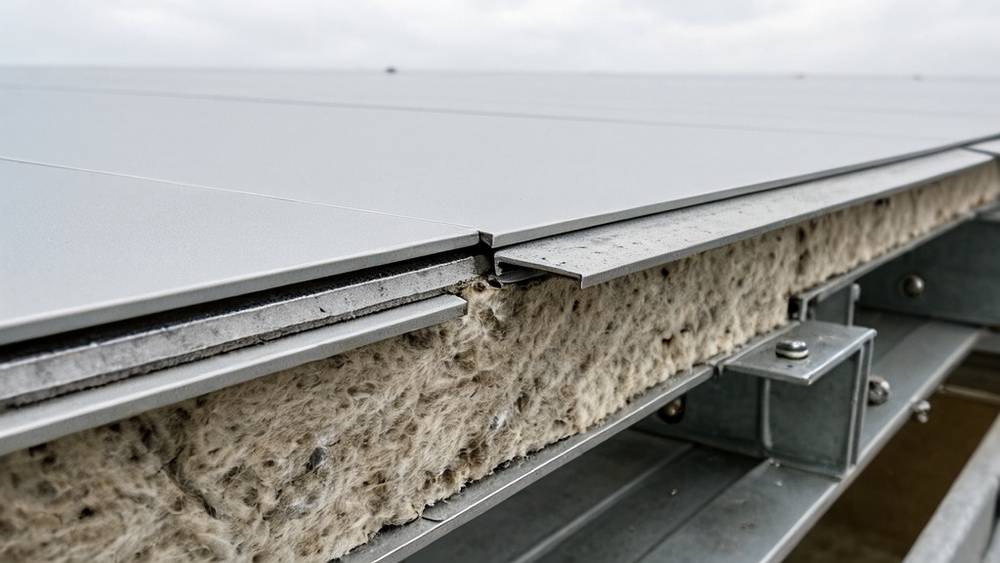
A metal clad wall built with solid aluminium panels must do more than shed rain and hold back wind. It has to survive a fire. That single requirement separates cladding that performs from cladding that becomes fuel, and the dividing line is carved into every major building code worldwide since 2017. For architects and envelope contractors specifying aluminium cladding on mid-rise and high-rise buildings, the question is no longer whether to use non-combustible materials but how to verify that the aluminium panels you are buying actually meet the fire rating demanded by the jurisdiction. This article examines what a 1-hour fire rated metal clad wall actually requires, how mineral wool core integration works with solid aluminium panels, which test standards govern compliance, and where procurement teams get tripped up when ordering fire-rated cladding from overseas mills.
Why Fire Rating Determines Aluminium Panel Specification
The regulatory landscape shifted irreversibly after the Grenfell Tower fire in 2017, when combustible polyethylene-cored cladding panels accelerated flame spread across 20 storeys in under 30 minutes. Governments in the UK, Australia, UAE, Singapore, and parts of North America responded with sweeping bans on combustible cladding materials for buildings above certain height thresholds. In England, the Building (Amendment) Regulations 2018 prohibited the use of combustible materials in external walls of residential buildings over 18 meters. Australia's NCC 2019 Vol. 1 and subsequent amendments imposed similar restrictions. The common denominator across these regulations is a demand for cladding systems that can demonstrate a defined period of fire resistance, typically 1 hour, 2 hours, or 3 hours, depending on building height, occupancy type, and local code.
Solid aluminium panels, when paired with the right substrate, can meet these requirements. But aluminium itself does not provide the fire barrier. Pure aluminium melts at approximately 660°C — a temperature easily reached within minutes of a compartment fire. This is where the mineral wool core becomes the decisive component. A metal clad wall achieving a 1-hour fire rating relies on the mineral wool layer behind the aluminium face to act as the thermal barrier, preventing flame and hot gas penetration through the wall assembly for 60 minutes under standardized test conditions.
The Anatomy of a 1-Hour Fire Rated Assembly
A certified 1-hour fire rated metal clad wall system is not a single product. It is a tested assembly consisting of multiple layers, each contributing to the fire resistance timeline. The typical cross-section includes the following components from exterior to interior:
- Solid aluminium face panel: 2.0 mm to 3.0 mm thick, PVDF or FEVE coated, serving as the weather barrier and aesthetic surface
- Mineral wool insulation core: Stone wool or slag wool with density typically 80–150 kg/m³, thickness 80–150 mm depending on the required fire rating period
- Steel or aluminium sub-frame: Support rails, brackets, and anchors mechanically fixed to the structural backing wall
- Vapour barrier and air seal: Positioned on the warm side of the insulation, preventing moisture ingress and air leakage
- Internal lining: Gypsum board or calcium silicate board adding additional fire resistance from the interior side
The aluminium panel itself is not fire rated. The mineral wool core is. This distinction matters enormously during procurement because some fabricators market "fire-rated aluminium panels" when what they actually mean is that the panel assembly, including a separately sourced and installed mineral wool layer, can theoretically achieve a rating if installed correctly. The specification sheet should always identify the complete tested system — not just the aluminium sheet.
Key Fire Test Standards Governing Metal Clad Wall Systems
Multiple test standards apply depending on the jurisdiction. The three most commonly referenced in international specifications are:
EN 13501-1: Reaction to Fire Classification
This European standard classifies construction products by their reaction to fire, assigning ratings from A1 (non-combustible) through F (easily flammable). Solid aluminium panels with mineral wool cores can achieve A2-s1,d0 classification, meaning limited combustibility, minimal smoke production, and no flaming droplets. This classification is accepted under European regulations for buildings above 18 meters. The rating depends on the entire assembly, not just the aluminium face. A PVDF-coated 3 mm solid aluminium sheet tested alone would not achieve A2; it is the mineral wool backing that earns the classification.
ASTM E119: Standard Test Methods for Fire Tests of Building Construction and Materials
The North American equivalent, ASTM E119, measures the duration for which a wall assembly can contain a fire and maintain structural integrity under a controlled time-temperature curve. A 1-hour rating under ASTM E119 means the assembly prevented flame passage and limited temperature rise on the unexposed side to no more than 139°C above ambient for 60 minutes. This is the benchmark referenced across US building codes for exterior bearing and non-bearing walls. Products like CENTRIA's TotalClad MW Heavy Embossed panels explicitly reference ASTM E119 compliance for 1-hour, 2-hour, and 3-hour ratings, demonstrating that factory-assembled insulated metal panels can meet these thresholds when mineral wool is the core material.
BS 8414 / BR 135: Large-Scale Façade Fire Test
The UK's post-Grenfell regulatory framework relies heavily on BS 8414, a large-scale test that evaluates the fire performance of an entire external cladding system under conditions simulating a fully developed compartment fire breaking through a window opening. Unlike small-scale reaction-to-fire tests, BS 8414 assesses flame spread behavior across a full two-storey façade mockup. The results are assessed against the performance criteria in BR 135. This standard is particularly relevant for projects in the UK, Ireland, Middle East markets that follow British standards, and any jurisdiction that requires large-scale system-level fire testing for cladding.
The table below summarizes how these standards compare and where each applies.
| Standard | Jurisdiction | Test Scope | Key Metric | 1-Hour Rating Equivalent |
|---|---|---|---|---|
| EN 13501-1 | EU, UK, GCC, SEA | Reaction to fire (small-scale) | Euroclass A1–F, smoke (s), droplets (d) | A2-s1,d0 with mineral wool core |
| ASTM E119 | USA, Canada, Middle East | Fire resistance (full assembly) | Time to failure (thermal + structural) | 60-minute assembly rating |
| BS 8414 / BR 135 | UK, Ireland, UAE (some) | Façade system (large-scale) | Flame spread, system classification | Pass/fail per BR 135 criteria |
| AS 1530.4 | Australia, NZ | Fire resistance (assembly) | FRL (structural/integrity/insulation) | 60/60/60 FRL |
| ISO 834 | Global reference | Fire resistance (generic) | Time-temperature curve compliance | 60-minute assembly rating |
Mineral Wool Core: The Critical Component
The fire performance of a metal clad wall depends overwhelmingly on what sits behind the aluminium face. Mineral wool — produced from molten rock (stone wool) or blast furnace slag (slag wool) — is the dominant non-combustible insulation material specified for fire-rated cladding assemblies. Its key properties are straightforward but indispensable: a melting point above 1,000°C, zero flame spread, and negligible smoke production. These characteristics allow mineral wool to function as a thermal barrier long after the aluminium face has softened or melted.
Density matters. Mineral wool specified for fire-rated cladding typically ranges from 80 kg/m³ to 150 kg/m³. Lower-density products (below 60 kg/m³) are cheaper but may lack the structural integrity to remain in place during fire exposure, compromising the assembly before the rated period ends. Fabricators and cladding contractors should verify that the mineral wool specified in the fire test report matches the product being delivered to site. Substituting a generic stone wool product for the tested brand can invalidate the certification and expose the project to regulatory non-compliance.
Thickness is the other variable that governs fire rating duration. A mineral wool layer 80 mm thick may achieve a 1-hour rating; 120 mm may extend this to 2 hours; 150 mm or more is typically required for 3-hour assemblies. These figures are approximate and depend on the specific tested assembly, the density of the wool, and the presence of any additional fire-resistant linings. Contractors should never extrapolate fire ratings from insulation thickness alone — only the test report for the specific assembly is valid.
Procurement Pitfalls When Ordering Fire-Rated Aluminium Cladding
International procurement of fire-rated solid aluminium cladding systems introduces risks that domestic sourcing does not. The most common failures observed in B2B transactions fall into several categories:
Certification mismatches. A fabricator provides a test report for a mineral wool product from Manufacturer A but ships mineral wool from Manufacturer B, claiming equivalence. Fire test reports are assembly-specific. Unless the substitute product has been tested in the same assembly configuration, the certification is void. Procurement contracts should explicitly name the mineral wool brand, density, and thickness, and require batch-level traceability documentation.
Incomplete system testing. Some suppliers quote fire ratings based on the mineral wool alone, without having tested the complete wall assembly including the aluminium panel, sub-frame, fixings, and internal lining. A 1-hour rating for the insulation board does not equal a 1-hour rating for the installed wall system. Specifiers should request the full assembly test report, not just the insulation datasheet.
Gauge and alloy substitution. Solid aluminium panels specified as 3.0 mm 3003-H14 may arrive as 2.5 mm or in a different temper. While this primarily affects structural performance rather than fire rating, a thinner panel deforms faster under heat, potentially exposing the insulation layer earlier than the tested configuration anticipated. For projects where fire rating is the primary compliance pathway, maintaining the tested aluminium thickness is non-negotiable.
Coating contribution to fire load. PVDF and FEVE coatings applied to solid aluminium panels are organic materials that contribute to the overall fire load of the façade. While the contribution is small relative to the mineral wool core, some jurisdictions calculate total combustible content per square meter of façade area. Coating thickness should be documented — standard PVDF systems at 25–35 microns DFT contribute minimal combustible mass, but thicker shop-applied coatings or laminated films may push assemblies over regulatory thresholds in strict markets like the UK and Australia.
Futeng®, a specialist in solid aluminium cladding panel fabrication, supplies 2.0–3.0 mm aluminium sheets with documented mill certs and can coordinate with mineral wool suppliers to align with specific fire test assembly requirements. The value is not in the panel alone but in the traceability from mill to site that fire-rated projects demand.
Cost Implications of Fire-Rated Metal Clad Wall Systems
Fire-rated cladding costs more than non-fire-rated alternatives, and the premium is driven primarily by the insulation layer, not the aluminium face. A standard non-fire-rated metal clad wall with PIR (polyisocyanurate) foam insulation might cost $80–120/m² installed. A 1-hour fire-rated assembly with mineral wool of equivalent thermal performance typically runs $120–180/m² installed. The incremental cost reflects the higher material price of mineral wool versus foam, the additional weight requiring stronger sub-frames, and the documentation and certification overhead.
The table below provides ballpark installed cost ranges for different fire rating levels using solid aluminium panels on a mid-rise commercial building with a steel-framed backing wall.
| Fire Rating | Insulation Type | Typical Thickness | Installed Cost Range (USD/m²) | Weight Addition vs Non-Rated |
|---|---|---|---|---|
| Non-rated | PIR foam | 60–80 mm | $80–120 | Baseline |
| 1-hour | Stone wool, 100 kg/m³ | 80–100 mm | $120–160 | +6–8 kg/m² |
| 2-hour | Stone wool, 120 kg/m³ | 100–140 mm | $150–200 | +10–14 kg/m² |
| 3-hour | Stone wool, 150 kg/m³ | 140–180 mm | $180–250 | +15–20 kg/m² |
The weight penalty is not trivial. A 3-hour rated assembly can add 20 kg/m² to the wall system compared to a non-rated build-up. This additional dead load must be accounted for in the structural design of the backing wall, slab edge connections, and foundation. On high-rise projects, the cumulative weight of fire-rated cladding across thousands of square meters can influence structural steel tonnage. Early-stage coordination between the cladding contractor and structural engineer prevents costly redesigns.
Installation and Detailing for Fire Integrity
A fire-rated metal clad wall is only as strong as its weakest detail. The test report covers the specific assembly configuration — panel joint design, fastener type and spacing, bracket material, and cavity dimensions. Deviating from these tested details during installation can compromise the fire rating, even if the materials are correct.
Perimeter fire stopping. Where the cladding meets floor slabs, the cavity between the back of the aluminium panel and the structural wall must be sealed with intumescent fire barriers that expand under heat to close the gap. Open cavities act as chimneys, accelerating vertical flame spread behind the cladding. The fire stopping system must be tested with the specific cavity width and substrate materials present in the project assembly.
Fixings and brackets. Aluminium brackets and fixings lose strength rapidly above 200°C and fail structurally well before the mineral wool reaches its thermal limit. Steel brackets and stainless steel fasteners are typically specified for fire-rated assemblies because they retain load-bearing capacity at higher temperatures. The test report will specify bracket material; substituting aluminium for steel without re-testing invalidates the rating.
Joint design. The panel joint is the path of least resistance for hot gases. Fire-rated assemblies often use interlocking or shiplap joint geometries with intumescent gaskets in the joint cavity. These gaskets expand when heated, sealing the joint against flame and hot gas penetration. Standard open-drained joints common in pressure-equalized rainscreen systems may not provide sufficient fire resistance without supplementary sealing measures.
Jurisdictional Variations in Fire Rating Requirements
One of the most common procurement mistakes is assuming that a fire rating accepted in one country automatically satisfies requirements in another. The regulatory landscape is fragmented, and a 1-hour ASTM E119 rating does not directly translate to a 1-hour rating under EN 13501-1 or AS 1530.4.
In the United States, the International Building Code (IBC) references ASTM E119 for exterior wall fire resistance. Requirements vary by construction type, building height, and proximity to property lines. Type I and II construction (high-rise, non-combustible) typically requires non-combustible exterior wall construction, with specific fire resistance ratings for bearing walls determined by the building's fire separation distance.
In the United Kingdom, Approved Document B (Fire Safety) to the Building Regulations sets out the requirements. Following the Grenfell Tower amendments, external walls of residential buildings over 18 meters must use materials achieving A2-s1,d0 or better under EN 13501-1. The cladding system as a whole must pass the BS 8414 large-scale test when assessed against BR 135 criteria. This is a more demanding standard than the material-level classification alone.
In the Middle East, the UAE Fire and Life Safety Code of Practice references both NFPA 285 (for multi-storey testing of exterior wall assemblies) and ASTM E119 for fire resistance. Projects in Dubai and Abu Dhabi increasingly require system-level fire test evidence, particularly for buildings over 15 meters. Suppliers unfamiliar with NFPA 285 requirements risk having their panels rejected at the submittal stage.
In Australia, the National Construction Code (NCC) requires external walls of Type A and Type B construction (typically buildings over three storeys) to be non-combustible. AS 1530.1 defines combustibility testing, and AS 1530.4 defines fire resistance levels (FRL) expressed as structural adequacy/integrity/insulation in minutes. An FRL of 60/60/60 corresponds to a 1-hour rating across all three criteria.
Contractors working across multiple jurisdictions should identify early which test standard the approving authority will require and procure a system tested to that specific standard. Retrofitting a foreign test report to satisfy a local building official is rarely successful and always time-consuming.
Practical Specification Checklist for Fire-Rated Metal Clad Wall Projects
Based on the recurring issues observed in B2B cladding procurement and installation, the following checklist helps contractors and specifiers avoid the most expensive mistakes:
- Confirm the applicable fire test standard before issuing any purchase order. Do not assume EN 13501-1 is accepted in a market that requires ASTM E119, or vice versa.
- Request the full assembly test report, not just the mineral wool datasheet or the aluminium panel certificate. The report must cover the exact combination of face material, insulation, sub-frame, fixings, and internal lining.
- Lock in the mineral wool brand and specification. Write it into the contract. Require mill certificates and batch numbers for each delivery. Do not accept "equivalent" substitutions without documented evidence of assembly-level re-testing.
- Verify aluminium panel thickness and alloy against the test report. If the tested assembly used 3.0 mm 3003-H14, that is what must arrive on site. Thinner panels change the assembly's behavior under fire exposure.
- Specify steel brackets and stainless steel fasteners for fire-rated assemblies unless the test report explicitly validates aluminium components.
- Include intumescent cavity barriers and fire stops in the cladding scope, not as a separate fire protection package. The integration of fire stopping with the cladding system determines real-world performance.
- Budget for the weight. A 1-hour fire-rated mineral wool assembly adds 6–20 kg/m² compared to non-rated foam-based systems. Confirm the structural engineer has accounted for this dead load.
- Document everything. Photograph the installed insulation, cavity barriers, and fixings before the aluminium panels are closed in. If the authority questions compliance during inspection, visual evidence is your strongest defense.
A metal clad wall with solid aluminium panels and a mineral wool core represents the industry's primary answer to post-Grenfell fire safety mandates. The technology is mature, the test standards are well-defined, and the supply chain exists to deliver compliant assemblies. What remains challenging is the coordination — between material suppliers, test standards, approving authorities, and installation teams — that determines whether the fire rating on paper translates to fire resistance on the building. Getting that coordination right is not a procurement afterthought. It is the entire point of specifying fire-rated cladding in the first place.