Aluminium Standing Seam Upfront Premium Versus TPO 30 Year Lifecycle Cost
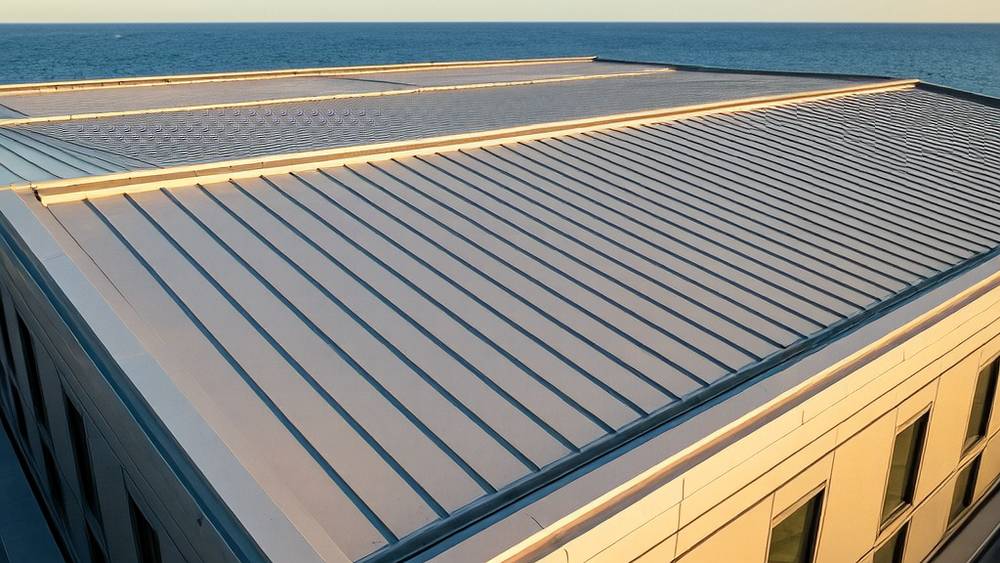
When a commercial roofing project reaches the specification phase, one number surfaces faster than any other: 30-40%. That figure represents the upfront cost premium of an aluminium standing seam system over conventional TPO or EPDM membranes. Facility managers see the line item, pause, and ask the same question procurement teams have been fielding for decades — does the math actually work across a 30-year holding period?
The short answer depends on who is doing the calculating. A growing number of commercial property owners and institutional facility directors now request custom lifecycle analyses before signing off on any roofing expenditure. The reason is straightforward: single-ply membranes carry predictable replacement cycles at the 12-18 year mark, while aluminium standing seam installations routinely reach 40-50 years with minimal intervention. This article walks through the real numbers that shape those lifecycle decisions, examining material degradation curves, maintenance schedules, energy performance, and end-of-life salvage value — the four variables that determine whether a 35% premium today becomes a net saving tomorrow.
The Replacement Cycle Gap That Drives Lifecycle Math
TPO and EPDM membranes dominate the low-slope commercial market for one reason: installed cost. At $5.50-$8.50 per square foot fully installed, they undercut aluminium standing seam by a wide margin. But the comparison collapses when the timeline stretches beyond the first replacement.
Industry data from the National Roofing Contractors Association (NRCA) indicates that mechanically attached TPO systems in temperate North American climates average 15-18 years before membrane degradation demands full replacement. In high-UV regions like the Southwest or coastal Florida, that window shrinks to 10-14 years. EPDM fares slightly better chemically but suffers seam failures that drive similar replacement cadences.
Aluminium standing seam operates on a different curve entirely. The Aluminium Association's technical data on 3000-series and 5000-series alloys used in architectural roofing confirms that bare aluminium substrates experience negligible structural degradation over 50+ years when properly detailed. The limiting factor is not the metal itself but the coating system. PVDF (Kynar 500®) factory-applied finishes carry 30-year film integrity warranties as standard, with field data from installations dating to the 1970s showing minimal chalking and colour retention above 60% after four decades.
This creates a stark replacement schedule gap. A commercial building with a 30-year ownership horizon will replace TPO twice or EPDM once, while the aluminium standing seam roof remains in service, likely with one recoating cycle around year 35-40. The math tilts further when factoring in removal and disposal costs for each membrane replacement — expenses that simply do not appear on the aluminium side of the ledger.
Breaking Down the 30-40% Premium: Where the Money Goes
The upfront cost difference between aluminium standing seam and single-ply alternatives is not arbitrary. It reflects concrete material and labour inputs that deserve line-by-line scrutiny. Understanding this breakdown helps procurement teams separate genuine value from supplier markup.
| Cost Component | TPO Membrane (per sq ft) | Aluminium Standing Seam (per sq ft) | Cost Driver Explanation |
|---|---|---|---|
| Raw Material | $0.90 - $1.40 | $3.20 - $5.00 | Aluminium ingot pricing (LME) plus rolling mill conversion; 0.032" (22 ga) to 0.040" (20 ga) coil stock |
| Coating/Finish | N/A (factory compounded) | $0.60 - $1.10 | PVDF 70/30 resin system applied via coil coating line; 2-coat or 3-coat specification |
| Panel Forming | N/A | $0.80 - $1.50 | Roll-forming or press-brake profiling; snap-lock vs. mechanical seam profiles affect tooling cost |
| Substrate/Accessories | $1.80 - $2.50 | $1.00 - $2.00 | TPO requires full insulation board, cover board, and fastening patterns; aluminium needs clip-and-rail substructure |
| Installation Labour | $1.00 - $1.80 | $2.50 - $4.00 | TPO uses hot-air welding (faster, lower skill); aluminium standing seam requires trained crews for seaming, flashing, and penetration detailing |
| Total Installed Range | $5.50 - $8.50 | $8.50 - $14.00 | 30-40% premium holds in most markets; coastal or complex geometry projects push the upper bound |
The labour differential deserves particular attention. Aluminium standing seam installation requires crews experienced with mechanical seaming equipment, custom flashing fabrication, and thermal movement detailing — skills that command higher hourly rates than membrane welding. However, this labour premium is partially offset by faster panel coverage rates on large, unobstructed roof planes. A four-person standing seam crew can install 800-1,200 sq ft per day on a straightforward commercial roof, while membrane crews manage 1,500-2,000 sq ft. The gap narrows when factoring in the aluminium system's reduced reliance on separate vapour barrier and cover board layers.
Energy Performance: The Hidden Lifecycle Variable
Roofing lifecycle analysis that ignores energy performance is incomplete. Aluminium standing seam systems influence building energy consumption through two mechanisms: solar reflectance and the ventilated cavity they naturally create above the roof deck.
Cool roof standards under ENERGY STAR and California Title 24 set minimum solar reflectance index (SRI) values that vary by climate zone. Standard PVDF-coated aluminium in light colours achieves solar reflectance values of 0.60-0.75 and thermal emittance above 0.80, qualifying for cool roof credits in most jurisdictions. TPO membranes in white can match or exceed these numbers when new, but field studies by the Lawrence Berkeley National Laboratory show that membrane reflectance degrades by 0.10-0.20 within three years due to soiling and biological growth, while metal roof reflectance drops only 0.02-0.05 over the same period because the hard PVDF surface resists particulate adhesion.
The second mechanism — the ventilated air cavity — is unique to metal roofing. Standing seam panels installed over battens or a clip system create a 1-2 inch air gap between the panel underside and the roof deck. This cavity functions as a thermal break and convective cooling channel. Research published by the Metal Construction Association documents that ventilated metal roof assemblies reduce heat flux into the building by 25-35% compared to directly adhered membrane systems, independent of surface reflectance. In cooling-dominated climates (ASHRAE zones 1-3), this translates to measurable HVAC energy savings that compound annually.
For a 50,000 sq ft commercial roof in Atlanta (ASHRAE zone 3A), conservative energy modelling suggests the ventilated cavity alone saves $0.08-$0.14 per sq ft annually in cooling costs. Over 30 years, discounted at 3%, that single factor contributes $2.40-$4.20 per sq ft in present-value savings — enough to close roughly half the upfront premium gap before considering replacement avoidance.
Maintenance Profiles: Scheduled vs. Reactive Spending
Roofing budgets distinguish between planned maintenance and emergency repair. The lifecycle advantage of aluminium standing seam lies in shifting spending from the latter category to the former — and dramatically reducing the total.
TPO and EPDM roofs demand semi-annual inspections as standard practice. Seam integrity must be probed, flashings checked for adhesion failure, and ponding water investigated for membrane saturation. The NRCA recommends budgeting 1.5-3% of the original roof cost annually for maintenance on low-slope membrane systems, escalating in years 8-12 as the membrane enters its degradation phase. A $350,000 TPO roof thus carries a $5,250-$10,500 annual maintenance line, totalling $157,500-$315,000 over 30 years before any major repair.
Aluminium standing seam maintenance follows a leaner schedule. The NRCA recommends annual visual inspection and gutter cleaning, with fastener torque checks every 5 years on clip-based systems. There are no seams to probe, no membranes to test for saturation. The primary maintenance intervention across the roof's life is coating renewal — a field-applied PVDF or FEVE recoat at roughly year 30-35, costing $2.50-$4.00 per sq ft. Annual maintenance budgeting typically runs 0.5-1% of original cost: $2,125-$4,250 per year on a $425,000 aluminium roof, or $63,750-$127,500 over 30 years.
The cumulative gap is significant. A mid-range 50,000 sq ft commercial roof sees a 30-year maintenance differential of $100,000-$200,000 in favour of aluminium, even after accounting for the mid-life recoat. Facility managers who track total cost of ownership rather than first cost consistently flag this as the single most overlooked variable in specification decisions.
End-of-Life Value: Salvage vs. Landfill Cost
Every roof eventually comes off. What happens at that moment — and what it costs — is the final variable that lifecycle analyses must capture.
TPO and EPDM membranes at end of life are landfill-bound. The mixed-polymer composition of TPO (polypropylene and ethylene-propylene rubber compounded with fillers, flame retardants, and stabilisers) makes mechanical recycling economically impractical at current volumes. Removal costs average $1.50-$2.50 per sq ft, plus landfill tipping fees of $40-$80 per ton. A 50,000 sq ft TPO roof generates approximately 15-20 tons of waste, costing $6,000-$12,000 in disposal alone.
Aluminium standing seam panels occupy the opposite end of the spectrum. Aluminium is infinitely recyclable without property degradation, and architectural scrap commands premium pricing from secondary smelters. Current North American scrap values for clean, segregated 3000-series aluminium roofing range from $0.45-$0.70 per pound. At roughly 0.7-0.9 pounds per square foot for 0.032" gauge material, a 50,000 sq ft roof yields 35,000-45,000 pounds of scrap worth $15,750-$31,500 at current market rates — a net credit that offsets removal labour.
The net end-of-life delta between the two systems can exceed $25,000-$40,000 on a mid-sized commercial roof. Forward-thinking building owners are beginning to factor this aluminium scrap value into project pro formas, treating it as a deferred asset rather than a future liability. Some suppliers, including Futeng® aluminium building products, now provide mill certificates documenting alloy composition specifically to facilitate future recycling chain-of-custody verification, a detail that aligns with LEED v4.1 Materials and Resources credits and growing institutional mandates for circular economy procurement.
Climate Zone Sensitivity: Where the Lifecycle Case Strengthens or Weakens
Lifecycle cost advantages are not geographically uniform. The case for aluminium standing seam varies meaningfully by climate zone, and honest analysis must acknowledge where the numbers weaken.
In coastal and high-humidity zones, the argument for aluminium is strongest. Salt spray accelerates ferrous metal corrosion but leaves aluminium largely unaffected — the material's natural oxide layer provides inherent protection that steel systems require metallic coatings to approximate. Aluminium standing seam roofs in Miami, Houston, or Singapore experience none of the cut-edge corrosion that plagues galvanised steel panels in the same environments. For buildings within 3 km of saltwater, aluminium is often the only standing seam substrate that manufacturers will warrant beyond 20 years.
In cold climates with heavy snow loads (ASHRAE zones 6-8), the calculus shifts slightly. Aluminium's higher thermal expansion coefficient (roughly 2.5× that of steel) demands more robust clip design and expansion joint detailing, adding perhaps $0.50-$0.80 per sq ft to the installed cost. The material handles snow sliding well — the smooth PVDF surface sheds snow efficiently — but the detailing premium narrows the lifecycle gap against steel standing seam alternatives.
In temperate, moderate-cost labour markets, the TPO-to-aluminium lifecycle crossover typically occurs at year 18-22 when factoring in one membrane replacement. In high-cost coastal markets, the crossover moves forward to year 12-15 because labour rates amplify the replacement cost penalty. In regions with cheap labour and mild climates, the crossover may push past year 25, making the decision more sensitive to energy performance assumptions and the building owner's holding period.
Building the Lifecycle Model: Variables Every Owner Should Track
Generic lifecycle claims are marketing. Rigorous analysis requires project-specific inputs. Facility managers and procurement teams evaluating aluminium standing seam should build their models around these variables:
- Holding period: Is the owner planning to hold for 10 years, 25 years, or perpetuity? Short holding periods favour lower first-cost systems; institutional owners with indefinite horizons tilt toward aluminium.
- Local labour rates: Replacement cost is dominated by labour. In markets where union roofing labour exceeds $75/hour fully burdened, the replacement-avoidance argument for aluminium intensifies.
- Energy pricing trajectory: The ventilated cavity's cooling savings are worth more in regions with high and rising electricity rates. California, the Northeast, and Hawaii amplify this factor.
- Insurability and wind resistance: Aluminium standing seam systems carry FM Global wind uplift ratings that can reduce property insurance premiums in hurricane-prone zones — a factor rarely included in standard lifecycle models but worth $0.03-$0.08 per sq ft annually in coastal markets.
- Scrap value assumptions: Aluminium pricing is cyclical. Conservative models should use the 10-year trailing average LME aluminium price, not current spot, when calculating end-of-life credits.
- Discount rate: Future savings are worth less than present dollars. A 3-5% discount rate is standard for institutional owners; higher discount rates weaken the aluminium case by devaluing distant-year benefits.
When a 50,000 sq ft aluminium standing seam roof carries a $425,000-$700,000 installed cost versus $275,000-$425,000 for TPO, the $150,000-$275,000 premium looks daunting on a bid tab. But a properly constructed 30-year net present value model that includes one TPO replacement at year 16 ($180,000-$250,000), differential maintenance ($100,000-$200,000), energy savings ($120,000-$210,000), and aluminium scrap credit ($15,000-$30,000) typically shows aluminium standing seam delivering a $75,000-$250,000 NPV advantage. The range is wide because it is real — every project's numbers differ.
"The most common error we see in roofing lifecycle comparisons is comparing a maintenance-intensive system to a low-maintenance system without factoring the cost of accessing the roof. On occupied commercial buildings, interior disruption during re-roofing often exceeds the roofing contract value itself." — paraphrased from industry cost engineering practice
Warranty Structure: Reading Beyond the Year Count
Warranty comparisons between membrane and metal systems require careful reading. A 30-year TPO warranty and a 30-year aluminium standing seam warranty are not equivalent documents.
TPO warranties are typically material-only or material-and-labour, with coverage that degrades on a prorated schedule after year 10-15. The membrane manufacturer's liability is capped at the original material cost — not the labour to access, remove, and replace failed material. A 30-year TPO warranty that pays out $0.90 per sq ft for failed membrane in year 20, while the owner pays $6.00 per sq ft for full replacement, is not the protection it appears to be.
Aluminium standing seam warranties from established manufacturers follow a different structure. The PVDF coating warranty — typically 30 years against film integrity failure, colour change exceeding 5 Delta E units, and chalking below ASTM D4214 rating 8 — is the primary document. The substrate itself carries no degradation warranty because none is needed; aluminium does not rot, rust, or lose structural capacity within any building's service life. Some manufacturers offer a combined system warranty covering both material and weathertightness for 20-25 years, backed by the panel manufacturer rather than a third-party coating supplier, which simplifies claims resolution.
The practical difference emerges in year 22. The TPO owner faces a roof nearing the end of its statistical service life with a warranty that has prorated to near-zero value. The aluminium standing seam owner has a roof with 20+ years of remaining service life and a coating warranty still in force — and a scrap value that has likely appreciated with aluminium prices.
Making the Specification Decision
The 30-40% upfront premium for aluminium standing seam is real, measurable, and intimidating on bid day. But the number is a starting point, not a conclusion. The decision turns on whether the organisation making it operates on a first-cost or lifecycle-cost basis — and whether the analysis accounts for all four lifecycle variables: replacement avoidance, energy performance, maintenance differential, and end-of-life value.
For commercial building owners with holding periods exceeding 15 years, particularly in coastal, high-humidity, or high-energy-cost regions, the lifecycle case for aluminium standing seam is robust and defensible. The crossover point where cumulative savings exceed the upfront premium typically falls between years 14 and 22 depending on local conditions. For institutional owners — universities, hospitals, government facilities — who measure building performance in generations rather than fiscal quarters, the analysis almost invariably favours aluminium.
The specification process should demand project-specific lifecycle modelling, not generic payback claims. Ask your roofing consultant or manufacturer's technical team to model your actual roof geometry, local climate data, energy rates, and labour costs. The output will be a number — a net present value difference — that either justifies the premium or does not. Either way, the decision rests on arithmetic rather than assumption.