Aluminium Laser Cut Panels Why Open Area Ratios Above 35 Percent Demand Engineering Review
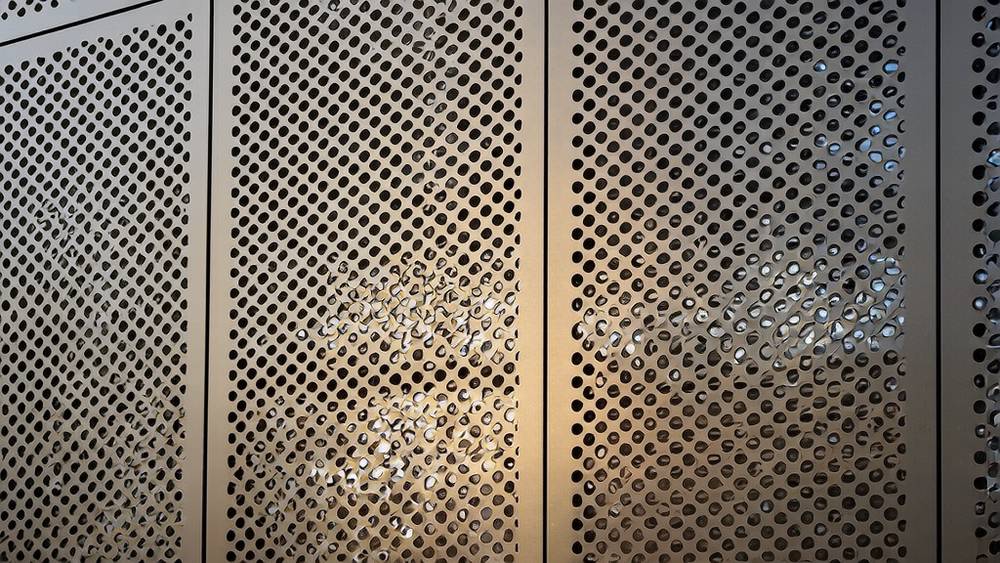
When a contractor calls asking why their laser-cut decorative facade panels arrived with micro-cracks radiating from intricate cutout corners, the conversation rarely stays pleasant. The fault isn't always the fabricator. More often, the root cause traces back to a single design-stage decision: open area ratio. For aluminium laser cut panels used in exterior cladding and screening applications, pushing the perforation percentage beyond what the base metal gauge can structurally sustain creates problems that powder coating hides temporarily but never solves. This article examines how open area ratio interacts with 2.0 mm, 2.5 mm, and 3.0 mm solid aluminium sheet, what happens when designers ignore minimum web widths, and how to specify panels that look precise on day one and stay flat through year ten.
What Open Area Ratio Actually Means in Solid Aluminium
Open area ratio is the percentage of a panel's total surface area removed by laser cutting. A panel measuring 1000 mm × 1000 mm with 400,000 mm² of cutouts has a 40% open area ratio. The remaining 60% is solid metal carrying all structural loads: wind pressure, self-weight, thermal movement, and handling stresses during installation.
With aluminium laser cut panels, this calculation gets more complex than it first appears. The ratio alone doesn't tell the full story. Two panels can both have 35% open area but behave completely differently depending on how that 35% distributes across the sheet. One might use large, widely-spaced circular perforations leaving generous solid bridges between holes. Another might pack dense, intricate filigree patterns where the remaining metal forms narrow, snaking webs only 3 mm wide. The second panel will deflect more, fatigue faster, and cost more to fabricate despite having the identical open area percentage on the shop drawing.
Fabricators working with solid aluminium sheets (not aluminium composite material) face a hard constraint: every square millimetre removed during laser cutting permanently reduces the panel's bending stiffness. Unlike ACP, which gets rigidity from its polyethylene core sandwich structure, solid aluminium relies entirely on its own cross-sectional geometry. When 40% of that cross-section disappears into decorative cutouts, the panel's effective moment of inertia drops by substantially more than 40% because the remaining metal often forms disconnected islands rather than continuous load paths.
The Web Width Rule That Prevents Field Failures
The industry doesn't have a single ISO standard dedicated solely to laser-cut panel web widths, but experienced fabricators and engineers converge on a practical rule: the minimum web width (the narrowest strip of solid metal between two adjacent cutouts) should never fall below 1.5× the sheet thickness for interior applications and 2.0× for exterior cladding.
Here's what that means for common gauges:
| Sheet Thickness | Minimum Web Width (Interior) | Minimum Web Width (Exterior) | Maximum Recommended Open Area |
|---|---|---|---|
| 2.0 mm | 3.0 mm | 4.0 mm | 30% |
| 2.5 mm | 3.75 mm | 5.0 mm | 38% |
| 3.0 mm | 4.5 mm | 6.0 mm | 45% |
These numbers come from field experience rather than a single published code. The web width rule addresses three failure modes simultaneously: tear-out during laser cutting (too-narrow webs can melt or distort under the laser's heat-affected zone), buckling under wind suction (narrow webs act as miniature columns with very low Euler buckling loads), and fatigue cracking at sharp internal corners where stress concentrates.
A project in Dubai specified 2.0 mm aluminium laser cut panels with 42% open area for a parking structure facade. The pattern featured elongated diamond cutouts leaving webs as narrow as 2.2 mm in certain orientations. Within six months of installation, inspectors found cracks propagating from the acute angles of the diamond tips on windward-facing elevations. The remediation involved replacing all affected panels with 3.0 mm sheet at the same open area ratio—the thicker gauge provided webs wide enough to arrest crack propagation.
Laser Kerf Width and Why It Eats Into Your Open Area Budget
A detail routinely overlooked in specification documents: the laser beam itself removes material. Fibre laser cutting of aluminium typically produces a kerf width between 0.15 mm and 0.30 mm depending on power settings, cutting speed, and assist gas parameters. For a panel with 500 individual cutouts, a 0.25 mm kerf around each cutout's perimeter adds up.
Consider a decorative screen panel with 400 circular perforations, each 20 mm in diameter. The designer calculates open area based on 400 × π × (10 mm)² = 125,664 mm². But the laser cuts a 0.25 mm kerf, meaning the actual removed diameter is 20.5 mm. Actual open area becomes 400 × π × (10.25 mm)² = 132,025 mm²—an additional 6,361 mm² that wasn't in the specification. That's roughly 5% more material removed than intended, and those extra fractions of a millimetre compound across thousands of cutouts on a large facade.
This matters because powder coating adds material back. A standard architectural PVDF or polyester powder coat builds 60-80 microns per side. On a 2.0 mm sheet, that's negligible for structural purposes. But inside a narrow 4 mm web, the coating radius at corners can reduce the effective load-bearing cross-section by a measurable percentage. Fabricators like Futeng® who handle high-volume aluminium laser cut panels production account for this in their nesting software, adjusting cut paths so post-coating web widths meet the engineering minimum, not just the pre-coating CAD dimensions.
Wind Load Deflection When 40% of the Panel Is Missing
Solid aluminium cladding panels deflect under wind load according to well-established plate bending equations found in standards like ASTM E1300 for structural glazing and adapted in practice for metal panels. A solid 2.5 mm aluminium sheet spanning 600 mm between fixing points might deflect 3 mm under a 1.5 kPa wind load—comfortably within the typical L/60 serviceability limit.
Remove 40% of that sheet via laser cutting, and the deflection calculation changes dramatically. The effective flexural rigidity (EI) doesn't simply reduce by 40%; it can drop by 60-70% depending on pattern geometry because the remaining metal no longer forms a continuous plate. Finite element analysis of perforated plates consistently shows that open area ratios above 35% produce nonlinear stiffness degradation—each additional percentage point of open area costs more stiffness than the last.
For specifiers, the practical takeaway is straightforward: if your aluminium laser cut panels exceed 35% open area, require the fabricator to submit FEA deflection plots for the specific pattern, not generic span tables for solid sheet. The difference between a pattern where load paths remain continuous versus one where they neck down to narrow isthmuses can be a factor of two in deflection under identical wind loads.
The AAMA 508 and 509 standards for pressure-equalized rainscreen systems provide relevant test protocols, though they were written primarily for solid panels. Adapting them for laser-cut panels requires engineering judgment: the air-permeable nature of perforated panels fundamentally changes cavity pressure behaviour, which affects the net wind load the panel actually experiences.
Thermal Movement in Perforated vs Solid Panels
Aluminium expands at approximately 23 × 10⁻⁶ per °C. A 3-metre panel subjected to a 60°C temperature swing (winter night to summer sun on a dark powder-coated surface) wants to grow by about 4.1 mm. Solid panels manage this through slotted fixing holes and expansion joints.
Laser-cut panels introduce a complication: the remaining metal webs heat up and cool down faster than solid sheet because they have more surface area relative to their mass. A 4 mm web in direct sunlight reaches equilibrium temperature faster than the surrounding frame. This differential thermal response can cause the web to buckle temporarily if it's constrained at both ends and the cutout pattern doesn't provide adequate expansion relief.
The fix isn't complicated but requires deliberate design. Patterns with continuous perimeter framing (a solid border 25-30 mm wide around all four edges) provide a stable mounting surface and isolate the decorative cutout field from the fixing points. Inside that field, the pattern itself should avoid creating long, straight, unbroken webs that run continuously from edge to edge—these act as thermal accumulators. Breaking up long webs with periodic wider nodes or staggered cutout arrangements lets each segment expand locally without accumulating strain over the full panel length.
Pattern Geometry Types and Their Structural Trade-offs
Not all cutout geometries are equal when it comes to structural performance. The table below summarizes how common pattern types behave at identical open area ratios on 2.5 mm solid aluminium:
| Pattern Type | Stress Concentration | Stiffness Retention at 35% Open Area | Fabrication Risk | Best Application |
|---|---|---|---|---|
| Circular perforations (staggered) | Low | 55-60% | Low | Sunscreens, parking facades |
| Square/rectangular cutouts | Moderate (at corners) | 45-50% | Medium | Modern geometric facades |
| Elongated slots (horizontal) | Low (parallel to span) | 50-55% | Medium | Ventilation screens, plant rooms |
| Organic/filigree curves | High (variable radii) | 35-45% | High | Feature walls, lobby art panels |
| Custom logo/lettering | Very high (sharp internal corners) | 30-40% | Very high | Branded architectural features |
Circular perforations dominate commercial aluminium laser cut panels production for good reason: the absence of sharp internal corners eliminates the stress concentration factor almost entirely. A circular hole under tension produces a stress concentration factor of approximately 3.0 at the hole boundary, but this is uniform around the circumference and doesn't create a single failure initiation point. A square cutout concentrates stress at its corners with factors reaching 5.0-7.0 depending on corner radius.
The organic filigree patterns popular in high-end architectural feature walls present the greatest engineering challenge. These patterns often include internal radii below 1.0 mm where the laser changes direction sharply. Each of those tight internal corners becomes a potential crack initiation site, particularly on exterior panels subjected to cyclic wind loading. When specifying these patterns, engineers should mandate a minimum internal radius of 2.0 mm at all concave corners—this single requirement eliminates the majority of fatigue-related warranty claims.
Alloy Selection: Why 5052 and 5754 Matter for Laser-Cut Work
The aluminium alloy you specify affects laser cutting behaviour, corrosion resistance, and post-cut flatness. Three alloys dominate the aluminium laser cut panels market:
AA 3003 H14: The most commonly specified general-purpose alloy. Manganese-alloyed, moderate strength (yield ~145 MPa), excellent corrosion resistance. Laser cuts cleanly with minimal dross. The lower strength means panels with high open area ratios need thicker gauges or smaller spans. Widely available and cost-effective.
AA 5052 H32: Magnesium-alloyed, higher strength (yield ~193 MPa), superior saltwater corrosion resistance. The go-to choice for coastal installations. Laser cutting 5052 requires slightly higher power settings and produces marginally more oxide edge residue, but any competent fabricator handles this routinely. The 33% higher yield strength versus 3003 translates directly into thinner possible gauges or higher permissible open area ratios for the same deflection criteria.
AA 5754 H22: Similar to 5052 but with better formability and slightly different corrosion characteristics. Often specified in European projects under EN 485 for marine and industrial atmospheres. The lower magnesium content (2.6-3.6%) compared to 5052 reduces susceptibility to intergranular corrosion in certain chemical environments.
For most architectural aluminium laser cut panels with open area ratios above 30%, 5052 H32 represents the engineering sweet spot. The cost premium over 3003 runs approximately 12-18%, but the strength advantage often allows downgauging from 3.0 mm to 2.5 mm, which partially offsets the material cost while reducing panel weight and fixing loads.
Edge Quality Specifications That Affect Coating Adhesion
Laser-cut edges on aluminium aren't inert. The cutting process leaves a thin oxide layer and, depending on gas parameters, a slight recast layer where molten metal resolidified at the cut boundary. This edge condition directly impacts how well powder coating or PVDF liquid coating adheres to the cut edges—and edge coating failure is the starting point for filiform corrosion on exterior panels.
The ISO 8503 surface roughness comparator grades provide a useful reference. For laser-cut edges receiving architectural coatings, the edge surface roughness should fall between Rz 10-25 μm. Rougher edges (above Rz 40 μm) create anchor profiles that improve mechanical adhesion but risk trapping contaminants. Smoother edges (below Rz 10 μm) may not provide sufficient keying for the coating system.
A practical quality control check: run a cotton glove along the cut edges of a sample panel after laser cutting but before coating. If the glove catches or snags, the edge has dross or sharp burrs that need mechanical deburring. If it glides smoothly with a slight texture, the edge is ready for pretreatment and coating. This isn't a substitute for profilometer measurements, but it catches the most common edge quality problems in seconds on the shop floor.
Framing and Fixing: How Mounting Systems Interact With Open Area
The structural performance of aluminium laser cut panels depends as much on the support system as on the panel itself. Three mounting approaches dominate the market, and each interacts differently with perforated panels:
Perimeter tray systems: The panel is brake-pressed into a shallow tray (typically 20-30 mm return legs) and fixed through the returns into a subframe. This is the standard approach for solid cladding panels and works well for laser-cut panels with open area ratios up to about 30%. Beyond that, the return legs themselves may interfere with the cutout pattern, and the reduced panel stiffness can cause the tray edges to twist under wind suction.
Through-panel mechanical fixings: Countersunk or dome-head fasteners pass through the face of the panel into the substructure. This approach eliminates the tray-forming step and works with any open area ratio, but it introduces visible fasteners that must be integrated into the aesthetic design. Rivet or screw heads can become focal points that clash with delicate cutout patterns unless deliberately arranged as part of the visual rhythm.
Concealed clip systems: Proprietary aluminium extrusion clips engage with folded edges or routed slots on the panel rear face. These systems preserve the clean, fastener-free look that architects typically want from decorative aluminium laser cut panels. However, the clip engagement geometry must account for the reduced panel stiffness—a clip designed for solid 3.0 mm sheet may not grip a heavily perforated panel securely because the panel can flex locally at the clip location.
The fixing specification should always reference the panel's actual stiffness after laser cutting, not the nominal stiffness of the base sheet. This means the structural engineer needs the cut pattern drawing before finalizing the fixing layout—a sequencing requirement that catches many projects off guard when the pattern design arrives late in the shop drawing phase.
Cost Drivers That Open Area Ratio Controls
Open area ratio directly drives three cost components that procurement managers need to track:
Laser cutting time: A 40% open area panel requires roughly 2.5× the cutting time of a 20% open area panel of the same dimensions, because the laser must trace the full perimeter of every cutout. More cutouts mean more pierce points, more acceleration/deceleration cycles, and more total linear metres of cutting. This is the single largest cost variable in aluminium laser cut panels production after the base metal.
Material yield: The removed material becomes scrap. At 40% open area, 40% of the aluminium sheet you purchased ends up in the recycling bin rather than on the building. Aluminium scrap commands roughly 40-60% of prime metal value, but the net material cost per usable square metre of finished panel still rises as open area increases.
Handling and packing: High open area panels are more fragile. They require more careful packing, often with custom crating and interleaving, and they suffer higher transit damage rates. Logistics costs for 45% open area panels can run 25-35% higher than for solid panels of the same dimensions.
A practical budget rule: for exterior-grade aluminium laser cut panels in 5052 H32 with PVDF coating, every 10 percentage points of open area above 20% adds approximately 18-22% to the total installed cost per square metre. This isn't linear—the jump from 30% to 40% costs more than the jump from 20% to 30% because of the nonlinear increase in cutting complexity and scrap generation.
Specifying Laser-Cut Panels for Long-Term Performance
A tight specification prevents most of the problems discussed above. Based on field experience across hundreds of projects, the following specification framework addresses the critical parameters that generic cladding specs miss:
The base metal should be specified as solid aluminium sheet conforming to ASTM B209 or EN 485, with alloy and temper explicitly stated—never accept "aluminium" without the grade. For exterior aluminium laser cut panels with open area exceeding 25%, require 5052 H32 or 5754 H22 as minimum. 3003 may be considered for interior applications or exterior panels with open area below 25% in non-coastal environments.
The pattern drawing must include a "minimum web width analysis" overlay that identifies every location where the solid metal between cutouts narrows below the specified minimum (2.0× thickness for exterior). The engineer of record should review and stamp this analysis before fabrication begins.
Coating specifications should reference AAMA 2605 for PVDF (minimum 70% PVDF resin, 30-35 microns dry film thickness) or AAMA 2604 for architectural polyester (50-60 microns). The pretreatment must include a chromium or chromium-free conversion coating applied after laser cutting but before powder or liquid coating, ensuring the cut edges receive the same corrosion protection as the sheet faces.
Quality assurance should include a first-article inspection comparing the fabricated panel's open area ratio (measured by optical scanning or weight comparison) against the approved shop drawing. A tolerance of ±2 percentage points on open area ratio is commercially reasonable; tighter tolerances drive costs exponentially.
The interaction between open area ratio, web width, alloy selection, and fixing design determines whether aluminium laser cut panels perform as specified or become a warranty liability. The engineering isn't complicated, but it requires someone to do it. The patterns that win design awards are almost always the ones where a structural engineer reviewed the cut file before it reached the laser bed.