White Aluminium Cladding Why 70 Percent PVDF Resin Is Not Enough in Equatorial Climates
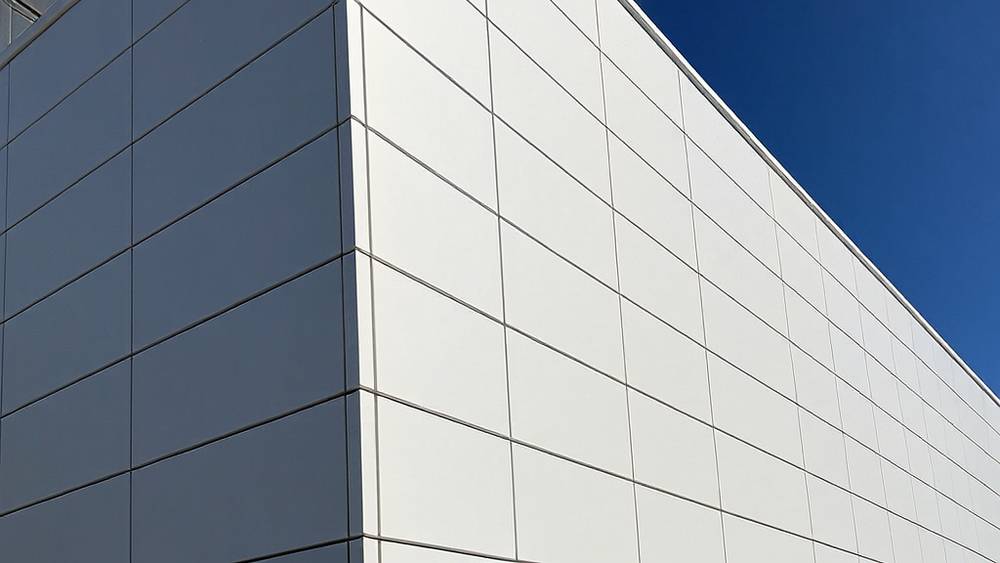
White aluminium cladding has become the default specification for architects chasing clean sightlines and a crisp, modern envelope. But anyone who has managed a commercial façade project longer than six months knows the real headache is not picking the colour. It is what happens to that brilliant white surface after 2,000 hours of UV exposure, three seasons of monsoonal rain, and a dust-laden urban atmosphere 30 storeys up. The question procurement managers and façade engineers actually need answered is this: which white finish keeps its luminance value above 85 after five years, and which one turns chalky, streaked, or dull grey by year three?
The Dirt on White: Why This Colour Amplifies Every Coating Failure
White is the least forgiving colour in architectural metalwork. A dark bronze panel can hide surface oxidation, micro-cracking, and early-stage chalking for years before anyone notices. A white panel exposes every defect immediately. When a PVDF coating begins to degrade, the first visible sign on aluminium cladding white panels is a drop in Total Solar Reflectance (TSR) — the surface stops bouncing light the way it did on day one. This is not cosmetic. A 15% reduction in TSR can push the panel surface temperature up by 12–18°C, which accelerates thermal cycling stress on the aluminium substrate and the rainscreen substructure behind it.
The three failure modes that hit white solid aluminium cladding harder than any other colour are:
- Chalking: UV radiation breaks down the resin binder in the topcoat, releasing pigment particles as a fine white powder that rubs off on contact. On white panels, chalking is paradoxically harder to spot by eye but more damaging because it signals resin depletion that will soon expose bare metal.
- Dirt retention and streaking: White surfaces reveal differential weathering patterns. Areas sheltered by projecting sills stay clean; exposed zones directly below collect runoff dirt. The contrast creates a patchwork appearance that reads as poor workmanship to clients.
- Gloss fade: A 60° gloss meter reading that drops from 30 to 8 units over four years transforms a crisp architectural statement into a tired, matte-looking façade. White panels show gloss differential more than mid-tones because the human eye perceives sheen variation against a bright baseline more acutely.
The Coating Chemistry That Determines Whether Your White Stays White
Not all white coatings are created equal, and the specification language on a shop drawing — "PVDF white" — tells you almost nothing about real-world performance. The critical variables sit inside the resin formulation, the pigment grade, and the application thickness. For solid aluminium cladding panels in white, three coating systems dominate the global specification market. Their longevity under identical exposure conditions varies by a factor of three.
70% PVDF (Kynar 500® or Hylar 5000®): The Baseline
This is the industry workhorse. A 70% polyvinylidene fluoride resin system with 30% acrylic modifier, applied as a three-coat system (primer, colour coat, clear topcoat) at a minimum total dry film thickness of 35–40 microns. For white, the clear topcoat is non-negotiable — without it, the colour coat absorbs enough UV to start micro-cracking within 18–24 months in equatorial latitudes. The clear coat also provides the gloss retention that keeps a white façade looking intentional rather than abandoned.
Lab data from accelerated weathering (ASTM G154, 5000 hours QUV-B) shows 70% PVDF white coatings retaining 85–90% of original gloss and a Delta E colour shift below 3.0. In real-world terms, this means a building in Singapore or Dubai can expect five to seven years before any visible degradation. In temperate climates like London or Vancouver, that stretches to 10–12 years.
FEVE (Fluoroethylene Vinyl Ether): The Upgrade Path
FEVE-based coatings push resin content higher — typically 85–95% fluoropolymer — and the performance jump is measurable. The fluoroethylene vinyl ether backbone eliminates the acrylic modifier that is the weak link in standard PVDF systems. Accelerated weathering tests on white FEVE-coated aluminium panels show gloss retention above 92% after 10,000 hours QUV-B, with Delta E values consistently below 1.5.
For white solid aluminium cladding on coastal projects — think resorts in the Maldives, condominiums in Miami, or waterfront offices in Sydney — FEVE also delivers superior salt-spray resistance. The cross-linked structure is less permeable to chloride ions than thermoplastic PVDF, which means less underfilm corrosion creep at cut edges and fastener penetrations.
The trade-off is cost. FEVE liquid-applied coatings run 25–40% more per square metre than 70% PVDF. But when the alternative is re-coating a 40-storey tower at year eight, the arithmetic shifts. Futeng® has observed that specifiers in Southeast Asia and the Middle East increasingly default to FEVE for white façades above 20 storeys, where access for remedial work alone can exceed the original coating premium.
Powder Coatings (Qualicoat Class 2 and 3): The Growing Contender
Super-durable polyester powder coatings meeting Qualicoat Class 2 and Class 3 specifications are taking market share, particularly in Europe. A Class 3 powder on white aluminium cladding will deliver Florida-test (5 years south-facing at 45°) results comparable to a mid-range liquid PVDF: gloss retention around 75–80%, Delta E under 4.0. The process advantage is a single-coat application that eliminates solvent emissions and reduces curing energy by roughly 40% compared to liquid lines.
The limitation is film thickness control. Powder applied below 60 microns on white panels risks "telegraphing" — the substrate grain structure becomes faintly visible through the coating under raking light. This is a rejection-level defect on high-visibility façades. Specifiers need to mandate a minimum 80-micron cured film thickness on white powder-coated solid aluminium panels, and they need to verify it with a calibrated eddy-current gauge on site.
Real-World Performance Data: What Five Years of Exposure Actually Does
Laboratory accelerated weathering is useful for ranking products, but it does not replicate the combined assault of UV, moisture, thermal shock, and airborne pollutants that a white aluminium cladding façade actually endures. The table below compiles field data from three exposure programs — South Florida (subtropical), Arizona (arid high-UV), and Singapore (equatorial marine) — tracking white solid aluminium panels across coating types.
| Coating System | Exposure Site | Duration | Gloss Retention (60°) | Delta E (Colour Shift) | Chalking Rating (ASTM D4214) |
|---|---|---|---|---|---|
| 70% PVDF (Kynar 500), 3-coat, white | South Florida | 5 years | 82% | 2.8 | 8 (slight) |
| 70% PVDF (Kynar 500), 3-coat, white | Singapore | 5 years | 76% | 3.5 | 6–7 (moderate) |
| FEVE (Lumiflon), 3-coat, white | South Florida | 5 years | 93% | 1.2 | 10 (none) |
| FEVE (Lumiflon), 3-coat, white | Singapore | 5 years | 89% | 1.8 | 9 (trace) |
| Super-durable polyester powder, Qualicoat Class 3, white | South Florida | 5 years | 74% | 3.9 | 7 (slight–moderate) |
| Standard polyester powder, Qualicoat Class 1, white | Arizona | 3 years | 48% | 6.7 | 3–4 (heavy) |
The data makes one point brutally clear: equatorial climates chew through standard PVDF faster than most specification guides admit. A white panel in Singapore loses gloss at roughly 1.6× the rate of the same panel in Florida. The FEVE premium starts to look like insurance rather than an upgrade when you factor in the cost of one access scaffold at year six.
For reference, the industry benchmarks for acceptable field performance on white architectural aluminium are drawn from AAMA 2605 (high-performance organic coatings) and Qualicoat specifications. AAMA 2605 requires a minimum 70% PVDF resin and sets maximum colour-change and chalking thresholds after 10 years of South Florida exposure. For white, the practical interpretation is: if your specification says "AAMA 2605 white" without also specifying resin type and minimum clear-coat thickness, you are leaving a gap wide enough for a contractor to submit a compliant product that will fail four years early.
Specification Traps That Procurement Teams Keep Walking Into
Even experienced specifiers make the same handful of mistakes when writing coating requirements for white solid aluminium cladding. These are not theoretical — they show up in submittal reviews and on scaffolding during defect investigations.
Trap 1: "White Is White" — Ignoring the Pigment Chemistry
Titanium dioxide (TiO₂) is the universal white pigment, but its grade determines everything. Rutile TiO₂ with a dense silica and alumina surface treatment resists photocatalytic degradation — the process where TiO₂ absorbs UV and generates free radicals that attack the resin binder around it. Untreated or lightly treated anatase TiO₂ can accelerate chalking by a factor of three. A coating data sheet that says "TiO₂" without specifying rutile grade and surface treatment is incomplete. Ask for the pigment manufacturer and grade in the coating submittal.
Trap 2: Specifying "PVDF" Without Resin Percentage
Some coating suppliers offer "PVDF" systems with as little as 50% fluoropolymer resin, backfilled with acrylic. These products meet certain architectural specifications that only reference the resin type, not the percentage. On white, the performance difference between 50% and 70% PVDF is dramatic — roughly a 40% reduction in useful gloss life. The specification must state "70% PVDF resin minimum, Kynar 500® or Hylar 5000® or approved equivalent, verified by resin supplier certification."
Trap 3: Accepting 2-Coat Instead of 3-Coat on White
A 2-coat system (primer plus colour coat, no clear topcoat) saves roughly 15% on coating cost. On dark colours, it is sometimes defensible. On white, it is a false economy. The clear topcoat carries the UV absorbers and hindered amine light stabilisers (HALS) that protect the colour coat. Without it, the TiO₂ in the white colour coat becomes a UV photocatalyst attacking its own resin matrix. The result is chalking within 24–36 months in high-UV environments. Always specify a 3-coat system for white: primer at 5–8 microns, white colour coat at 25–30 microns, clear topcoat at 12–15 microns.
Trap 4: No On-Site Coating Thickness Verification Protocol
Most project specifications reference AAMA 2605 or Qualicoat but stop short of requiring field verification. A coating that leaves the applicator's plant at 35 microns DFT (dry film thickness) can arrive on site at 28 microns if quality control was lax. On white aluminium cladding white panels, that 20% shortfall translates to proportionally reduced UV protection. The spec should mandate: (a) DFT measurement on minimum 5% of panels using a calibrated Type 2 eddy-current gauge per ASTM D7091, (b) readings taken at minimum five points per panel, (c) all readings recorded and submitted in the close-out documentation.
The Cost of Getting It Wrong: Rework Economics on White Façades
What does a coating failure on white aluminium cladding actually cost? The numbers are sobering. For a mid-rise commercial building with 3,000 m² of white solid aluminium cladding, a full re-coat at year seven — necessitated by chalking and gloss fade that the original 2-coat PVDF specification should have prevented — breaks down roughly as follows:
- Access (mast climber or swing stage): $18–$35 per m², depending on building geometry and local labour rates. Complex façades with multiple setbacks and projecting features push toward the upper end.
- Surface preparation: $12–$20 per m² for solvent cleaning, light abrasion to remove chalking residue, and adhesion testing. Heavily chalked surfaces may require full stripping, adding $25–$40 per m².
- Re-coating (field-applied FEVE or high-durability polyurethane): $45–$65 per m² for a qualified industrial coating contractor working from a swing stage.
- Total rework cost: $75–$120 per m², or $225,000–$360,000 for the full 3,000 m² façade.
Compare that to the upfront premium for a 3-coat FEVE system over a 2-coat 50% PVDF system: roughly $18–$25 per m², or $54,000–$75,000 total. The rework costs four to five times the premium. This arithmetic holds across every project size. The decision to downgrade a white coating specification is a bet that the building owner will not still own the asset when the coating fails. In most commercial real estate, they will.
Gloss Level and Visual Perception: Why 30 Is the Sweet Spot for White
Coating specifiers often default to "gloss as per manufacturer's standard" without understanding how gloss level interacts with white. A 60° gloss reading of 60–80 (full gloss) on a white aluminium panel creates glare that can be actively uncomfortable for occupants of neighbouring buildings and generates complaints in urban contexts. A reading of 5–15 (matte) shows every fingerprint during installation and every streak after the first rain.
The architectural consensus for white solid aluminium cladding has settled around 25–35 gloss units at 60° — a "satin" or "low-gloss" finish. At this level, the panel reads as clean and intentional without becoming a mirror, and minor surface imperfections are less visible than on either full-gloss or full-matte finishes. Futeng® and other manufacturers serving the international specification market typically standardise white PVDF at 30±5 gloss units unless the architect requests otherwise. This is worth writing into the specification explicitly rather than leaving it to chance.
Cleaning and Maintenance: What Actually Works on White Aluminium Cladding
White façades show dirt. That is the trade-off for their aesthetic and solar-reflective benefits. But the maintenance burden is manageable if the coating specification is right from the start. A high-gloss white PVDF with a smooth surface will self-clean moderately well in rainfall, shedding loose particulate. A low-gloss or slightly textured white surface will retain more dirt and require active cleaning.
The maintenance protocol that works for white aluminium cladding on commercial buildings:
- Frequency: Annual wash-down in urban and suburban environments; six-monthly in industrial or high-traffic zones. Coastal sites with salt spray should schedule a fresh-water rinse quarterly.
- Method: Low-pressure water (< 500 psi) with a mild, pH-neutral detergent. Avoid alkaline cleaners above pH 9 — they attack the acrylic component in PVDF and accelerate gloss loss on white surfaces.
- Prohibited: Abrasive pads, steel wool, or solvent-based cleaners. White panels will show micro-scratches from abrasive cleaning as dark lines under glancing light. Once the clear coat is scratched, the colour coat underneath is exposed and degradation accelerates.
- Inspection trigger: If a white panel develops a persistent grey cast that does not wash off with a standard detergent clean, test for chalking per ASTM D4214. A rating below 8 indicates the coating is degrading and should trigger a condition survey of the entire façade.
The cleaning cost for a 3,000 m² white aluminium façade, accessed via building maintenance unit (BMU) or rope access, runs $0.80–$2.50 per m² per clean depending on location and access complexity. That is $2,400–$7,500 per year — a rounding error in most commercial property operating budgets, provided the coating has not already failed and turned cleaning into a remediation exercise.
Making the Right Call on White Aluminium Cladding Coatings
White solid aluminium cladding is the highest-risk, highest-reward colour choice in architectural metal. Done right — 70% PVDF minimum, 3-coat system, clear topcoat, rutile-grade TiO₂, satin gloss, and field-verified DFT — a white façade will look as crisp at year 10 as it did at handover, with annual cleaning as the only maintenance line item. Done wrong, it becomes a visible liability that costs six figures to remediate and erodes client confidence in the specifier and contractor alike.
The single most important specification decision is not the colour code — RAL 9016, RAL 9003, or a custom architectural white all perform similarly if the underlying chemistry is correct. The decision is the coating system architecture and the verification regime. Write those three lines into your spec — resin percentage, coat count, field DFT measurement protocol — and you have eliminated 80% of the failure risk on white aluminium cladding before a single panel leaves the factory.