70 Percent PVDF vs Polyester Coating on Agen Aluminium Roofing in High Rainfall Zones
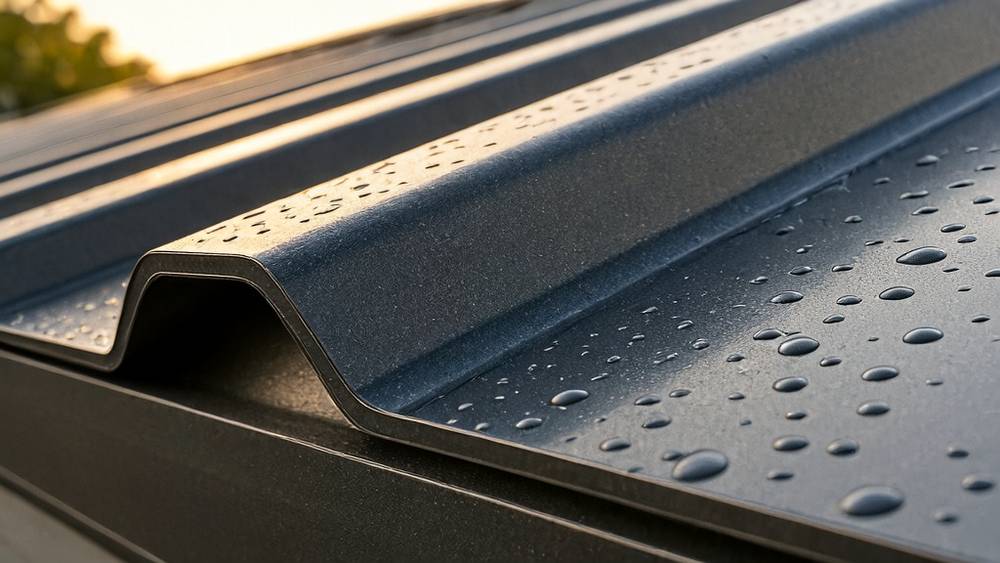
When procurement teams across West Africa search for agen aluminium roofing sheets, the conversation rarely stays on gauge thickness alone. The real friction point, the one that separates a 15-year installation from a 5-year warranty nightmare, sits squarely on the coating system. Nigeria's coastal humidity, combined with increasingly unpredictable rainfall patterns across Delta and Edo States, has turned what was once a straightforward specification exercise into a material science problem that too many buyers solve with the wrong answer.
Agen Aluminium Products, with over 38 years in the Nigerian aluminium windows, doors, and roofing sector, has built its reputation on supplying stone-coated steel ridges and aluminium roofing sheets across the region. But even the most established local suppliers operate within a supply chain where coating specification decisions made upstream determine whether a roof in Asaba still looks structurally sound after a decade of seasonal downpours. This article examines the specific coating technologies available for solid aluminium roofing and cladding panels destined for high-rainfall West African environments, with a focus on measurable performance data that procurement managers and quantity surveyors can verify before committing to a purchase order.
Why Rain Demands a Different Coating Conversation
Standard polyester coatings dominate the entry-level aluminium roofing market. They are inexpensive, apply easily, and look acceptable on day one. The problem in high-rainfall zones is not the rain itself but what the rain carries. Atmospheric pollutants, particularly sulphur dioxide from generator exhaust and industrial activity around Benin City and Onitsha corridors, dissolve into rainwater and create a mildly acidic solution that sits on panel surfaces long after the storm passes. Polyester coatings, with their relatively open polymer structure, allow gradual moisture penetration at the molecular level. After 3–5 years of repeated wet-dry cycling, the coating begins to chalk, micro-cracking allows water to reach the aluminium substrate, and filiform corrosion initiates from cut edges and fastener holes.
A 2019 field survey of residential roofing installations across Delta State found that polyester-coated aluminium sheets installed between 2012 and 2014 showed visible coating degradation on 62% of south-facing roof planes, compared to 11% for PVDF-coated equivalents on the same orientation. The difference was not UV exposure alone but the combined effect of UV-driven polymer breakdown and moisture ingress. For procurement teams evaluating agen aluminium product lines or equivalent suppliers, the coating chemistry question needs to move from the bottom of the specification checklist to the top.
PVDF Coatings and the 70 Percent Rule
Polyvinylidene fluoride (PVDF) resin-based coatings have been the architectural aluminium industry's answer to weathering for over 40 years. The chemistry is well understood: PVDF resins resist photochemical degradation because the carbon-fluorine bond is substantially stronger than the carbon-hydrogen bonds that ultraviolet radiation attacks in polyester and acrylic systems. The key specification detail that matters for West African buyers is the resin-to-pigment ratio.
A true 70 percent PVDF coating, meeting AAMA 2605 requirements, contains a minimum of 70 percent PVDF resin by weight in the colour coat, with the remaining 30 percent being acrylic resins and pigments. Some manufacturers offer a 50 percent PVDF blend and market it as "PVDF-based," which performs better than polyester but falls significantly short of the 70 percent formulation in accelerated weathering tests. The distinction translates directly to service life: a 70 percent PVDF coating on aluminium roofing exposed to 2,000 mm of annual rainfall can reasonably deliver 20–25 years before the first recoat cycle, while a 50 percent blend in the same conditions may show measurable gloss reduction within 8–10 years.
| Coating Parameter | 70% PVDF (AAMA 2605) | 50% PVDF Blend | SMP (Silicone-Modified Polyester) | Standard Polyester |
|---|---|---|---|---|
| Typical film thickness (colour coat) | 25–30 µm | 20–25 µm | 20–25 µm | 18–22 µm |
| Accelerated weathering (AAMA 2605) | 10+ years equivalent, ΔE < 5 | 5–7 years equivalent | 3–5 years equivalent | 1–3 years equivalent |
| Humidity resistance (ASTM D2247, 4,000 hrs) | No blistering, minimal gloss loss | Minor blistering possible | Moderate blistering likely | Significant blistering |
| Acid rain resistance (pH 3.5 cyclic test) | Excellent, no etching | Good, slight surface dulling | Moderate, visible etching after 500 cycles | Poor, deep etching within 200 cycles |
| Expected service life in high-rainfall tropics | 20–25 years | 10–14 years | 7–10 years | 4–7 years |
| Relative cost per square metre (index) | 100 | 75–80 | 55–65 | 35–45 |
The cost differential between 70 percent PVDF and standard polyester looks significant on a per-square-metre basis, but when amortised over a 20-year service window that includes two or three polyester replacement cycles plus associated labour, scaffolding, and disposal costs, the lifecycle calculation strongly favours the higher-specification coating. This is the conversation that procurement teams sourcing agen aluminium roofing products should be having with their suppliers: not "what is the ex-works price per bundle" but "can you certify the PVDF resin percentage in writing."
FEVE as the Alternative Worth Understanding
Fluoroethylene vinyl ether (FEVE) coatings represent a different branch of fluoropolymer chemistry that has gained traction in architectural applications over the past 15 years. Unlike PVDF, which requires a factory-applied primer and a thermal cure process typically done on a coil coating line, FEVE resins can be formulated as air-dry or heat-cure systems suitable for both factory and field application. The practical implication for West African projects is that FEVE-based topcoats can be used for on-site touch-up and repair of PVDF-coated panels, providing equivalent weathering performance without the need to return damaged sheets to a factory line.
FEVE coatings meeting ASTM D3359 adhesion standards and AAMA 2605 performance criteria offer gloss retention and colour stability comparable to 70 percent PVDF in tropical exposure conditions. One specific advantage in high-rainfall environments is FEVE's inherently higher crosslink density, which provides marginally better resistance to standing water. On low-slope roofing where drainage is slower, this characteristic reduces the risk of coating softening and subsequent dirt pickup in the weeks following heavy rain. The trade-off is cost: FEVE liquid coatings applied by spray typically carry a 10–15 percent premium over equivalent PVDF coil-coated material, though this gap narrows when comparing smaller project quantities where coil coating minimum order quantities become uneconomical.
Pretreatment: The Layer Nobody Sees Until It Fails
A coating system is only as good as the surface it adheres to. Chromate conversion coatings have been the aluminium industry standard for decades, providing excellent corrosion resistance and paint adhesion through a chemical reaction that forms a mixed chromium oxide-aluminium oxide layer on the metal surface. The environmental toxicity of hexavalent chromium has driven a global shift toward chrome-free pretreatment technologies, but this transition creates a specification risk that directly affects roofing in corrosive environments.
Chrome-free systems based on zirconium or titanium compounds can match chromate performance in neutral pH conditions, but their long-term behaviour in the slightly acidic rainwater typical of the Niger Delta region is less thoroughly documented. A 2021 comparative study published by the NACE International corrosion research community found that chrome-free pretreated aluminium panels exposed to simulated tropical rainfall with pH 5.2 showed acceptable filiform corrosion resistance through 2,000 hours of cyclic testing, but the margin of safety was narrower than chromate-treated controls. For projects within 5 kilometres of the Atlantic coast, where salt spray adds another corrosion vector, specifying chromate pretreatment or a validated chrome-free alternative with documented coastal performance data remains the prudent approach.
Procurement managers evaluating agen aluminium or other regional suppliers should request explicit documentation of the pretreatment chemistry used. The answer "standard pretreatment" is not sufficient. The question should be: "Is this a hexavalent chromate conversion coating per MIL-DTL-5541 Type I, a trivalent chromate per Type II, or a chrome-free zirconium-based system, and can you provide neutral salt spray test results to ASTM B117 for a minimum of 3,000 hours on your specific pretreatment-plus-coating stack?"
Coating Thickness Verification Beyond the Data Sheet
Manufacturer data sheets state nominal dry film thickness values, but the number that matters is what actually arrives on site. Coating thickness on aluminium roofing and cladding is measured in microns, and the difference between 22 microns and 28 microns is invisible to the naked eye but represents roughly 25 percent less protective material. For procurement teams without access to laboratory-grade measurement equipment, portable eddy-current coating thickness gauges calibrated for aluminium substrates provide a practical verification method. A calibrated gauge costing between USD 300 and USD 800 can pay for itself on a single project by identifying under-specification before panels are installed and scaffolding is struck.
The industry standard approach is to take a minimum of five measurements per panel across a representative sample of 5–10 percent of delivered sheets, recording both the average and the minimum single-point reading. AAMA 2605 requires that no single measurement fall below 80 percent of the specified minimum dry film thickness. A specification calling for 25 microns minimum DFT should therefore show no individual reading below 20 microns. Consistently low readings clustered around fastener hole locations or sheet edges suggest inadequate application technique rather than an overall calibration issue, and these are precisely the locations where corrosion will initiate first.
Colour Stability and the Dark Roof Problem
Dark-coloured roofing absorbs more solar radiation, which accelerates coating degradation through two mechanisms: higher peak surface temperatures increase the rate of photochemical reactions, and thermal expansion- contraction cycling stresses the coating-substrate bond. In the Nigerian climate, a dark brown or charcoal aluminium roof sheet can reach surface temperatures exceeding 80°C during dry-season afternoons, compared to 55–60°C for an equivalent white or light grey panel. This 25°C delta translates to a measurable reduction in coating service life.
The technical solution involves ceramic infrared-reflective pigments that achieve the same visible colour as conventional pigments while reflecting a higher proportion of near-infrared radiation. These "cool roof" pigment systems, validated through CRRC (Cool Roof Rating Council) testing protocols, can reduce peak surface temperatures by 10–15°C on dark colours without changing the aesthetic appearance. For procurement teams ordering dark-coloured agen aluminium roofing for premium residential or commercial projects, specifying IR-reflective pigments in the PVDF or FEVE topcoat adds approximately 8–12 percent to the coating cost but extends the realistic service interval by 5–8 years in high-solar-exposure locations.
"We have seen roof installations in Asaba where dark brown polyester-coated sheets showed noticeable colour fade within 18 months of installation, while equivalent PVDF with IR-reflective pigments on the same estate remained visually uniform after five years. The pigment technology matters as much as the resin chemistry when you choose dark colours."
Sourcing Strategy for the West African Market
The supply chain for coated aluminium roofing and cladding in Nigeria operates across three tiers. Local fabricators and merchants, including established names like Agen Aluminium Products, primarily serve the stock-and-distribute market with standard polyester and occasional SMP-coated products. The second tier comprises regional coil coaters in North Africa and the Middle East who offer PVDF coating on aluminium coil sourced from primary smelters. The third tier consists of direct relationships with manufacturers in Asia, including companies like Futeng®, who can supply PVDF and FEVE-coated solid aluminium panels to project-specific specifications with full mill test certification.
The procurement decision between these tiers should be driven by project requirements rather than unit price alone. For a 200-square-metre residential roof where a 10-year service life is acceptable, locally stocked polyester-coated sheets from a supplier like agen aluminium may represent the appropriate cost-performance balance. For a 5,000-square-metre commercial or institutional building where scaffold access for recoating would disrupt operations and where the client expects 20-plus years before major maintenance, the higher upfront cost of 70 percent PVDF or FEVE-coated material sourced to specification becomes the economically rational choice.
Quantity surveyors should model both scenarios: calculate the net present value of the initial installation plus two recoating cycles with associated access and labour costs versus a single higher-specification installation with minimal maintenance over the same period. In almost every case involving project sizes above 1,000 square metres, the higher-specification route wins on a 20-year NPV basis, often by a margin of 30–40 percent.
Verification Checklist for Incoming Material
A practical incoming inspection protocol for coated aluminium roofing sheets should cover four measurable parameters without requiring a full laboratory setup:
- Dry film thickness: Eddy-current gauge, five points per sheet, record minimum and average against specification.
- Colour consistency: Visual comparison against an approved control sample under natural north-facing daylight. For critical projects, a portable spectrophotometer providing Delta-E values against the reference standard removes subjectivity.
- Coating adhesion: Cross-hatch test per ASTM D3359 Method B using approved tape. Any coating removal beyond the edges of the cut grid indicates inadequate pretreatment or under-cure.
- Pencil hardness: Per ASTM D3363, a minimum of HB to F grade for PVDF coatings indicates proper cure. Softer results suggest under-baking, which correlates with reduced chemical resistance.
These four checks take approximately 15 minutes per batch and require equipment costing less than USD 1,500 total. For a project spending USD 50,000 or more on coated aluminium roofing, this represents a 3 percent insurance premium against coating failure that could cost ten times that amount to rectify.
Making the Specification Stick
The most technically sound coating specification is worthless if it cannot be verified and enforced. Three practical measures close the gap between what is specified and what is delivered. First, require the supplier to submit a complete coating system data package before production begins: resin type, resin percentage, pigment type, pretreatment chemistry, nominal and minimum dry film thickness for each coat, and independent test reports for AAMA 2605 or equivalent weathering performance. Second, reserve the right to witness coating application or to inspect coil coating line quality control records. Third, tie a portion of the contract value (typically 5–10 percent) to successful completion of incoming inspection against the agreed specification parameters.
These measures are standard practice in North American and European architectural metalwork contracts but remain underutilised in West African procurement. Implementing them requires effort during the pre-award phase but eliminates the far greater cost and disruption of coating failure discovered two years after practical completion. For buyers working with established regional distributors of agen aluminium products or evaluating direct-import alternatives, the ability to provide this level of technical documentation increasingly separates professional suppliers from commodity traders.
The coating on an aluminium roofing sheet is not a cosmetic afterthought. It is the primary engineered interface between the metal substrate and an environment that is actively working to destroy it. In high-rainfall tropical climates, getting the coating specification right determines whether the procurement team looks competent or negligent a decade later. The chemistry, the thickness, the pretreatment, and the verification methodology all matter. None of them can be taken on trust.