8 Fire Rating Checks Before Signing an Aluminium Ceiling Supplier Singapore Contract
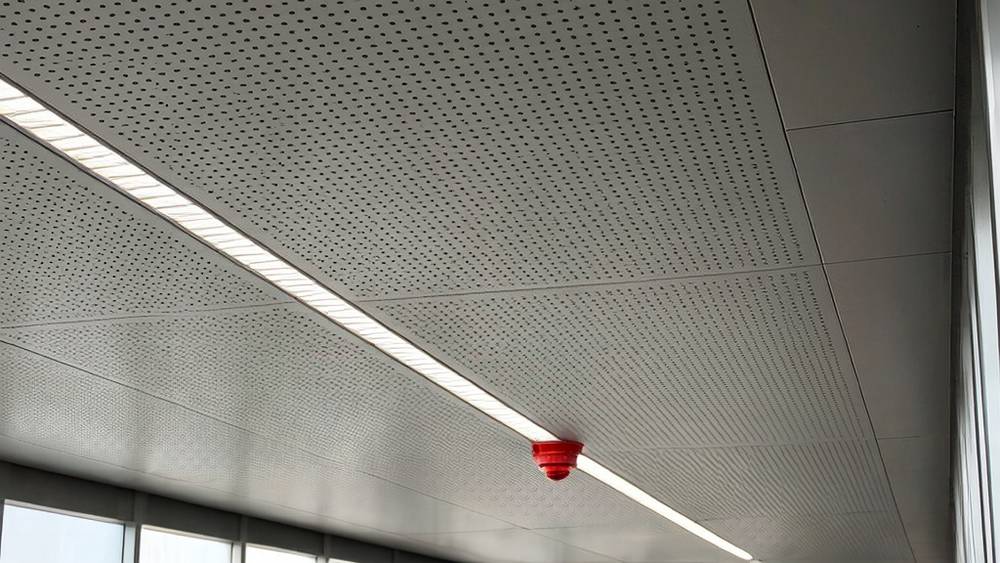
When a procurement team in Singapore shortlists an aluminium ceiling supplier singapore for a commercial project, the conversation rarely starts with aesthetics. It starts with fire compliance. The Singapore Civil Defence Force (SCDF) enforces one of the strictest fire safety regimes in Southeast Asia, and suspended ceiling systems — particularly those installed in escape corridors, atrium voids, and commercial kitchens — sit squarely in the compliance crosshairs. A supplier that cannot produce a valid Certificate of Conformity (CoC) or a fire test report from a SAC-SINGLAS accredited laboratory for their aluminium panel system is, simply put, not a supplier worth the risk. This article examines the specific fire rating requirements that apply to solid aluminium ceiling panels in Singapore, how BS 476 Parts 6 and 7 map onto local SCDF expectations, and what procurement managers should verify before signing a supply contract.
The Regulatory Framework That Shapes Aluminium Ceiling Procurement
Singapore's fire safety requirements for building materials flow from the Fire Code 2023, which the SCDF updates periodically to reflect lessons from incidents and international research. The code classifies building elements by their function and location, then assigns minimum fire performance thresholds. For suspended ceilings, the key distinction is whether the ceiling forms part of a protected shaft, a smoke reservoir, or a means of escape. In escape corridors — the most scrutinised application — the ceiling lining must achieve a Class 0 surface spread of flame rating as defined in BS 476 Part 6 and Part 7.
A solid aluminium panel itself is non-combustible. The aluminium alloy grades commonly used — 1100, 3003, and 5052 — have melting points above 600°C and do not contribute fuel to a fire. The compliance risk lies entirely in the coating system. A PVDF coating applied at 25–35 microns DFT (dry film thickness) over a chromate primer adds negligible combustible mass. But polyester powder coatings, particularly those applied at 60–80 microns without a fire-retardant formulation, can alter the surface spread of flame classification. This is precisely where an aluminium ceiling supplier singapore that understands local fire code nuances adds value: they know which coating formulations have been pre-tested and hold valid CoCs recognised by SCDF.
Class 0, Class 1, and What They Actually Mean for Aluminium Panels
The term "Class 0" is widely referenced in Singapore tender documents but frequently misunderstood. It is not a single test. Class 0 under the UK Building Regulations — which Singapore's Fire Code inherits — requires the material to achieve Class 1 in BS 476 Part 7 (surface spread of flame) and satisfy the fire propagation index requirements of BS 476 Part 6. Class 1 in Part 7 means the flame spread does not exceed 165 mm within 10 minutes. Part 6 measures the fire propagation index (I), which must not exceed 12 for Class 0 compliance.
Solid aluminium panels with PVDF coatings consistently achieve Class 0. The paint film is thin, the substrate is inert, and the total heat release is negligible. The complication arises with perforated aluminium ceiling panels. Once the panel face is perforated — say, with 2.5 mm holes at 5 mm staggered centres for acoustic absorption — the ceiling is no longer a continuous membrane. The SCDF may then require the acoustic fleece or backing material behind the perforations to be independently fire-rated. A supplier quoting a fire-rated aluminium panel but silent on the acoustic backing is delivering a system with an untested fire performance envelope.
SCDF Fire Code 2023 Clause 3.5.1: "Any material used as a lining to a wall or ceiling shall have a surface spread of flame rating of not lower than Class 1. In protected shafts, escape corridors, and exit staircases, the requirement is Class 0."
Material Certifications That Procurement Teams Should Verify
When engaging an aluminium ceiling supplier singapore, the procurement checklist should include three document categories. First, the CoC for the specific panel configuration — not a generic company certificate but a document that references the exact coating type, substrate thickness, and perforation pattern if applicable. Second, the test report from an accredited laboratory. In Singapore, laboratories accredited by the Singapore Accreditation Council (SAC) under the SINGLAS scheme carry the most weight with SCDF. Third, the supplier's scope of ISO 9001 certification should explicitly include the supply of aluminium ceiling systems, not just general metal fabrication.
A common pitfall is accepting a European test report — say, EN 13501-1 Class A2-s1,d0 — as equivalent to BS 476 Class 0 without formal verification. While both standards assess reaction to fire, the test methodologies differ in furnace configuration, specimen mounting, and classification thresholds. SCDF accepts EN 13501-1 classifications on a case-by-case basis, typically requiring a Registered Inspector (RI) endorsement. The safer path is to source panels from a supplier whose product has been tested to BS 476 Parts 6 and 7 by a SINGLAS-accredited lab.
Coating Selection and Its Fire Performance Implications
The table below compares the three coating systems most commonly specified for aluminium ceiling panels in Singapore, with their fire performance characteristics and typical applications.
| Coating Type | Typical DFT (microns) | BS 476 Part 6 Index (I) | BS 476 Part 7 Class | SCDF Compliance | Best Application |
|---|---|---|---|---|---|
| PVDF (Kynar 500®) | 25–35 | <6 | Class 1 | Class 0 achievable | Escape corridors, atriums, MRT stations |
| FEVE (Lumiflon®) | 30–40 | <8 | Class 1 | Class 0 achievable | High-humidity interiors, swimming pools |
| Polyester Powder Coat | 60–80 | 8–15 | Class 1 or 2 | Varies — verify per batch | Back-of-house areas, non-critical zones |
The data in the table reflects aggregated test results from multiple panel suppliers and should not replace batch-specific certification. PVDF coatings, particularly those formulated with Kynar 500® resin, are the de facto standard for projects requiring Class 0. The lower DFT means less organic material to contribute to flame propagation. FEVE coatings offer comparable fire performance with superior gloss retention in humid environments, making them suitable for Singapore's indoor swimming complexes and spa facilities. Polyester powder coats are the budget option but demand careful scrutiny: a 70-micron polyester film can push the fire propagation index above the Class 0 threshold of 12, especially if the formulation lacks halogenated flame retardants.
Panel Thickness and the Structural Fire Endurance Question
Fire compliance for ceilings extends beyond surface spread of flame. SCDF also assesses the ceiling system's ability to maintain structural integrity during a fire — what the industry calls fire resistance, as distinct from reaction to fire. For aluminium ceiling panels, the relevant metric is the panel thickness and the suspension system's performance under elevated temperatures.
Solid aluminium panels specified at 1.5 mm thickness will begin to deflect significantly at around 300°C, well below aluminium's melting point. At 2.0 mm — the minimum thickness that experienced suppliers like Futeng® recommend for commercial ceiling applications — the panel retains dimensional stability longer, delaying the point at which gaps open in the ceiling plane and allow hot gases to bypass into the plenum. For ceilings forming part of a smoke reservoir in an atrium smoke control system, 2.5 mm or even 3.0 mm panels may be specified to ensure the reservoir integrity holds for the full 30-minute smoke containment period required under SCDF Fire Code Clause 7.1.
The suspension grid matters equally. A standard T-bar grid made from galvanised steel with a zinc coating of 120 g/m² will lose load-bearing capacity faster than a grid fabricated from stainless steel or pre-finished aluminium with a higher temperature tolerance. The SCDF does not mandate a specific grid material, but the overall ceiling system must pass a full-scale fire test if it forms part of a fire-rated floor or roof assembly. Procurement managers should request the full system test report — panel, grid, hangers, and fixings — rather than accepting a panel-only fire certificate.
Acoustic Perforation and the Fire Compliance Gap
One of the most recurrent compliance failures in Singapore aluminium ceiling installations involves perforated acoustic panels. The logic seems straightforward: specify a Class 0 solid aluminium panel, perforate it for acoustic performance, and the fire rating carries over. It does not. Perforation changes the panel from a continuous surface to an open mesh, and the material behind the perforations — typically a non-woven acoustic fleece or a mineral wool infill — becomes exposed to the fire test environment.
SCDF requires that any backing material used with a perforated ceiling panel must independently meet the same surface spread of flame classification as the panel face. A black acoustic fleece made from polyester fibres will almost certainly fail a BS 476 Part 7 test unless it has been treated with a fire-retardant compound. Glass fibre tissue, by contrast, is inherently non-combustible and can achieve Class 0 when tested as a composite with the aluminium panel. The cost difference between polyester fleece and glass fibre tissue is approximately SGD 4–8 per square metre, a small premium for eliminating a significant compliance risk.
Beyond the backing material, the perforation ratio itself influences fire test results. Panels with an open area exceeding 30% may be classified differently under SCDF's interpretation of the Fire Code. Some suppliers offer pre-tested perforated panel assemblies with certified backing configurations. Verifying the existence of a test report for the exact perforation pattern, open area percentage, and backing material specified in the project is not optional due diligence — it is the minimum standard for a competent procurement process.
The Supply Chain Reality: Stock, Lead Times, and Certification Validity
A fire-rated aluminium panel is only as good as the documentation that accompanies it. Singapore construction timelines are unforgiving, and the temptation to accept a "certificate will follow" promise from a supplier is strong when the alternative is a two-week delay. The SCDF plan submission process for fire safety requires the CoC to be lodged before the Temporary Fire Permit (TFP) is issued. Submitting the CoC late can delay the TFP, which in turn delays the Fire Safety Certificate (FSC), which delays project handover.
An aluminium ceiling supplier singapore that maintains local stock of pre-certified panels eliminates this sequencing risk. Suppliers who fabricate panels overseas and ship to order — common with custom RAL colours or non-standard perforation patterns — may require 6–10 weeks for production plus 3–4 weeks for sea freight. If the fire test certificate is tied to a specific production batch and the batch changes between order and delivery, the certification trail can break. Procurement managers should establish, before order placement, whether the supplier's CoC is batch-specific or type-approved. Type-approved certifications, which cover a defined product range over a specified validity period (typically three years), provide far greater scheduling certainty.
Site Conditions That Can Invalidate Fire Certifications
Even a perfectly certified aluminium ceiling panel can fail a site inspection if the installation method compromises the tested configuration. SCDF inspectors look for specific details: the panel-to-grid engagement depth, the type and spacing of fixing screws, the treatment of service penetrations through the ceiling, and the sealing of perimeter gaps against the wall angle.
A ceiling tested with panels mechanically clipped into a grid at 600 mm x 600 mm modules will not perform identically to the same panels screwed directly to furring channels at 400 mm centres. The thermal expansion of aluminium — approximately 24 x 10⁻⁶ per °C — means a panel fixed rigidly at all four edges will buckle under fire conditions, opening gaps that compromise the smoke barrier. The tested configuration typically allows for some degree of free expansion, either through loose-lay panel mounting or through slotted fixing holes. If the site installation deviates from the tested method, the fire certificate is no longer valid for that installation.
Service penetrations — sprinkler heads, smoke detector apertures, speaker grilles, and lighting cutouts — are another vulnerability. Each penetration through a fire-rated ceiling must be sealed with an approved fire-stopping system. SCDF accepts intumescent collars, fire-rated mastics, and proprietary grommet systems, but the installer must provide a separate CoC for the fire-stopping product used at each penetration type. A supplier who can coordinate the fire-stopping documentation alongside the ceiling panel certification reduces the administrative burden on the main contractor.
How to Structure a Pre-Qualification Audit of an Aluminium Ceiling Supplier
Based on the fire compliance requirements detailed above, a procurement team can structure a focused pre-qualification audit around five questions:
- Does the supplier hold a valid CoC for the specific panel configuration, issued by a SINGLAS-accredited laboratory, referencing BS 476 Parts 6 and 7? Generic "our products are fire-rated" statements without supporting test reports are insufficient.
- If perforated panels are specified, does the CoC cover the complete assembly including the acoustic backing material? A panel-only certificate for a perforated system is a red flag.
- Is the CoC type-approved or batch-specific? Type-approved certifications simplify multi-phase project procurement and reduce re-testing costs.
- Does the supplier maintain local stock in Singapore, and what is the lead time for replacement panels in the event of site damage? A supplier dependent on overseas fabrication introduces schedule risk that can cascade into TFP delay.
- Can the supplier provide installation method statements that align with the tested configuration, and can they coordinate fire-stopping documentation for service penetrations? A supplier whose scope ends at panel delivery leaves the main contractor exposed to compliance gaps during SCDF inspection.
Suppliers who answer these five questions with documented evidence rather than verbal assurances are the ones worth shortlisting. The industry in Singapore is mature enough that there is no excuse for ambiguity on fire compliance. The SCDF's enforcement track record — including stop-work orders issued for non-compliant ceiling installations in several high-profile commercial projects over the past five years — has made the cost of non-compliance painfully visible to the entire construction supply chain.
Regional Standards Comparison: Where Singapore Sits
For international procurement teams sourcing aluminium ceiling panels for Singapore projects from regional suppliers in Malaysia, China, or Thailand, understanding how Singapore's fire requirements compare with neighbouring jurisdictions prevents expensive specification errors. Malaysia's Uniform Building By-Laws reference BS 476 as well, but enforcement varies by state and the classification language differs. Indonesia's SNI fire standards derive from ISO 9705 and EN 13501, creating a direct translation challenge when Indonesian-manufactured panels are submitted for SCDF approval. A panel tested to EN 13501-1 Class A2-s1,d0 in a European or Indonesian laboratory may require supplementary BS 476 testing before SCDF accepts it for an escape corridor application in Singapore.
The practical implication is that international suppliers targeting the Singapore market should invest in BS 476 testing through a SINGLAS-accredited laboratory — SAC maintains a publicly accessible directory — rather than relying on EN or ISO test reports and seeking equivalency determinations on a project-by-project basis. The cost of BS 476 Part 6 and Part 7 testing for an aluminium panel system is approximately SGD 3,000–5,000, a modest investment relative to the value of a single commercial ceiling contract in Singapore.
The fire compliance pathway for aluminium ceiling systems in Singapore is not ambiguous. The standards are published, the testing laboratories are accredited, and the SCDF's expectations are documented in the Fire Code. What separates a reliable aluminium ceiling supplier singapore from an unreliable one is not the ability to quote a competitive price per square metre — it is the willingness to produce verifiable fire test documentation for the exact panel configuration specified, without hesitation, before the purchase order is signed. Procurement teams that treat fire certification as a pre-condition rather than a post-order formality will avoid the most predictable and costly compliance failure in Singapore ceiling procurement.