EN 13501-1 Fire Rating for Aluminium Spandrel Panel Cores A1 vs A2 s1 d0 Explained
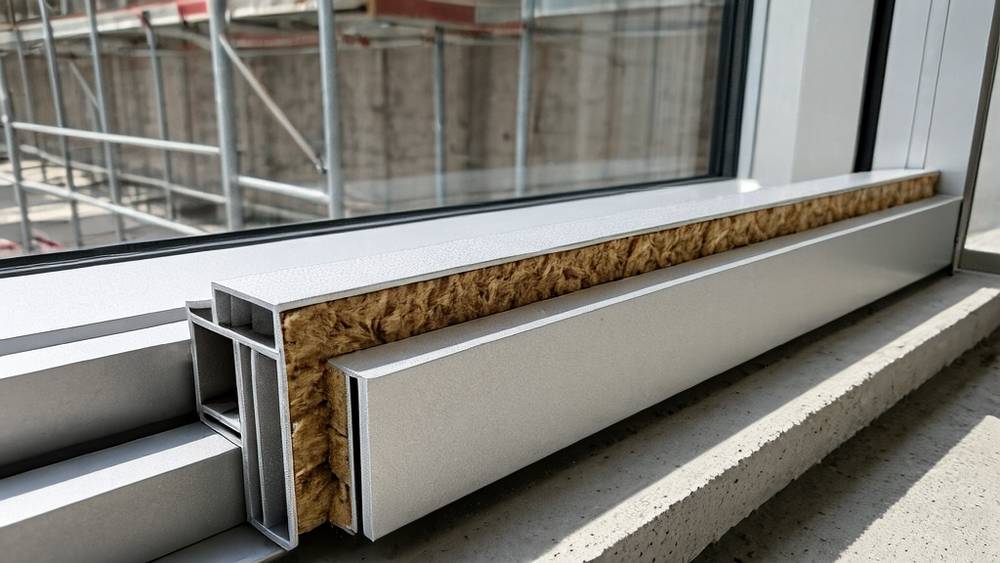
When a curtain wall contractor specifies an aluminium spandrel panel for a high-rise project in London or Dubai, the conversation rarely ends at dimensions and colour. The question that follows almost immediately is fire classification. Since the Grenfell Tower tragedy in 2017, building regulations across the UK, Europe, Middle East and parts of Asia have tightened dramatically for façade components. An aluminium spandrel panel sits directly in front of floor slabs — the exact location where compartmentation fire stops are required. If the panel burns, contributes fuel load, or produces flaming droplets, the entire passive fire strategy of the building is compromised. This article examines how EN 13501-1 fire classification applies specifically to insulated aluminium spandrel panels, what A1 and A2-s1,d0 ratings actually mean in terms of material composition, and why the insulation core material — not the aluminium skin — dictates the outcome of a fire test.
Why Fire Classification Matters More for Spandrel Panels Than for General Cladding
A rainscreen panel on an open-ventilated cavity and an aluminium spandrel panel sealed within a curtain wall frame face fundamentally different fire risk profiles. The rainscreen has an air gap behind it; flames can vent upward. A spandrel panel, by contrast, is typically installed flush against the floor slab edge with mineral wool or insulation board directly behind the aluminium skin. There is no ventilation. Heat builds up. The panel becomes part of the compartmentation barrier between floors.
Building regulations in the UK (Approved Document B), the UAE Fire and Life Safety Code, and Hong Kong's Code of Practice for Fire Safety in Buildings all treat spandrel zones as critical horizontal fire break locations. If an aluminium spandrel panel fails here, fire can leap from one floor to the next via the façade — the very failure mode that investigators identified in multiple fatal high-rise fires globally. This is why specifiers now demand EN 13501-1 test reports not just for the cladding system as a whole, but specifically for the spandrel panel assembly.
The aluminium facing sheet itself — typically 2.0 mm, 2.5 mm or 3.0 mm thick, grade 3003 or 5052 alloy — is non-combustible. Aluminium melts at approximately 660°C, but it does not contribute organic fuel to a fire. The fire performance of an aluminium spandrel panel hinges entirely on what is behind that aluminium skin: the insulation core, any bonding adhesives, and the inner liner material.
Decoding EN 13501-1: A1, A2, and the s1,d0 Suffix
EN 13501-1 is the harmonised European standard for fire classification of construction products. For façade components, the classifications that matter are A1, A2, B, C, D, E and F — with A1 being the highest (fully non-combustible) and F the lowest (no performance determined). But the letter alone does not tell the full story. The standard also measures two additional parameters that are critical for spandrel applications: smoke production (s1, s2, s3) and flaming droplets/particles (d0, d1, d2).
A1 classification means the product makes no contribution to fire at any stage, including a fully developed fire. An aluminium spandrel panel can only achieve A1 if every component in the assembly — the outer aluminium sheet, the insulation core, the inner liner, and any edge treatment — is non-combustible. This typically requires a mineral wool or mineral fibre core with no organic binders, and an inner liner of aluminium or galvanised steel. No polymer-based adhesives can be used; mechanical fixing or inorganic bonding is required.
A2-s1,d0 classification is the next tier and is widely accepted for buildings above 18 metres in the UK and for high-rise façades in many jurisdictions. A2 means the product makes a very limited contribution to fire. The "s1" suffix indicates the lowest level of smoke production (the scale runs s1 through s3). The "d0" suffix means no flaming droplets or particles within the first 600 seconds of the test — a critical requirement for spandrel panels positioned above exit routes or adjacent to other combustible façade elements.
The difference between A1 and A2-s1,d0 is often a single component: the bonding adhesive. Many manufacturers use a thin polyurethane or epoxy adhesive layer to bond the insulation core to the aluminium skins. That adhesive, even at less than 2% of the total panel mass, can be enough to shift classification from A1 to A2. For specifiers, understanding this nuance is essential when comparing technical data sheets from competing suppliers.
| Classification | Combustibility | Smoke Production | Flaming Droplets | Typical Core Material | Typical Application Height |
|---|---|---|---|---|---|
| A1 | No contribution to fire | N/A (non-combustible) | N/A | Mineral wool (no organic binder) | Unrestricted |
| A2-s1,d0 | Very limited contribution | Very low (s1) | None (d0) | Mineral wool with minimal binder or Fabrock core | Above 18 m (UK), high-rise (UAE) |
| A2-s2,d0 | Very limited contribution | Low (s2) | None (d0) | Mineral wool with higher organic content | Mid-rise, varies by jurisdiction |
| B-s1,d0 | Very limited contribution | Very low (s1) | None (d0) | PIR or phenolic foam with fire retardants | Below 18 m (UK), check local codes |
The Insulation Core: Where Fire Performance Is Won or Lost
The aluminium skins on an insulated spandrel panel are thermally conductive but chemically inert in a fire. The core material is the variable that determines whether the panel achieves A1, A2-s1,d0, or a lower classification. Three core types dominate the market:
Mineral Wool (Stone Wool) Cores
Stone wool — manufactured from basalt rock and recycled slag, spun into fibres at around 1,500°C — is inherently non-combustible. It can withstand temperatures exceeding 1,000°C without melting or contributing fuel. This makes it the only practical core material for achieving A1 classification in an aluminium spandrel panel. However, not all mineral wool is identical. Some manufacturers use a small percentage of organic binder (typically a phenol-formaldehyde resin) to improve handling and dimensional stability. If the binder content exceeds the threshold defined in the EN 13501-1 testing regime, the panel may drop from A1 to A2.
For specifiers, the key question to ask suppliers is: "Is the mineral wool core binder-free, and can you provide a test report showing A1 classification for the full panel assembly?" A test report on the insulation alone is not sufficient; the entire sandwich panel must be tested as it would be installed.
Fabrock and Engineered Mineral Cores
Fabrock is a proprietary insulation core material used by several European spandrel panel manufacturers, including systems tested to A2-s1,d0 classification. It combines mineral-based fillers with a controlled quantity of inorganic binders, pressed into a rigid board format. The advantage of Fabrock over traditional mineral wool is dimensional stability: it does not compress, sag or delaminate under its own weight when installed vertically in a spandrel frame — a real concern with some low-density mineral wool boards.
Metalline's ULTIMA range, referenced in multiple EN 13501-1 test reports, uses Fabrock as the insulation core to achieve A2-s1,d0. Their ULTIMA A1 variant uses a hard edge — essentially a perimeter frame of non-combustible material — to reinforce the panel and eliminate any combustible edge sealant from the fire equation. This is a detail that architects rarely see on drawings but that makes a measurable difference in a fire test.
PIR and Phenolic Foam Cores
Polyisocyanurate (PIR) and phenolic foam cores offer superior thermal insulation per millimetre of thickness — a compelling argument for projects where floor-to-floor height is constrained and spandrel depth is limited. However, these materials are combustible. Even with fire retardant additives, PIR cores typically achieve only B-s1,d0 or C-s1,d0 under EN 13501-1. In the UK, this restricts their use to buildings below 18 metres. For an aluminium spandrel panel on a high-rise tower, PIR is effectively off the table.
Some manufacturers market "fire-rated PIR" panels, but specifiers must read the fine print. A PIR core that resists ignition in a small-scale test may still contribute significant fuel load in a fully developed fire. The EN 13501-1 classification tells the real story. If the report says B or C, the panel is not suitable for high-rise spandrel applications regardless of marketing claims.
Inner Liner Materials and Their Fire Contribution
The inner face of an aluminium spandrel panel — the side facing the floor slab — is often overlooked in fire assessments. The outer aluminium skin gets the attention because it defines the façade appearance. But the inner liner matters too. Common inner liner options include:
- Mill-finish aluminium (0.7 mm to 1.5 mm): Non-combustible, lightweight, and fully compatible with A1 or A2-s1,d0 assemblies. This is the standard choice for high-rise spandrel panels.
- Pre-galvanised steel (0.5 mm to 1.0 mm): Also non-combustible. Slightly heavier than aluminium but offers better screw retention for mechanical fixings. Acceptable for A1 and A2 assemblies.
- Reinforced foil or vapour barrier membranes: Some manufacturers use a foil-faced vapour barrier as the inner liner to reduce cost. If the foil is bonded with an organic adhesive, this can affect classification. Verify with test data.
Metalline's ULTIMA 1 panel configuration, for example, offers a choice between a powder-coated or mill-finish aluminium inner liner and a pre-galvanised steel inner liner — both compatible with A2-s1,d0 when combined with the correct core. This flexibility allows contractors to optimise for either weight or cost without compromising fire performance.
Edge Details: The Overlooked Fire Path
Even with a non-combustible core and aluminium skins, the perimeter edge of an aluminium spandrel panel can become a fire vulnerability. Some manufacturers seal panel edges with a polymer-based edge sealant to prevent moisture ingress during transport and installation. Others use a PVC or EPDM gasket between the panel edge and the curtain wall frame. In a fire, these materials can ignite, creating a path for flames to propagate around the panel — even if the panel itself is non-combustible.
The ULTIMA A1 hard edge solution addresses this by using a rigid, non-combustible perimeter material that eliminates the need for combustible edge sealants. Similarly, some mineral wool core panels are manufactured with a fully encapsulated edge where the aluminium skin is folded over and crimped, leaving no exposed core or sealant. These details rarely appear in marketing brochures but are visible in the test reports and installation manuals that specifiers should request.
For contractors installing aluminium spandrel panels on projects above 18 metres, a practical checklist for edge compliance includes: confirming that edge sealants are tested as part of the full panel assembly (not tested separately), verifying that any gaskets or tapes used at the panel-to-frame interface carry their own EN 13501-1 classification compatible with the panel rating, and documenting all edge treatment materials in the project's fire safety file for building control sign-off.
Testing and Certification: What to Demand from Suppliers
An EN 13501-1 classification is only meaningful if the test was performed on the exact panel configuration being supplied. A common but problematic practice in the industry is "component-based classification" — where a manufacturer claims A2-s1,d0 for a panel based on testing the insulation core alone, or testing a panel of different thickness, or testing a panel with a different inner liner. This is not compliant with the standard.
The BS EN 13501-1:2018 standard requires that classification reports clearly state the exact product configuration tested, including: outer skin material and thickness, core material, density and thickness, inner liner material and thickness, bonding method and adhesive type (if any), edge treatment, and overall panel dimensions. A specifier reviewing a test report should be able to match every one of these parameters to the panel proposed for the project.
Third-party certification adds another layer of confidence. Look for test reports issued by UKAS-accredited laboratories such as Warringtonfire, Exova (now Element Materials Technology), or BRE. These laboratories conduct the EN 13823 (Single Burning Item) test and EN ISO 1182 (non-combustibility) test that underpin the EN 13501-1 classification. A manufacturer's in-house test data, without third-party verification, should be treated with caution.
Manufacturers like Futeng® supply aluminium spandrel panels globally and can provide full EN 13501-1 test documentation for their insulated panel assemblies upon request. For procurement managers, the rule is simple: no test report, no purchase order.
Fire Performance and Thermal Insulation: Not Mutually Exclusive
A frequent concern among architects is that specifying an A1 or A2-s1,d0 rated aluminium spandrel panel forces a compromise on thermal performance. PIR cores offer U-values of 0.022 W/m·K or better, while mineral wool cores typically range from 0.035 to 0.040 W/m·K. On paper, the PIR panel looks thermally superior.
In practice, the difference is manageable. Increasing the mineral wool thickness by 20-30 mm usually compensates for the lambda value difference. For a typical spandrel zone with 80-100 mm of available depth, an A2-s1,d0 mineral wool core panel can achieve a U-value of 0.30-0.35 W/m²K — sufficient for most curtain wall spandrel applications under Part L of the UK Building Regulations or equivalent energy codes in other jurisdictions.
The FINSPAN-A1 system from Finish Facades illustrates this approach: an external aluminium facing bonded to an insulated mineral wool core, tested to EN 13501-1 for fire performance and assessed for thermal transmittance under EN ISO 6946. The combination of fire safety and thermal insulation in a single panel simplifies the spandrel build-up and reduces on-site labour compared to separate fire-stopping and insulation installations.
Regional Code Differences That Affect Specification
While EN 13501-1 provides a common testing framework, how different countries apply the results varies significantly. A panel that is compliant in one jurisdiction may be non-compliant in another — not because the fire performance changes, but because the regulatory threshold differs.
In England and Wales, Approved Document B (as amended in 2022) bans the use of combustible materials in the external walls of "relevant buildings" — defined as residential buildings, hospitals, student accommodation and care homes above 18 metres. An aluminium spandrel panel with an A2-s1,d0 or A1 classification meets this requirement. A panel with a B classification does not, regardless of its s1,d0 rating.
Scotland's Building Standards Technical Handbook 2024 takes a different approach: it requires A1 classification for external wall components on buildings above 11 metres. This is stricter than England and effectively rules out A2-s1,d0 panels for Scottish high-rise projects. Contractors working across the UK must check which jurisdiction's rules apply.
In the UAE, the Fire and Life Safety Code of Practice (2021 edition) references NFPA 285 for façade fire propagation testing alongside material-level classification. An aluminium spandrel panel may need to demonstrate both EN 13501-1 classification and compliance with the full NFPA 285 assembly test, depending on the building height and occupancy type. In Hong Kong, the Code of Practice for Fire Safety in Buildings 2011 requires materials in specified locations to meet the equivalent of A1 or A2 classification, but the testing standard accepted may be BS 476 or EN 13501-1 depending on the project specification.
This regulatory patchwork means that specifiers cannot rely on a single "fire rated" claim from a manufacturer. They must map the test data to the specific code requirements of the project's jurisdiction.
Installation Factors That Can Invalidate Fire Classification
A panel that achieves A2-s1,d0 in a laboratory can be rendered non-compliant by poor installation. Common site issues include:
- Substituting the specified insulation behind the panel with a cheaper combustible alternative to save cost.
- Using combustible packers or shims between the panel and the curtain wall transom that were not part of the tested assembly.
- Sealing panel joints with a combustible silicone or mastic not covered by the test report.
- Drilling or cutting panels on site and leaving exposed core edges without re-sealing them with the tested edge treatment.
The CWCT (Centre for Window and Cladding Technology) provides guidance on spandrel panel installation within curtain wall systems, emphasising that the installed condition must replicate the tested condition. Quality assurance during installation — including photographic records of each spandrel panel before the inner liner is closed up — is increasingly a requirement for building control sign-off on high-rise projects.
Practical Guidance for Specifying Fire-Compliant Aluminium Spandrel Panels
Based on the fire classification framework outlined above, specifiers and procurement managers can follow a structured approach to ensure compliance:
- Determine the regulatory threshold for the project location and building type. Is A1 required, or is A2-s1,d0 acceptable? This decision drives the core material choice.
- Request the full EN 13501-1 classification report for the exact panel configuration proposed — not a generic brochure or a report for a similar product.
- Verify the tested assembly matches the specification: core material and thickness, outer and inner skin materials, edge treatment, and bonding method.
- Check the laboratory accreditation. Reports from UKAS-accredited labs carry more weight than in-house testing.
- Include installation inspection gates in the quality assurance plan to verify that installed panels match the tested specification.
- Document everything for the building control fire safety file, including panel test reports, installation records, and any deviation approvals.
Fire classification for an aluminium spandrel panel is not a marketing checkbox. It is a measurable, testable property of a specific assembly, and the margin between a compliant specification and a dangerous one can be as thin as a 2 mm layer of combustible adhesive. In the current regulatory environment — where building control bodies scrutinise façade fire performance more rigorously than at any point in history — getting this detail right is non-negotiable.