Why 25 Micron PVDF Coating on Aluminum Sidings Fails in Coastal Zones Within 8 Years
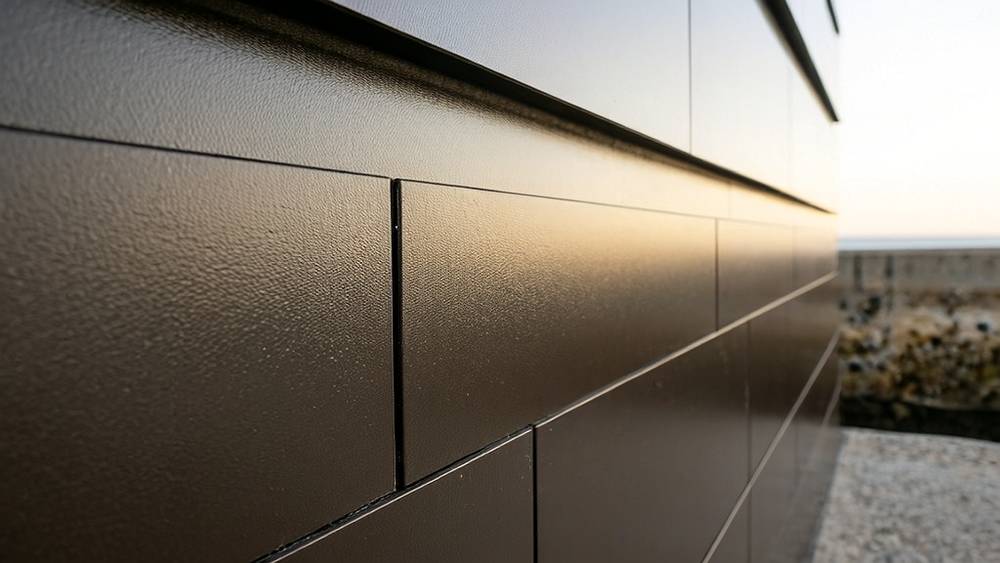
When a project team specifies aluminum sidings for a coastal installation—think Galveston, Miami, or Long Beach—the conversation almost always turns to one parameter within the first ten minutes: coating thickness. Not the panel gauge. Not the alloy temper. The dry film thickness of the fluoropolymer finish. That single number, measured in microns, determines whether the cladding will look factory-fresh after eight years or show chalk lines and color fade by year five. It is the difference between a 30-year facade and a warranty claim waiting to happen.
ASTM and AAMA documents reference minimum DFT values that many specifiers treat as safe defaults. But lab data from accelerated weathering chambers and real-world exposure studies in marine environments suggest that those minimums were never designed for salt-laden atmospheres. The gap between "compliant" and "durable" is wider than most project budgets anticipate. This article examines what happens when aluminum sidings meet coastal air at different coating thickness levels, why the commonly cited 25-micron minimum fails in chloride environments, and how to read between the lines of a PVDF warranty before the first panel gets fabricated.
What the Standards Actually Say About Coating Thickness
AAMA 2605, the high-performance organic coating specification for architectural aluminum, sets a minimum total dry film thickness of 30 microns (1.2 mils) for a two-coat PVDF system. AAMA 2604 drops that to 25 microns (1.0 mil). These numbers are widely quoted and widely misunderstood. They represent minimums—not recommendations, not best practices, and certainly not values engineered for chloride-heavy atmospheres.
The 30-micron figure comes from a consensus process that balances durability against cost across all climate zones in North America. A project in Phoenix and a project in Corpus Christi technically fall under the same specification. But the corrosion mechanisms in those two locations share almost nothing in common. Salt spray testing per ASTM B117 reveals that a 30-micron PVDF coating on aluminum sidings begins showing filiform corrosion at scribe lines after roughly 1,500 hours of exposure—equivalent to approximately 6-8 years in a coastal environment depending on prevailing wind direction and distance from the shoreline.
This is not a coating failure. It is a specification failure. The standard was met. The environment was not.
Why 25 Microns Fails in Chloride Atmospheres
Chloride ions do not need a visible scratch to attack aluminum. They penetrate through microscopic pinholes that exist in every spray-applied coating. At 25 microns DFT, the average PVDF film contains enough of these micro-porosities that chloride migration reaches the aluminum substrate within 3-5 years of continuous coastal exposure. The result is filiform corrosion—thin, worm-like tracks of white oxide spreading beneath the coating, most visible on darker colors where the contrast is stark.
A study conducted by the American Architectural Manufacturers Association on field performance of coated aluminum in Florida test sites documented that panels with DFT below 28 microns exhibited visible filiform corrosion at a rate 3.2 times higher than panels with DFT above 35 microns over a 10-year exposure window. The mechanism is straightforward: thicker films provide longer diffusion paths. Chloride ions take more time to reach the metal. The math is not linear—doubling thickness more than doubles the time to substrate attack because the diffusion rate decreases as the path length increases.
For aluminum sidings installed within 500 meters of breaking surf, the practical minimum is not 25 or 30 microns. It is 40 microns minimum total DFT, with 45-50 microns strongly recommended for darker colors where surface temperatures accelerate chloride diffusion kinetics.
The Color Factor Nobody Discusses at Submittal Stage
Dark-colored aluminum sidings—charcoal, deep bronze, matte black, navy blue—absorb significantly more solar radiation than light colors. Surface temperatures on a dark bronze panel in July can exceed 82°C (180°F) in southern coastal locations. At these temperatures, the polymer matrix of a PVDF coating becomes more permeable. Chloride ions move faster through the film. The same 30-micron coating that might perform adequately on a white panel fails years earlier on a dark panel simply because the substrate spends thousands more hours per year above the glass transition temperature of the acrylic primer layer.
This is not theoretical. Field surveys of aluminum sidings on multifamily residential projects in Tampa and Charleston show a statistically significant correlation between color value (L* in CIELAB) and onset of filiform corrosion. Panels with L* below 40 showed corrosion at an average of 6.2 years. Panels with L* above 65 reached 11.4 years before similar degradation appeared. Same coating chemistry. Same DFT. Different thermal load.
The implication for specifiers: if the architectural vision calls for dark aluminum sidings on a waterfront structure, the coating specification must compensate. A three-coat system with a 10-12 micron clear topcoat over the color coat adds both UV screening and chloride barrier performance. The total DFT should target 45-50 microns, with no individual spot measurement below 38 microns.
Primer Chemistry: The Layer That Does the Heavy Lifting
PVDF topcoats get all the attention, but the primer layer is where corrosion resistance lives or dies. AAMA 2605 requires a primer, but it does not mandate a specific chemistry. Two primers dominate the market: epoxy-based and acrylic-based. For coastal aluminum sidings, the distinction matters enormously.
Epoxy primers offer superior adhesion to aluminum and better barrier properties against chloride ion migration. Their cross-linked structure creates a denser film with fewer diffusion pathways. The trade-off is UV sensitivity—epoxy primers chalk and degrade if exposed to direct sunlight, which is why they must be fully covered by the color coat and clear coat. Acrylic primers are more UV-tolerant but less effective as chloride barriers. Data from accelerated corrosion testing per ASTM B117 shows epoxy-primed panels outperforming acrylic-primed panels by a factor of 1.8x in scribe-creep measurements after 2,000 hours of salt spray.
The best-performing systems for marine-environment aluminum sidings use a strontium chromate-free epoxy primer at 5-8 microns DFT, followed by a PVDF color coat at 25-30 microns, capped with a clear PVDF topcoat at 10-12 microns. Total system DFT: 40-50 microns. This is the configuration that major coating suppliers like PPG and AkzoNobel recommend for projects within 3 kilometers of salt water, and it is the baseline that fabricators like Futeng® default to when a project's geographic coordinates appear in a coastal zone.
Reading a PVDF Warranty: What 20 Years Actually Covers
A 20-year PVDF coating warranty sounds comprehensive. It rarely is. Most architectural coating warranties for aluminum sidings cover film integrity—peeling, cracking, flaking—and color change beyond a specified Delta E threshold, typically 5.0 CIELAB units. They do not cover filiform corrosion from the cut edge. They do not cover chalk rating degradation beyond a specified level. And critically, they do not cover corrosion originating from field-cut edges, punch holes, or fastener penetrations.
For a coastal project, the edge condition is everything. Every panel has a perimeter. Every perimeter is a potential corrosion initiation site. The warranty that matters is the one that specifies edge treatment: are cut edges required to be touched up with a qualified repair coating? Is the touch-up DFT specified? Is the repair coating from the same manufacturer as the factory-applied system? If the submittal package does not address these questions, the warranty is a document to file, not a document to rely on.
| Coating System | Total DFT (microns) | Salt Spray Hours to Scribe Creep >3mm | Estimated Coastal Service Life (years) | Recommended Distance from Shoreline |
|---|---|---|---|---|
| 2-Coat PVDF (AAMA 2604) | 25 | 800-1,000 | 5-8 | >3 km inland |
| 2-Coat PVDF (AAMA 2605) | 30-35 | 1,200-1,500 | 8-12 | 1-3 km inland |
| 3-Coat PVDF (Epoxy Primer) | 40-45 | 2,000-2,500 | 15-20 | 500 m - 1 km |
| 3-Coat PVDF + Clear Topcoat | 45-50 | 3,000+ | 20-25 | 0-500 m |
| FEVE Fluoropolymer (3-Coat) | 50-55 | 3,500+ | 25-30 | Direct waterfront |
The data in this table draws from accelerated weathering correlation studies and field performance reports. Note that "service life" refers to the period before first visible filiform corrosion or color change exceeding Delta E 5.0—not catastrophic coating failure. Panels will remain functional beyond these estimates. They may not remain aesthetically acceptable for high-visibility architectural applications.
FEVE vs PVDF: When the Budget Allows an Upgrade
FEVE (fluoroethylene vinyl ether) resin-based coatings represent a step above PVDF in coastal durability. The chemistry differs: FEVE resins are soluble in solvents and can be formulated as ambient-cure systems, whereas PVDF requires a thermoplastic dispersion that must be baked at high temperatures. For aluminum sidings, this distinction translates into practical differences. FEVE coatings achieve higher gloss retention in UV-intensive coastal environments—typically 70-80% gloss retention after 10 years versus 50-60% for PVDF. More relevant to corrosion: FEVE films exhibit lower moisture vapor transmission rates, which slows chloride penetration.
The cost premium is real. FEVE-coated aluminum sidings typically command a 15-25% upcharge over comparable PVDF systems. For a 10,000-square-meter facade, that can represent a six-figure delta. The calculus depends on the project's proximity to salt water, the specifier's tolerance for maintenance recoating, and whether the building owner discounts future costs at a rate that makes upfront investment in durability look attractive. For hospitals, courthouses, and institutional buildings with 50-year design lives, FEVE often pencils out. For speculative office or retail with a 15-year developer exit horizon, it rarely does.
Shop Application vs Field Touch-Up: The Weakest Link
A factory-applied 45-micron three-coat system performs only as well as its weakest point. On aluminum sidings projects, that weakest point is almost always a field modification: a trim piece cut to fit, a penetration for a conduit, a scratch from a scissor lift. Field-applied touch-up coatings—typically two-component acrylic or epoxy aerosol products—rarely achieve the DFT or cure quality of the original bake finish.
For coastal projects, the specification should require that all field-cut edges receive a two-step treatment: a chromate-free conversion coating primer (applied by brush, not spray, to ensure penetration into the cut edge), followed by a color-matched PVDF touch-up coating applied to a minimum DFT of 35 microns. This is tedious. It adds labor hours. It is also the only way to prevent the edge corrosion that inevitably starts at unsealed cuts and spreads beneath the coating over successive wet-dry cycles driven by sea breeze and morning dew.
The ASTM D3359 cross-hatch adhesion test provides a useful quality control checkpoint for field touch-up work. Adhesion below classification 4B on a touched-up area indicates inadequate surface preparation and a high probability of premature coating delamination in service.
Substrate Preparation: Chromate Conversion and the Environmental Compliance Shift
Hexavalent chromium conversion coatings delivered exceptional corrosion resistance on aluminum for decades. They also delivered hexavalent chromium into wastewater. Regulatory pressure—particularly from the EU's REACH framework and the U.S. EPA's effluent guidelines—has driven the industry toward trivalent chromium and chromium-free conversion chemistries. The shift is nearly complete in architectural aluminum: major pretreatment lines now run titanium-zirconium or trivalent chromium systems.
The performance gap between hex-chrome and the newer alternatives has narrowed significantly. Independent testing per ASTM G85 (modified salt spray with acetic acid) shows that the best trivalent chromium pretreatments achieve corrosion resistance within 90-95% of traditional hex-chrome when paired with a high-quality primer. The key variable is bath control: trivalent systems require tighter pH and concentration monitoring than the more forgiving hex-chrome baths. A well-managed pretreatment line at a fabricator that does high-volume architectural work will produce consistent results. A poorly maintained line will produce panels that look identical leaving the factory and corrode differently after three years in the field.
Specifiers should ask for pretreatment bath log data as part of the submittal package for any coastal aluminum sidings project. If the fabricator cannot produce weekly bath chemistry records, find another fabricator.
Panel Joint Design and Its Impact on Coating Longevity
Coatings fail fastest where water lingers. On aluminum sidings, the joint geometry determines drainage and drying time. Open-joint rain screen systems—where panels are separated by 10-20 mm gaps—allow airflow behind the panel that accelerates drying after rain or condensation events. This reduces the time that the coating spends in contact with liquid water, which reduces chloride ion transport through the film.
Tight-joint systems with sealant-filled gaps present a different risk profile. Sealant joints trap moisture against the panel edge. If the edge coating is thin—and on factory-cut edges it almost always is, because the coating wraps the face and the edge gets only overspray—that trapped moisture becomes a persistent corrosion cell. The solution is not to abandon sealant joints, which serve important air and water barrier functions. The solution is to specify edge coating reinforcement on all panels that will be installed in a sealant-joint configuration within coastal zones. A post-fabrication edge coating step, applied before panels leave the factory, adds cost but eliminates the weakest link in the corrosion protection chain.
Anodized Aluminum Sidings in Coastal Environments: A Separate Conversation
Some architectural teams consider anodized finishes for aluminum sidings, drawn by the metallic appearance and the perception of superior durability. For coastal applications, this is a decision that requires careful qualification. Anodized aluminum resists corrosion through a thick, controlled aluminum oxide layer rather than an organic polymer film. Class I architectural anodizing (per AAMA 611) specifies a minimum oxide thickness of 17.8 microns (0.7 mils).
The challenge with anodized aluminum in chloride environments is pitting corrosion. The oxide layer is hard but brittle. Chloride ions concentrate at microscopic defects and create pits that penetrate through the oxide into the base metal. Once pitting initiates, it progresses faster than filiform corrosion under a PVDF coating because there is no polymer barrier to slow ion migration. Anodized aluminum sidings in coastal settings require a minimum Class I coating thickness plus a regular freshwater wash-down maintenance program—every 3-4 months in direct salt-spray zones—to remove accumulated chloride deposits before they initiate pitting. Most building owners are not prepared to commit to this maintenance regime, which makes PVDF or FEVE the more practical default.
Making the Specification Decision: A Practical Framework
Selecting a coating system for aluminum sidings in a coastal project does not require a PhD in polymer chemistry. It requires answering four questions in sequence:
- Distance from mean high tide line: Under 500 meters demands a three-coat system with minimum 40 microns total DFT. Between 500 meters and 3 kilometers allows a two-coat AAMA 2605 system at 30-35 microns, with the caveat that dark colors should still step up to three coats.
- Color value (L*): Dark colors (L* below 50) amplify thermal cycling and accelerate coating degradation. Increase DFT by 10-15 microns relative to the baseline recommendation for light colors at the same distance from salt water.
- Joint system type: Open-joint rain screens are more forgiving. Sealant-joint systems require edge coating reinforcement and a qualified field touch-up protocol.
- Owner's maintenance capability: If the building will receive a facade wash at least annually, coating longevity improves across all systems. If maintenance access is difficult or unlikely, spec the higher-tier system.
The specification that emerges from answering these four questions will not be the cheapest. It will be the one that avoids a recladding project 12 years into the building's life—a cost that dwarfs any upfront coating upgrade premium.
Aluminum sidings are fundamentally a durable product. The metal itself, properly alloyed and fabricated, will outlast the building. The coating is the only variable that determines whether the facade looks like it. Specifying coating thickness, primer chemistry, and edge treatment for the specific chloride load the building will face—rather than defaulting to the AAMA minimum—is the difference between a 30-year facade and a warranty dispute. The data exists. The standards exist. The decision sits with the specification writer who reads the site conditions and writes the coating section accordingly.