Metal Facade Systems What Engineers and Contractors Must Verify Before Ordering Solid Aluminium Panels
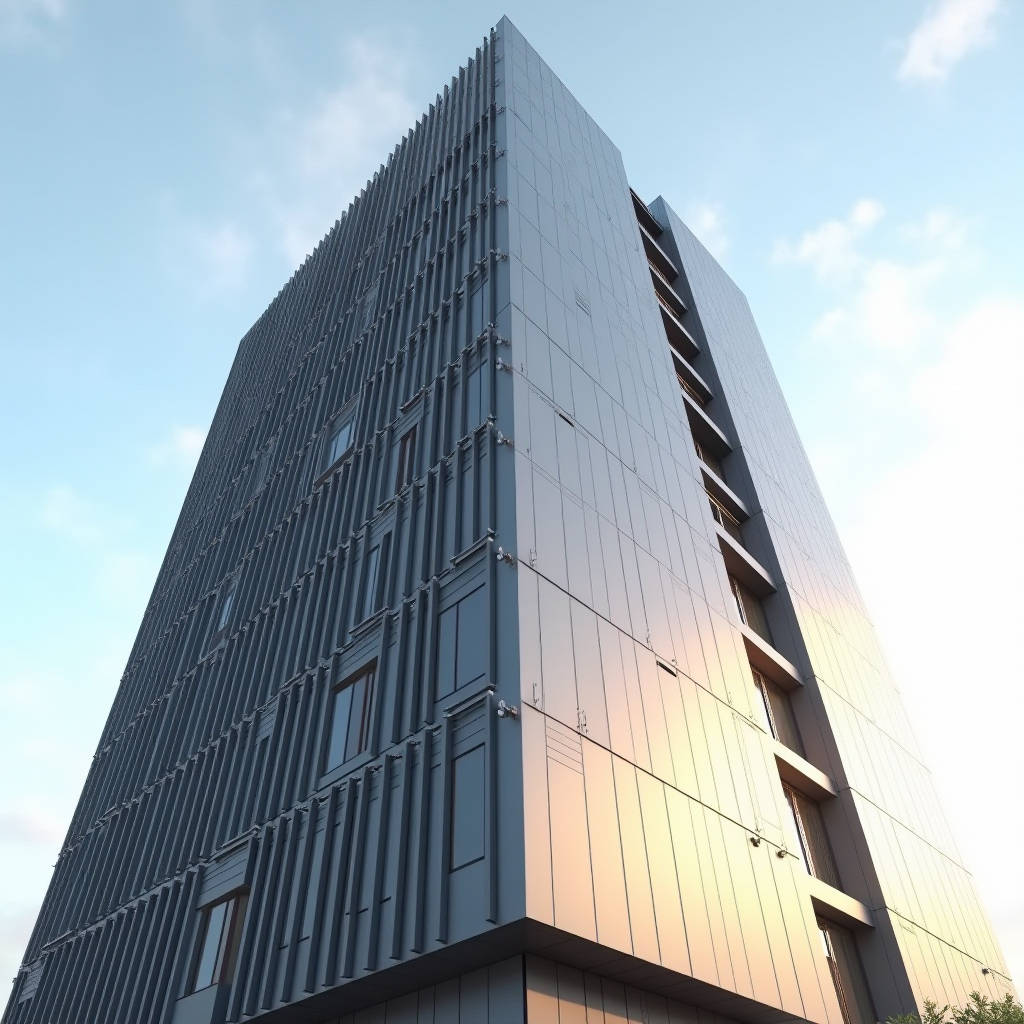
When a project specification lands on your desk requiring metal facade systems, the first question isn't about aesthetics. It's about whether the panel can hold its geometry across a 4-meter span without oil-canning, whether the coating will still look factory-fresh after 15 years of UV exposure in Dubai or Singapore, and whether the supplier can actually deliver 3,000 square meters of custom-perforated panels in eight weeks. These are the questions that separate catalogue specs from buildable solutions. Solid aluminium cladding panels — not composite sandwiches, not thin-gauge sheet — remain the default choice for architects and envelope contractors who refuse to compromise on flatness, fire performance, and long-term dimensional stability. Having walked through fabrication lines in China's manufacturing clusters and reviewed submittals for projects across Southeast Asia, the Middle East, and Europe, I can tell you that the gap between what a spec sheet promises and what arrives on-site is where reputations are made or broken.
What Actually Counts as a Solid Aluminium Facade Panel
The term "metal facade systems" covers a broad range of products, but when engineers specify solid aluminium, they are talking about panels fabricated from single-sheet aluminium alloy — typically 1100, 3003, or 5005 series — with thicknesses of 2.0mm, 2.5mm, or 3.0mm. This is not aluminium composite material (ACM/ACP), which sandwiches a polyethylene or mineral core between two thin aluminium skins. The distinction matters for three reasons: fire code compliance, fabrication tolerances, and long-term flatness.
A 2.5mm solid panel, properly routed and folded with return edges, can span 600mm between stiffeners without visible waviness. A 3.0mm panel can push that to 800mm or more depending on wind load calculations. The alloy temper also plays a role — H14 temper offers a good balance of formability and strength for most rainscreen and curtain wall applications. When you're reviewing shop drawings, pay attention to whether the fabricator has specified the alloy series and temper, not just the thickness. A 2.0mm panel in 1100-H14 behaves differently under thermal cycling than the same thickness in 3003-H14.
Field Note: On a high-rise in Ho Chi Minh City, we had to reject an entire batch of 2.0mm panels because the fabricator substituted 1100 alloy without notifying us. The wind load calculations were based on 3003-H14. The difference in yield strength was roughly 30%. Always cross-check the mill certificate against the structural engineer's assumptions before fabrication begins.
Coating Systems That Survive the Real World
For exterior metal facade systems, the coating isn't decoration — it's the primary corrosion barrier. The industry standard for premium architectural applications is PVDF (polyvinylidene fluoride) coating, typically referenced as meeting AAMA 2605 requirements. This means a minimum total dry film thickness of 30 microns for a two-coat system and 40 microns for a three-coat system, with the PVDF resin accounting for at least 70% of the binder — usually Kynar 500® or Hylar 5000®.
Here's what procurement managers should verify on the coating submittal:
- Resin percentage: 70% PVDF minimum. Some suppliers cut costs by blending in lower-cost acrylic resins. Ask for the resin certification, not just the coating brand name.
- Primer layer: A chromate or non-chromate conversion coating followed by a corrosion-inhibiting primer is non-negotiable for coastal or high-humidity environments.
- Color consistency: For large facades, insist on a Delta E tolerance of ≤ 1.0 across all production batches. Anything above 1.5 will be visible to the naked eye under overcast sky conditions.
- Gloss consistency: Specify gloss units (GU) at 60° measurement angle. A variance of ±5 GU across panels is acceptable for most commercial projects; ±3 GU for premium architectural work.
For projects in the Middle East, where surface temperatures can exceed 80°C on dark-colored panels, specify heat-reflective pigment technology. Standard PVDF on dark colors can experience excessive thermal expansion if not formulated with infrared-reflective pigments. This is a detail that gets overlooked in tender documents more often than you'd expect.
Panel Geometry, Stiffener Design, and the Oil-Canning Problem
Oil-canning — the visible waviness or buckling on flat metal panels — is the single most common complaint on completed metal facade systems. It's not a structural failure, but it's the first thing the client's representative will notice when the scaffolding comes down. The root causes are predictable: insufficient panel thickness for the span, inadequate stiffener design, thermal expansion that wasn't properly accommodated, or residual stress from the fabrication process.
The standard approach to minimizing oil-canning involves:
- Stiffener spacing: For 2.5mm panels, keep stiffener spacing under 600mm center-to-center. For 3.0mm panels, 700-800mm is generally safe depending on wind loads and panel aspect ratio.
- Stiffener attachment: Use structural adhesive (such as two-part epoxy or polyurethane) rather than welding. Welding introduces heat distortion and creates hard points that can telegraph through the face of the panel.
- Return edge depth: Minimum 20mm return edge on all sides. For panels exceeding 2m in any dimension, increase to 25-30mm.
- Stress relief: After routing and folding, panels should be allowed to rest for 24 hours before coating. This lets residual stresses from the forming process dissipate.
Pro Tip: If your project is in a region with extreme diurnal temperature swings — think desert climates or high-altitude locations — specify a "pillowed" or "cambered" panel face. A very slight convex curvature (1-2mm crown over a 1m width) is invisible to the eye but prevents the panel from going concave when it heats up. This is a trick that experienced facade engineers in the Gulf region use routinely.
Supply Chain Realities: Lead Times, MOQs, and Logistics
For procurement managers sourcing metal facade systems internationally, the numbers matter. Here's a realistic breakdown based on current manufacturing capacity out of China's major aluminium fabrication hubs:
| Parameter | Typical Range | What Affects It |
|---|---|---|
| Standard panel lead time | 4-6 weeks from deposit | Order volume, color complexity, perforation requirements |
| Custom shape/3D panels | 6-8 weeks | Mold fabrication, bending complexity, QC sampling rate |
| Minimum order quantity | 300-500 m² per color | Coating line setup cost, raw material sheet utilization |
| PVDF coating line MOQ | 500 m² per color batch | Paint mixing, line purge, color matching overhead |
| Sea freight (Asia to Europe) | 25-35 days | Port congestion, container availability, customs clearance |
| Sea freight (Asia to Middle East) | 15-22 days | Direct vs. transshipment routing |
Packaging deserves more attention than it typically gets in tender documents. Solid aluminium panels with PVDF finish are susceptible to scratches during transit, and a scratched panel on-site means either a touch-up kit application (which will never match perfectly) or a replacement panel that delays the entire elevation. The standard packaging protocol for export-grade metal facade systems should include: PE protective film (minimum 60 microns thickness) on the exposed face, interleaving foam sheets between panels, steel-reinforced wooden crates for panels over 1.5m in any dimension, and moisture-absorbing desiccant packs inside crates for sea freight. For FOB shipments, specify that the supplier is responsible for loading supervision and that any damage detected before container sealing is the supplier's liability.
When evaluating suppliers, look beyond the per-square-meter price. A factory that runs its own PVDF coating line — rather than outsourcing to a third-party coater — can typically offer tighter quality control, faster turnaround on color samples, and better traceability. Futeng® is one example of a manufacturer that maintains in-house coating capability alongside CNC routing and folding, which reduces the coordination risk that comes with multi-vendor supply chains.
Fire Performance and Building Code Compliance
Fire safety has become a non-negotiable driver of material selection for metal facade systems since the Grenfell Tower tragedy and subsequent regulatory tightening worldwide. Solid aluminium panels have a distinct advantage here: they are inherently non-combustible. Unlike ACP products with polyethylene cores, a solid 2.5mm or 3.0mm aluminium panel does not contribute fuel to a facade fire.
Key compliance points to verify:
- EN 13501-1 classification: Solid aluminium panels achieve A1 or A2-s1,d0 classification, depending on the coating system. Verify that the test report covers the specific coating and thickness you're specifying.
- ASTM E84: For projects referencing US standards, solid aluminium panels with PVDF coating typically achieve Class A (flame spread index ≤ 25, smoke developed index ≤ 450).
- NFPA 285: This is a full-scale assembly test, not a material test. Your metal facade system as a whole — including insulation, air barrier, and mounting system — must pass NFPA 285 if the building is above a certain height threshold per IBC. The panel material is only one component.
- BS 8414 / BR 135: For UK and Commonwealth projects, the entire cladding system must be tested to BS 8414 and assessed against the performance criteria in BR 135.
Don't accept a supplier's claim of "fire-rated" without requesting the full test report, including the test date, the accredited laboratory name, and the exact specimen description. A report from 2018 for a different panel thickness or coating system is not valid for your project.
Installation Tolerances That Prevent Site Disputes
The best metal facade panels in the world will look terrible if the supporting substructure is out of tolerance. Most panel suppliers warrant their products based on the assumption that the site-installed framing meets certain positional tolerances. When those tolerances aren't met, the supplier's warranty is void — and the contractor is left holding the cost of remediation.
Standard industry tolerances for the supporting structure (typically hot-dip galvanized steel or aluminium extruded profiles):
- Vertical rail alignment: ±2mm over a 3m length, ±5mm over any 10m run
- Horizontal rail alignment: ±2mm over a 3m length
- Rail twist: Maximum 1mm per meter of rail length
- Fixing point position: ±2mm from design intent in all three axes
- Panel joint width consistency: ±1.5mm from specified joint width across the entire elevation
If the main contractor's structural steel or concrete substrate is out of tolerance, the facade contractor needs to flag this before starting bracket installation. A 10mm deviation in the slab edge on Level 5 becomes a 30mm cumulative error by Level 15 if it's not corrected early. Laser scanning the substrate before bracket layout is now standard practice on high-end projects and is cheaper than re-fabricating panels.
How to Evaluate a Supplier's Technical Capability Before Visiting the Factory
Before you book a flight to conduct a factory audit, there are several desk-level checks that can filter out underqualified suppliers:
- Request a sample panel with your project's specific coating, thickness, and edge detail. Don't accept a generic sample from stock. A supplier that can't produce a custom sample within 10-14 working days is likely already stretched on production capacity.
- Ask for three recent project references in your target region. Call the contractor or architect, not the supplier's sales contact. Ask about on-time delivery, packaging quality, and how the supplier handled any quality issues.
- Review their quality control documentation. A capable fabricator should provide: incoming material mill certificates, coating thickness measurement records (per AAMA 2605 or equivalent), color spectrophotometer readings for each batch, and dimensional inspection reports for a statistically valid sample of finished panels.
- Check their coating capability. If they don't have an in-house PVDF line, ask who their coating partner is and audit that facility separately. The coating is the most technically demanding step in the entire process.
- Verify their engineering support. Can they produce structural calculations for your specific wind loads and fixing system? Do they have an in-house engineering team or do they outsource it? The answer tells you a lot about their depth of technical capability.
According to industry data from Statista, the global architectural metal coatings market has been growing steadily, driven by commercial construction activity in Asia-Pacific and the Middle East. This growth has attracted many new entrants to the supply side, but the technical barrier to producing high-quality solid aluminium cladding panels remains significant. It's not just about having a CNC router and a folding machine — it's about process control across every step from alloy selection to final inspection.
Cost Drivers Beyond the Square Meter Price
When comparing quotations for metal facade systems, the per-square-meter price is only the starting point. The real cost to the project is determined by factors that don't appear on the supplier's quotation:
- Material utilization rate: A supplier quoting a lower per-m² price but achieving only 75% sheet utilization (versus 85-90% from a more experienced fabricator) will actually cost you more because you're paying for more raw material. Ask for the nesting layout as part of the shop drawing submittal.
- Perforation and pattern complexity: Perforated panels with open areas above 30% require more handling care, slower routing speeds, and higher scrap rates. Expect a 15-25% premium over solid panels of the same dimensions.
- Color and finish: Standard PVDF colors (RAL, Pantone-matched solids) are baseline pricing. Metallic, mica, and pearlescent finishes add 10-20%. Custom color matching to an architect's sample can add 15-25% and extend lead time by 1-2 weeks.
- Panel size: Panels exceeding 2m in width or 4m in length require special handling equipment, larger crates, and often a higher defect rate. The per-m² price should increase for oversized panels, not stay flat.
- Packaging for export: Standard domestic packaging costs roughly $2-4/m². Export-grade packaging with reinforced crating, moisture protection, and PE film can run $6-12/m². This is not the place to save money.
The ISO 12944 series on corrosion protection of steel structures by protective paint systems provides a useful reference framework, though it's primarily written for steel. For aluminium, the equivalent guidance comes from the AAMA standards and the Aluminium Association's design guidelines. Make sure your specification references the correct standard for the substrate material.
Making the Final Call on Supplier Selection
After 10-plus years of sourcing metal facade systems from both established and emerging manufacturing bases, the pattern is clear: the suppliers who deliver consistently are the ones who invest in process control, not just equipment. A factory with a brand-new CNC line but no documented QC procedures will produce more defects than a modest facility with rigorous inspection protocols.
When you're evaluating bids, weight the technical submission at least as heavily as the commercial offer. A supplier who submits a complete package — mill certificates, coating warranties, structural calculations, installation manual, packaging specification, and a realistic production schedule — is demonstrating the kind of thoroughness you want on your project. A supplier who sends a one-page quotation with a price and a delivery date is signaling that they expect you to fill in the gaps. That's not a partnership; it's a gamble.
The specification for solid aluminium cladding panels is well-established in international standards. The challenge isn't defining what you need — it's verifying that what you specified is what you'll actually receive. That verification process, from sample approval through factory inspection to pre-shipment QC, is where procurement expertise translates directly into project outcomes.