Exterior Wall Cladding in Solid Aluminium Versus Composite What Façade Engineers Must Verify
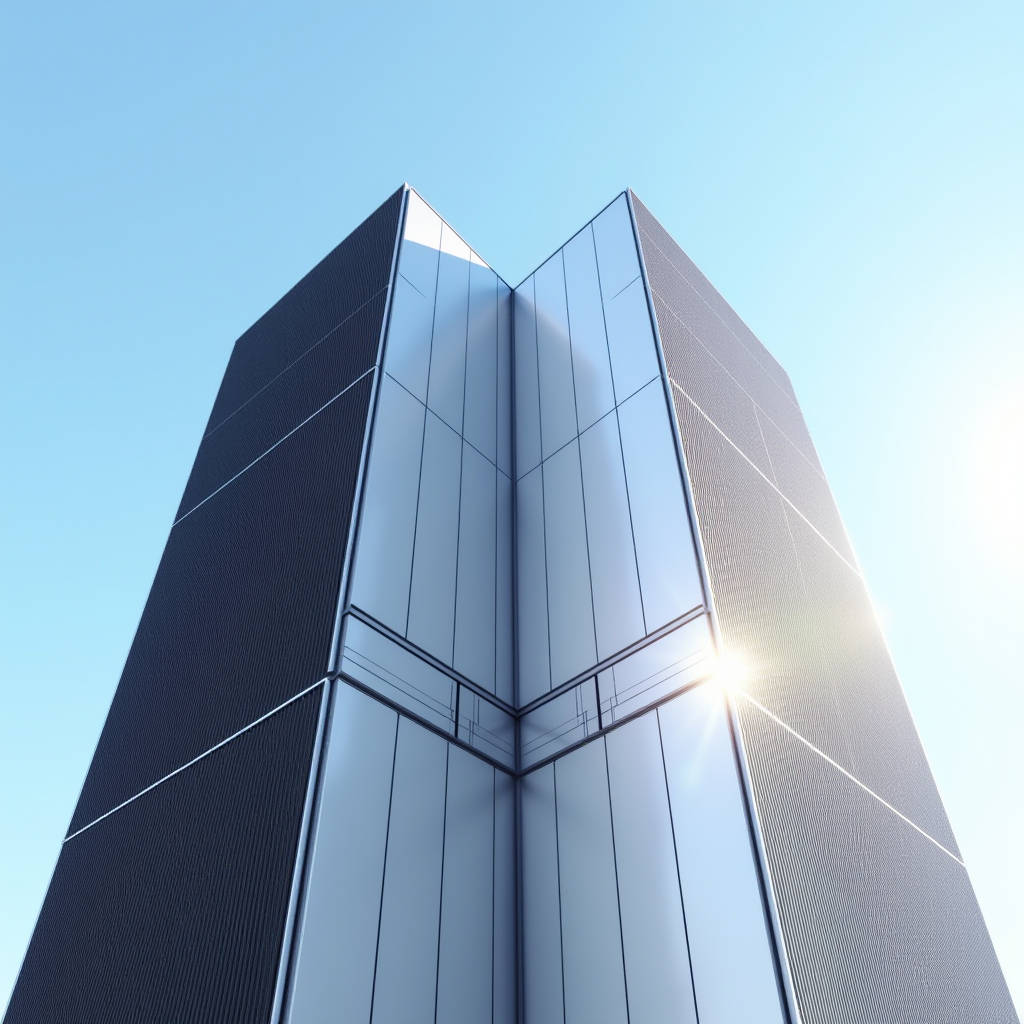
Façade procurement teams evaluating exterior wall cladding for mid-rise and high-rise commercial projects face a decision that reverberates through every phase of construction: solid aluminium panels or lightweight aluminium composite material (ACM). The distinction is not semantic. It affects fire compliance, wind-load performance, flatness tolerances, and ultimately the liability chain from specifier to installer. This article breaks down the engineering realities behind 2.0mm, 2.5mm, and 3.0mm solid aluminium cladding panels — single-skin sheets formed from mill-grade AA1100, AA3003, or AA5005 alloys — and maps them against the project criteria that matter most to general contractors, curtain wall specialists, and cost consultants managing international procurement across Asia, the Middle East, and Europe.
What Counts as Solid Aluminium Exterior Wall Cladding — and What Does Not
Solid aluminium exterior wall cladding refers to single-layer sheets manufactured from wrought aluminium alloy, typically supplied in thicknesses of 2.0mm, 2.5mm, or 3.0mm. The material arrives at the fabrication shop as coil or flat sheet, gets cut to panel dimensions on CNC turret punches or waterjet machines, then routed, folded, and welded into cassette or rainscreen profiles. There is no polyethylene core. There is no mineral-filled middle layer. The panel is one homogeneous metal cross-section from face to back.
This matters because the building envelope's reaction to fire, thermal cycling, and negative wind suction is fundamentally different from composite panels. ASTM E84 and EN 13501-1 classifications for solid aluminium cladding are straightforward: the material is non-combustible (A1 or A2-s1,d0 depending on coating and assembly). There is no core to delaminate, no polymer to melt, and no cavity propagation risk that fire engineers lose sleep over. For projects above 18 metres in the UK, Dubai, or Singapore, this distinction alone can determine whether a cladding system passes gateway approval.
Field Note: When specifying solid aluminium panels for rainscreen applications, always request the mill certificate showing alloy grade and temper. AA3003-H14 is the workhorse for flat panels. AA5005-H14 offers better anodising response. If the mill cert says "AA1100," you are looking at commercially pure aluminium with lower tensile strength — fine for interior liners, not ideal for large-format exterior wall cladding panels subjected to high wind zones.
Panel Thickness and the Engineering Logic Behind 2.0mm, 2.5mm, and 3.0mm
Thickness selection is not a cost-cutting exercise. It is a deflection calculation. A 2.0mm solid aluminium panel spanning 600mm between fixing rails will behave differently from the same panel at 1,200mm centres. The rule of thumb among experienced façade engineers: for visible flatness under raking light, panel deflection under wind load should not exceed L/175, where L is the span between supports. For projects with stringent architectural flatness requirements — think smooth metallic façades on corporate headquarters — the limit often tightens to L/240.
Here is how the three common thicknesses map to real-world applications:
- 2.0mm — Suitable for small-format panels (up to 600mm x 1,200mm) with close support centres. Common in soffit liners, column cladding, and interior feature walls. Not recommended for large rainscreen panels above 1m² without stiffener ribs.
- 2.5mm — The sweet spot for most commercial exterior wall cladding. Handles panel sizes up to 1,200mm x 2,400mm with standard aluminium subframe spacing. Offers a balance of weight (approx. 6.75 kg/m²), cost, and flatness retention after routing and folding.
- 3.0mm — Specified for large-format panels (1,500mm x 3,000mm+), high-wind zones, and projects where the architect demands zero oil-canning under any lighting condition. Heavier at 8.1 kg/m², which increases dead load on the supporting structure and may require heavier-gauge subframe members.
PVDF Coating: Kynar 500, Film Thickness, and the Delta E Conversation
No discussion of exterior wall cladding gets far without addressing the coating system. For solid aluminium panels, the industry benchmark is a three-coat or four-coat PVDF (polyvinylidene fluoride) system based on Kynar 500 resin — a minimum 70% PVDF content by weight. The standard specification calls for a total dry film thickness (DFT) of 30–40 microns for a three-coat system and 40–50 microns for a four-coat metallic or pearlescent finish.
Procurement managers should request the following from coating suppliers or panel fabricators:
- Kynar 500 or Hylar 5000 resin certification from the resin manufacturer (not just the paint brand)
- DFT measurement reports per batch, using calibrated eddy-current gauges per ISO 2360
- Accelerated weathering test results: minimum 4,000 hours QUV-B or Xenon arc per ASTM G154, with Delta E not exceeding 5.0 after exposure
- Colour consistency across batches: Delta E ≤ 1.5 under D65 illuminant, measured with a spectrophotometer
Pro Tip: During the sample approval stage, insist on a "range panel" — a physical sample showing the acceptable upper and lower colour limits. This single document resolves more factory-vs-site disputes than any contract clause. We have seen entire container shipments rejected at port because the approved sample was one perfect panel and production ran slightly lighter. The range panel sets realistic expectations.
Fire Performance and the Solid Aluminium Advantage
Regulatory changes since 2017 have reshaped the exterior wall cladding market globally. The UK's Building (Amendment) Regulations 2018 effectively banned combustible materials in external walls of relevant buildings over 18 metres. Dubai Civil Defence now mandates non-combustible cladding for all new high-rise projects. Singapore's SCDF Circular on Cladding Materials tightened requirements after several façade fires across the region.
Solid aluminium panels with PVDF coating achieve EN 13501-1 classification A1 or A2-s1,d0, depending on the specific assembly and coating weight. This is a fundamental advantage over ACP products with polyethylene cores, which typically classify B or lower. For contractors bidding on government, healthcare, or high-rise residential projects, specifying solid aluminium exterior wall cladding removes a compliance variable before it becomes a problem.
Fabrication Tolerances That Affect Installation
The gap between a well-fabricated panel and a problematic one is measured in millimetres. For solid aluminium cladding panels, the following fabrication tolerances should be written into purchase specifications:
| Parameter | Standard Tolerance | Measurement Method |
|---|---|---|
| Panel length/width | ±1.0mm for panels ≤ 1,200mm; ±1.5mm for panels > 1,200mm | Calibrated tape or digital calliper |
| Diagonal difference | ≤ 2.0mm for panels ≤ 1m²; ≤ 3.0mm for larger panels | Corner-to-corner measurement |
| Fold angle deviation | ±1.0° from specified angle | Digital protractor |
| Flatness (oil canning) | ≤ 0.5% of panel diagonal length | Feeler gauge on flat surface |
| Bend radius (internal) | ≥ 1.5 × material thickness | Radius gauge |
| Hole/slot position | ±0.5mm from drawing datum | CNC verification or jig check |
These tolerances are not academic. On a 40-storey tower with 8,000 panels, a systematic 1.5mm length error per panel compounds into centimetres of accumulated misalignment by the time the crew reaches the top floor. The fix involves field cutting, which damages the PVDF edge seal and creates corrosion initiation points. Experienced façade contractors check the first 50 panels off the production line against these parameters before authorising full production runs.
Subframe Compatibility and Thermal Movement
Solid aluminium has a coefficient of thermal expansion of approximately 2.4 × 10⁻⁵ per °C. A 3-metre panel subjected to a 60°C temperature swing (from -10°C winter night to 50°C summer sun on a dark-coloured panel) will expand by roughly 4.3mm. The subframe design must accommodate this movement through slotted fixing holes, sliding clips, or expansion joints at panel boundaries.
Common subframe materials include aluminium extruded profiles (T5 or T6 temper), galvanised steel, and stainless steel. The compatibility question is galvanic: aluminium in contact with carbon steel in a wet environment will corrode. The fix is straightforward — use EPDM gaskets, nylon washers, or stainless steel fasteners (grade 304 or 316 for coastal environments) to isolate dissimilar metals. This is basic curtain wall engineering, but it gets overlooked surprisingly often in fast-track projects where the subframe package is procured separately from the cladding panels.
Procurement and Logistics: What the Contract Needs to Cover
International procurement of exterior wall cladding panels involves a chain of handovers — factory to forwarder, forwarder to port, port to site — each introducing risk of mechanical damage. Solid aluminium panels, especially those with decorative PVDF finishes, are unforgiving. A scratch through the topcoat cannot be repaired on site to match the factory finish. The panel is scrap.
Key contractual and logistics points:
- Packaging specification: Each panel should be interleaved with PE foam or non-abrasive paper, stacked on A-frame stillages, and wrapped in weather-resistant film. Pallets must be fumigated per ISPM 15 for international shipments.
- Inspection protocol: Define whether inspection is at factory (FOB) or at destination (CIF). For first-time supplier relationships, third-party inspection by SGS, Bureau Veritas, or TÜV before container loading is worth the cost — typically USD 800–1,500 per day depending on location.
- MOQ realities: Most solid aluminium panel fabricators set minimum order quantities around 300–500m² per colour and thickness. Below this, the per-unit cost rises sharply because the PVDF coating line setup and CNC programming amortisation become dominant.
- Lead time: Standard production lead time for custom exterior wall cladding panels is 4–6 weeks from drawing approval. Add 2–3 weeks for ocean freight from major Asian manufacturing hubs to Europe or North America, plus customs clearance.
Suppliers like Futeng® with integrated in-house coil coating lines and CNC routing capacity can compress lead times by eliminating the handover between coating subcontractor and fabrication shop — a common bottleneck in the supply chain. When evaluating suppliers, ask specifically whether PVDF coating is done in-house or outsourced. The answer affects both lead time reliability and quality accountability.
Cost Structure: Where the Money Goes
Understanding the cost breakdown of solid aluminium exterior wall cladding helps procurement teams negotiate from a position of knowledge. The following table represents typical cost drivers for a 2.5mm PVDF-coated panel, FOB factory gate:
| Cost Component | Approximate Share | Key Variables |
|---|---|---|
| Aluminium substrate (coil) | 40–50% | LME aluminium price, alloy grade, thickness |
| PVDF coating (3-coat) | 15–20% | Colour (metallics cost more), resin brand, film thickness |
| CNC fabrication | 15–20% | Panel complexity, number of folds, perforations |
| Packaging & logistics | 8–12% | Distance, freight mode, panel size |
| Quality assurance & margin | 5–10% | Testing requirements, warranty terms |
Note that aluminium substrate cost tracks the London Metal Exchange (LME) price, which fluctuates. Most reputable fabricators quote with an aluminium surcharge mechanism — the base price assumes a certain LME level, and if the LME moves more than a specified threshold, the surcharge adjusts. This is standard practice, not a negotiating trick. Locking a fixed price for 12 months without a surcharge clause means the supplier is either building in a large buffer or will cut corners if aluminium spikes.
When Solid Aluminium Is the Right Call — and When It Is Not
Solid aluminium exterior wall cladding is not the universal answer. For projects with tight budgets and low-rise structures where fire regulations permit combustible materials, ACM panels may be a commercially rational choice. For projects requiring complex 3D curves, solid aluminium can be stretch-formed or pressed, but the tooling cost and scrap rate increase significantly compared to flat panels.
The decision matrix typically looks like this:
- High-rise (>18m), any jurisdiction with strict fire codes: Solid aluminium is the default specification. The compliance path is clean.
- Mid-rise commercial, architectural flatness critical: Solid aluminium at 2.5mm or 3.0mm delivers the visual performance architects demand. The cost premium over ACM is real but often justified by reduced rejection rates during snagging.
- Low-rise, budget-driven, standard flatness: The decision becomes commercial. Solid aluminium may still win on total lifecycle cost if the building owner values durability and low maintenance over a 30-year service life.
- Coastal or corrosive environments: Solid aluminium with PVDF coating and stainless steel fixings is the standard recommendation. The absence of a core eliminates a potential delamination path in salt-spray conditions.
Quality Audit Checklist for Supplier Evaluation
When visiting a factory or conducting a remote supplier audit for exterior wall cladding procurement, the following checklist separates capable fabricators from those who will cause problems later:
- Mill certificate traceability: Can the supplier trace every panel back to the original aluminium coil heat number? This matters for warranty claims and regulatory compliance.
- Coating line capability: If PVDF coating is in-house, check the pretreatment process (chrome or chrome-free conversion coating), oven temperature profiling, and DFT measurement frequency. If outsourced, verify the coating subcontractor's qualifications.
- CNC capacity and maintenance: Look at the machine shop. Well-maintained CNC routers with regular calibration records produce consistent panels. Machines with visible wear on guide rails produce panels with edge quality issues.
- Packaging and loading area: This tells you more about a supplier's quality culture than the showroom. If finished panels are stacked without interleaving or left exposed to weather before wrapping, expect damage claims.
- Reference projects: Ask for projects completed 5+ years ago, not just recent installations. The long-term performance of exterior wall cladding is what matters, and a supplier with panels still performing well after a decade of weather exposure has proven their coating and fabrication quality.
The Chartered Institution of Building Services Engineers (CIBSE) and the Society of Façade Engineering both publish technical guidance notes that are worth consulting during the specification phase. The American Architectural Manufacturers Association (AAMA) 2605 standard remains the reference specification for high-performance organic coatings on aluminium extrusions and panels in North American markets.
Making the Specification Stick
The gap between a well-written exterior wall cladding specification and a successfully delivered project is filled with submittals, samples, mock-ups, and inspections. The most effective procurement strategies treat the specification not as a document to be handed over but as a process to be managed. This means engaging with the fabricator during the design development phase, not after the tender is awarded. It means conducting a pre-production meeting where tolerances, colour range panels, and inspection hold points are agreed in writing. It means having a qualified façade inspector on site during the first two weeks of panel installation, when the learning curve is steepest and the risk of systematic errors is highest.
Solid aluminium exterior wall cladding, specified correctly and procured through a capable supply chain, delivers decades of low-maintenance performance. The engineering is well understood. The standards are mature. The variable that determines project outcomes is the diligence applied to the procurement and quality assurance process — and that is entirely within the project team's control.