Exposed Fastener Metal Wall Cladding Panels and the 10 Year Re-gasket Burden
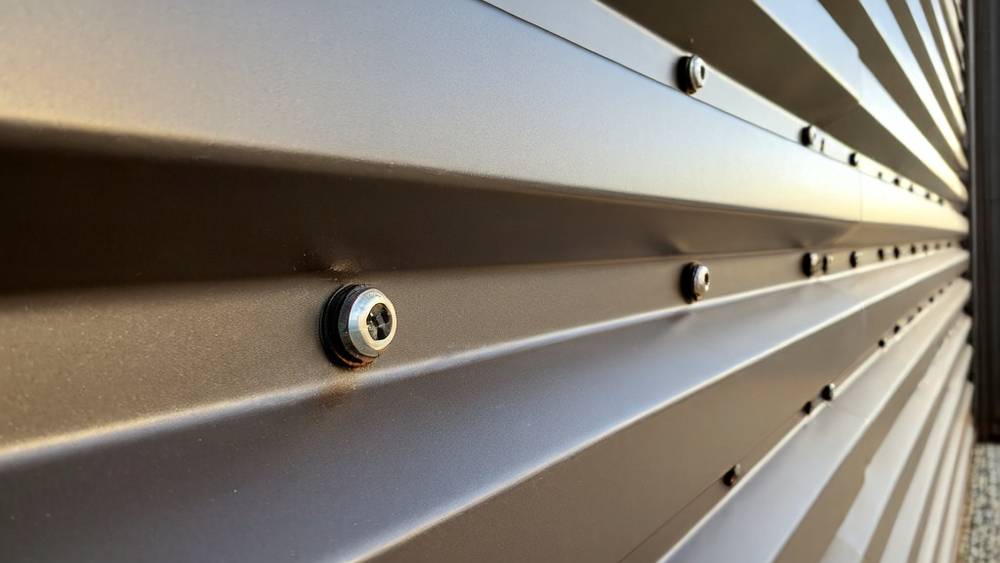
Exposed fastener metal wall cladding panels dominate the North American commercial and industrial building market for one reason: installed cost that runs 30–50% lower than concealed fastener alternatives. The trade-off, however, shows up years after commissioning — fastener gaskets degrade, water finds a path behind the panel, and maintenance teams start chasing leaks across thousands of square feet of wall area. This article examines the real cost equation behind exposed fastener metal wall cladding panels, including material pricing per square foot, fastener gasket lifecycles, thermal movement accommodation limits, and the long-term maintenance burden that specification writers often overlook when comparing system types.
The Cost Gap: Exposed vs Concealed Fastener Metal Wall Cladding Panels in 2026
Current North American pricing for exposed fastener metal wall cladding panels runs $4 to $12 per square foot installed, while concealed fastener and interlocking panel systems typically land between $12 and $45 per square foot installed. The numbers come from the 2026 pricing data compiled by industry cost databases and contractor bid analysis. At face value, choosing exposed over concealed on a 20,000-square-foot commercial wall means a difference of $160,000 to $660,000 in total project cost. That number alone drives specification decisions.
But the gap deserves closer scrutiny. The $4–$12 range for exposed fastener panels typically covers 24- or 26-gauge steel panels with SMP (silicone-modified polyester) paint finishes, using standard zinc-plated carbon steel fasteners with EPDM washers. Moving to aluminium panels — specifically 2.0 mm or 2.5 mm solid aluminium sheets — pushes the material cost upward, though the fastener and substructure approach remains largely identical to steel. Solid aluminium panels in exposed fastener configurations typically land at $8–$14 per square foot installed, depending on gauge, finish specification, and project geography.
What the per-square-foot comparison misses is the lifecycle. A concealed fastener system spreads thermal movement across the entire panel perimeter through engineered clips that allow for expansion and contraction independently of the fastener seal. Exposed fastener systems concentrate all thermal stress at each fastener penetration point. Over years of daily temperature cycles, the EPDM washer under each screw head experiences compression set, ultraviolet degradation, and eventual failure. When the washer fails, the penetration becomes a leak path.
| Cost Factor | Exposed Fastener System | Concealed Fastener System |
|---|---|---|
| Installed cost per sq ft (steel, 24 ga) | $4 – $12 | $14 – $28 |
| Installed cost per sq ft (solid aluminium, 2.0 mm) | $8 – $14 | $18 – $45 |
| Typical fastener count per 100 sq ft | 80 – 120 | 0 (face screws) or 12 – 24 (clip screws, hidden) |
| Primary water barrier | EPDM washer at each screw | Panel joint geometry + gaskets |
| Thermal movement accommodation | Slot clearance at fastener (limited) | Engineered sliding/expansion clips |
| Re-gasketing cycle (years) | 10 – 18 | 25 – 35+ |
| Typical warranty on fastener seal | 5 – 10 years | N/A (no exposed penetration) |
| Labor to re-seal 1,000 fasteners | $2,500 – $5,000 | $0 (no exposed fasteners) |
Fastener Gasket Degradation: The Maintenance Time Bomb
Every exposed fastener on a metal wall cladding panel relies on a small EPDM or neoprene washer — typically 10 to 14 mm in diameter — to seal the penetration against water ingress. These washers sit compressed between the screw head and the panel surface, typically at 20–30% compression. The seal depends on maintaining that compression force over decades of thermal cycling, UV exposure, ozone attack, and mechanical vibration from wind loading.
EPDM (ethylene propylene diene monomer) is the industry-standard washer material for metal wall cladding fasteners, and for good reason: it offers excellent ozone resistance and maintains flexibility across a wide temperature range. But EPDM is not immune to compression set. Under sustained compressive load at elevated temperatures — conditions that occur routinely on south-facing dark-coloured panels in summer — EPDM gradually loses its ability to rebound. Once compression set exceeds approximately 40%, the washer no longer maintains adequate sealing pressure, and capillary action can draw water past the fastener shank.
The timeline varies by climate. In moderate zones like the Pacific Northwest or Great Lakes region, EPDM washer failure typically begins appearing at years 12–15. In high-UV, high-temperature environments like Phoenix, Las Vegas, or South Florida, degradation accelerates, and failures can emerge as early as years 8–10. Panel colour matters too: dark bronze or charcoal panels absorb more solar radiation, elevating the surface temperature at each fastener head and accelerating compression set.
Re-gasketing a building is not a simple maintenance task. Each failed fastener must be removed, the old washer scraped off, a new stainless steel screw with integrated EPDM washer driven into the same hole, and — critically — the hole must not have elongated from wind-induced panel movement. Elongated holes require either a larger-diameter fastener or panel replacement at that location. For a 30,000-square-foot industrial building with fasteners at 12-inch on-centre spacing, the fastener count approaches 40,000. Even at conservative labour rates, a full re-gasket programme can run $50,000 to $100,000 — costs that never appeared in the original project budget.
Thermal Movement: Why Fastener Spacing Matters More Than You Think
Solid aluminium metal wall cladding panels expand and contract at roughly 0.000023 mm per mm per degree Celsius — approximately twice the thermal movement rate of steel panels. A 3-metre aluminium panel subjected to a 60°C temperature swing (from -10°C winter night to 50°C summer sun on a dark finish) will expand and contract by approximately 4.1 mm along its length. In an exposed fastener system, that movement must be absorbed within the clearance between the fastener shank and the pre-punched or field-drilled hole in the panel.
Standard installation practice calls for pre-punched holes that are 1.5 to 2.0 mm larger than the fastener shank diameter, providing a small amount of float. But this clearance only accommodates movement if the panel can slide freely against the substructure. Paint adhesion, dirt accumulation, and corrosion at the panel-to-substructure interface can lock panels in place over time, forcing all thermal movement to concentrate at the fastener holes. The result is hole elongation — oval-shaped wear patterns that progressively enlarge and eventually exceed the washer diameter, creating a direct leak path.
The American Architectural Manufacturers Association (AAMA) and ASTM do not publish a single standard that directly governs exposed fastener thermal movement accommodation for wall panels, but the principles outlined in ASTM E283 (air leakage) and ASTM E331 (water penetration under static pressure) set the testing framework. Panel systems that pass these tests when new may fail after five to ten years of thermal cycling, as hole elongation undermines the original seal geometry.
Specifiers who want to mitigate this risk on exposed fastener metal wall cladding panels should require stainless steel fasteners with oversized EPDM washers (minimum 16 mm diameter), specify slotted rather than round pre-punched holes on panels over 2 metres in length, and mandate that installers apply an anti-seize compound or isolation tape between the panel back and the steel substructure to prevent galvanic bonding that can lock panels in place. These details add marginal cost at installation but dramatically reduce the rate of hole elongation.
Galvanic Corrosion: The Hidden Risk When Aluminium Meets Steel Fasteners
Exposed fastener systems on solid aluminium panels introduce a galvanic cell at every single screw location. Aluminium sits at approximately -0.75V on the galvanic series in seawater, while zinc-plated carbon steel sits at roughly -1.05V. The potential difference of 0.30V is enough to drive galvanic corrosion under wet conditions, with the steel fastener acting as the sacrificial anode. The fastener corrodes preferentially, and the corrosion product — iron oxide — expands and fractures the surrounding aluminium, a phenomenon known as "crevice corrosion" at the fastener hole perimeter.
The standard mitigation is to specify stainless steel fasteners (304 or 316 grade) with aluminium panels. Stainless steel sits closer to aluminium on the galvanic series, reducing the potential difference to approximately 0.15V to 0.20V — still not zero, but low enough that corrosion rates remain manageable in most environments. In coastal or industrial atmospheres with high chloride or sulfur dioxide concentrations, even stainless fasteners can drive corrosion, and the specification should call for 316 stainless with an additional isolation washer or nylon sleeve at each penetration.
Manufacturers like Futeng® supply solid aluminium cladding panels with pre-punched hole patterns engineered for specific fastener types and thermal movement requirements. For projects in aggressive environments, the panel specification should include a chromate conversion coating or thin-film anodised layer at each pre-punched hole edge, providing an additional corrosion barrier at the most vulnerable point in the system.
SMP vs PVDF Finishes: The Finish Lifecycle Gap in Exposed Fastener Systems
SMP (silicone-modified polyester) paint remains the default finish on most cost-driven exposed fastener metal wall cladding panel projects. SMP offers acceptable colour retention and chalk resistance for approximately 10–15 years in temperate climates, at a coating cost roughly 50–60% lower than PVDF (polyvinylidene fluoride). For a specifier working to a tight budget, SMP on exposed fastener panels looks like a logical pairing: both the fastener gasket and the paint will need attention around the same time, roughly years 12–18.
The problem with this logic is that SMP and EPDM degrade through different mechanisms and on different schedules. SMP chalks gradually — the pigment binder breaks down under UV, and the surface develops a white powdery residue that washes unevenly, creating a patchy appearance. EPDM fails suddenly — the washer develops a crack, or compression set crosses the threshold, and water ingress begins immediately. A building with SMP-finished panels may look cosmetically tired but remain weathertight; a building with failed EPDM washers leaks regardless of how good the paint looks.
PVDF coatings, typically applied as a three-coat system (primer, colour coat, clear coat) meeting AAMA 2605 requirements, carry a 20–30 year film integrity warranty and maintain colour and gloss far longer than SMP. On solid aluminium panels, PVDF is the standard finish for architectural work. Pairing PVDF with exposed fasteners creates a mismatch: the panel finish will outlast the fastener seals by a decade or more. The building owner pays for a premium finish but still faces the same re-gasket cycle. Some specifiers accept this trade-off for aesthetic reasons — PVDF offers a much wider colour range and better colour consistency across batches — but the lifecycle cost analysis should account for the re-gasket event that interrupts the otherwise low-maintenance PVDF service life.
Substructure Design: Where Exposed Fastener Systems Hide Additional Cost
Exposed fastener panels require a continuous or near-continuous substructure to receive fasteners at the specified spacing, typically 300 to 400 mm on centre vertically and at each horizontal girt. Concealed fastener systems, by contrast, can often span between girts spaced 1,200 to 1,500 mm apart, because the panel itself provides structural stiffness and the clips only attach at discrete points.
The substructure cost difference is substantial. For a steel-framed commercial building, reducing girt spacing from 1,500 mm to 400 mm means adding roughly 2.75 additional horizontal girts per metre of wall height. At approximately $8–$12 per linear metre for galvanised steel girts (including brackets and installation), the additional substructure cost for a 10-metre-high wall runs $220–$330 per linear metre of building perimeter. On a 60-metre x 30-metre building (180 linear metres of perimeter wall), the substructure premium for exposed fastener compatibility approaches $40,000–$60,000.
This cost is rarely attributed to the cladding system in project budgets. It gets buried in the structural steel or cold-formed framing line items. But from a value-engineering perspective, it narrows the gap between exposed and concealed fastener systems. When the substructure premium is added to the panel and fastener cost, and the re-gasket maintenance reserve is factored in, the 30–50% initial cost advantage of exposed fastener systems shrinks considerably over a 25-year building lifecycle.
Air and Water Barrier Integration: Sequencing Pitfalls
Exposed fastener metal wall cladding panels are typically installed as a rainscreen — the panel is the primary weather barrier, and any water that bypasses it should be intercepted by a secondary drainage plane behind the cladding. In practice, the sequencing of air and water barrier (AWB) installation relative to cladding substructure attachment creates conflicts that compromise the secondary drainage function.
The standard North American sequence places the AWB — usually a self-adhered or fluid-applied membrane — on the exterior sheathing before the cladding substructure is attached. Each girt bracket or Z-girt penetration through the AWB must be individually sealed with a flashing patch or liquid-applied sealant. On an exposed fastener wall with closely spaced girts, the number of AWB penetrations is significantly higher than on a concealed fastener system with wider girt spacing. Every penetration is a potential leak point if the sealant bead is missed or poorly applied.
The ASTM E2357 standard test method for air barrier assembly performance provides a framework for evaluating these systems, but it tests the assembly — not the long-term durability of individual penetration seals. Field quality control during AWB installation becomes disproportionately important on exposed fastener projects. Third-party inspection of penetration seals, particularly at girt-to-sheathing connections, should be specified in the quality assurance section of the specification.
When Exposed Fastener Metal Wall Cladding Panels Make Engineering Sense
Despite the maintenance burden, exposed fastener systems remain the correct choice for several application categories. Agricultural buildings, equipment storage facilities, unheated warehouses, and post-frame structures where interior moisture control is not critical benefit from the low installed cost without incurring meaningful lifecycle penalties. The building interior is not conditioned, so occasional water ingress does not damage contents or drive mould growth.
Short-service-life buildings — those with a planned 10–15 year operational window before demolition or major renovation — also favour exposed fastener systems. The re-gasket event falls outside the building's useful life, making it irrelevant to the project economics. Retail pop-up structures, temporary event facilities, and some industrial leasehold improvements fall into this category.
Buildings where the cladding is purely aesthetic and a secondary weather barrier carries the full water management load can also use exposed fastener panels effectively. In these designs, the metal wall cladding panel functions as a decorative rainscreen, and the AWB behind it is the primary drainage plane. Water that penetrates past fasteners drains down the AWB surface and exits through weeps at the base of the wall. This approach requires careful detailing of the cavity — minimum 10 mm depth, open ventilation at top and bottom, and corrosion-resistant cavity closures — but it decouples the panel fastener performance from building weathertightness.
Specification Checklist for Exposed Fastener Aluminium Wall Panels
For specifiers who determine that exposed fastener metal wall cladding panels suit their project requirements, the following technical provisions should appear in the specification to manage the known failure modes:
- Fastener material: 300-series stainless steel (304 minimum; 316 for coastal or industrial environments), with minimum 16 mm diameter EPDM washer, tested per ASTM D395 for compression set resistance.
- Pre-punched holes: Slotted holes (not round) on panels exceeding 2,000 mm in length, with slot orientation parallel to the panel's primary thermal movement axis. Minimum slot length 6 mm for panels up to 3,000 mm.
- Panel material: Solid aluminium 3003-H14 or 5052-H32, minimum 2.0 mm thickness for wall applications, with chromate conversion treatment at cut edges and pre-punched holes.
- Finish: PVDF three-coat system meeting AAMA 2605 when colour retention beyond 15 years is required; SMP meeting AAMA 2604 acceptable for short-service-life or agricultural applications.
- Galvanic isolation: Nylon or EPDM isolation washers between panel back and steel substructure at each fastener location; anti-seize compound on fastener threads.
- Substructure: Hot-dip galvanised steel girts, minimum G90 coating weight, with slotted connections to allow differential movement between the steel frame and aluminium panels.
- Air and water barrier: Fluid-applied or self-adhered membrane behind cladding, with all substructure penetrations individually sealed and inspected. Include AWB integrity testing per ASTM E2357 prior to panel installation.
- Maintenance manual: Deliver a building-specific maintenance plan identifying the expected re-gasket timeline (8–12 years for high-UV climates, 12–18 years for moderate climates) and fastener replacement procedure.
The exposed fastener metal wall cladding panel remains the most widely installed wall system in North American commercial and industrial construction. Its cost advantage is real and defensible for the right applications. The risk lies not in the system itself but in specifications that treat it as a "fit and forget" assembly. Fastener gaskets have a finite service life. Thermal movement concentrates at penetrations. Galvanic couples form at every dissimilar metal interface. A specification that acknowledges these realities and includes the necessary provisions — stainless fasteners, slotted holes, isolation details, and a maintenance schedule — transforms exposed fastener panels from a future liability into a predictable, manageable building component.
Solid aluminium panels bring additional considerations — higher thermal movement than steel, different galvanic behaviour, and a wider gap between finish life and fastener life — that demand even more rigorous detailing. Suppliers with deep experience in solid aluminium cladding, including manufacturers who offer pre-engineered hole patterns and factory-applied edge treatments, provide specifiers with a head start on addressing these challenges at the design stage rather than discovering them during the first re-gasket programme a decade after handover.