Why 3 0 mm Aluminium Wall Cladding Panels Still Show Oil Canning Under Raking Light
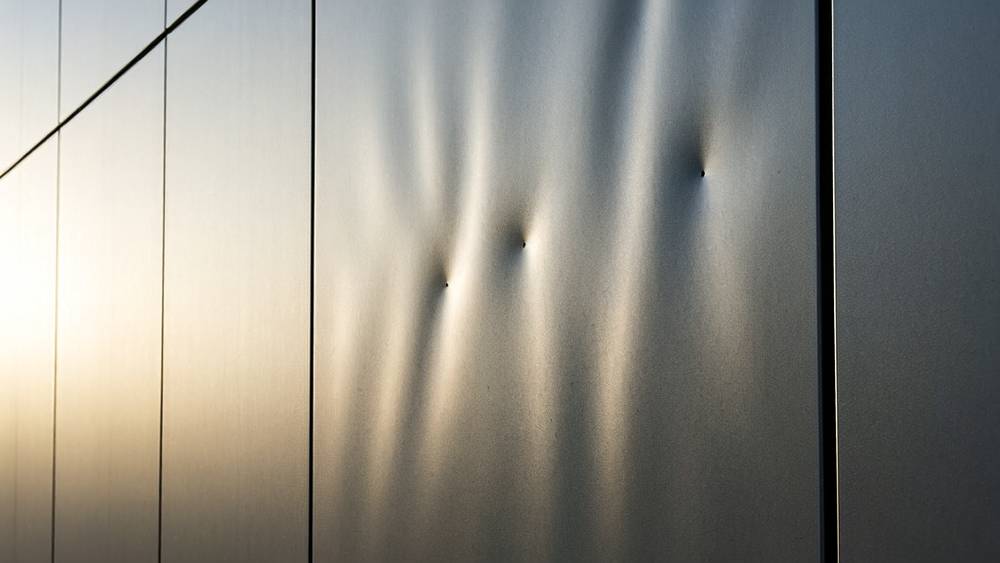
When a project team in Hamburg opened their first shipment of solid aluminium wall cladding panels for a 12-storey mixed-use tower, they discovered something no specification sheet had warned them about: 340 panels, each spanning 3.2 metres, had arrived with edge ripples subtle enough to pass a warehouse inspection but catastrophic once mounted under low-angle morning light. The general contractor halted installation for 11 days. The fabricator blamed the alloy temper. The supplier pointed to handling. The architect wanted answers. This is the reality of oil canning in aluminium wall cladding panels — a phenomenon that sits at the intersection of metallurgy, fabrication tolerances, and site logistics, and one that costs the global curtain wall industry millions in rework every year. Understanding what oil canning actually is, how it develops in solid aluminium sheets, and what procurement teams can do before issuing a purchase order separates projects that run on schedule from those that end up in mediation.
What Oil Canning Means in Solid Aluminium Wall Cladding Panels
Oil canning describes the wavy distortion visible on the flat surface of metal panels under certain lighting conditions. The name comes from the sound and motion of an old-fashioned oil can bottom popping in and out under thumb pressure. In solid aluminium wall cladding panels, the defect appears as a series of shallow ripples or undulations running across the face — not structural buckling, not coating failure, but an optical irregularity that changes with viewing angle and time of day.
The problem is not cosmetic in the way a scratched paint finish is cosmetic. Oil canning alters the perceived flatness of an entire façade. On a 20-metre elevation, a panel with 2 mm of peak-to-valley deviation can look perfectly acceptable at noon and visibly distorted at 4:00 p.m. when raking sunlight hits the surface at 15 degrees. Architects who specify aluminium wall cladding panels for uniform, monolithic façades often discover oil canning only after the scaffolding comes down, by which point remediation involves dismantling installed panels, replacing them, and absorbing delay penalties that can run to €3,000–€8,000 per day on large commercial projects.
The industry has a name for this problem but no universal acceptance threshold. AAMA 508-14, the voluntary standard for pressure-equalized rainscreen systems, references flatness but stops short of defining oil canning measurement protocols. ASTM does not publish a dedicated oil canning standard for architectural aluminium panels. This regulatory gap means that acceptance is often negotiated between project teams after the defect appears — exactly the moment when leverage is weakest for the party holding the invoice.
The Metallurgical Root: Why Solid Aluminium Sheets Are Prone to Distortion
Solid aluminium wall cladding panels behave differently from aluminium composite panels when residual stress releases. A 3.0 mm thick 5005-H14 or 5052-H32 sheet arrives from the mill with internal stress patterns locked into the grain structure during cold rolling. The temper designation — H14, H32, H34 — encodes how much strain hardening the material underwent after annealing. Higher temper means higher yield strength but also higher locked-in stress.
When the fabricator shears, punches, bends, or routs that sheet into a finished panel, they release some of that stress asymmetrically. The panel edges, now cut free, can relax and curl microscopically. The centre of the panel, still constrained by surrounding material, cannot. The result is a stress gradient across the panel width that manifests as waviness. The thinner the panel and the larger the unsupported span, the more visible the effect.
Three metallurgical factors determine oil canning susceptibility in aluminium wall cladding panels:
- Alloy selection: 5052-H32 offers better flatness stability than 5005-H14 because of its magnesium content and finer grain structure after processing. The trade-off is approximately 8–12% higher material cost.
- Temper uniformity: Sheets from mills with tighter gauge tolerance control (±0.03 mm versus ±0.05 mm) exhibit less post-cutting distortion because residual stress is distributed more evenly through the thickness.
- Stress-relief treatment: Some fabricators, including Futeng® when specified for high-visibility façades, run panels through a controlled stretch-leveling process before CNC routing. This adds roughly €3–5 per square metre but can reduce oil canning incidence by an estimated 60–70% based on project feedback from three curtain wall contractors surveyed in 2023.
Panel Geometry and the Span-Thickness Ratio That Matters
The single most predictive factor for oil canning in aluminium wall cladding panels is the ratio of unsupported panel width to material thickness. Industry field data, gathered from defect reports across 40 projects in Europe and Southeast Asia between 2018 and 2023, suggests the following risk profile:
| Span-to-Thickness Ratio | Oil Canning Risk Level | Typical Panel Configuration | Recommended Action |
|---|---|---|---|
| < 200:1 | Low | 2.5 mm panel, 400 mm span | Standard specification acceptable |
| 200:1 to 350:1 | Moderate | 3.0 mm panel, 800 mm span | Require stress-relieved sheets; specify stiffener ribs |
| 350:1 to 500:1 | High | 2.0 mm panel, 900 mm span | Add intermediate stiffeners; consider 3.0 mm upgrade |
| > 500:1 | Very High | 2.0 mm panel, 1,200 mm span | Redesign panel layout or switch to stiffened cassette system |
These numbers are empirical, not codified. They reflect what experienced façade engineers have learned through warranty claims and remedial projects. A 2.0 mm thick panel spanning 1,200 mm between support points — a ratio of 600:1 — will almost certainly show oil canning under critical lighting, regardless of alloy or fabrication quality. The physics is simple: thin aluminium under low bending stiffness cannot resist the internal stress redistribution that follows cutting and handling.
Procurement teams should not rely on fabricator assurances alone. The specification should state a maximum span-to-thickness ratio — 350:1 is a defensible upper limit for most commercial projects — and require shop-drawing submittals that calculate this ratio for every unique panel dimension on the project. If the fabricator cannot provide these calculations, the procurement risk is unquantified.
Fabrication Variables That Amplify or Suppress Oil Canning
Even with optimal alloy and thickness choices, fabrication processes can introduce or mitigate oil canning in aluminium wall cladding panels. The following variables deserve attention during vendor qualification:
CNC Routing and Edge Relaxation
When a CNC router cuts a perimeter profile into a flat sheet, the tool removes material and releases stress along the cut path. The narrower the remaining edge flange — the distance from the cut line to the panel edge — the less constrained the panel perimeter becomes. A flange width below 25 mm on a 3.0 mm panel provides minimal resistance to edge curling. Some fabricators compensate by leaving a wider flange and folding it into a return leg, which stiffens the edge and masks incipient waviness.
Bending Sequence and Springback
Panels with multiple bends — trays, cassettes, folded corners — accumulate stress with each forming operation. The sequence matters. Bending the long edges first, then the short edges, produces different residual stress patterns than the reverse order. Shops that have invested in CNC press brakes with programmable back-gauging and angle correction can hold bend angle tolerances to ±0.5°, which reduces the springback variation that contributes to panel-to-panel flatness inconsistency.
Stiffener Bonding Method
Most large-format aluminium wall cladding panels include aluminium stiffener profiles bonded to the rear face with structural adhesive. The bonding method directly affects flatness. Panels where stiffeners are applied under vacuum pressure with controlled adhesive thickness (0.5–1.0 mm) exhibit better long-term flatness than those spot-bonded manually. The stiffener layout — vertical, horizontal, or grid pattern — should be designed so that no point on the panel face is more than 400 mm from a stiffener line for 3.0 mm material, and 300 mm for 2.0 mm.
Site Handling and the Damage That Looks Like Manufacturing Defect
Not all oil canning originates in the factory. Panels that leave the fabricator flat can develop waviness after improper site storage, handling, or installation. This distinction is critical because it determines whether the cost of replacement falls on the supplier or the installer.
Common site-induced causes include:
- Stacking without interleaving: Aluminium wall cladding panels stacked face-to-face without protective interleaving sheets can develop pressure marks and subtle deformation, particularly in warm weather when the material is softer.
- Lifting from one end: A 3-metre-long panel lifted by two workers from one end can flex enough to exceed the elastic limit locally, leaving a permanent set. Panels above 2.5 metres in length should be lifted using suction cups or spreader bars.
- Over-tightening fasteners: When installers torque fasteners beyond the specified limit, the panel edge is pulled into the substructure, inducing compressive stress around the fastener point. This creates a characteristic "dimple" pattern visible under grazing light.
- Thermal exposure during storage: Dark-coloured panels stored in direct sunlight before installation can reach surface temperatures above 70°C. If they are then installed while hot and restrained by fixed fasteners, cooling contraction can produce compressive buckling.
A practical site protocol: require the installer to unwrap and inspect panels under oblique lighting before hoisting. Photograph each panel face with a date stamp. If oil canning appears after installation on panels that passed the pre-installation inspection, the root cause is almost certainly installation-related rather than manufacturing-related.
Specification Language That Protects the Project
Most architectural specifications for aluminium wall cladding panels address oil canning with vague language: "Panels shall be free from objectionable oil canning." This is unenforceable. The word "objectionable" means different things to an architect reviewing a mock-up in diffuse daylight and a contractor staring at a completed façade at sunrise.
A defensible specification should include:
- A defined inspection protocol: State the viewing distance (typically 6 metres), lighting angle (specify time of day or artificial lighting setup), and viewing angle relative to the panel surface. Reference AAMA 508-14 Section 8.3.2 for guidance on visual inspection conditions.
- An acceptance criterion: The simplest measurable criterion is peak-to-valley deviation across any 300 mm gauge length on the panel face, measured with a straightedge and feeler gauge. A limit of 0.8 mm per 300 mm is achievable by competent fabricators using stress-relieved material. Tighter limits (0.5 mm/300 mm) should be reserved for premium projects with corresponding budgets.
- A mock-up requirement: The specification should require a visual mock-up of at least three full-size panels, installed on the actual substructure, inspected and approved by all parties before production begins. Mock-up approval establishes the baseline for what "acceptable" looks like on that specific project.
- Remediation hierarchy: State clearly that panels failing the acceptance criterion will be replaced, not repaired. Field-applied fixes — heating, re-rolling, on-site adhesive stiffeners — have poor long-term track records on solid aluminium wall cladding panels.
The American Architectural Manufacturers Association provides technical guidance documents that can be referenced in specification Division 07 42 13. Meanwhile, the International Organization for Standardization publishes ISO 7599:2018 for anodizing quality, which indirectly affects flatness because poor anodizing process control can introduce thermal distortion.
Coating Systems and Their Interaction with Panel Flatness
The coating system on aluminium wall cladding panels does not cause oil canning, but it can make existing waviness more or less visible. Three coating-related factors matter:
Colour and gloss level: Dark colours (Ral 7016 Anthracite Grey, Ral 9005 Jet Black) and high-gloss finishes (above 70 GU at 60°) amplify the optical visibility of surface undulations. The same panel that looks flat in Ral 9010 Pure White matte can show pronounced oil canning in Ral 9006 White Aluminium metallic. Architects who insist on dark, glossy solid aluminium wall cladding panels must understand that they are choosing the most oil-canning-revealing combination available and should specify correspondingly tighter flatness tolerances.
PVDF cure temperature: Kynar 500® or Hylar 5000® PVDF coatings require a peak metal temperature of 232–249°C during curing. If the oven temperature profile is uneven, panels can experience differential thermal exposure, introducing minor distortion. Quality-focused coaters run their lines with thermocouple arrays to verify uniform heating across the full panel width.
FEVE fluoropolymer alternatives: FEVE-based coatings cure at lower temperatures (typically 180–200°C), which reduces the thermal stress input during finishing. For projects where oil canning is a primary concern and the budget allows a premium coating specification, FEVE offers a dual benefit: superior gloss retention per AAMA 2605 and lower processing-induced distortion risk. The FEVE fluoropolymer technology was pioneered in Japan and has a 30-plus-year track record in architectural applications.
Testing Methods: What Works and What Does Not
Three testing approaches are used in industry to assess oil canning in aluminium wall cladding panels. Only one is practical for project-level quality control.
1. Visual Inspection Under Controlled Lighting (Practical)
The panel is mounted vertically or held at the intended installation angle. A strong directional light source — typically a 500W halogen lamp or equivalent LED — is positioned to create grazing incidence at 5–15° to the panel surface. The inspector views the panel from 6 metres at an angle of 45–60° to the surface. Waviness visible under these conditions is documented photographically and compared against the agreed acceptance standard. This method is specified in project QC plans because it replicates the worst-case site condition: morning or evening sunlight raking across the façade.
2. Straightedge and Feeler Gauge (Quantitative)
A calibrated straightedge (minimum length 300 mm) is placed on the panel surface, and the gap between the straightedge and the panel is measured with feeler gauges. Measurements are taken at multiple locations across each panel face. This method produces numbers that can be written into a specification, but it is time-consuming for large panel quantities and only captures deviation along a single line, potentially missing complex waviness patterns.
3. Digital Image Correlation (Research-Grade)
DIC systems project a speckle pattern onto the panel surface and use stereo cameras to measure full-field deformation under controlled conditions. This technology, available through organisations like the RILEM technical committees, provides the most complete picture of panel flatness but is not practical for routine production QC due to cost and complexity.
Cost Implications: What Flatness Costs Versus What Oil Canning Costs
Procurement decisions about aluminium wall cladding panels often treat flatness as a binary yes/no property rather than a cost variable. This is a mistake. Flatness exists on a spectrum with measurable cost increments at each level:
| Flatness Specification | Material Upgrade | Fabrication Adders | Approximate Cost Premium vs. Baseline | Typical Application |
|---|---|---|---|---|
| Standard commercial (no oil canning control) | 5005-H14, 2.0 mm | None | Baseline €55–70/m² | Industrial sheds, rear elevations |
| Moderate flatness (basic QC) | 5005-H14, 2.5 mm | Visual inspection sampling | +12–18% | Commercial offices, retail |
| High flatness (specified oil canning limit) | 5052-H32, 3.0 mm, stress-relieved | Stiffener grid, 100% visual QC | +25–35% | High-visibility façades, dark colours |
| Premium flatness (museum-grade) | 5052-H32, 3.0 mm, stretcher-leveled | FEVE coating, vacuum-bonded stiffeners, full DIC sample testing | +50–70% | Signature architecture, low-angle sunlight façades |
A project that spends €15/m² extra on flatness controls for 2,000 m² of aluminium wall cladding panels adds €30,000 to the façade budget. If that investment prevents a single week of site delay and 100 panel replacements, it pays for itself several times over. Projects that skip flatness controls and encounter oil canning after installation face replacement costs of €120–180/m² (removal, new panel fabrication, reinstallation) plus programme delay costs that dwarf the original panel value.
Procurement Checklist: 10 Questions to Ask Before Ordering
Based on field experience across multiple international projects, the following questions should be answered before a purchase order is issued for aluminium wall cladding panels:
- What alloy and temper does the fabricator propose, and can they provide mill test certificates showing gauge tolerance and mechanical properties for the specific coil or sheet lot?
- Does the fabricator perform stress-relief processing (stretch-leveling or roller-leveling) after shearing and before CNC routing?
- What is the maximum span-to-thickness ratio for the largest panel on this project, and has the fabricator confirmed it falls below 350:1?
- What stiffener layout is proposed, and what is the maximum unsupported distance between stiffener lines on the panel face?
- Is the coating line oven temperature monitored with thermocouple arrays, and can the coater provide a time-temperature profile for each production batch?
- Does the fabricator perform visual flatness inspection under oblique lighting as part of their standard QC, and can they provide photographic records?
- Will the supplier provide a mock-up of at least three full-size panels in the specified colour and gloss level, installed on the project substructure, before production?
- What is the written acceptance criterion for oil canning (measurement method, gauge length, deviation limit), and is it included in the supply contract?
- What site handling and storage protocol does the supplier recommend, and will they provide this in writing as part of the submittal package?
- What warranty terms apply to panel flatness, and do they explicitly address oil canning or exclude it?
These questions are not theoretical. Each one corresponds to a real project where the absence of a clear answer led to disputes, delays, or both.
"Oil canning is not a material defect. It is an outcome of interacting decisions made across the supply chain — from alloy selection at the mill to fastener torque on site. Managing it means managing those decisions, not hoping they align by accident." — Façade engineer, Frankfurt, project debrief 2022
The Fabricator's Perspective: Why Not Everyone Delivers Flat Panels
Understanding the economics on the supply side helps procurement teams negotiate realistic specifications. A fabricator producing aluminium wall cladding panels at competitive market rates operates on thin margins — typically 8–15% net after material, labour, and overhead. Stress-relieving adds process time and equipment cost. Full visual inspection under oblique lighting adds labour minutes per panel. Stiffener grids add material and bonding time. FEVE coating costs roughly 30–40% more than standard PVDF.
A fabricator asked to deliver premium flatness at standard commercial pricing has three options: absorb the cost and lose money, cut corners elsewhere, or decline the project. The first two outcomes harm the project. The third is honest but leaves the procurement team searching for alternatives.
The practical approach: separate the flatness specification from the base panel specification in tender documents. Ask bidders to price the base package at commercial flatness and provide an add-on price for enhanced flatness controls. This transparency allows the project team to make an informed cost-benefit decision and signals to bidders that flatness is a valued, priced attribute rather than an unfunded expectation.
Some manufacturers, including Futeng® for export-oriented projects, have invested in dedicated flatness-critical production cells that combine stretcher-leveling, automated stiffener bonding, and 100% oblique-light QC in a single workflow. The existence of such capabilities in the supply chain means that projects with genuine flatness requirements can find qualified suppliers — but only if the specification makes those requirements explicit and measurable. The Aluminum Association publishes alloy and temper designations that form the starting point for any serious flatness conversation.
Conclusion
Oil canning in aluminium wall cladding panels is preventable but not by accident. Prevention requires decisions at five stages: alloy and temper selection, panel geometry design within defensible span-to-thickness limits, fabrication processes that manage residual stress, coating choices that do not amplify inherent waviness, and site handling protocols that preserve the flatness delivered by the factory. Each stage involves cost and each cost is small compared to the expense of discovering oil canning after installation. The single most effective step a procurement team can take is to write an acceptance criterion — a number, a measurement method, a viewing condition — into the supply contract before ordering. Without that number, flatness is an opinion. With it, flatness is a deliverable.