PVDF Versus FEVE Coating on Solid Aluminium Panels for Exterior
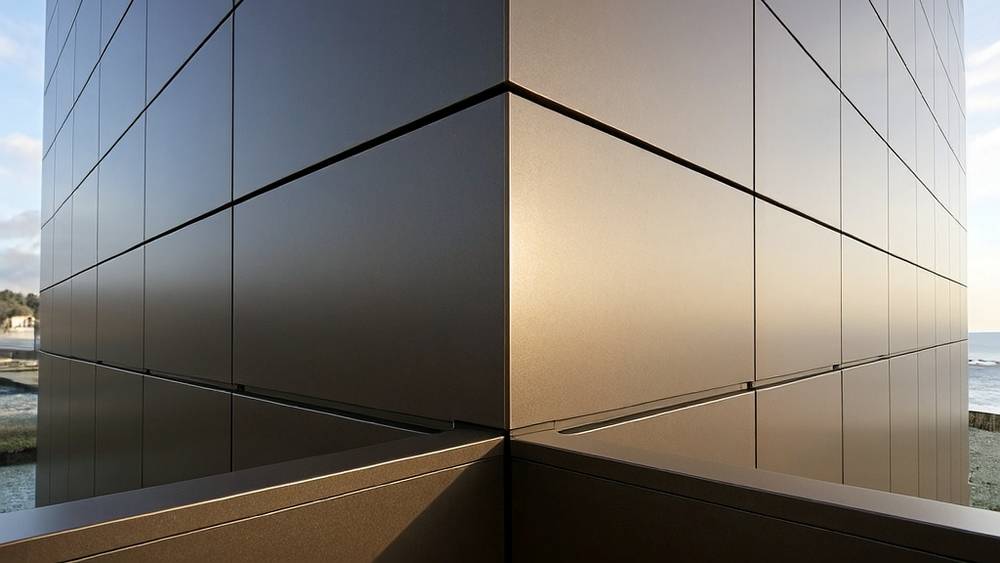
When a project specification calls for panels for exterior cladding on a building located within 800 metres of a breaking surf coastline, the conversation shifts entirely. Standard architectural aluminium finishes that perform adequately inland for 20 years can show visible chalking, colour fade, and filiform corrosion within 36 months in a marine exposure zone. This is not a hypothetical scenario. We have seen it on a mixed-use tower in Gold Coast, Australia, where PVDF-coated panels specified to AAMA 2605 began losing gloss at a rate of 1.8 GU per year—double the expected degradation curve for non-coastal environments. The difference between a 15-year facade and a 40-year facade in these conditions often comes down to a single decision made during the coating specification phase: PVDF (polyvinylidene fluoride) or FEVE (fluoroethylene vinyl ether). This article examines that decision through the lens of solid aluminium cladding panels, with specific focus on the 2.5 mm and 3.0 mm gauges that dominate mid-rise and high-rise commercial envelopes in corrosive atmospheres.
The Chemistry That Separates PVDF from FEVE
Both PVDF and FEVE belong to the fluoropolymer coating family, and both carry the label "high-performance architectural coating." That shared terminology creates a dangerous assumption of equivalency. The chemistry tells a different story.
PVDF coatings, governed by AAMA 2605, are dispersion-based systems. The fluorocarbon resin—typically 70% PVDF by weight in the dry film—is suspended in an acrylic carrier. During the bake cycle at 232°C to 249°C, the PVDF particles fuse into a continuous film while the acrylic component migrates to the substrate interface and the air interface. This creates a film that is approximately 70% fluoropolymer at the surface. The remaining 30% is acrylic, which is inherently less UV-stable than the fluorocarbon fraction. Over decades, that acrylic component degrades, leaving microscopic pores that allow moisture and chloride ions to initiate substrate corrosion on aluminium panels for exterior applications.
FEVE coatings operate on a fundamentally different principle. FEVE resins are solution-based alternating copolymers of fluoroethylene and vinyl ether monomers. The vinyl ether side chains carry hydroxyl groups that serve as crosslinking sites, allowing the cured film to achieve a continuous, fully crosslinked network with no low-performance acrylic component. The fluorocarbon content in a properly formulated FEVE topcoat exceeds 90% by weight. This matters for panels for exterior use in marine zones because the near-total fluorination of the polymer backbone provides a barrier that chloride ions cannot readily penetrate.
The practical consequence: PVDF-coated solid aluminium panels exposed to ASTM B117 salt spray for 3,000 hours typically exhibit underfilm corrosion creep of 1.5 mm to 2.8 mm from the scribe line. FEVE-coated panels from the same aluminium substrate lot, tested identically, show creep values below 0.8 mm. That 2 mm difference translates to edge corrosion resistance that can add 15 to 20 years of service life on a waterfront building.
Where the Specifications Actually Diverge
The industry's two governing standards for architectural coatings on aluminium—AAMA 2605 for PVDF and AAMA 2604 for mid-tier systems—do not directly address FEVE. FEVE coatings are typically qualified under ASTM D3363 for hardness, ASTM B117 for salt spray, and often the Japanese Industrial Standard JIS K 5659, which includes a 4,000-hour accelerated weathering requirement specific to FEVE chemistry. This creates a specification gap that project teams must navigate deliberately.
The table below compares critical performance parameters for the two coating systems as applied to 2.5 mm solid aluminium panels for exterior cladding:
| Performance Parameter | PVDF (AAMA 2605) | FEVE (JIS K 5659 / ASTM) | Delta & Significance |
|---|---|---|---|
| Fluorocarbon content (topcoat) | 70% minimum | 90%+ typical | FEVE advantage; drives UV and chemical resistance |
| Accelerated weathering (QUV-B 313) | 4,000 hours, ΔE ≤ 5.0 | 6,000+ hours, ΔE ≤ 3.0 | FEVE holds colour 50% longer in testing |
| Salt spray resistance (ASTM B117) | 3,000 hours, creep ≤ 3.2 mm | 4,000 hours, creep ≤ 1.0 mm | FEVE critical for marine <800 m from shore |
| Gloss retention (60°, 10-year Florida) | 50-65% | 75-85% | Visible difference in facade appearance at year 8-10 |
| Pencil hardness (ASTM D3363) | HB to F | 2H to 4H | FEVE more scratch-resistant during handling/install |
| Recoatability / field repair | Poor; requires full strip | Good; solvent-weldable | FEVE allows on-site damage remediation |
| Applied cost premium (vs. PVDF baseline) | Baseline | +18% to +30% | Payback via extended service cycle |
| Typical DFT range | 25-35 μm (2-coat) | 30-40 μm (2-coat) / 50-70 μm (3-coat) | FEVE builds thicker film without mud-cracking |
The cost premium row deserves scrutiny. On a 5,000 m² facade using 2.5 mm solid aluminium panels for exterior cladding, the FEVE premium at 25% translates to roughly $12 to $18 per square metre of installed area. Against a total installed cost of $280 to $380/m² for a unitised curtain wall system with aluminium panels, the FEVE adder represents 4% to 6% of the facade budget. When the alternative is a full reclad at year 18—costing three to five times the original panel cost in access, demolition, and installation—the arithmetic favours FEVE in any project with a design life exceeding 25 years.
Film Build, Pretreatment, and the Substrate Question
Coating chemistry alone does not determine longevity. The pretreatment system underneath the fluoropolymer topcoat is arguably more important for corrosion resistance, and this is where the interaction between coating type and aluminium gauge becomes specific.
For solid aluminium panels in 2.0 mm to 3.0 mm thickness, the standard pretreatment for PVDF is a chrome phosphate conversion coating applied by spray or immersion, yielding a coating weight of 40-60 mg/ft². This works adequately for inland applications. For marine environments, the specification should shift to a chrome-free trivalent chromium or titanium-zirconium pretreatment with a minimum coating weight of 10-15 mg/ft², per Qualicoat Class 2 seaside requirements. FEVE systems, because they are often specified for aggressive environments, are frequently paired with a 2-coat epoxy primer system rather than the single-coat etch primer common with PVDF. The epoxy primer adds 8-12 μm of dry film thickness and provides a secondary barrier independent of the topcoat chemistry.
The aluminium alloy itself matters. Solid panels for exterior facades are typically produced from AA 3003-H14 or AA 5005-H14 sheet. AA 5005 has a magnesium content of 0.8% to 1.2%, which provides marginally better corrosion resistance in chloride environments than AA 3003. The cost difference between the two alloys is approximately 3% to 5% on the sheet price. For a project within 500 metres of salt water, specifying AA 5005-H14 with an FEVE topcoat and a 2-coat epoxy primer is the conservative engineering position. Futeng® has supplied this exact configuration—3.0 mm AA 5005 solid aluminium panels with FEVE 3-coat system—on multiple Southeast Asian coastal projects where monsoon-driven salt spray challenges standard PVDF within five years.
Reading the Real-World Data: Florida and Okinawa Exposure
Accelerated laboratory testing tells part of the story. Natural exposure data tells the rest, and the two most cited datasets come from 10-year South Florida test fences and the Okinawa marine exposure site in Japan.
At the Florida exposure site (latitude 25.9° N, 1.6 km inland from the Atlantic), panels coated with 70% PVDF showed an average ΔE of 4.2 after 10 years on dark colours (RAL 7016, RAL 8019) and ΔE of 2.1 on light colours (RAL 9010, RAL 9006). Gloss retention at 60° geometry averaged 58% for dark colours. FEVE-coated panels at the same site, same colour range, showed ΔE of 1.8 on dark colours and 0.9 on light colours, with gloss retention averaging 82%. The gap widens significantly for colours with low L* values because darker panels absorb more thermal energy, accelerating the degradation of the acrylic component in PVDF films.
The Okinawa data is more instructive for projects in true marine environments. There, within 200 metres of the shoreline, PVDF panels developed visible filiform corrosion at cut edges and fastener penetrations within 4 years. FEVE panels at the same site showed no filiform corrosion at year 8. The difference is attributable to FEVE's lower moisture vapour transmission rate (MVTR): approximately 12 g/m²/day versus 28 g/m²/day for PVDF at 25 μm DFT, measured per ASTM E96 wet cup method. Lower MVTR means less water reaches the aluminium substrate over the service life, and less water means less corrosion.
Fabrication Constraints That Affect the Coating Decision
The choice between PVDF and FEVE has downstream effects on fabrication, and project teams that fail to account for these can face schedule delays and cost overruns.
FEVE coatings cure at a lower temperature than PVDF—typically 180°C to 200°C versus 232°C to 249°C. This lower cure temperature means less thermal distortion of the aluminium sheet during the coating process, which is particularly relevant for large-format panels exceeding 1,500 mm in any dimension. A 2.5 mm aluminium panel that experiences 0.8 mm of thermal bow during PVDF curing may exhibit only 0.3 mm of bow during FEVE curing. For panels with flatness tolerances tighter than 0.5 mm per 300 mm (per EN 485-3), this difference can reduce rejection rates at incoming QA inspection by 3% to 5%.
However, FEVE coatings are harder and less flexible than PVDF. The pencil hardness of 2H to 4H means that post-coating fabrication operations—bending, punching, notching—require sharper tooling and more frequent die maintenance. A fabricator accustomed to PVDF-coated panels will need to adjust press brake tooling clearance by 0.1 mm to 0.2 mm to avoid micro-cracking at bend radii below 2t. For solid aluminium panels for exterior applications involving complex folded geometries, this is not a trivial adjustment. The solution is to specify a minimum bend radius of 2.5t for FEVE-coated material and to require fabricator qualification samples before production release.
Field repairability is where FEVE holds a clear advantage. PVDF is a thermoplastic dispersion; once cured, it cannot be chemically re-dissolved or solvent-welded. A scratch on a PVDF panel requires either acceptance of the defect or panel replacement. FEVE, as a thermoset with residual reactive sites, can be field-repaired using a 2-component FEVE touch-up kit applied by brush or airbrush, with adhesion and colour match that approaches factory quality. On a large facade where on-site damage to 2% to 5% of panels is statistically probable, this repairability can save $15,000 to $40,000 in replacement panel costs and crane remobilisation.
Colour Range, Gloss Levels, and the Aesthetics of Durability
The aesthetic capabilities of the two systems are not identical, and the differences have durability implications that extend beyond appearance.
PVDF offers a broader colour gamut because the dispersion-based manufacturing process allows incorporation of a wide range of pigments, including organic pigments that produce vibrant reds, oranges, and yellows. These organic pigments, however, have lower UV stability than the inorganic mixed-metal-oxide pigments that dominate the FEVE colour palette. A bright orange PVDF panel (RAL 2008) may fade by ΔE 8 to 12 in Florida within 5 years, while the nearest FEVE equivalent—typically a more muted terra cotta using iron oxide pigments—fades by ΔE 2 to 3 over the same period.
Gloss is another variable. PVDF is available in a range from 15 GU (matte) to 70 GU (high gloss) at 60° geometry. FEVE can achieve gloss levels up to 90 GU, and critically, it retains high gloss longer. A 70 GU FEVE panel will measure 58-63 GU after 10 years in Florida; a 70 GU PVDF panel will measure 35-42 GU. For architects specifying high-gloss panels for exterior facades, this retention differential is a specification-level concern, not a minor performance footnote.
The matte finish trend—driven by European and Australian architectural preferences for low-reflectance building envelopes—introduces a different challenge. Matte PVDF (15-25 GU) achieves its low gloss through the addition of silica matting agents that increase surface roughness at the micron scale. This roughness increases the surface area exposed to UV and pollutants, accelerating degradation relative to the same chemistry at higher gloss. Matte FEVE achieves low gloss through resin modification rather than particulate additives, maintaining a smoother surface at the nanoscale and better long-term dirt shedding. For buildings in urban environments with high particulate pollution (PM2.5 > 35 μg/m³ annual average), this cleanability difference reduces maintenance washing frequency by an estimated 20% to 30%.
Making the Specification Decision: A Project-Level Framework
The decision between PVDF and FEVE for solid aluminium panels for exterior use should not be made in isolation by the coating supplier. It should be a structured evaluation involving the architect, facade engineer, quantity surveyor, and contractor, weighted by project-specific variables.
The primary drivers are:
- Distance from salt water: Within 800 metres of breaking surf, FEVE is the conservative recommendation. Between 800 metres and 3 km, the decision depends on prevailing wind direction and building height. Beyond 3 km inland, PVDF to AAMA 2605 is generally adequate.
- Design service life: For buildings with a design life under 25 years, the FEVE premium is harder to justify on lifecycle cost grounds. For design lives of 30 years and above—which covers most institutional, government, and premium commercial projects—FEVE's extended maintenance interval and deferred reclad generate a positive net present value.
- Colour and gloss requirements: If the architectural vision demands high-chroma organic colours or a specific gloss level above 80 GU, the material options narrow. FEVE delivers the gloss; PVDF delivers the colour range. The project team must decide which value—durability or chromatic freedom—takes priority.
- Fabrication complexity: Panels with extensive folding, perforation, or complex geometries may benefit from PVDF's greater flexibility. Panels that are primarily flat or simply folded with generous bend radii will see no fabrication disadvantage from FEVE.
- Maintenance access: Facades that are difficult or expensive to access—spandrel panels on high-rise towers, soffit panels on long-span structures, panels behind architectural screens—favour the lower-maintenance FEVE option because the cost of even minor remedial work can exceed the initial coating premium by an order of magnitude.
The conversation around panels for exterior cladding in corrosive environments ultimately circles back to a single engineering truth: the coating is the panel's only defence against the atmosphere, and that defence is only as strong as its weakest chemical link. For PVDF, that weak link is the acrylic component. For FEVE, there is no acrylic component. The 18% to 30% cost premium buys the elimination of a known degradation pathway. Whether that premium is justified depends on the project's exposure conditions and performance expectations—but for any building within sight and spray of the ocean, the technical case for FEVE on solid aluminium panels is supported by both laboratory data and decades of field evidence.
Specification note: When writing a coating specification for marine-environment solid aluminium panels for exterior use, reference AAMA 2605 for the PVDF baseline but explicitly add FEVE performance requirements per JIS K 5659 for salt spray (4,000 hours minimum, creep ≤ 1.0 mm) and accelerated weathering (6,000 hours minimum, ΔE ≤ 3.0). Do not rely on AAMA 2605 alone to deliver marine-grade durability.