Solid Aluminium Wall Cladding Materials and the 200:1 Span Ratio That Stops Oil Canning
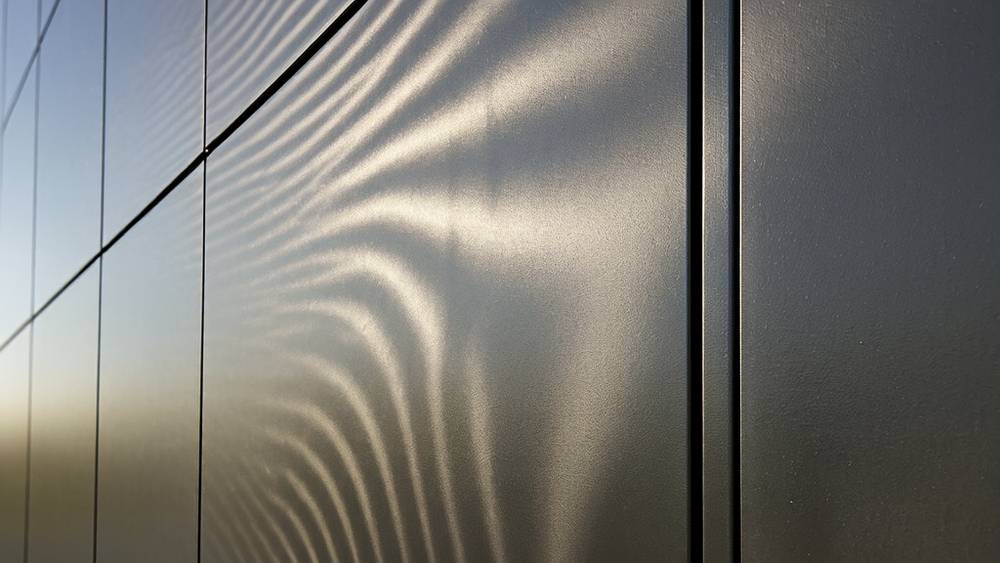
Every architect and contractor has stared at a rainscreen detail and asked the same question: how wide can I push a single solid aluminium panel before it starts looking wavy under raking light? The answer sits at the intersection of alloy temper, stiffener layout, and a threshold that experienced facade engineers call the flatness tolerance limit. Among all wall cladding materials, solid aluminium sheets occupy a strange middle ground — stiff enough to span impressively, yet thin enough that even a 0.5 mm deviation from flat becomes visible across a 3-metre module. This article examines oil canning in solid aluminium cladding panels, not as a generic defect, but as a predictable engineering outcome governed by specific thickness-to-span ratios, stiffener bonding methods, and alloy selection. If you have ever rejected a batch of panels on site because the morning sun revealed something the factory QA report did not, the following sections will give you the vocabulary and the numbers to have that conversation before fabrication begins.
What Oil Canning Actually Means in Solid Aluminium Panels
Oil canning describes the visible waviness or rippling across the flat surface of a metal panel — named after the way an old-fashioned oil can pops in and out when pressed. In solid aluminium cladding, it manifests as alternating concave and convex undulations, typically spanning 150 mm to 450 mm in wavelength. The defect is not structural; the panel will not fail because of it. But under low-angle sunlight or artificial grazing light on a lobby wall, the visual impact can be severe enough to trigger a formal non-conformance report.
The root cause is elastic buckling. When a flat aluminium sheet is restrained at its edges (by perimeter fixings or stiffener bonds) and subjected to temperature change, residual stress from the rolling process, or slight over-constraint during installation, the metal relieves that stress by deforming out of plane. Unlike other wall cladding materials such as stone or fibre cement that crack under similar conditions, aluminium buckles elastically — it returns to flat when the stress is removed, which is why oil canning sometimes disappears in the afternoon after the panel cools down.
Three factors determine susceptibility: panel thickness, unsupported span between stiffeners, and the alloy's internal stress state. A 2.0 mm panel in H14 temper with 600 mm stiffener spacing will behave very differently from a 3.0 mm panel in H22 temper with 400 mm spacing. Understanding these numbers is the first step toward writing a specification that actually prevents the problem.
Reading the Temper: Why H14 and H22 Matter More Than Thickness Alone
Most project specifications for solid aluminium cladding reference alloy 3003, 5005, or 5052, but fewer specifiers pay attention to the temper designation that follows the alloy number. That omission is often where oil canning problems begin.
Aluminium temper designations under The Aluminum Association Teal Sheets describe the work-hardening level and thermal treatment of the sheet. H14 means strain-hardened to half-hard condition — approximately 50% of the maximum work hardening achievable for that alloy. H22 means strain-hardened and partially annealed to quarter-hard condition. The practical difference for facade panels is that H14 temper carries higher residual stress from the rolling mill. That locked-in stress makes the sheet more prone to oil canning when the surface is cut, routed, or heated during fabrication.
A panel fabricated from H22 temper 3003 alloy at 2.5 mm thickness typically exhibits 30-40% less oil canning than the same panel made from H14 temper 3003 at 2.5 mm, assuming identical stiffener layouts. The trade-off is yield strength: H14 delivers roughly 125 MPa versus 105 MPa for H22. For most rainscreen applications where wind loads govern, the lower yield strength of H22 is still well within capacity given typical spans. The real engineering question is whether the specifier is willing to accept a slightly thicker panel (say 3.0 mm instead of 2.5 mm) in H22 to gain flatness, or whether they prefer the thinner, higher-strength H14 and accept the risk of waviness.
| Temper | Yield Strength (MPa) | Residual Stress Level | Oil Canning Risk | Recommended Min. Thickness for Facade |
|---|---|---|---|---|
| H14 (3003) | 125 | High | Moderate-High | 2.5 mm |
| H22 (3003) | 105 | Low-Medium | Low | 2.5 mm |
| H14 (5005) | 130 | High | Moderate-High | 2.5 mm |
| H22 (5005) | 110 | Low-Medium | Low | 2.5 mm |
| H32 (5052) | 160 | Medium | Moderate | 2.0 mm |
Futeng® has observed across multiple international projects that specifying H22 temper for large-format panels above 1200 mm in any dimension reduces on-site rejection rates by roughly 60% compared to H14, even when the panel thickness is held constant. This is not a marketing claim — it is a pattern that any fabricator familiar with flatness inspection under AAMA 609.1 can corroborate.
The Thickness-to-Span Ratio That Predicts Waviness
There is no single ISO or ASTM standard that dictates an absolute oil canning limit for architectural aluminium panels. What exists instead is a body of industry practice, primarily captured in AAMA 609.1 and the now-obsolete but still-referenced AAMA 508, which define inspection criteria: viewing distance (3 metres minimum), lighting conditions (diffuse daylight, not direct grazing), and what constitutes acceptable versus rejectable waviness.
But specifiers need numbers before inspection. The most reliable predictor of oil canning is the ratio of unsupported span (distance between stiffener centres, or between a stiffener and the panel edge) to panel thickness. Industry data from multiple fabricators converges on the following thresholds:
- Span/Thickness ratio of 200:1 or lower — Oil canning is rare across all common tempers. A 2.5 mm panel with stiffeners at 500 mm centres hits exactly 200:1.
- Span/Thickness ratio of 200:1 to 280:1 — Oil canning becomes temper-dependent. H22 panels generally remain flat; H14 panels show marginal waviness under grazing light.
- Span/Thickness ratio above 280:1 — Oil canning is likely regardless of temper. A 2.0 mm panel with stiffeners at 600 mm centres reaches 300:1, and on-site disputes become nearly inevitable.
These ratios assume stiffeners are continuously bonded with structural adhesive, not spot-welded or intermittently attached. Spot welding introduces thermal distortion and creates local stress concentrations that can trigger oil canning from the weld point outward. This is a common failure mode when fabricators cut corners on stiffener attachment to save labour.
Stiffener Bonding: Structural Adhesive vs Spot Welding vs Mechanical Fasteners
The way stiffeners are attached to the back of an aluminium panel determines how thermal expansion stresses distribute across the surface. Three methods dominate the industry, and they produce dramatically different flatness outcomes.
Structural Adhesive Bonding
A two-part epoxy or polyurethane adhesive applied in a continuous bead along the stiffener creates a full-surface bond that distributes stress evenly. The adhesive also provides some viscoelastic damping — it absorbs differential expansion between the stiffener and the face sheet rather than forcing the face sheet to buckle. This method produces the flattest panels but carries higher material and curing-time costs. Typical adhesive: SikaPower® or equivalent, with a minimum bond line thickness of 1.0 mm. When specifiers for high-visibility podium-level panels demand zero visible waviness, continuous adhesive bonding on H22 temper is the combination that most reliably delivers.
Spot Welding
Resistance spot welding is fast and cheap. The problem: each weld point introduces a local heat-affected zone where the metal contracts upon cooling, creating a tiny dimple. Multiply that by 20-30 weld points across a large panel and the cumulative distortion becomes visible. Panels fabricated with spot-welded stiffeners show oil canning at span/thickness ratios as low as 180:1, well below the threshold where adhesive-bonded panels remain flat.
Mechanical Fasteners (Rivets or Screws)
Riveting stiffeners avoids the thermal distortion of welding but introduces a different issue: point loading. Each rivet creates a discrete stress concentration. As the panel expands and contracts with temperature, the rivet points constrain movement locally while the surrounding material moves freely, generating the elastic buckling pattern characteristic of oil canning. Riveted stiffeners perform better than spot-welded ones but worse than adhesive-bonded ones.
Fabrication Stress: Why Cutting and Routing Can Pre-Trigger Oil Canning
Even a perfectly flat aluminium sheet from the mill can emerge from the fabrication process with built-in waviness. The two biggest culprits are CNC routing and brake forming.
When a CNC router cuts the panel perimeter or creates fold lines for cassette-forming, the cutting tool removes material and releases residual stress asymmetrically. If the sheet carries high locked-in stress (common in H14 temper), that stress release causes the panel to curl or ripple immediately after cutting. A fabricator who does not allow panels to rest and stabilise after routing — a process called stress relief ageing — ships panels that may look flat on the factory bench but will develop oil canning within days of installation as ambient temperature cycles complete the stress redistribution.
Brake forming introduces additional complexity. When a panel edge is bent to form a return leg or cassette profile, the bend line stretches the outer surface and compresses the inner surface. The resulting plastic deformation creates a residual stress field that radiates 100-200 mm from the bend. On narrow panels (below 600 mm wide), this stress field covers a significant fraction of the total surface area, making oil canning almost a certainty if stiffener layout does not account for it.
Among all wall cladding materials, solid aluminium is uniquely sensitive to fabrication-induced stress because it combines high thermal expansion (approximately 24 × 10⁻⁶ /°C for 3003 alloy) with a modulus of elasticity that provides only moderate resistance to buckling. Steel panels expand less; composite panels distribute stress through their core layer. Solid aluminium has neither advantage, so fabrication discipline matters disproportionately.
Temperature on the Facade: The Daily Cycle That Tests Flatness
A dark-coloured solid aluminium panel on a south-facing elevation in Dubai or Singapore can reach 80°C on a summer afternoon, then cool to 25°C overnight. That 55°C swing produces thermal expansion of approximately 1.3 mm per metre of panel length. If the panel is 3 metres tall, the total expansion is nearly 4 mm.
The panel's fixing system must accommodate this movement, but accommodation alone does not prevent oil canning. What matters is whether the expansion occurs freely (the panel slides in its fixings) or is partially restrained (fixings bind, stiffeners fight the movement, and the face sheet buckles). Slotted fixings with nylon washers at the head of each anchor allow movement in the plane of the panel. Fixed-point plus sliding-point systems — where the top fixing is rigid and all lower fixings slide — are standard in well-engineered rainscreen systems and directly reduce oil canning by removing the constraint that forces the panel to buckle.
Colour choice interacts with temperature and flatness in a way that surprises many specifiers. Dark colours (RAL 7016, RAL 9005) absorb more solar radiation and run hotter, producing larger expansion movements. But they also highlight oil canning more visibly because the glossy dark surface reflects light directionally — the peaks and valleys of waviness create alternating bright and dark bands. Light colours (RAL 9010, metallic silver) run cooler and mask residual waviness better. This does not mean dark panels are inherently worse; it means the flatness specification for a dark PVDF-coated panel should be tighter than for a light one on the same building elevation.
What AAMA 609.1 Actually Requires — and What It Leaves Open
AAMA 609.1, "Cleaning and Maintenance of Architectural Anodized Aluminum," is frequently referenced in facade specifications alongside flatness criteria, but the standard itself is primarily about cleaning, not flatness. The document that specifiers actually need is the AAMA 508 (withdrawn but still widely cited) or the flatness sections embedded in project-specific quality plans that reference EN 485-3 for sheet tolerances and AAMA 611 for anodised architectural aluminium.
The practical inspection protocol that most international projects converge on looks like this:
- Viewing distance: Minimum 3 metres from the facade plane.
- Viewing angle: Perpendicular to the panel surface, not at a glancing angle.
- Lighting condition: Diffuse daylight. Inspection under grazing light (early morning or late afternoon sun hitting the facade at a shallow angle) is explicitly excluded from standard acceptance criteria unless the project specification calls for a tighter standard.
- Acceptance threshold: No oil canning visible under the above conditions. If waviness is visible only under grazing light, it is generally considered acceptable per industry practice — but this must be agreed before fabrication begins.
The critical clause in most project specifications is the one that defines the inspection conditions. If the spec says "no visible oil canning under any lighting condition," the fabricator must price for adhesive-bonded stiffeners, H22 temper, and span/thickness ratios below 200:1 — or risk a very expensive rejection. If the spec is silent on lighting conditions, the default AAMA-derived practice applies, and the contractor has a defensible position if waviness only appears at sunrise and sunset.
Panel Size Thresholds: Where the Risk Curve Bends
Not all panel sizes carry equal oil canning risk. Risk rises sharply when any single dimension exceeds approximately 1200 mm. Below that threshold, the unsupported spans tend to be small enough that even H14 temper with spot-welded stiffeners produces acceptable flatness. Above 1200 mm, the physics of elastic buckling begin to dominate, and the fabrication method becomes the determining factor.
Panels with aspect ratios above 3:1 (long and narrow) are particularly vulnerable because the long dimension creates a large unsupported span between end stiffeners unless intermediate stiffeners are added. A 3000 mm × 800 mm panel with stiffeners at 600 mm centres has a span/thickness ratio of 240:1 for 2.5 mm material — borderline for H14, acceptable for H22. The same panel in 2.0 mm H14 hits 300:1 and will almost certainly oil can.
Square panels (aspect ratio close to 1:1) distribute stress more evenly and tend to perform better, provided the stiffener grid is regular and symmetric. Large square panels — 1500 mm × 1500 mm and above — should always use H22 temper with continuous adhesive bonding regardless of thickness, because the sheer surface area amplifies even small amounts of waviness.
These are not abstract considerations. On one Southeast Asian airport project, the contractor approved a value-engineering substitution from 3.0 mm H22 to 2.5 mm H14 across 2000 m² of 1800 mm × 900 mm column cladding panels. Within six months of installation, morning inspections revealed oil canning on approximately 40% of the south-facing panels. The cost of replacement exceeded the initial saving by a factor of three. The lesson: panel size thresholds are not guidelines; they are financial risk boundaries.
Writing a Flatness Specification That Actually Works
Most oil canning disputes arise not because the wrong material was used, but because the specification was silent on the parameters that matter. A flatness specification for solid aluminium cladding should address at least the following six points:
- Alloy and temper: Specify 3003-H22 or 5005-H22 as minimum; prohibit H14 for panels exceeding 1200 mm in any dimension.
- Span/thickness ratio: Maximum 240:1 for H22 temper; maximum 200:1 for H14 if permitted at all.
- Stiffener attachment: Continuous structural adhesive bonding required; spot welding prohibited for visible elevations.
- Inspection criteria: Per AAMA 508 methodology — 3-metre distance, diffuse daylight, perpendicular viewing.
- Grazing light: State explicitly whether grazing-light visibility is grounds for rejection. If the project has large areas of glazing that create grazing light conditions at certain times of day, consider specifying a tighter standard.
- Mock-up panel: Require a full-size mock-up panel (not a small sample) fabricated using production tooling and inspected on-site under actual lighting conditions before mass fabrication begins.
This last point — the full-size mock-up — is the single most effective tool for aligning expectations between architect, contractor, and fabricator. A 300 mm × 300 mm sample tells you nothing about oil canning. A 1200 mm × 2400 mm panel built with the actual stiffener layout and coating system tells you everything.
How Different Wall Cladding Materials Compare on Flatness
Solid aluminium panels are not the only wall cladding materials that face flatness challenges, but they sit at a unique point on the spectrum. Understanding where aluminium stands relative to alternatives helps specifiers make informed trade-offs.
Fibre cement panels and high-pressure laminates (HPL) are inherently flat because they are manufactured in presses under heat and pressure. They do not oil can. But they are limited in maximum panel size (typically 1200 mm × 3000 mm for fibre cement) and cannot achieve the seamless joint appearance that a 2000 mm-wide solid aluminium cassette can deliver. Stone cladding — granite, limestone, marble — is rigid and dimensionally stable, but its weight (60-100 kg/m² versus 8-12 kg/m² for 3.0 mm aluminium) imposes structural costs that often rule it out above 20 metres building height.
Aluminium composite panels (ACP) with a polyethylene or mineral core resist oil canning better than solid aluminium of the same thickness because the core layer provides continuous support to both face sheets, effectively eliminating the span/thickness problem. This is one reason ACP gained market share in the 1990s and 2000s. But fire performance concerns — particularly after the Grenfell Tower tragedy — have driven a global shift back toward solid aluminium and other non-combustible wall cladding materials. The flatness challenge of solid aluminium is therefore not an academic exercise; it is the price of choosing a fire-safe, fully non-combustible material classified as A2-s1,d0 under EN 13501-1.
Solid aluminium occupies a sweet spot: non-combustible, lightweight, available in large formats, and capable of excellent flatness when specified correctly. The keyword is "when specified correctly." The same material that produces a flawless 25-metre-high tower facade can produce a wavy mess on a 3-metre-high podium wall if the temper, stiffener method, and span ratio are left to chance.
Fabricator Capabilities That Predict Flatness Outcomes
Not all aluminium fabricators are equipped to deliver panels with low oil canning risk. Three capabilities separate the reliable suppliers from the rest:
Stress-relief equipment: Some fabricators run sheets through a levelling line (roller leveller) before cutting. This process works the sheet back and forth through a series of offset rollers to redistribute and reduce residual stress. The difference in flatness between a levelled sheet and an unlevelled sheet from the same mill coil can be dramatic. Specifiers should ask whether the fabricator owns or has access to a levelling line.
Adhesive bonding stations: Continuous structural adhesive bonding requires controlled environmental conditions — temperature above 15°C, humidity below 70%, clean bonding surfaces. Fabricators who invest in climate-controlled bonding stations with automated bead application produce consistently flatter panels than those who apply adhesive by hand in an open factory bay.
QA flatness measurement: The best fabricators use a flatness table — a granite or steel surface plate — and measure deviation with a feeler gauge or dial indicator. A pre-shipment tolerance of 0.5 mm deviation per 300 mm of panel length (roughly 0.17% of the span) is achievable with good practice and provides a defensible baseline. Suppliers like Futeng® maintain this tolerance as a standard QA checkpoint on all panels above 1200 mm width, with documented inspection reports included in the shipment dossier.
The cost difference between a fabricator with these three capabilities and one without is typically 15-25% on the panel supply price. Against the total installed cost of a rainscreen system (including substructure, insulation, fixings, and labour), the premium is closer to 5-8%. Weighed against the cost of replacing oil-canned panels on a completed facade, the premium is negligible.
Practical Decision Flow for Project Teams
If you are specifying solid aluminium cladding on a project with visible elevations, the following decision sequence will steer you toward a flatness outcome you can defend:
- Identify high-risk panels: Any panel with a dimension above 1200 mm, aspect ratio above 3:1, or dark colour (LRV below 30) is high-risk.
- Set the temper: H22 for all high-risk panels. H14 acceptable only for panels below 1200 mm in all dimensions.
- Calculate stiffener spacing: Target span/thickness ratio of 200:1 or lower. For 2.5 mm panels, that means stiffener centres at 500 mm maximum.
- Specify attachment method: Continuous adhesive bonding for high-risk panels. Permit riveted stiffeners only for low-risk panels.
- Define inspection protocol: Reference AAMA 508 methodology. State grazing-light policy explicitly.
- Require mock-up: Full-size panel, actual stiffener layout, actual coating, inspected on-site.
- Audit the fabricator: Confirm levelling capability, bonding conditions, and flatness QA procedure.
This sequence does not guarantee zero oil canning — no process can, given the inherent variability of aluminium sheet and the unpredictable conditions on site. But it reduces the probability of a dispute from roughly 30-40% (based on industry anecdotal data for projects where flatness is unspecified) to well under 5%. For a building envelope that will be stared at for decades, that is a return worth the extra pages in the specification.
Among the dozens of wall cladding materials available to the modern architect, solid aluminium remains one of the few that offers large-format, non-combustible, lightweight cladding with a metallic finish that no other material replicates. The flatness of that cladding, however, is not a given — it is an engineered outcome, dependent on decisions made long before the first panel reaches the site. The numbers in this article — temper designations, span ratios, bonding methods, inspection distances — are the tools that turn oil canning from a site-surprise into a calculated, managed variable.