Solid Aluminium Atap Cladding Engineering for Tropical Roof Applications
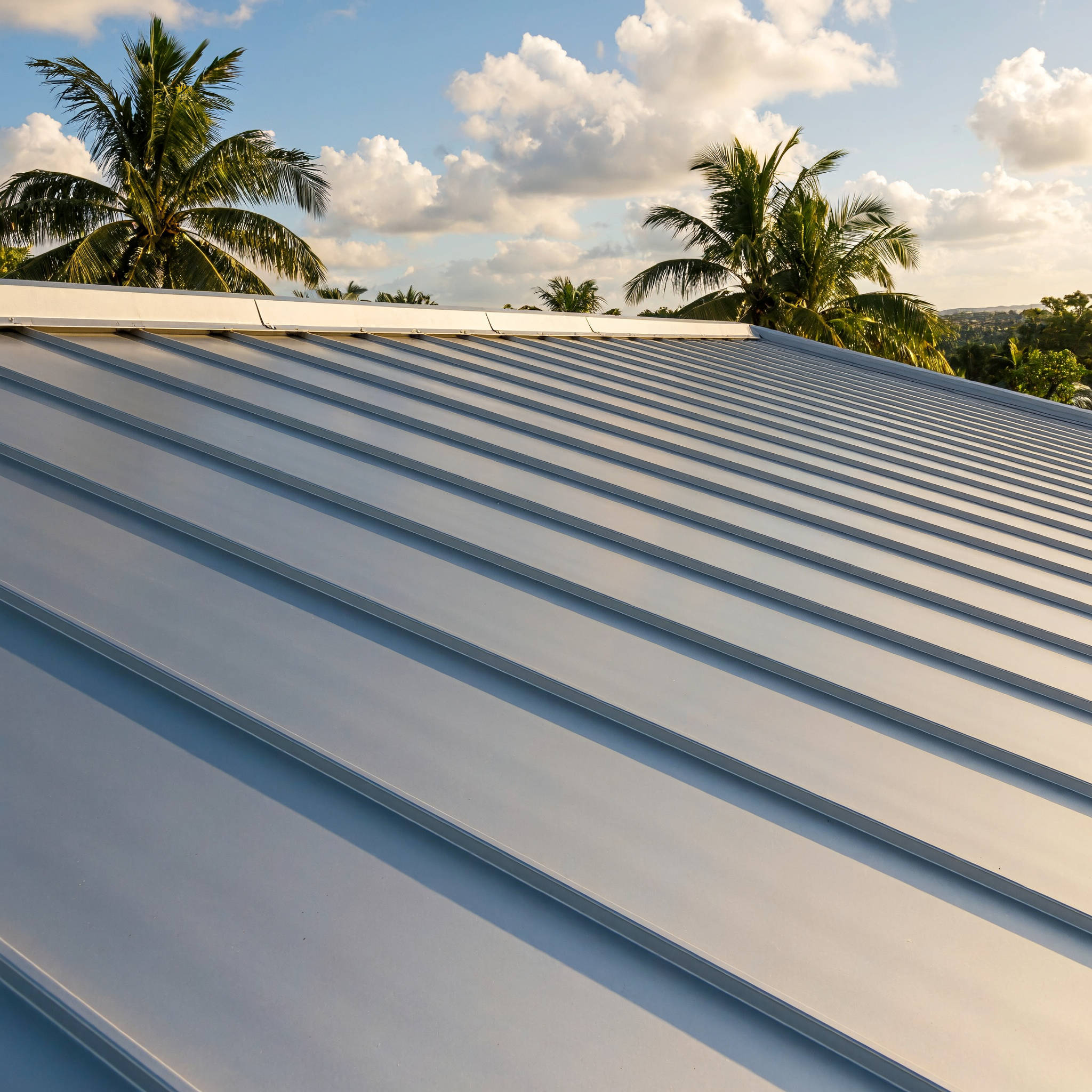
When a project specification calls for solid aluminium panels on the roof, the conversation shifts from standard wall cladding into a domain where gravity, thermal movement, and wind uplift converge with material science. "Atap cladding" — the term widely used across Indonesian and Southeast Asian construction markets to describe metal roof cladding systems — carries engineering demands that go far beyond what many project teams anticipate. While the Indonesian market is saturated with thin-gauge coated steel and zincalume trapezoidal profiles from local suppliers, architects and facade consultants working on premium commercial, industrial, and institutional projects increasingly specify solid aluminium panels for roofing applications. The reason is straightforward: coastal corrosion resistance, strength-to-weight ratios that reduce structural steel tonnage, and a 30-plus-year service life that thin steel simply cannot match. This article examines the specific technical challenges that arise when solid aluminium panels move from the wall to the roof, what procurement managers need to verify before signing off on a PO, and how to approach installation detailing so the finished roof performs exactly as the spec writer intended.
What "Atap Cladding" Actually Means in Engineering Terms
In Bahasa Indonesia, "atap" translates directly to "roof," while "cladding" has been absorbed into the local construction lexicon to mean any profiled or flat metal skin applied to a building envelope. The combined term "atap cladding" is used colloquially across tender documents, supplier catalogs, and site meetings to refer to metal roof covering systems. In practice, this spans everything from 0.25mm zincalume trapezoidal sheets sold by the meter on Tokopedia to engineered 2.5mm and 3.0mm solid aluminium standing seam or cassette roof panels specified for airport terminals, refinery control buildings, and high-end commercial pavilions.
The distinction matters enormously. Thin-gauge coated steel products — the dominant volume in Indonesia's atap market through suppliers like PT NS Bluescope Lysaght, PT Yane Manufaktur, and various local distributors — are designed for residential and light commercial shed roofing with typical design lives of 10 to 20 years in benign environments. Solid aluminium atap cladding occupies a different technical category entirely. Panels are fabricated from AA3003, AA5005, or AA5052 alloy sheets at 2.0mm, 2.5mm, or 3.0mm thickness, formed into interlocking profiles, and finished with PVDF (polyvinylidene fluoride) coatings meeting AAMA 2605 standards. The engineering logic is not about cost per square meter — it is about total lifecycle cost, structural performance under tropical monsoon wind loads, and eliminating the risk of perforation corrosion in coastal and industrial atmospheres.
Why Solid Aluminium Panels on Roofs Demand Different Engineering Than Walls
Wall cladding panels resist wind pressure and suction, handle some thermal movement, and contribute to the building's aesthetic. Roof panels do all of that plus manage ponding water, foot traffic during maintenance, and the relentless cycle of tropical solar radiation followed by cooling rain. The engineering differences are substantial and often underestimated during the value-engineering phase.
Thermal Expansion Across Long Roof Slopes
Aluminium expands at approximately 2.4 mm per linear meter per 100°C temperature change. On a 30-meter roof slope in Jakarta or Surabaya, where surface temperatures can swing from 25°C at night to over 80°C under direct equatorial sun, the total thermal movement approaches 40mm. A wall panel on a 4-meter vertical span deals with roughly 5mm of movement. The roof panel must accommodate eight times that displacement without buckling, without tearing fasteners, and without breaking the weather seal at panel joints.
This dictates the choice of fixing system. Fixed-point and sliding-clip arrangements become non-negotiable for solid aluminium atap cladding on spans exceeding 6 meters. Each panel typically has one fixed point — often at the ridge or mid-span — with all other clips designed to slide longitudinally. The clip material, usually stainless steel grade 304 or 316 for coastal projects, must be selected to avoid galvanic corrosion with the aluminium panel. Nylon or EPDM isolators at every clip-to-panel interface prevent bimetallic contact and eliminate the clicking noises that thermal movement can produce.
Wind Uplift: The Governing Load Case
For wall cladding, wind pressure is typically the governing load. For atap cladding, wind uplift almost always controls the design. The negative pressure coefficient at roof corners and edges — particularly on low-rise buildings with wide eaves common in tropical architecture — can exceed -3.0 per ISO 4354 or the local SNI 1727 wind loading code. A 2.5mm solid aluminium standing seam panel must resist this suction without the seam opening, without the clip disengaging, and without permanent deformation that would void the weathertightness warranty.
Testing matters here. Reputable solid aluminium panel suppliers — Futeng® being one manufacturer that provides full-system testing reports — conduct uplift resistance tests per ASTM E1592, which evaluates the structural performance of metal roof panel systems under uniform static air pressure. Procurement managers should request these test reports for the exact panel profile, thickness, clip spacing, and substrate (steel purlin vs. timber batten) that will be used on their project. A generic test report for a different configuration is not sufficient.
Material Selection: Alloy, Temper, and Coating Decisions
Three alloy families dominate solid aluminium atap cladding specifications, and choosing the wrong one has consequences that show up during fabrication or, worse, after installation.
| Alloy | Temper | Tensile Strength (MPa) | Yield Strength (MPa) | Elongation (%) | Best Application |
|---|---|---|---|---|---|
| AA3003 | H14 | 140–180 | ≥115 | ≥5 | General roofing, moderate spans, good formability |
| AA5005 | H14/H24 | 145–185 | ≥110 | ≥5 | Coastal roofing, superior anodizing finish quality |
| AA5052 | H32 | 210–260 | ≥130 | ≥7 | High-wind zones, long spans, industrial environments |
AA3003 is the workhorse of the aluminium cladding industry — cost-effective, readily available in coil form, and perfectly adequate for the majority of atap cladding applications on commercial and institutional buildings. AA5052 steps up when spans exceed 8 meters or when wind uplift calculations demand higher yield strength. The higher magnesium content in 5052 also improves corrosion resistance in marine and heavy industrial atmospheres, making it the default choice for refinery control buildings, coastal resort roofs, and port infrastructure.
Coating selection runs parallel to alloy selection. PVDF (Kynar 500® or equivalent 70% PVDF resin systems) is the industry standard for architectural atap cladding, delivering color retention and chalk resistance that easily exceeds 20 years in tropical UV exposure. The coating thickness should be a minimum of 25 microns for a two-coat system and 35 microns for a three-coat system with primer. For industrial roofing where aesthetics are secondary, polyester coatings at 20 microns offer a cost reduction but with a proportionally shorter gloss retention period — typically 5 to 8 years in equatorial conditions before noticeable fading occurs.
Profile Geometry and Water Management
The profile shape of solid aluminium atap cladding is not just an architectural styling decision. It determines the roof's hydraulic capacity, its resistance to capillary water ingress, and how the system handles the intersection of thermal movement and weathertightness.
Standing Seam Profiles
Standing seam remains the dominant profile for premium solid aluminium roofing. Seam heights of 65mm are standard, with 75mm and 90mm available for low-slope applications where ponding risk is higher. The critical dimension is the seam-to-pan-width ratio — a 65mm seam on a 400mm-wide pan provides a 16% seam height, which handles most tropical rain intensities. For roofs below 2 degrees pitch, a 90mm seam on a 300mm pan is often specified.
The seam closure method divides the market: mechanically seamed (field-rolled) versus snap-lock (clip-engaged). Mechanically seamed profiles use a dedicated seaming machine that folds the panel edges together in situ, creating a watertight joint with no exposed fasteners. Snap-lock systems rely on the clip geometry and panel stiffness to engage and hold the seam. Mechanically seamed systems consistently achieve higher uplift ratings and are preferred for atap cladding on low-slope roofs and high-wind locations.
Trapezoidal and Cassette Profiles
Trapezoidal solid aluminium profiles — typically with 32mm to 45mm rib heights and 200mm to 300mm rib spacing — are used where the roof must also serve as a structural diaphragm, transferring lateral wind loads to the bracing system. These profiles are through-fixed with exposed fasteners fitted with EPDM sealing washers. The fastener line becomes the primary water barrier, so fastener specification is critical: A2 or A4 stainless steel self-drilling screws with a minimum 16mm EPDM washer diameter, installed to the correct torque to achieve 30-40% compression of the washer without over-tightening and damaging the panel coating.
Cassette systems — large-format flat panels with concealed fixings — are increasingly specified for soffit and underside applications but are rarely suitable for primary atap cladding because their flat geometry cannot shed water efficiently and their joint tolerances are too tight to accommodate the thermal movement ranges experienced on exposed roofs.
Procurement Checklist: What to Verify Before You Commit
Procurement managers and quantity surveyors handling atap cladding packages for international projects face a supply chain where not all "solid aluminium" claims hold up under scrutiny. The following verification points should be addressed before a purchase order is issued.
- Mill certificate traceability: Every coil of aluminium should be traceable to a certified mill — Hindalco, Chalco, NALCO, or equivalent — with full chemical composition and mechanical property certificates per ISO 6361 (wrought aluminium alloy sheet).
- Coating system certification: PVDF coatings must be backed by a coating manufacturer's warranty (PPG, AkzoNobel, Sherwin-Williams, or similar) confirming the resin system is minimum 70% PVDF and applied by a licensed coating line.
- System testing reports: Request ASTM E1592 uplift test reports, ASTM E283 air leakage, and ASTM E331 water penetration test data for the exact panel configuration being supplied.
- Galvanic compatibility schedule: The supplier should provide a table specifying compatible fastener, clip, and substructure materials for the project's environmental exposure category.
- Fabrication tolerances: Panel length tolerance should be ±1.5mm, width ±1.0mm, and diagonal difference ≤2.0mm for panels up to 6 meters. Bow and camber should not exceed 0.1% of panel length.
- Packaging and shipping protection: Solid aluminium panels for atap cladding must be shipped with interleaving protective film, on A-frame stillages, in closed containers. Any panel arriving with surface scratches deeper than the primer layer should be rejected on-site.
Manufacturers like Futeng® that operate dedicated solid aluminium cladding production lines can typically provide this documentation package as a matter of course. The key is requesting it during the tender stage, not after the container has shipped.
Installation Factors That Determine Roof Performance
Even the best-specified solid aluminium atap cladding will fail if installation shortcuts are taken. Three areas deserve particular attention from the site supervision team.
Substructure Alignment
Solid aluminium panels are unforgiving of uneven substructures. A purlin misalignment of 5mm over a 6-meter bay translates into visible waviness across the roof plane and can prevent standing seam clips from engaging correctly. The tolerance for purlin alignment should be ±2mm across any 3-meter straightedge. This is tighter than what most structural steel erectors are accustomed to delivering, so it must be specified clearly in the steel package scope, not left as an assumption.
Fastener Torque Control
For through-fixed trapezoidal atap cladding, every exposed fastener is a potential leak point. Under-torqued fasteners allow water ingress around the EPDM washer. Over-torqued fasteners dimple the panel, create a water trap, and can strip the purlin, reducing pull-out capacity. The correct installation torque for a 5.5mm self-drilling screw into 2.0mm steel purlins is typically 8-10 Nm. This should be verified with a calibrated torque wrench at the start of each shift and spot-checked throughout the day.
Cut Edge Treatment
Every field-cut edge on a PVDF-coated solid aluminium panel exposes bare aluminium. On wall cladding, this raw edge is often hidden by flashings or sealant. On atap cladding, cut edges at ridges, hips, and valleys are exposed to the most aggressive water flow on the entire roof. These edges must be deburred, cleaned, and touched up with a two-part epoxy primer followed by PVDF topcoat within 24 hours of cutting. In coastal environments, delaying this touch-up by even a few days can initiate filiform corrosion that creeps under the coating.
Cost Structure: Why Solid Aluminium Atap Cladding Is a Lifecycle Decision
The upfront material cost of 2.5mm solid aluminium standing seam atap cladding typically ranges from USD 45 to USD 75 per square meter, FOB, depending on alloy, coating specification, and profile complexity. This compares to USD 8 to USD 15 per square meter for 0.40mm zincalume trapezoidal roofing — a fivefold to sixfold difference that, on a line-item basis, makes solid aluminium difficult to justify.
The justification emerges when the comparison horizon extends beyond the construction budget. Consider a 5,000-square-meter industrial building roof in Cilegon or Batam, where atmospheric corrosion rates for zinc-coated steel can reach 2-4 microns per year. A 0.40mm zincalume sheet with a 20-micron coating has a perforation life of perhaps 12 to 15 years. The solid aluminium alternative — with no substrate to corrode through — has a design life exceeding 30 years with only cosmetic coating degradation. Factor in two roof replacements, associated business interruption, and the escalating cost of access and disposal, and the lifecycle cost equation shifts decisively.
For projects where the building owner holds the asset for more than 15 years, solid aluminium atap cladding is not a premium option — it is the financially rational baseline.
Regional Supply Chain Considerations for Southeast Asian Projects
Indonesia's atap cladding market is served predominantly by local coil-coating lines and roll-forming operations producing steel and zincalume profiles. Solid aluminium panel fabrication — particularly for standing seam and engineered cassette systems — requires CNC folding, routing, and assembly capabilities that fewer facilities possess. PT Yane Manufaktur, PT Inti Atap Suksesindo, and others serve the volume roofing segment effectively, but projects requiring 2.5mm+ solid aluminium panels with PVDF finishes and full system engineering often look to specialized manufacturers with dedicated aluminium fabrication lines.
For projects in Indonesia, Malaysia, Singapore, and the broader ASEAN region, lead times for solid aluminium atap cladding typically run 6 to 10 weeks from approved shop drawings to FOB, plus shipping. The shop drawing and engineering phase adds 2 to 4 weeks. Procurement teams should plan for a 12 to 16-week total lead time and resist the temptation to compress this — panel geometry errors from rushed engineering are expensive to rectify on site.
Logistics also deserve attention. Solid aluminium panels for roofing are typically 6 to 12 meters long and cannot be containerized in standard 20-foot or 40-foot GP containers without excessive splicing. Open-top or flat-rack containers are often required, adding 30-50% to freight costs compared to standard container rates. This freight premium should be built into the budget estimate from day one, not discovered when the shipping quote arrives.
Practical Engineering Recommendations
Drawing together the technical threads, the following recommendations capture the engineering approach that produces reliable solid aluminium atap cladding installations across tropical and coastal project environments:
- Specify the alloy based on span and environment, not habit. AA5052-H32 for coastal and long-span roofs; AA3003-H14 for inland, moderate-span applications.
- Design the fixing system for thermal movement from the outset. Fixed-point plus sliding-clip arrangements are not optional on roof slopes exceeding 6 meters.
- Insist on ASTM E1592 uplift test data for the exact panel profile, thickness, and clip spacing. Do not accept extrapolations from different configurations.
- Set substructure alignment tolerances at ±2mm per 3 meters and enforce them during the steel erection phase.
- Budget for open-top container shipping if panel lengths exceed 5.8 meters.
- Treat cut edges within 24 hours using a compatible two-part touch-up system — this single step eliminates the most common corrosion failure mode.
- Engage the panel manufacturer's technical team during the shop drawing phase. The detailing decisions made at this stage determine whether the roof performs for 30 years or becomes a maintenance liability in five.
Solid aluminium atap cladding represents a distinct engineering category within the broader metal roofing market. It demands different design logic, tighter tolerances, and more rigorous supply chain verification than the commodity roofing products that dominate volume in Southeast Asia. For project teams willing to apply that rigor, the result is a roof that quietly performs its job through decades of tropical sun, monsoon rain, and coastal salt spray — without the cycle of replacement that defines the thin-gauge alternative.