How Weathering Performance Determines Building Exterior Cladding Service Life
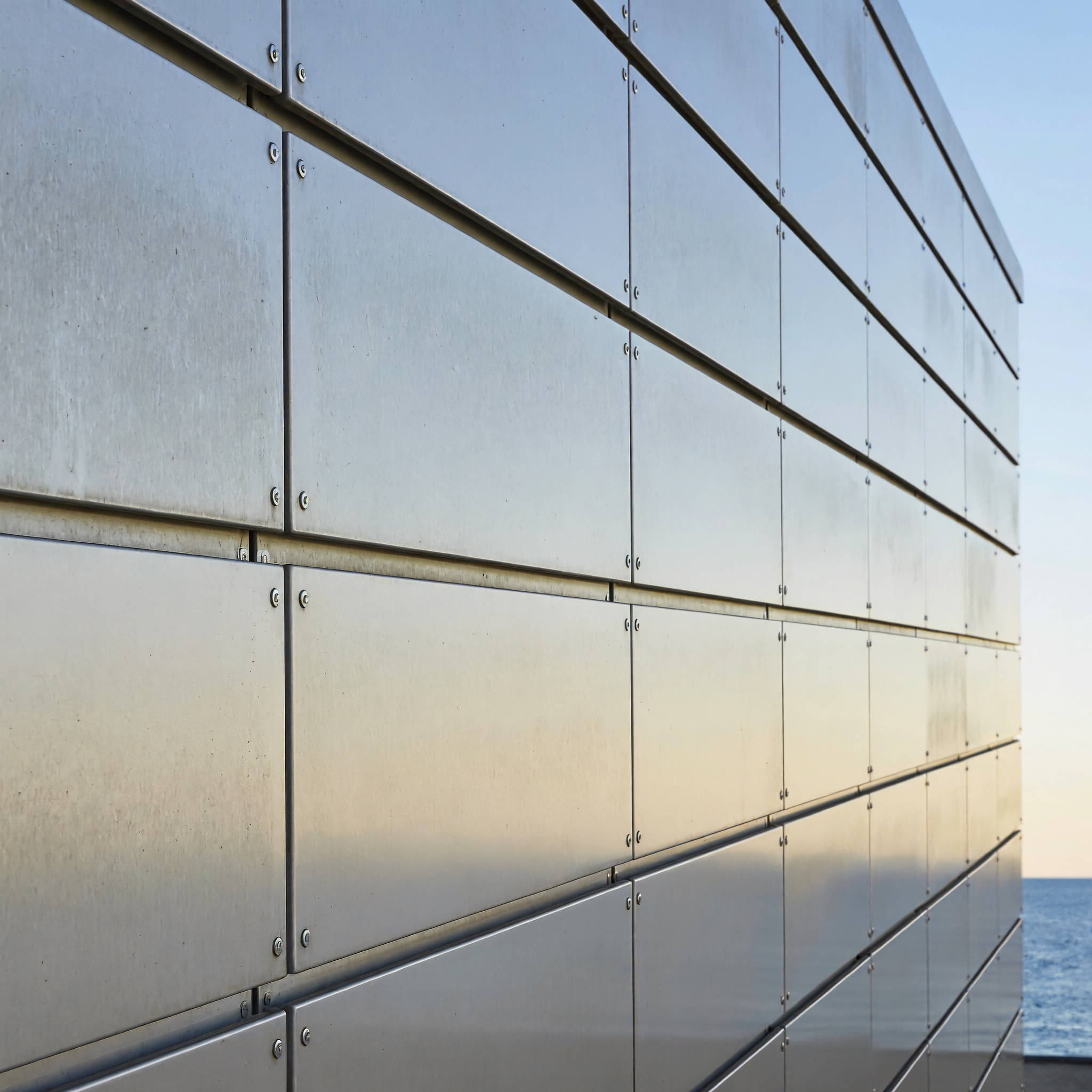
When a project reaches the facade specification stage, the conversation about building exterior cladding inevitably turns to material longevity. Every cladding type carries a manufacturer's warranty, but the gap between a laboratory test result and what actually happens on a coastal high-rise after 15 years of salt spray and UV bombardment is where reputations are made or broken. Solid aluminium cladding panels have dominated commercial facades for decades precisely because their real-world performance track record is long enough to verify. Unlike newer composite products that rely on accelerated weathering extrapolations, 2.5mm and 3.0mm solid aluminium sheets with PVDF coatings have been standing on buildings since the 1980s, and engineers can inspect them today. This article examines how weathering mechanisms actually degrade facade materials over time, what the key testing standards actually measure versus what they miss, and why the distinction between laboratory simulation and field performance should drive specification decisions for any project with a design life exceeding 30 years.
What Accelerated Weathering Tests Actually Measure
Accelerated weathering chambers are the backbone of facade material qualification, but understanding their limitations is essential for anyone specifying building exterior cladding. The two dominant standards, ASTM G154 and ISO 16474, use fluorescent UV lamps or xenon arc sources to compress years of exposure into weeks. A typical QUV test cycle alternates between 8 hours of UV radiation at 60°C and 4 hours of condensation at 50°C. The xenon arc method under ASTM G155 adds water spray and humidity control, producing a somewhat more realistic spectrum.
The fundamental problem is spectral mismatch. Fluorescent UVB-313 lamps, still widely used in Asian manufacturing QA, emit short-wave UV below 295nm that never reaches the earth's surface. Materials that pass UVB-313 testing can still fail catastrophically under natural sunlight because the degradation chemistry triggered by these unrealistic wavelengths differs from what happens outdoors. Even xenon arc lamps, while better, cannot replicate the full complexity of natural weathering. A 2019 study published by the National Institute of Standards and Technology found that xenon arc exposure underestimated Florida outdoor gloss loss for certain PVDF formulations by as much as 30% over 5-year equivalent periods.
The takeaway for specifiers: a 5,000-hour QUV certificate tells you something, but not everything. The lamp type, cycle parameters, and evaluation criteria matter as much as the duration. For solid aluminium cladding panels, the relevant standard is typically AAMA 2605, which requires 4,000 hours of xenon arc exposure with maximum 5-unit gloss retention drop and maximum 8 Delta E color shift on the PVDF coating. This is the industry's high-water mark and should be the baseline specification for any commercial building exterior cladding project.
Coating Chemistry and the Real Degradation Pathway
PVDF (polyvinylidene fluoride) coatings dominate high-end architectural aluminium because the carbon-fluorine bond is one of the strongest in organic chemistry, with a bond dissociation energy of approximately 485 kJ/mol. The UV photons that reach the earth's surface, even at their most energetic around 300nm, carry roughly 400 kJ/mol. This means PVDF's primary chemical structure is not directly broken by sunlight, a claim few other architectural coating resins can make.
However, real-world PVDF degradation does occur, and understanding the mechanism explains why coating quality varies dramatically between manufacturers. Commercial architectural PVDF coatings are not pure PVDF. They typically contain 70% PVDF resin blended with 30% acrylic resin. The acrylic component improves pigment dispersion and adhesion but is far more vulnerable to UV degradation. Over decades, the acrylic fraction slowly photodegrades, causing micro-pitting at the coating surface. This increases surface roughness, which reduces gloss and gradually exposes pigment particles. The PVDF backbone remains largely intact, which is why properly formulated 70% PVDF coatings can maintain film integrity for 30-plus years even as gloss slowly declines.
FEVE (fluoroethylene vinyl ether) resins, used in some Japanese and European coating systems, offer an alternative chemistry with different degradation characteristics. FEVE coatings are typically applied at lower film builds, around 25-35 microns versus PVDF's 30-40 microns. Their weatherability is excellent, but the smaller film thickness means less sacrificial material before substrate exposure. For marine environments with combined UV and chloride stress, the thicker PVDF film remains the conservative engineering choice for building exterior cladding applications.
| Coating System | Resin Chemistry | Typical Film Build (microns) | AAMA Standard | South Florida 10-Year Gloss Retention | Best Application |
|---|---|---|---|---|---|
| PVDF 70% (Kynar 500/Hylar 5000) | PVDF + Acrylic | 30-40 | AAMA 2605 | 75-85% | Premium commercial facades, coastal high-rise |
| PVDF 50% | PVDF + Acrylic | 25-30 | AAMA 2604 | 50-65% | Mid-range commercial, interior feature walls |
| FEVE (Lumiflon-based) | Fluoroethylene Vinyl Ether | 25-35 | AAMA 2605 | 70-80% | High-gloss requirements, complex curves |
| Polyester (Super Durable) | Polyester + TGIC/HAA | 60-80 | AAMA 2603 | 30-50% | Industrial buildings, interior panels |
| Anodized (Class I) | Aluminium Oxide | 15-25 | AAMA 611 | 60-75% (color dependent) | Monumental architecture, uniform metallic appearance |
Environmental Stressors That Tests Cannot Fully Replicate
Cyclic Salt Exposure and Chloride Attack
Salt spray testing per ASTM B117 is ubiquitous in facade material qualification, yet it is widely acknowledged within the corrosion science community as poorly correlated with real-world performance. The continuous 5% NaCl fog at 35°C bears little resemblance to the cyclic wet-dry conditions of an actual marine facade. A building 200 meters from a shoreline experiences intermittent salt deposition, morning dew that activates chloride ions, midday drying that concentrates them, and rain that partially washes the surface. This cycling drives crevice corrosion mechanisms that continuous fog chambers simply do not trigger.
For solid aluminium building exterior cladding, the critical vulnerability is not the panel face but the cut edges and fastener penetrations. When a 3.0mm 3003-H14 aluminium sheet is fabricated, the cut edge exposes bare metal. A high-quality PVDF coating shop will apply a chromate conversion coating to the entire sheet before painting, including edges. Lesser fabricators may only treat visible surfaces. On a coastal project, unprotected edges become initiation sites for filiform corrosion, which can travel millimeters under the coating before becoming visible. The specification should explicitly require edge treatment per the coating applicator's AAMA 2605 certification scope.
Thermal Cycling and Panel Flatness
Solid aluminium has a coefficient of thermal expansion of approximately 23.6 × 10⁻⁶ per °C. A 3-meter panel subjected to a 60°C temperature swing, which is routine for a dark-colored facade in a continental climate, will expand and contract by roughly 4.25mm over its length. This movement is entirely reversible and elastic, but it must be accommodated by the fixing system. When panels are rigidly restrained, compressive stresses build during heating cycles, leading to oil-canning, fastener loosening, or in extreme cases, buckling at panel edges. This is a purely physical phenomenon unrelated to coating quality, but it is frequently misdiagnosed as a material defect.
The engineering solution is straightforward: slotted holes at fixed points, properly sized expansion gaps between panels (typically 8-12mm depending on panel dimension and climate zone), and careful sequencing of the fixing process. These details are well-documented in the AAMA TIR-A9 design guide for metal wall cladding systems. The problem is that value-engineered projects often eliminate the engineering review step, and the resulting facade issues get blamed on the cladding material rather than the installation design.
Atmospheric Pollutants and Acid Rain
Urban and industrial environments introduce sulfur dioxide, nitrogen oxides, and particulate matter that interact with facade surfaces in ways that accelerated weathering chambers cannot easily replicate. SO₂ dissolved in surface moisture forms sulfurous acid, which attacks both the aluminium substrate and certain coating pigments. This is particularly relevant for building exterior cladding in rapidly industrializing regions where air quality regulations lag behind construction booms.
PVDF coatings are inherently resistant to acid attack due to the chemical inertness of the fluoropolymer backbone. The vulnerability lies in the inorganic pigments. Certain red and yellow iron oxide pigments, and some organic blue pigments, are susceptible to acid-catalyzed color shifts. A specifier selecting a bright red PVDF finish for a project in a high-pollution corridor should request supplementary acid resistance testing beyond the standard AAMA 2605 requirements. The relevant test is ASTM D1308, which evaluates coating resistance to specific chemical reagents including sulfuric and nitric acids at standardized concentrations.
Geographic Performance Gradients: Why One Specification Does Not Fit All
A single building exterior cladding specification applied globally is a recipe for uneven performance. The degradation drivers vary dramatically by latitude, proximity to marine environments, and local industrial activity. South Florida's subtropical UV intensity, combined with warm humidity and marine aerosol, produces roughly 3-4 times the annual degradation rate of a temperate Northern European location. The 10-year South Florida exposure benchmark, which is the gold standard for architectural coating qualification, represents approximately 25-30 years of equivalent exposure in Frankfurt or London.
The Middle East presents a uniquely aggressive combination: extreme UV (annual solar radiation exceeding 2,200 kWh/m² in Dubai versus approximately 1,600 kWh/m² in Miami), frequent sand abrasion events, and diurnal temperature swings that can exceed 30°C. Sand particles impacting facade surfaces at wind speeds above 30 km/h cause micro-abrasion that gradually erodes coating thickness. For projects in Gulf Cooperation Council countries, a minimum 40-micron PVDF film build with a 3-coat system (primer, color coat, clear topcoat) is standard practice among experienced facade consultants. The clear coat provides sacrificial thickness against sand erosion.
Southeast Asian tropical environments add biological growth to the degradation equation. High humidity combined with warm temperatures supports fungal and algal colonization on facade surfaces, particularly on north-facing elevations that receive less direct sun. While PVDF coatings do not directly support biological growth, surface dirt accumulation in textured finishes can trap organic matter that becomes a substrate for microorganisms. Specifying a smoother finish (lower gloss units tend toward higher surface roughness) and incorporating periodic cleaning into the building maintenance plan addresses this issue more effectively than any coating modification.
Substrate Quality and the Hidden Variable
Coating performance discussions often overlook the aluminium substrate itself, which is a critical error for anyone specifying solid aluminium building exterior cladding. The 3000-series alloys (typically 3003 or 3105 for architectural sheet) offer the right balance of formability, corrosion resistance, and cost for facade applications. The temper designation matters: H14 (half-hard) provides sufficient strength for panel flatness while retaining enough ductility for bending and routing operations. H18 (full-hard) sheet is cheaper but prone to cracking during fabrication, particularly on tight-radius returns.
Mill finish quality varies substantially between suppliers. Surface defects such as roll marks, inclusion stringers, and uneven grain structure are invisible after coating but can initiate premature coating failure. Roll marks create microscopic ridges where coating thickness is thinner. Inclusion stringers from recycled content can form galvanic micro-cells if the impurity particles are cathodic relative to the aluminium matrix. These defects are statistical in nature; a reputable aluminium supplier serving the architectural market maintains tighter process controls than a commodity mill serving industrial applications.
The pretreatment step before coating is equally critical. A chromate conversion coating, applied by immersion or spray, passivates the aluminium surface and provides adhesion promotion for the primer layer. The chromium VI compounds used in traditional chromate conversion are increasingly regulated under REACH in Europe and similar frameworks elsewhere, driving development of chromium-free alternatives. Titanium-zirconium based pretreatments have emerged as the leading replacement, but their long-term field performance data is limited to approximately 15 years versus 40-plus years for chromate systems. For projects with a 50-year design life, this data gap is significant. Futeng® and other established manufacturers maintain both chromate and non-chromate pretreatment lines, allowing specifiers to choose based on regional regulations and project durability requirements.
Reading Between the Lines of a Test Report
Facade specifiers receive coating test reports as part of material submittals, and the ability to critically evaluate these documents separates experienced practitioners from those who simply check for a "pass" stamp. A legitimate AAMA 2605 certification requires testing by an accredited third-party laboratory, not the coating manufacturer's in-house lab. The test report should identify the specific coating system by product name, the applicator facility, the substrate alloy and temper, the pretreatment process, and the film thickness measurement method.
Gloss retention numbers deserve particular scrutiny. A report showing 95% gloss retention after 4,000 hours of xenon arc exposure is not necessarily better than one showing 85%. The initial gloss level determines what the retained gloss means in practice. A coating starting at 30 gloss units (GU) that retains 85% has a final gloss of 25.5 GU, which is visually acceptable. A coating starting at 80 GU that retains 95% has a final gloss of 76 GU, which is also acceptable. But a coating starting at 30 GU that drops to 50% retention reaches 15 GU, which appears visibly chalky. The absolute retained gloss value, not the percentage, determines visual acceptability.
Color shift measurements using the CIELAB Delta E metric require similar contextual interpretation. A Delta E of 5.0 is the AAMA 2605 maximum, but human perception of color difference varies with hue. A Delta E of 3.0 in the yellow region is less noticeable than a Delta E of 2.0 in the gray region. For projects where adjacent panels will be installed years apart (phased construction), a tighter Delta E specification of 3.0 or less is advisable for the initial installation, with the understanding that weathering will gradually shift all panels toward a common aged appearance.
The ISO 12944 series provides a useful framework for specifying coating durability across different corrosivity categories, from C1 (very low, heated interiors) to C5-M (very high, marine). Most commercial building exterior cladding falls into categories C3 (urban/industrial) or C4 (coastal with moderate salinity). The coating specification should reference both the AAMA standard for the coating system and the ISO corrosivity category for the project location.
Inspection Windows and the Practical Reality of Facade Life
A building facade is rarely inspected closely after the defects liability period expires. The first detailed inspection typically occurs when something visibly fails, leaks develop, or a refurbishment is being scoped 20-30 years after construction. This means the real-world performance of building exterior cladding materials is judged on a single data point decades after installation, with no intermediate condition monitoring.
This inspection reality has implications for material selection. A coating system that degrades gracefully, with slow, uniform gloss reduction and minimal color shift, will pass a 25-year inspection even if it no longer looks new. A coating that degrades catastrophically, with sudden delamination or localized corrosion blooming from edge defects, will fail that same inspection regardless of its average condition. PVDF coatings on properly pretreated aluminium are valued precisely because their failure mode is gradual and predictable. The acrylic fraction erodes slowly, gloss declines linearly, and the building owner has years of warning before any remediation is required.
For specifiers evaluating warranty terms, the distinction between a material warranty and a performance warranty is critical. A material warranty covers manufacturing defects in the coating or substrate, which are typically discovered during or shortly after installation. A performance warranty covers specific measurable properties (gloss retention, color shift, film integrity, adhesion) over a defined period. AAMA 2605-certified PVDF coatings typically carry 20-30 year performance warranties from the coating manufacturer, subject to proper application and maintenance. These warranties are backed by decades of field data, not just accelerated testing, which distinguishes them from newer coating technologies with shorter track records.
The ASTM G154 and ASTM G155 standards remain the primary tools for initial qualification, but they should be supplemented with natural exposure data from the coating manufacturer's test fence program. Any reputable PVDF coating supplier maintains test fences in South Florida (subtropical), Arizona (arid high-UV), and at least one industrial location. Requesting 10-year or longer natural exposure data for the specific color and gloss level being specified provides a reality check on the accelerated test results. If the manufacturer cannot provide this data, the specifier should ask why.
"Accelerated weathering is a screening tool, not a prediction. The correlation between 4,000 hours of xenon arc and 30 years on a building is an engineering judgment informed by field experience, not a physical law." — This principle, articulated in various forms throughout the coatings industry, should guide every specification decision involving building exterior cladding durability.
Making the Specification Decision
Selecting a building exterior cladding material based on weathering performance requires integrating multiple data streams: accelerated test results, natural exposure data, the specific environmental stressors at the project site, the building's design life, and the owner's tolerance for maintenance interventions. There is no universal "best" specification, but there are clearly wrong ones.
For commercial projects with a 30-plus year design life in any environment more aggressive than a benign temperate inland location, the conservative specification is a 3.0mm solid aluminium panel with a 70% PVDF 3-coat system meeting AAMA 2605, applied over chromate conversion pretreatment (or the best available chrome-free alternative where regulations prohibit hexavalent chromium), with documented edge treatment and a minimum 35-micron total film build. This specification has a 40-year field track record and leaves little to chance.
For projects where budget constraints push toward thinner panels or lower-specification coatings, the trade-offs should be explicitly documented. A 2.0mm panel with a 50% PVDF coating meeting AAMA 2604 will cost less upfront but will require recoating or replacement roughly 10-15 years earlier than the full-spec alternative in a coastal environment. Whether this trade-off makes financial sense depends on the owner's holding period and discount rate, but the facade consultant's job is to ensure the owner understands what they are buying.
The aluminium facade supply chain has consolidated significantly over the past decade, with a relatively small number of manufacturers globally capable of consistently producing AAMA 2605-certified solid aluminium cladding panels at commercial scale. When evaluating suppliers, look beyond the certificate to the quality infrastructure: in-house or dedicated third-party testing capability, documented process control for pretreatment bath chemistry, spectrophotometric color verification on every batch, and traceability from coil certification through to finished panel. These operational details predict future performance more reliably than any marketing document.
Weathering is ultimately a materials science problem with a large empirical component. The laboratory can screen out bad options, but only field history can confirm good ones. Solid aluminium panels with PVDF coatings have that history, which is why they remain the default choice for architects and engineers who specify facades that must perform for decades without drama.