4x8 Aluminium Cladding Sheet Price in Pakistan Lahore Cost Drivers
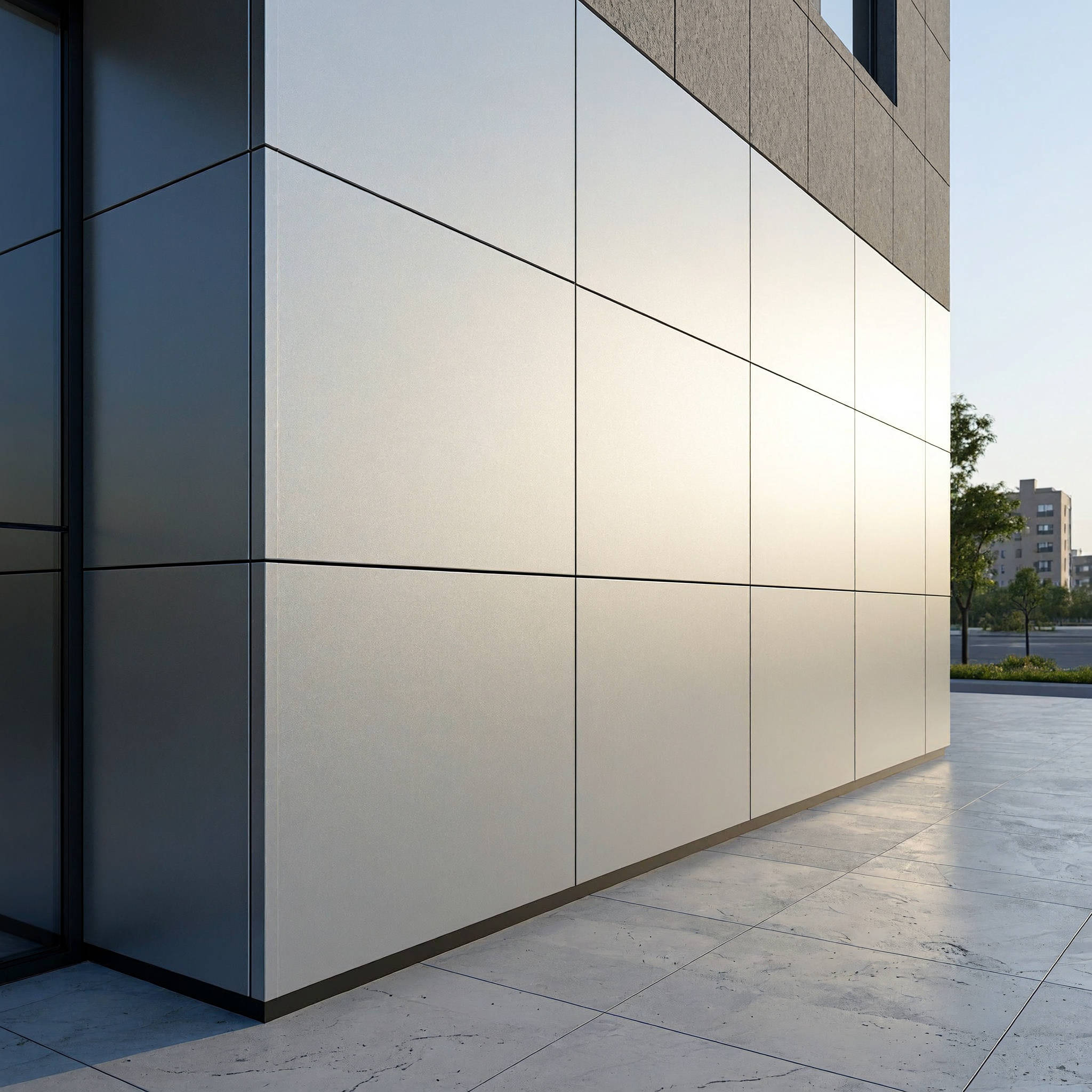
Establishing an accurate budget for facade materials requires moving beyond generic market averages to understand the specific variables driving the 4x8 aluminium cladding sheet price in pakistan lahore. Current rates for solid aluminium panels are not static figures but dynamic values tethered to London Metal Exchange (LME) ingot quotes, processing complexity, and coating specifications. For procurement managers and architects operating in Lahore, the base material cost typically ranges between PKR 3,800 and PKR 6,500 per square foot for standard 2.5mm to 3.0mm solid sheets, excluding fabrication and installation. This variance stems directly from alloy purity, temper hardness, and paint system performance rather than arbitrary supplier markups. Understanding these technical cost drivers allows project teams to evaluate quotations based on verifiable engineering data instead of relying on potentially misleading lump-sum estimates that omit critical quality parameters.
Decoupling Raw Material Costs from Fabrication Premiums
The fundamental error in estimating the 4x8 aluminium cladding sheet price in pakistan lahore is treating the finished panel as a commodity. Solid aluminium cladding is a semi-finished industrial product where the raw substrate accounts for only 40% to 50% of the final delivered cost. The remaining value lies in CNC routing, folding precision, welding, grinding, and pretreatment. When analyzing supplier quotes, it is necessary to separate the mill finish sheet cost from the fabrication surcharge. Raw 1100-H24 or 3003-H24 aluminium sheets follow global pricing indices adjusted for local import duties and currency exchange rates. A spike in LME aluminium prices will immediately affect the substrate cost, but fabrication labor and overhead remain relatively stable in the short term.
Contractors should request itemized breakdowns distinguishing between raw material supply and manufacturing services. This transparency reveals whether a price increase is justified by global market conditions or inflated processing fees. For instance, a quote significantly below the calculated LME-based floor price often indicates the use of recycled scrap aluminium with inconsistent chemical composition or non-standard thickness tolerances. Adhering to ASTM B209 standards for aluminium sheet and plate ensures the substrate meets minimum mechanical property requirements for architectural facades. Deviations in alloy composition can lead to premature corrosion or structural failure under wind load, negating any initial savings on the 4x8 aluminium cladding sheet price in pakistan lahore.
Alloy Selection and Temper Impact on Pricing
Not all solid aluminium sheets are created equal. The choice between Alloy 1100 and Alloy 3003 creates a distinct price differential. Alloy 1100 offers superior formability and corrosion resistance, making it ideal for complex geometric folds and curved facades common in modern Pakistani architecture. However, its lower tensile strength may require thicker gauges for large-format panels to prevent oil-canning. Alloy 3003 provides higher strength due to manganese addition, allowing for slightly thinner sections in flat applications, but it commands a premium due to additional alloying elements and rolling processes. Specifying the correct alloy-temper combination prevents over-engineering costs while ensuring structural integrity.
- Alloy 1100-H24: Best for intricate shapes and high corrosion resistance; generally more cost-effective for standard cladding.
- Alloy 3003-H24: Higher mechanical strength suitable for larger spans or areas with extreme wind loads; carries a 5-8% material premium.
- Alloy 5052-H32: Marine-grade option for coastal or highly polluted industrial zones in Lahore; significant cost increase justified only by specific environmental exposure.
PVDF Coating Specifications as Primary Price Variables
The coating system represents the most volatile component of the 4x8 aluminium cladding sheet price in pakistan lahore. Fluorocarbon (PVDF) paints vary drastically in resin content, pigment quality, and layer structure. A genuine PVDF coating meeting AAMA 2605 specifications contains a minimum of 70% Kynar 500® or Hylar 5000® PVDF resin. Lower-cost alternatives labeled as "fluorocarbon" may contain only 30-40% PVDF resin blended with cheaper acrylics, resulting in rapid chalking and fading within three to five years in Lahore's intense UV environment. The price difference between compliant and non-compliant coatings can exceed PKR 800 per square foot, yet this distinction is frequently obscured in vague quotations.
Coating thickness also dictates cost. Standard architectural PVDF systems require a total dry film thickness of at least 25 microns (typically 4-micron primer + 21-micron topcoat). High-durability specifications demanding 30+ microns or multiple clear coat layers for metallic finishes add measurable expense. Procurement teams must verify coating thickness via magnetic gauge testing upon delivery rather than accepting supplier certificates at face value. Reputable manufacturers like Futeng® provide batch-specific test reports correlating to international weathering standards, offering a benchmark for validating claims against actual product performance. Investing in verified coating quality protects the long-term asset value far beyond the immediate savings of substandard paint systems.
Pretreatment and Primer Chemistry
Beneath the visible PVDF layer lies the pretreatment and primer system, which critically influences both adhesion and price. Chrome-free pretreatment processes complying with environmental regulations cost more than traditional chromate conversion coatings but are increasingly mandated for export-quality production. Epoxy primers provide superior corrosion protection compared to polyester primers, adding approximately 3-5% to coating costs but extending service life significantly in humid monsoon conditions. Omitting proper pretreatment to reduce the 4x8 aluminium cladding sheet price in pakistan lahore creates latent defects that manifest as delamination or filiform corrosion, leading to costly remediation far exceeding initial material savings.
Fabrication Complexity and Tolerance Standards
Standard flat panels represent the baseline for pricing, but architectural facades rarely consist solely of flat surfaces. Each fabrication operation adds cost: CNC routing for open joints, V-grooving for sharp corners, welding for box forms, and stud attachment for concealed fixing. Complex geometries requiring multi-axis bending or double curvature demand specialized tooling and skilled labor, increasing fabrication costs by 20-40% over simple cassettes. The 4x8 aluminium cladding sheet price in pakistan lahore must reflect these processing realities. Suppliers quoting uniform rates across varying panel complexities are either absorbing losses on difficult pieces or overcharging on simple ones, both scenarios creating commercial risk.
Tolerance specifications directly correlate with manufacturing cost. Standard industry tolerances for solid aluminium panels typically allow ±1.0mm on dimensions and ±0.5mm on flatness. Tighter tolerances required for unitized curtain wall systems or seamless aesthetic zones necessitate slower production speeds, additional inspection steps, and higher rejection rates. Clearly defining acceptable tolerances in contract documents prevents disputes during installation. Referencing ISO 21073 guidelines for anodizing and organic coating tolerances provides objective acceptance criteria independent of subjective visual assessment.
| Cost Component | Standard Specification | Premium Specification | Price Impact (%) | Technical Justification |
|---|---|---|---|---|
| Base Alloy | 1100-H24 (2.5mm) | 3003-H24 (3.0mm) | +12-15% | Higher tensile strength for larger unsupported spans |
| PVDF Resin Content | 40-50% Blend | 70% Kynar/Hylar | +18-25% | AAMA 2605 compliance for 20-year color retention |
| Total Coating Thickness | 20-22 Microns | 28-32 Microns | +8-12% | Enhanced abrasion resistance and UV barrier |
| Fabrication Tolerance | ±1.5mm | ±0.5mm | +20-30% | Required for unitized glazing integration |
| Pretreatment | Chromate Conversion | Chrome-Free Zirconium | +3-5% | Environmental compliance and equivalent adhesion |
Logistics and Installation Factors Specific to Lahore
The quoted 4x8 aluminium cladding sheet price in pakistan lahore often excludes logistics and site handling costs that significantly impact total installed expense. Solid aluminium panels are heavy and susceptible to damage during transport. Proper packaging with interleaving foam, edge protectors, and vertical racking prevents surface scratches and deformation but adds packaging cost. Transporting 4x8 sheets requires dedicated flatbed vehicles; consolidating with other materials risks damage. Local fuel price volatility and route restrictions within Lahore further influence delivery charges. Factoring logistics into material comparison ensures apples-to-apples evaluation between distant suppliers offering low ex-works prices versus local fabricators with higher unit costs but lower transport risk.
Installation methodology also affects effective material cost. Panels designed for concealed clip fixation require integrated returns and stiffeners, increasing fabrication expense but eliminating visible fasteners and reducing on-site drilling time. Open-joint systems with exposed screws have lower panel costs but higher labor intensity and potential water infiltration risks. Evaluating total installed cost rather than bare material price reveals the true economic optimum. Labor rates in Lahore vary based on installer expertise; experienced crews familiar with solid aluminium handling command premiums but reduce waste and rework. Budgeting must account for this skill differential to avoid false economies where cheap panels are ruined by inexperienced installation.
Waste Optimization and Yield Calculations
Material yield profoundly impacts effective cost per installed square meter. Standard 4x8 sheets (1220mm x 2440mm) generate offcuts when panel dimensions do not align with sheet multiples. Efficient nesting software can optimize cut patterns to achieve 85-90% yield, whereas manual layout may result in 70-75% utilization. The 4x8 aluminium cladding sheet price in pakistan lahore should be evaluated alongside projected yield rates. Suppliers offering custom-sized coils or sheets tailored to project module dimensions can eliminate waste entirely, potentially offsetting higher unit prices through material savings. Requesting yield analysis from fabricators during tender stage identifies opportunities for cost optimization invisible in simple rate comparisons.
Validating Supplier Claims Through Technical Documentation
Price verification requires rigorous documentation review. Valid quotations for solid aluminium cladding must include mill certificates confirming alloy and temper, coating supplier warranties specifying resin type and thickness, and third-party test reports validating performance claims. Absence of these documents suggests the quoted 4x8 aluminium cladding sheet price in pakistan lahore reflects inferior products regardless of verbal assurances. Cross-referencing coating batch numbers with manufacturer databases confirms authenticity. Physical sample approval before bulk production establishes quality baselines. Contractual clauses linking payment milestones to document submission create accountability mechanisms protecting against bait-and-switch tactics common in unregulated markets.
Long-term value assessment extends beyond initial procurement cost. Maintenance requirements, cleaning frequency, and expected service life determine true lifecycle expense. Genuine PVDF-coated solid aluminium typically requires only biannual cleaning with mild detergent to maintain appearance, whereas inferior coatings may need annual treatment or early replacement. Factoring maintenance costs into procurement decisions justifies investment in premium specifications. Industry resources such as the Centre for Window and Cladding Technology provide guidance on performance testing and durability expectations, enabling evidence-based specification rather than price-driven compromise.
Risk Mitigation in Volatile Markets
Currency fluctuation and raw material volatility create pricing uncertainty for Lahore-based projects spanning multiple months. Fixed-price contracts transfer risk to suppliers who may respond by hedging through lower-quality inputs. Price-adjustment clauses linked to published LME indices share risk transparently between buyer and seller. Establishing maximum price caps and adjustment triggers provides budget certainty while acknowledging market realities. Stockpiling critical materials during price dips requires capital but insulates projects from supply shocks. Collaborative relationships with established fabricators enable joint risk management strategies unavailable in transactional purchasing. The goal is sustainable supply security rather than opportunistic lowest-price acquisition that jeopardizes project completion.
Navigating the 4x8 aluminium cladding sheet price in pakistan lahore demands technical literacy and commercial discipline. By dissecting costs into constituent elements—substrate, coating, fabrication, logistics, and installation—procurement professionals can distinguish genuine value from deceptive pricing. Verification through standards compliance, documentation review, and physical testing transforms subjective supplier claims into objective decision criteria. This analytical approach protects project budgets while ensuring facade performance meets architectural intent and regulatory requirements. Ultimately, successful cladding procurement balances immediate cost constraints with long-term building performance, recognizing that the cheapest initial price frequently proves most expensive over the structure's lifespan.