Slotted Aluminum Metal Sheet Wind Load Drainage and Cut Edge Engineering for Facades
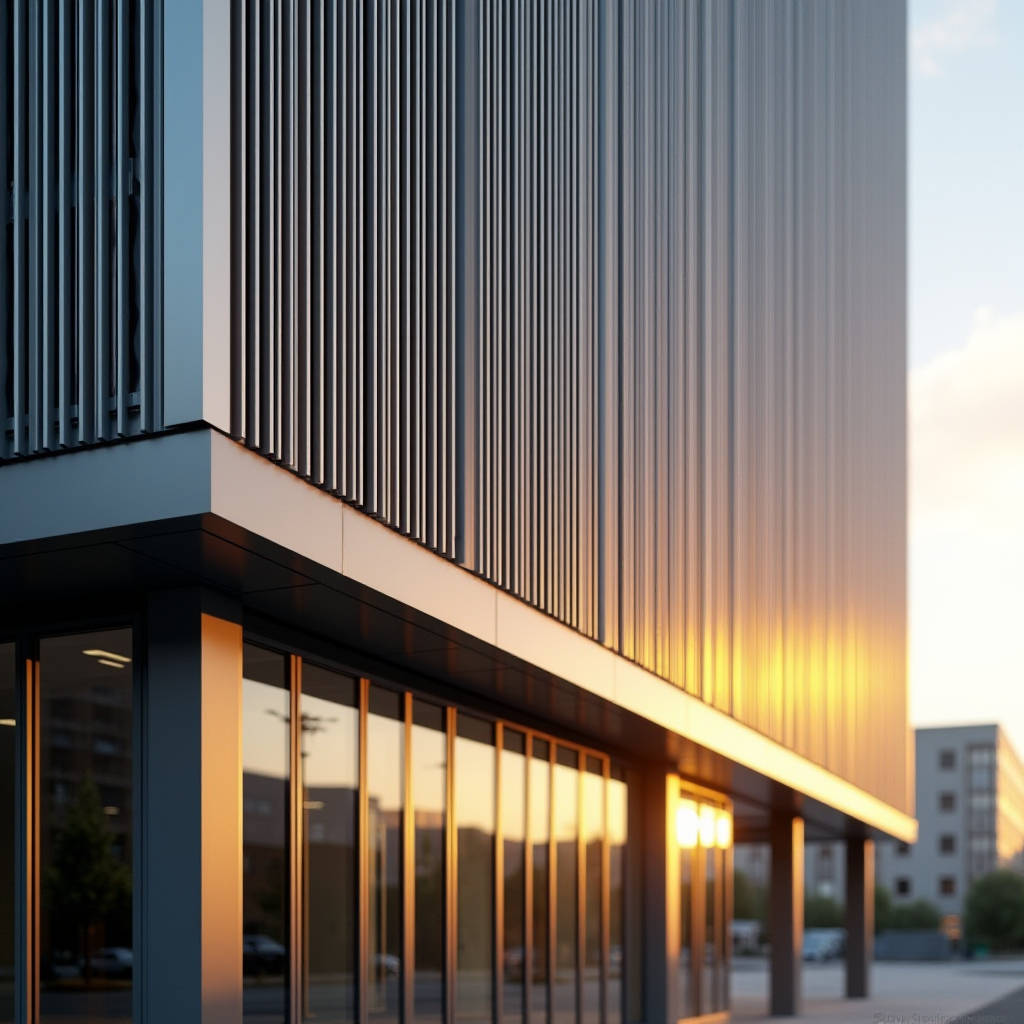
A slotted aluminum metal sheet is a solid aluminum panel machined with precision-cut linear openings that stay closed at both ends, unlike a fully open-ended perforated sheet. In commercial facade work, the slot geometry changes how the panel carries wind load, how it drains water, and how much daylight or airflow passes through. The decision that matters most to a facade contractor or procurement team is not whether to use slots, but how slot width, length, pitch, and orientation interact with the panel's structural stiffness and the coating's cut-edge performance. This article works through those variables from an engineering and supply standpoint, with load estimates, drainage logic, and coating data you can use when specifying a slotted aluminum metal sheet on a rainscreen or screen wall.
What a Slotted Aluminum Metal Sheet Actually Is
In the solid aluminum cladding trade, a slotted panel is cut from a single sheet of 2.0, 2.5, or 3.0 mm aluminum alloy, typically 3003-H14 or 5005-H34. The slots are cut by CNC turret punch, laser, or water jet, and the parent sheet is never laminated or bonded to a core. This is the defining difference from composite products: the slotted aluminum metal sheet has no polyethylene or mineral core, so its mechanical behavior is predictable and its fire performance is governed only by the alloy and the coating.
Slot geometry is usually described by three numbers: slot width, slot length, and the pitch (center-to-center spacing) in both directions. A common architectural pattern is a 6 mm wide by 50 mm long slot on a 60 mm horizontal pitch and a 100 mm vertical pitch, which yields an open area of roughly 5 percent. The open-area ratio is the single most important number for the engineer, because it drives wind load, drainage, and visual density at the same time.
How Slot Geometry Changes Structural Capacity
Every slot removes material from the parent sheet, which reduces the panel's effective section modulus. A solid 3.0 mm sheet behaves as a continuous plate; a slotted sheet behaves more like a series of interrupted strips connected by the remaining ligaments between slot ends. The reduction in bending stiffness is not linear with open area. A panel with 5 percent open area can lose 15 to 25 percent of its bending stiffness depending on slot orientation relative to the span direction, because the slots create stress concentrations at their rounded ends.
For a preliminary check, a facade engineer estimates the allowable wind load on a slotted panel using the reduced section modulus. Consider a 3.0 mm 3003-H14 panel spanning 600 mm between stiffeners, with a 5 percent open area and slots oriented parallel to the span. The effective moment of inertia drops by roughly 20 percent compared with a solid sheet. Using a conservative allowable bending stress of 60 MPa for 3003-H14, the solid panel resists roughly 1.8 kPa of service wind load, while the slotted version drops to about 1.4 kPa under the same span. If the project wind zone requires 2.0 kPa, the fix is either a shorter span, a thicker sheet, or added stiffeners behind the slotted aluminum metal sheet.
The orientation rule is straightforward and worth stating to the fabricator early. Slots running parallel to the stiffener span are structurally less damaging than slots running perpendicular, because perpendicular slots cut across the load path. When a design calls for horizontal slots, the natural stiffener layout should also run horizontally so the slots and the stiffeners share the same direction.
Drainage and Water Management Behind the Panel
A slotted aluminum metal sheet in a rainscreen is not a waterproof barrier. It is the outer leaf of a two-stage system, and the slots are deliberate openings that admit a small amount of water under driving rain. The cavity behind the panel, the air barrier, and the flashings do the real waterproofing. What the slot pattern controls is how much water reaches the cavity and how quickly the cavity dries.
Open area below about 3 percent behaves nearly like a solid panel for drainage purposes, and any water that enters tends to linger because there is little airflow to dry the cavity. Open area above 10 percent turns the panel into a screen rather than a cladding, which changes the thermal and acoustic behavior of the assembly. Most facade teams land between 4 and 8 percent open area for a slotted aluminum metal sheet used as a decorative screen over a ventilated cavity, which balances visual screening, airflow, and water entry.
The cut edges of every slot are the weak point for corrosion. When a PVDF or polyester coating is applied after cutting, the coating wraps the slot edges and protects them. When a panel is cut from pre-finished coil, the slot edges are bare aluminum. For coastal or high-humidity sites, the specification should require edge treatment or post-cut coating, and the coating supplier's warranty language should be checked for cut-edge exclusions. This is a procurement detail that gets missed until the first site inspection.
Coating Performance on Slotted Panels
The coating on a slotted aluminum metal sheet has to survive the same exposure as a solid panel, but with far more linear cut edge per square meter. A 6 mm by 50 mm slot has a perimeter of 112 mm. At a pitch that produces 200 slots per square meter, that is more than 22 meters of cut edge per square meter of panel. The coating system and the fabrication sequence therefore matter more on slotted work than on plain flat sheets.
The table below compares the coating systems most often specified for slotted solid aluminum panels, with the parameters that actually drive a facade warranty decision.
| Coating System | Nominal Dry Film Thickness | Typical Warranty | Cut-Edge Behavior | Best Suited Exposure |
|---|---|---|---|---|
| PVDF (70% resin, 3-coat) | 30-35 µm | 20-30 years | Good when post-cut coated | Coastal, high-UV, industrial |
| PVDF (70% resin, 2-coat) | 25-30 µm | 15-20 years | Moderate at slot edges | Urban, inland |
| Polyester (super durable) | 25-30 µm | 10-15 years | Moderate, needs edge coat | Inland, low pollution |
| Anodized (AA-M10/M12) | 10-20 µm oxide | Depends on seal quality | Edge sealed if cut pre-anodize | Dry inland only |
The practical takeaway is that a 3-coat PVDF system applied after slotting is the standard choice for a slotted aluminum metal sheet on any project with a 20-year facade expectation. The slotting is done first, then the panel is cleaned, pretreated, and coated so the liquid coating flows into the slot walls. Laser-cut edges can leave an oxide layer that reduces coating adhesion, so a light mechanical or chemical edge preparation step is worth specifying before pretreatment.
Fabrication Tolerance and Open-Area Consistency
Procurement teams often focus on sheet thickness and forget that slot consistency is what determines the visual result. A panel with slot width varying from 5.8 to 6.4 mm across a facade will read as patchy from the street, even if the coating is perfect. The specification should state a slot width tolerance of ±0.1 mm and a pitch tolerance of ±0.5 mm, which is achievable with CNC turret punching on a modern machine.
Laser and water jet cutting hold slightly tighter slot width, but laser leaves a heat-affected zone on thin aluminum that can distort the panel, and water jet is slower and more expensive per slot. Turret punching is the economical default for slot widths from 3 to 12 mm in 2.0 to 3.0 mm sheet, and it introduces no thermal distortion. The burr direction also matters: the punch should enter from the exterior face so the burr sits on the back side and does not catch light or hold dirt.
A supplier running this work at volume, such as Futeng®, will normally quote the slot pattern as a DXF file and confirm the burr side, the corner radius of the slot ends, and whether the pattern runs edge-to-edge or stops short of the panel perimeter. Stopping slots 25 to 40 mm short of the panel edge preserves the fold return and keeps the edge stiff enough for the perimeter fixing.
Acoustic and Daylight Side Effects
Slots are not neutral in an acoustic sense. A slotted aluminum metal sheet with 5 percent open area reflects most sound but lets a narrow band of high-frequency energy through the openings. Behind a ventilated cavity with mineral wool, the slots have little effect on the overall sound reduction because the insulation dominates. Behind an empty cavity, the slots can create a slight Helmholtz-type absorption at a narrow frequency, which is rarely a design driver but is worth knowing when the panel sits close to a hard substrate.
Daylight behavior is more predictable. Open area is a reasonable first estimate of light transmission for a backlit or glazed-screen application, but the slot aspect ratio changes the perceived brightness. Long narrow slots read brighter than the same open area distributed as round holes, because the eye integrates along the slot. A 6 mm slot at 5 percent open area appears noticeably more transparent than a 5 percent open area of 6 mm round perforations. This is a useful lever for an architect trying to maximize screening with minimal open area.
Specifying the Slot Pattern for Procurement
When the slotted aluminum metal sheet goes out to tender, the drawing set should fix more than the pattern. The items below are the ones that change price and lead time, and they should be locked before quotes are compared.
- Sheet alloy and temper (3003-H14 or 5005-H34) and nominal thickness.
- Slot width, length, corner radius, horizontal pitch, and vertical pitch.
- Open-area percentage, calculated and stated on the drawing.
- Slot orientation relative to the stiffener and fold direction.
- Burr side and whether slots stop short of the panel perimeter.
- Coating system, film thickness, and whether coating is applied before or after slotting.
- Cut-edge treatment requirement for coastal or industrial exposure.
- Flatness tolerance after slotting, since punching can bow a large panel.
Flatness deserves a separate note. Punching hundreds of slots into a 3.0 mm sheet releases internal stress and can produce a visible bow across a 1.2 m by 3.0 m panel. The fabricator controls this with a stress-relief pass, a heavier sheet, or a stiffer fold return. The specification should state a flatness limit, commonly 0.8 percent of the panel diagonal, measured after fabrication.
Load Path and Fixing Detail
The fixing system for a slotted aluminum metal sheet is generally the same as for a solid panel: perimeter returns, a rear stiffener grid where the span demands it, and either visible or concealed fasteners into a subframe. The slot pattern changes two things. First, the reduced stiffness may force a closer stiffener spacing than the architect assumed. Second, the slots create local weak points where a fixing lands close to a slot end, so the fixing layout should be coordinated with the pattern rather than placed on a fixed grid independent of it.
A practical rule for the detailer is to keep any fastener or stiffener bond line at least 15 mm clear of a slot end. Where a concealed fixing rail must cross a row of slots, the rail should be bonded or riveted to the full ligament between slots, not to the narrow strip between two adjacent slots. These are small details, but they are where site failures on slotted work actually occur.
Cost Drivers Worth Knowing Before You Quote
Slotted panels cost more than plain flat sheets for two reasons: the punching time and the scrap logic. Punching time scales with the number of slots per sheet, not with open area, so a fine pattern of many small slots costs more than a coarse pattern of fewer large slots at the same open area. Scrap logic matters because a slotted sheet cannot be re-cut into a smaller plain panel once the pattern is punched, so the fabricator prices the full sheet as bespoke.
Coating after slotting adds a step and a handling cost, but it eliminates the cut-edge corrosion risk and is usually the right call on any project with a warranty longer than 15 years. Coating before slotting is cheaper but leaves bare edges, and the savings rarely justify the long-term risk on exposed facades. When comparing quotes, the procurement team should confirm the fabrication sequence in writing, not assume it.
When a Slotted Panel Is the Wrong Choice
A slotted aluminum metal sheet is not a universal solution. If the facade must be fully weathertight as a single barrier, slots are the wrong detail and a solid panel with a drained joint is correct. If the project needs high sound insulation with no cavity, slots reduce the mass-air-mass performance and should be avoided. If the site is in a severe marine environment and the budget cannot cover post-cut PVDF coating, a solid panel with a textured finish will outlast a slotted panel with bare edges.
The honest engineering position is that slots are a screening and daylight tool first, and a structural or waterproofing element never. When the design intent is visual screening, controlled daylight, or a ventilated aesthetic over a functioning rainscreen, the slotted aluminum metal sheet is a precise and durable option. When the intent is weathertightness, it is the wrong tool.
For a facade contractor or procurement manager, the slotted aluminum metal sheet is best handled by fixing the slot geometry, the fabrication sequence, and the coating system before tender, then holding the fabricator to a stated slot tolerance, burr direction, and flatness limit. The engineering is predictable once the open-area ratio and slot orientation are known, and the long-term performance is governed almost entirely by how the cut edges are treated. Get those two things right, and the panel will perform for decades; get the edges wrong, and no amount of slot precision will save the facade.