How Honeycomb Aluminum Panel Weight and Flatness Drive Façade Engineering Decisions
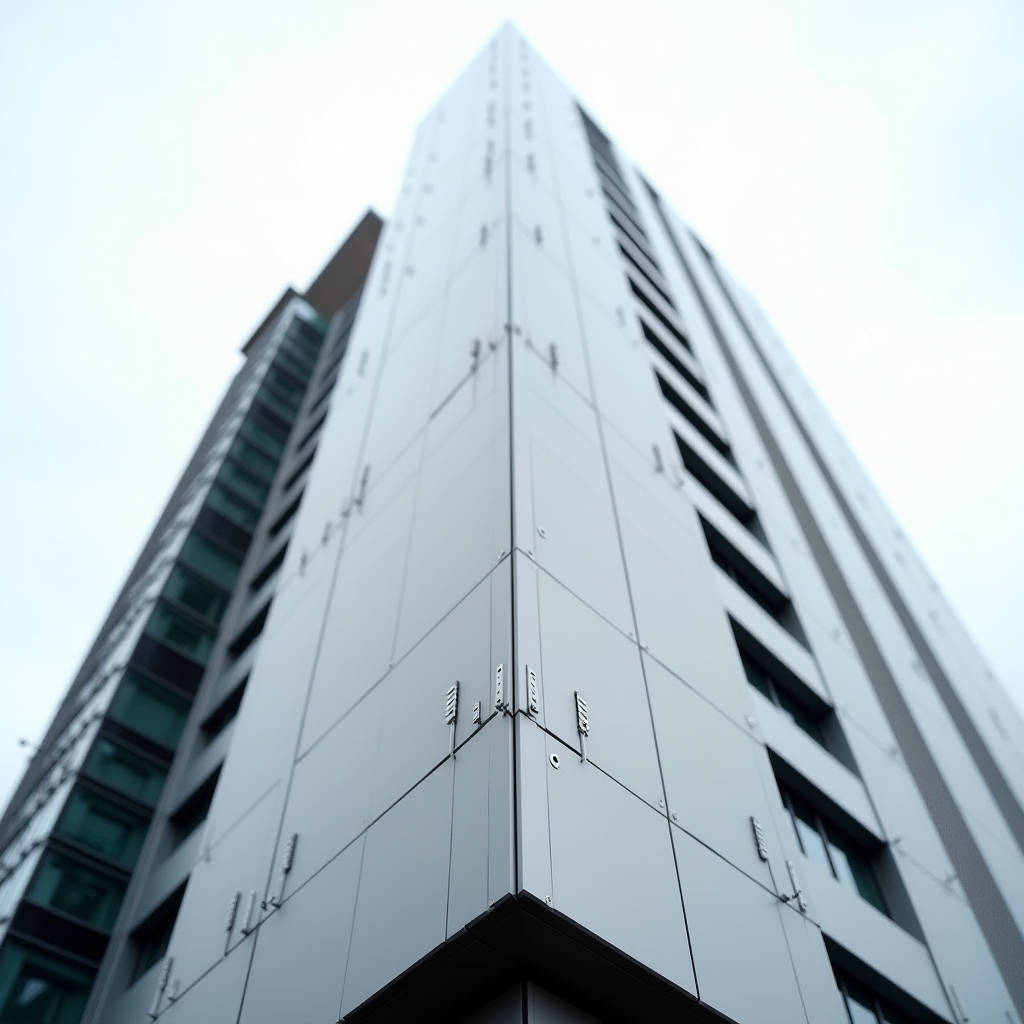
When a façade contractor starts evaluating honeycomb aluminum panel systems for a high-rise curtain wall, the first question rarely concerns aesthetics. It concerns dead load. A standard 4mm solid aluminium cladding panel weighs roughly 10.8 kg/m². A 20mm honeycomb aluminum panel—with 0.7mm top skin, 0.5mm back skin, and 3000-series aluminium core—comes in around 7.2 kg/m². That 33% weight reduction cascades through the entire project: lighter structural steel, fewer anchor points, smaller crane requirements, and faster installation cycles. Over a 15,000 m² façade, the math gets serious fast.
But weight savings alone do not justify the material switch. The real conversation among procurement managers and engineering teams revolves around flatness under thermal load, wind load deflection performance, and long-term coating integrity. A properly manufactured honeycomb aluminum panel maintains a deflection limit of L/200 under wind loads up to 3.5 kPa when engineered with the correct skin thickness and cell size. That is not marketing language—it is what structural engineers need to see on the spec sheet before signing off.
What Actually Drives Honeycomb Panel Cost Beyond the Square Meter Price
Procurement teams often fixate on the per-square-meter ex-works price. That number matters, but it misleads more than it informs. A honeycomb aluminum panel project involves at least six cost layers that the unit price alone does not capture.
First, the skin thickness configuration. The most common commercial specification pairs a 0.7mm front skin (AA3003-H14 or AA5052-H32) with a 0.5mm back skin. Moving to 1.0mm/0.7mm adds roughly 18–22% to material cost but buys you higher wind load resistance and better flatness across spans exceeding 1,200mm. Second, the core specification. Hexagonal cell cores come in 3003, 5052, and rarely 5056 alloys, with cell sizes of 6mm, 8mm, or 10mm. Smaller cell sizes (6mm) deliver higher compressive strength but increase adhesive consumption and panel weight. Third, the coating system. PVDF fluorocarbon coatings using 70% Kynar 500® resin—applied at 35–40 microns minimum dry film thickness—cost roughly 2.3x more than polyester powder coatings but remain the only defensible choice for exterior applications exceeding 10-year service life expectations.
Then there are the secondary costs that procurement managers in Southeast Asia and the Middle East flag regularly: edge treatment (open edge vs. folded edge vs. extruded aluminum frame), attachment system compatibility (cassette, tray, or unitized), and factory-applied protective film rated for 90-day UV exposure during site storage. Each of these decisions shifts the final installed cost by $12–$28 per square meter.
Field Note: On a mixed-use tower project in Kuala Lumpur, the contractor saved $47,000 in remedial work by specifying 0.7mm/0.7mm skins instead of 0.7mm/0.5mm after discovering that the original spec was under-designed for the 2.8 kPa design wind load at the 45th floor. The additional $9/m² upfront eliminated oil-canning complaints entirely. Always request a panel-specific wind load calculation from the manufacturer before locking the skin gauge.
Engineering Flatness: Why Honeycomb Panels Outperform Solid Sheet at Large Spans
Solid aluminium cladding panels at 3.0mm thickness perform well up to roughly 600mm spans before visible waviness appears under raking light. Push them to 900mm or 1,200mm, and the contractor either accepts a degree of oil-canning or adds stiffeners—which add weight, labor, and thermal bridge complications.
The honeycomb aluminum panel solves this differently. The continuous epoxy or thermoplastic adhesive bond between the aluminium skins and the honeycomb core creates a stressed-skin structure. When a bending moment is applied, the top skin carries compression, the bottom skin carries tension, and the core transfers shear. The result: a 20mm-thick panel with 0.7mm skins can span 1,500mm between supports while maintaining a flatness tolerance of ±0.5mm per 300mm, measured with a straight edge under ASTM E1155 or equivalent.
This flatness advantage matters most on two project types: airport terminals with long horizontal sightlines, and curtain wall spandrel zones where reflected light from adjacent buildings exposes every millimeter of deformation. Architects specifying these applications should insist on factory inspection reports showing flatness measurements taken at 20°C and 50% relative humidity, because a panel that measures flat in a 35°C factory will not stay flat on a 5°C winter morning in London.
Thermal Movement and the Hidden Risk in Long Panels
Aluminium expands at roughly 0.024mm per meter per degree Celsius. A 4-meter honeycomb panel subjected to a 60°C temperature swing (from -10°C night to 50°C direct sun) will expand by approximately 5.8mm. If the attachment system does not accommodate this movement, the panel buckles or the fasteners loosen over time.
Experienced façade engineers address this with slotted holes at the fixed end and sliding clips at the free end, sized for the calculated movement range. The honeycomb core itself does not eliminate thermal movement—it simply distributes the stress more evenly than a solid sheet, reducing the likelihood of localized buckling at fastener points. The spec writer should reference ASTM E283 for air infiltration and ASTM E331 for water penetration when the honeycomb panel forms part of a drained and back-ventilated rainscreen system.
Coating Specification: PVDF, FEVE, and What the Warranty Actually Covers
Exterior honeycomb aluminum panel coatings fall into three categories, and the differences matter far more than the color chart suggests.
| Coating Type | Resin System | Typical DFT (microns) | Warranty Period (Standard) | Best Application |
|---|---|---|---|---|
| PVDF (Kynar 500®) | 70% PVDF / 30% acrylic | 35–40 (3-coat) | 20–25 years | Exterior façades, coastal zones |
| FEVE (Lumiflon®) | Fluoroethylene vinyl ether | 40–50 (3-coat) | 25–30 years | High-gloss metallics, severe UV |
| Polyester Powder | TGIC or HAA polyester | 60–80 | 5–10 years | Interior, soffits, sheltered areas |
| Anodized | Electrochemical oxide layer | 15–25 (AA20–AA25) | 10–15 years | Uniform matte metallic appearance |
PVDF remains the workhorse specification for 90% of exterior honeycomb panel projects. The Kynar 500® designation specifically requires 70% minimum PVDF resin content in the color coat—not the primer, not the clear coat. Some manufacturers cut cost by using 50% PVDF blends. The panel will look identical on day one. By year seven, the chalk rating difference (ASTM D4214) becomes unmistakable. Procurement managers should require a batch-level resin certification from the coating supplier, not just a mill test certificate from the panel fabricator.
For projects in the Gulf region or Southeast Asia where UV exposure is extreme, FEVE-based coatings offer genuine technical advantages. The higher gloss retention (85%+ after 10 years vs. 50–65% for standard PVDF) justifies the $8–$12/m² premium on landmark buildings where the architect will not compromise on metallic finish consistency.
Pro Tip: When specifying PVDF on honeycomb panels with deep embossed textures or perforations, increase the minimum dry film thickness by 5–8 microns at the recessed areas. Standard electrostatic spray application tends to thin out on edges and inside perforations. Request a cross-section microscope measurement from the first-off sample, not just a flat-surface reading. This single check has caught coating failures before they left the factory floor.
Fire Performance and the Core Material Debate
Fire codes are tightening globally, and the honeycomb core material is under scrutiny. The core options break down into three categories with distinct fire performance profiles:
- Aluminium honeycomb core (3003/5052 alloy): Inherently non-combustible. Achieves EN 13501-1 Class A1 or A2-s1,d0 when tested as a complete panel assembly. This is the only core type acceptable for high-rise façades above 18 meters in most jurisdictions following the Grenfell-driven regulatory overhaul.
- Thermoplastic honeycomb core (polypropylene, polycarbonate): Lighter and cheaper, but combustible. Typically achieves EN 13501-1 Class B-s1,d0 or lower. Restricted to low-rise applications or interior partitions in most markets.
- Phenolic-impregnated paper core: A middle ground. Achieves Class B-s1,d0 or A2-s3,d0 depending on density and resin loading. Used in interior applications where weight is critical and fire requirements are moderate.
The specification writer must confirm that the fire test report covers the complete panel assembly—skins, core, adhesive, and coating—not just the core material in isolation. A non-combustible core bonded with a thick layer of combustible adhesive can still fail the assembly-level test. ASTM E84 (surface burning), EN 13501-1 (reaction to fire), and ASTM E119 (fire resistance) are the three most commonly referenced standards in international specifications.
Supply Chain Realities: Lead Times, MOQs, and Packaging for Export
For international procurement managers, the factory's technical capability matters only if the logistics work. Honeycomb aluminum panel production involves a sequence that cannot be compressed beyond certain limits: skin fabrication (cutting, grooving, bending), surface pretreatment (chromate or chrome-free conversion coating), spray coating with curing, core expansion and skin bonding under heat and pressure, edge trimming, and final inspection.
Standard lead times run 4–6 weeks from deposit receipt and drawing approval for quantities up to 3,000 m². Larger orders or complex panel geometries (curved panels, tapered panels, 3D folded panels) extend to 8–10 weeks. The minimum order quantity for custom honeycomb panels typically starts at 200–300 m² depending on the factory, though some manufacturers—including Futeng®—accept smaller trial orders for first-time project qualification, recognizing that specifiers need to evaluate physical samples before committing to a full façade package.
Export packaging deserves more attention than it receives. Honeycomb panels are rigid but not indestructible. A standard export crate uses a steel frame base with corrugated dividers between panels, plus a 3mm MDF top sheet and full-enclosure shrink wrap. For sea freight to the Middle East or Europe, specify desiccant packs inside the crate and a minimum 0.15mm polyethylene vapor barrier. Surface rust on the crate hardware can stain panel edges if moisture penetrates during the 4–6 week shipping window.
Documentation requirements for customs clearance vary by destination, but the minimum package should include: mill test certificates for the aluminium coil (EN 10204 Type 3.1 or equivalent), coating batch certificates with resin composition, factory inspection reports with dimensional tolerances, and a packing list that maps each crate to specific façade zones. Projects in the EU increasingly require Environmental Product Declarations (EPDs) under EN 15804, which adds 2–3 weeks to the documentation timeline if not requested upfront.
Installation Tolerances and the Attachment System Interface
The best honeycomb aluminum panel in the world will fail if the substructure is out of tolerance. Curtain wall contractors working with honeycomb panels should hold the supporting steel or aluminum framework to a positional tolerance of ±3mm in-plane and ±2mm out-of-plane across any 3-meter bay. Anything looser, and the panel joints will show visible stepping—especially under the low-angle sunlight conditions that make façade defects painfully obvious.
Three attachment systems dominate the market:
- Concealed clip system (cassette): Panels hang on extruded aluminum rails with interlocking joints. Fastest installation—a skilled crew can hang 40–60 m² per day. Best for large, repetitive façades. Joint width tolerance: ±2mm.
- Exposed fastener system (face-fixed): Panels are screwed directly to the substructure through pre-drilled holes with EPDM-gasketed stainless steel fasteners. Lower cost, easier to replace individual panels. Acceptable for industrial buildings and parking structures. Joint width tolerance: ±3mm.
- Unitized system: Panels are pre-assembled into larger units (typically one floor height × one structural bay) at the factory, then craned into position on site. Minimum site labor, maximum quality control. Requires precise structural coordination. Used on premium office towers where site access is constrained.
Joint sealant selection is the detail that separates experienced contractors from novices. For honeycomb panel joints 15–25mm wide, use a low-modulus neutral-cure silicone sealant with ±25% movement capability. The sealant must be compatible with the PVDF coating—some acetoxy-cure silicones can attack the coating at the cut edge. Always request a compatibility test from the sealant manufacturer, referencing the specific coating system and primer used on the panels.
When Honeycomb Panels Make Economic Sense—and When They Do Not
The decision to specify honeycomb aluminum panel over solid sheet or other cladding materials should be driven by a cold-eyed assessment of project parameters, not by a supplier's brochure.
Honeycomb panels deliver clear value when three conditions align: the panel span exceeds 800mm between supports, the project requires flatness tolerance tighter than ±1mm per 300mm, and the total façade area exceeds 5,000 m² where the weight savings translate into measurable structural cost reductions. On a 20,000 m² curtain wall, switching from 4mm solid sheet to 20mm honeycomb can reduce the supporting steel tonnage by 12–18%, which often offsets the higher panel unit cost entirely.
Conversely, honeycomb panels are difficult to justify for small areas (under 500 m²), projects with spans under 600mm where solid sheet performs adequately, or applications where the panels will be field-cut extensively. Field cutting honeycomb panels exposes the core, requires edge resealing, and compromises the factory-applied coating integrity at the cut line. The labor cost of proper field edge treatment often erases the material's installation speed advantage.
For architects and engineers evaluating suppliers, the qualifying questions should include: What is the factory's flatness inspection protocol? Can they provide a project-specific wind load calculation signed by a qualified structural engineer? Do they stock the specific alloy and temper you need, or will they substitute based on availability? A supplier who answers these questions with data rather than assurances is the one worth shortlisting. Futeng® has built its export reputation on providing exactly this level of technical documentation—mill certificates, test reports, and calculation packages—before the purchase order is signed, because no serious contractor buys honeycomb panels on a promise.
The global curtain wall market continues to demand larger panels, tighter tolerances, and faster installation. Honeycomb aluminum panel technology is not new—the aerospace industry has used it for decades—but its adoption in commercial façade engineering is accelerating as the cost of structural steel rises and fire regulations eliminate combustible core alternatives. The contractors who invest time in understanding the material's engineering fundamentals, rather than treating it as a commodity, will be the ones who deliver façades that look as good at year 15 as they did on handover day.