Mirror Aluminum Panel Specifications for High Reflectance Curtain Wall Façade Projects
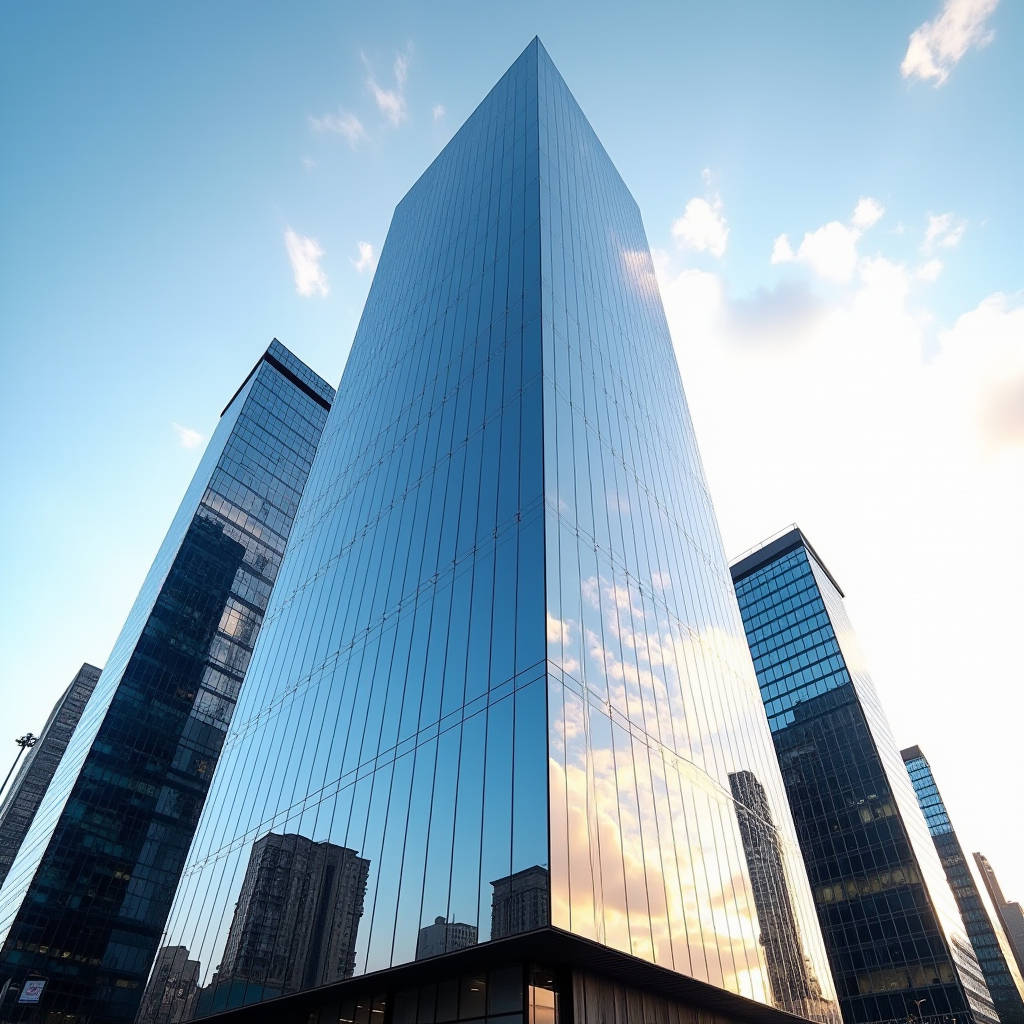
When a façade consultant specifies "mirror aluminum panel" on a curtain wall drawing, the procurement team faces a specific set of technical questions that generic cladding suppliers often cannot answer: what alloy grade holds the reflective finish without distortion, how tight the flatness tolerance must be to avoid optical waviness, and whether the PVDF coating system can maintain reflectance above 80% after five years of UV exposure. These are not aesthetic preferences. They are engineering requirements that determine whether the installed façade matches the architect's renderings or triggers a costly rejection during site inspection.
Mirror aluminum panel is a solid aluminium cladding panel — typically 2.0mm, 2.5mm, or 3.0mm thick — with a polished or bright-rolled surface that achieves a highly reflective, near-mirror finish. The substrate is almost always AA5005 or AA5052 alloy, selected for its balance of formability and corrosion resistance. The reflective effect comes from one of two routes: mechanical polishing followed by anodizing, or a high-gloss PVDF (polyvinylidene fluoride) coating system applied over a chemically pre-treated surface. Both approaches demand tighter process control than standard architectural aluminum panels. A 0.2mm deviation in flatness that would be invisible on a matte silver panel becomes glaringly obvious on a mirror surface.
This article walks through the material specifications, fabrication tolerances, coating chemistry, and on-site handling protocols that separate a successful mirror aluminum panel installation from a dispute-prone one. The focus is on what façade contractors and procurement managers need to verify before signing off on a shop drawing or a purchase order.
What Mirror Aluminum Panel Actually Means in Solid Aluminium Cladding
The term "mirror aluminum panel" is not defined by a single ASTM or EN standard. It describes a visual outcome. In practice, it refers to a solid aluminium cladding panel whose surface reflectance — measured by a gloss meter at a 60° angle — exceeds 80 GU (gloss units). Standard architectural PVDF coatings typically land in the 25–40 GU range. Mirror finishes push well past 80 GU, with some bright-anodized variants reaching 90+ GU.
This distinction matters because the procurement specification must clarify which reflective technology is being quoted. Three common paths exist:
- High-gloss PVDF coating: A 70% Kynar 500® or Hylar 5000® resin system (minimum 30–35 μm dry film thickness, three-coat or four-coat) applied over a mirror-polished aluminum substrate. This is the most common route for exterior façades because it combines reflectivity with exterior-grade weatherability.
- Bright anodizing: Electrochemical oxidation (typically 10–15 μm oxide layer per AAMA 611) over a mechanically polished or bright-rolled surface. Offers superior metallic depth but is more sensitive to substrate quality and handling damage.
- PVD (Physical Vapor Deposition): A thin-film deposition process that can produce chrome-like reflectance. Used sparingly in architectural applications due to cost and limited panel size capability.
For most commercial and institutional curtain wall projects, the high-gloss PVDF route on a 2.5mm or 3.0mm AA5005 substrate represents the practical intersection of optical performance, durability, and cost. Suppliers like Futeng® that operate dedicated mirror-finish production lines can hold reflectance consistency across batch runs — something that becomes critical when a 5,000 m² façade is fabricated over six weeks.
Field Note: When reviewing mirror aluminum panel samples, always measure gloss with the same geometry (60°) and the same instrument model that will be used for site QA. Different gloss meter brands can disagree by 3–5 GU on high-reflectance surfaces. Write the meter model into the inspection test plan.
Alloy Selection and Flatness: Why Substrate Quality Dictates the Mirror Effect
A mirror aluminum panel is only as flat as the sheet it starts from. Unlike textured or low-gloss finishes that mask minor ripples, a reflective surface amplifies every deviation. The human eye can detect optical distortion from flatness deviations as small as 0.3mm over a 300mm span on a mirror surface. This is why the alloy grade, temper, and sheet-leveling process are not secondary concerns — they are the foundation of the entire specification.
AA5005 vs AA5052: Matching Alloy to Application
AA5005 (Al-Mg series, Mg content ~0.8–1.1%) is the most commonly specified alloy for mirror aluminum panel applications. It offers good formability for bending and punching, excellent anodizing response, and sufficient strength for non-structural cladding. AA5052 (Mg content ~2.2–2.8%) provides higher tensile strength (210–260 MPa vs. 145–185 MPa for 5005-H14) and better fatigue resistance, making it the preferred choice for panels exceeding 1,200mm in width or installations in high wind-load zones. The trade-off: AA5052 is slightly harder to polish to a uniform mirror finish and costs roughly 8–12% more per kilogram.
| Parameter | AA5005-H14 | AA5052-H32 | Relevance to Mirror Finish |
|---|---|---|---|
| Tensile Strength (MPa) | 145–185 | 210–260 | Higher strength allows thinner gauge without oil-canning |
| Yield Strength (MPa) | ≥110 | ≥160 | Resistance to permanent deformation during handling |
| Elongation (%) | ≥8 | ≥10 | Better formability for complex folded geometries |
| Polish Response | Excellent | Good | Uniformity of mirror finish across large surfaces |
| Anodizing Quality | Excellent | Very Good | Oxide layer clarity and color consistency |
| Typical Cost Delta | Baseline | +8–12% | Budget impact for large-scale procurement |
Flatness Tolerances for Mirror Finishes
Standard aluminum panel flatness tolerances — typically ±1.5mm per meter per ASTM or EN 485 — are insufficient for mirror aluminum panel applications. Suppliers experienced in reflective cladding work to a tighter internal standard: ±0.5mm per linear meter, measured with a straight edge and feeler gauge on a granite inspection table. This is achieved through tension leveling (stretching the sheet beyond its yield point to eliminate internal stresses) followed by precision roller leveling.
For procurement teams, the practical implication is straightforward: the mirror aluminum panel specification must explicitly state the flatness tolerance, and the factory must demonstrate the leveling equipment and inspection protocol during the pre-qualification audit. A supplier that cannot show a dedicated tension-leveling line is unlikely to deliver consistent mirror-finish flatness across a full container load.
Coating Systems That Hold Reflectance Over Time
The reflective performance of a mirror aluminum panel on day one is easy to demonstrate. The harder question is what happens after three years of UV radiation, thermal cycling, and airborne pollutants. The answer depends on two factors: the PVDF resin system and the primer chemistry.
Kynar 500® vs. FEVE: Resin Chemistry Matters
Architectural PVDF coatings based on Kynar 500® or Hylar 5000® resin (minimum 70% PVDF by weight in the resin solids) are the industry benchmark for exterior aluminum cladding. They deliver proven color and gloss retention over 20+ years of South Florida exposure testing per AAMA 2605. For mirror aluminum panel applications, the key specification is the 60° gloss retention after accelerated weathering: a properly formulated three-coat Kynar 500® system should retain at least 70% of its initial gloss after 4,000 hours of QUV-B testing (ASTM G154).
FEVE (fluoroethylene vinyl ether) coatings, sometimes marketed as "PVDF alternatives," offer higher initial gloss — up to 90+ GU — but their long-term exterior durability data is less extensive than the 50-year track record of Kynar 500®. For projects requiring a 15–20 year warranty on the mirror finish, Kynar 500® remains the conservative specification choice.
The Three-Coat System: Primer, Color Coat, Clear Coat
A mirror aluminum panel typically requires a three-coat PVDF system, not the standard two-coat system used for matte or semi-gloss colors:
- Primer (5–8 μm): Chromate or chrome-free corrosion-inhibiting primer that bonds to the chemically pre-treated aluminum surface. For mirror finishes, the primer must be exceptionally smooth — any orange peel texture telegraphs through to the topcoat.
- Color coat (15–20 μm): The pigmented PVDF layer. For a true mirror aluminum panel, this layer is often a metallic silver or tinted formulation that contributes to the reflective depth.
- Clear coat (10–15 μm): A transparent PVDF topcoat that protects the color coat and provides the high-gloss surface. This is where the gloss meter reading is taken. Total dry film thickness: 30–43 μm minimum.
Pro Tip: During the sample approval phase, ask the coating applicator to spray a test panel with the same batch of clear coat that will be used on production. Measure gloss at five points across the panel. A variance greater than 5 GU indicates inconsistent film thickness — a red flag for mirror finishes on large panels.
Fabrication: How Bending, Routing, and Assembly Affect the Mirror Surface
Fabricating a mirror aluminum panel introduces risks that do not exist with standard finishes. Every contact point — press brake tooling, routing table, assembly bench — can leave a mark that ruins the panel. The fabrication shop must adopt specific protocols.
Press Brake Bending with Protective Film
Mirror aluminum panels arrive at the fabrication shop with a factory-applied PE protective film (typically 60–80 μm thickness). This film must remain in place throughout cutting, bending, and routing. The press brake tooling should use polyurethane die inserts (shore hardness 90A–95A) rather than bare steel to prevent film penetration. Bend radii should follow the minimum recommended values: 1.5× material thickness for AA5005, 2.0× for AA5052. Tighter bends risk micro-cracking the coating along the bend line, which becomes visible as a hairline distortion on the mirror surface.
CNC Routing and Edge Quality
When mirror aluminum panels are used as rainscreen cladding with visible joints, the cut edge quality matters. A rough router edge reflects light differently from the face, creating a dark line at the panel perimeter. The solution: specify a down-cut spiral router bit and a finishing pass at reduced feed rate. For folded panels where the return leg is visible, the exposed edge should receive a touch-up coating matched to the face color — though on mirror finishes, a perfect match is nearly impossible, so detailing the panel to conceal edges is always preferred.
Packaging, Shipping, and Site Handling for Mirror Aluminum Panel
Damage during logistics is the single largest source of mirror aluminum panel rejection. A panel that leaves the factory with a perfect mirror finish can arrive on site with scratches, scuffs, or — worst of all — permanent pressure marks from strapping. The packaging specification is as important as the material specification.
Export-Grade Packaging Standards
For FOB and CIF shipments, mirror aluminum panels require:
- Interleaving: Each panel separated by a sheet of PE foam or kraft paper (minimum 80 g/m²) to prevent face-to-face abrasion during transit vibration.
- Edge protection: Cardboard or plastic edge guards on all four corners and along the perimeter to prevent fork-lift damage during container loading.
- Pallet construction: Export-grade fumigated plywood pallets (not standard timber) with a flat, rigid top surface. Panel overhang beyond the pallet edge must not exceed 100mm to prevent cantilever bending.
- Strapping tension: Polyester strapping with tension limiters set to 200–250 kg. Over-tightened steel strapping is a common cause of permanent indentation on mirror surfaces.
- Moisture barrier: Full pallet wrap with VCI (volatile corrosion inhibitor) film for sea freight shipments exceeding 30 days in transit.
On-Site Storage and Handling
Once the mirror aluminum panel shipment arrives on site, the contractor must maintain the same discipline. Panels should be stored vertically on A-frame racks with padded contact points, indoors or under a weatherproof canopy. Horizontal stacking — even with interleaving — is not recommended for mirror finishes beyond 48 hours, as the weight of upper panels can imprint texture onto lower panels. The protective film should remain in place until the panel is installed and the surrounding area is clean of construction dust. Premature film removal is a common mistake that leads to scratch claims that no supplier will warranty.
Cost Drivers: What Adds Expense to a Mirror Aluminum Panel Specification
Procurement managers evaluating mirror aluminum panel quotations need to understand where the cost premium comes from. A mirror-finish solid aluminium cladding panel typically costs 25–45% more than an equivalent matte-finish panel of the same alloy and thickness. The premium is not arbitrary — it reflects real process costs:
- Substrate premium: Mirror-grade aluminum sheet commands a 10–15% surcharge from rolling mills. The sheet must be free of roll marks, inclusion lines, and other surface defects that standard architectural sheet tolerates.
- Coating complexity: A three-coat high-gloss PVDF system costs roughly 20–30% more per square meter than a two-coat standard system. The clear coat itself is a significant material cost.
- Yield loss: Mirror panel fabrication typically experiences 8–12% rejection rate at final inspection, compared to 3–5% for standard finishes. These rejected panels cannot be reworked — they are scrap.
- Packaging: Export-grade packaging for mirror panels adds $2–4 per square meter versus standard packaging.
For a 3,000 m² curtain wall project, the mirror finish premium could add $45,000–$75,000 to the cladding package. The value proposition must be clear: a mirror aluminum panel delivers a visual signature that standard cladding cannot replicate, and it does so with the same 20+ year exterior durability that solid aluminum cladding is specified for in the first place.
Specification Checklist for Mirror Aluminum Panel Procurement
Before issuing a purchase order, procurement teams should verify the following technical parameters with the supplier. These items should appear in the technical data sheet, not just the sales proposal:
- Alloy and temper: AA5005-H14 or AA5052-H32, with mill test certificates from the rolling mill.
- Thickness tolerance: ±0.05mm for 2.0mm and 2.5mm gauges; ±0.08mm for 3.0mm gauge, per EN 485-3.
- Flatness: Maximum deviation of 0.5mm per linear meter, measured on a granite table.
- Coating system: Minimum 70% Kynar 500® or Hylar 5000® resin, three-coat system, total DFT 30–43 μm.
- Gloss level: 60° gloss ≥80 GU, measured per ASTM D523, with maximum variance of ±5 GU across the panel.
- Color consistency: Delta E (CIE Lab) ≤1.0 between panels of the same batch, measured with a spectrophotometer.
- Protective film: PE film, 60–80 μm thickness, UV-stabilized for outdoor storage up to 90 days.
- Packaging: Export-grade pallet with interleaving, edge protection, and VCI wrap for sea freight.
- Warranty: Minimum 15-year film integrity warranty for the PVDF coating, issued by the coating manufacturer (not just the panel fabricator).
Suppliers with dedicated mirror-finish production capability — such as Futeng® — can typically provide all of the above documentation as part of the standard submittal package. The presence or absence of a documented flatness inspection protocol is often the fastest way to separate experienced mirror panel fabricators from general-purpose cladding suppliers.
FAQ: Mirror Aluminum Panel in Real-World Projects
Can mirror aluminum panels be used in coastal environments?
Yes, provided the correct alloy and coating system are specified. AA5052-H32 with a three-coat Kynar 500® system is the recommended combination for projects within 5km of a saltwater coastline. The higher magnesium content of 5052 provides better resistance to pitting corrosion, and the PVDF coating system has proven performance in marine environments per AAMA 2605 testing. Regular cleaning (every 6–12 months with pH-neutral detergent) is essential to prevent salt buildup from etching the clear coat over time.
What is the maximum panel size for a mirror aluminum panel?
Practical maximums depend on the substrate thickness and the flatness requirement. For a 2.5mm mirror aluminum panel, the recommended maximum dimension is approximately 1,500mm × 3,000mm. Panels larger than this become increasingly difficult to handle without introducing waviness. Some fabricators can produce panels up to 2,000mm × 4,000mm in 3.0mm gauge, but the flatness tolerance must be relaxed to ±1.0mm per meter — and the architect should be consulted on whether this is visually acceptable for the specific building geometry and viewing distance.
How does mirror aluminum panel compare to stainless steel for reflective façades?
Stainless steel (typically grade 304 or 316, 1.5–2.0mm thick) can achieve a higher absolute reflectance than mirror aluminum panel, and it is more resistant to impact damage. However, stainless steel weighs roughly three times more per square meter (12 kg/m² for 1.5mm stainless vs. 6.8 kg/m² for 2.5mm aluminum), which imposes a structural penalty on the curtain wall support system. Stainless also costs 2–3× more than mirror aluminum panel on a per-square-meter basis. For most commercial projects, mirror aluminum panel offers the better balance of optical performance, weight, and installed cost.
Is the mirror finish repairable on site?
Minor scratches can be reduced with a fine polishing compound, but the result will never match the factory finish. Deep scratches that penetrate the clear coat are not repairable — the panel must be replaced. This is why protective film discipline during handling and installation is non-negotiable. Procurement contracts should clearly define the acceptance criteria for surface defects (e.g., no visible scratches from a distance of 3 meters under diffuse daylight per ASTM D523 viewing conditions) and the procedure for documenting and claiming damaged panels upon delivery.
What lead time should be budgeted for custom mirror aluminum panels?
Standard lead time for mirror aluminum panel fabrication is 4–6 weeks from drawing approval, assuming the substrate material is in stock. Custom colors or non-standard alloy/temper combinations can extend this to 8–10 weeks. Sea freight to major ports (e.g., Los Angeles, Rotterdam, Dubai, Singapore) adds 3–5 weeks depending on origin. Procurement teams should budget a total of 10–14 weeks from PO issuance to site delivery for international orders. Rush orders are possible but typically incur a 15–20% surcharge and still require a minimum of 6 weeks for production.
Mirror aluminum panel procurement rewards technical rigor. The difference between a façade that delivers the intended reflective signature and one that generates punch-list disputes comes down to the details: alloy grade, flatness tolerance, coating chemistry, and packaging discipline. Contractors who invest the time to specify these parameters during the submittal phase — and who qualify suppliers against them — consistently achieve better outcomes than those who treat mirror finish as a simple checkbox on a finish schedule.