Brushed Aluminum Panel Procurement Guide for Façade Contractors and Curtain Wall Specifiers
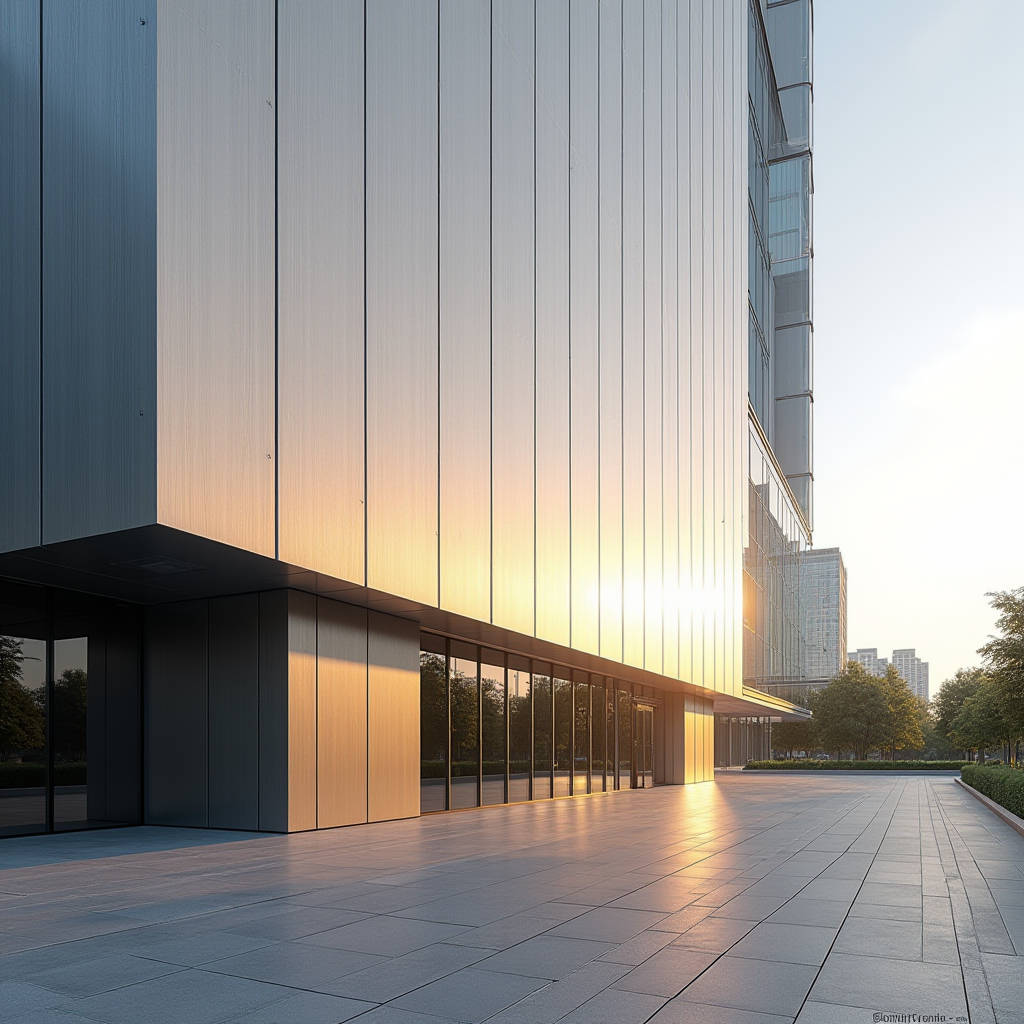
When a façade contractor specifies a brushed aluminum panel for a high-rise exterior, the conversation shifts quickly from aesthetics to four hard metrics: alloy grade, anodized or PVDF finish durability, panel flatness tolerance, and lead time. These are not interchangeable commodities. A 2.5mm solid aluminium panel with a linear grain finish must hold its surface integrity across 40+ floors of UV exposure, thermal cycling, and wind load—without oil-canning, without delamination, and without color shift that exceeds Delta E ≤ 2.0 under ASTM D2244. This article breaks down the technical procurement logic that separates a specification-grade brushed aluminum panel from a generic architectural sheet, with data on temper selection, finish chemistry, flatness standards, and real-world lead time planning.
What a Brushed Aluminum Panel Actually Is—and What It Is Not
A brushed aluminum panel is a solid aluminium sheet—typically 2.0mm, 2.5mm, or 3.0mm thick—that has undergone mechanical surface finishing to produce a uniform, directional linear grain. The brushing process uses abrasive belts or wheels (grit range commonly 120–240) that remove a thin layer of the alloy surface, creating a consistent satin texture. This is not a coating. It is a physical alteration of the metal surface itself.
This matters because the brushed finish exposes the base alloy directly. Unlike a PVDF-coated panel where the fluoropolymer layer shields the aluminum, a brushed surface demands an additional protective step—either a clear anodic layer or a transparent fluoropolymer clear coat—to prevent oxidation and fingerprint etching. Skipping this step is a common mistake in procurement. A raw brushed surface without protection will oxidize unevenly within months, particularly in coastal or industrial atmospheres.
Three alloy families dominate the market for brushed aluminum panel applications:
- AA 3003 / 3105 (Al-Mn): Moderate strength, excellent formability. Common for interior cladding and decorative applications where structural loads are minimal. Tensile strength typically 130–170 MPa.
- AA 5052 (Al-Mg): Higher strength-to-weight ratio, superior corrosion resistance. The standard choice for exterior façade panels. Tensile strength 210–260 MPa in H32 temper.
- AA 5005: A balanced option with good anodizing response. Often specified when a consistent brushed-anodized architectural finish is required.
Field Note: When ordering brushed aluminum panel in AA 5052 H32 temper, request the mill test report (MTR) upfront. We've seen shipments where the temper was mislabeled as H32 but the actual yield strength tested closer to H34—which will crack during brake forming on tight radii. A 2.5mm panel with a 90° bend requires a minimum inside radius of 1.5× material thickness for H32; H34 demands at least 2×. This detail gets overlooked in tender documents constantly.
Finish Chemistry: Clear Anodized vs. Clear PVDF Over Brushed Grain
Once the mechanical brushing is complete, the panel must be sealed. Two dominant protection strategies exist, and the choice affects everything from warranty duration to on-site repairability.
Clear Anodized Brushed Aluminum Panel
Anodizing builds a controlled aluminum oxide layer (typically 10–20 microns for architectural Class I per AAMA 611) through an electrochemical process. The brushed texture remains visible and tactile. The oxide layer is integral to the substrate—it cannot peel or delaminate. For interior applications or sheltered exterior zones, a 15-micron anodic layer performs well. For direct weather exposure, specify Class I anodizing (≥18 microns) with mid-temperature nickel sealing.
The limitation: anodized brushed aluminum panel has a restricted color range. The natural metallic tone is silver-grey. Electrolytic coloring can shift it toward bronze or black, but vibrant or custom colors are not feasible. Also, anodized surfaces are susceptible to mortar staining and alkali attack—a real concern during installation near wet concrete or masonry cleaning chemicals.
Clear PVDF (Fluoropolymer) Over Brushed Aluminum Panel
This approach applies a transparent 2-coat or 3-coat PVDF system (primer + clear topcoat, total dry film thickness 30–40 microns) over the mechanically brushed substrate. The PVDF resin must contain a minimum 70% Kynar 500® or Hylar 5000® fluoropolymer by weight in the topcoat, per AAMA 2605. The clear coat preserves the brushed grain visibility while adding UV stability, chemical resistance, and a 20-year film integrity warranty from reputable coaters.
This is the preferred specification for exterior brushed aluminum panel on curtain walls, spandrels, and column covers. The clear PVDF system handles pollution, acid rain, and salt spray far better than anodizing alone. The trade-off is cost: clear PVDF adds approximately $8–15 per square meter versus anodized finishing, depending on order volume and panel complexity.
Flatness and Oil-Canning: The Specification Nobody Writes Properly
Oil-canning—the visible waviness or buckling in flat metal panels—is the single most common dispute between façade contractors and panel suppliers. Brushed aluminum panel with a directional grain finish is particularly unforgiving because the linear texture amplifies any surface distortion under raking light.
There is no universal ASTM standard that defines acceptable oil-canning. However, the industry reference is ASTM E330/E330M for structural performance under wind load, and the flatness tolerance is typically specified as:
- Maximum deviation of 0.8% of the panel diagonal for solid aluminium panels (per AAMA 508 and EN 14782 for metal cladding)
- For a 1200mm × 2400mm panel, this translates to roughly ±2.5mm across the diagonal
Factors that influence flatness in brushed aluminum panel production:
- Alloy temper: H14 temper (strain-hardened, partially annealed) provides better flatness stability than H32 for large-format panels. H32 offers higher strength but retains more residual stress from cold rolling.
- Panel thickness: A 3.0mm panel resists oil-canning far better than 2.0mm. For spans exceeding 800mm without intermediate stiffeners, 2.5mm minimum is recommended.
- Stiffener design: Factory-bonded aluminum stiffeners (extruded profiles, mechanically fixed or structural-adhesive bonded) are essential. The spacing should not exceed 500mm center-to-center for 2.5mm panels.
- Thermal stress relief: Some mills offer stress-relieved sheet (via stretcher-leveling) that reduces locked-in rolling stresses. This adds roughly 5–8% to material cost but significantly reduces oil-canning risk.
Pro Tip: Before approving production of a large brushed aluminum panel order, request a 600mm × 600mm flat sample with the specified stiffener pattern attached. View it under side-lighting at a 15° angle from 3 meters distance. If oil-canning is visible at this scale, it will be worse on full-size panels. Document the acceptance criteria with photos and have both parties sign off. This single step has saved more projects than any contract clause.
Technical Specification Comparison: Brushed Finishes at a Glance
Procurement teams evaluating brushed aluminum panel options need to weigh finish type, substrate, and performance characteristics side by side. The table below summarizes the key technical differentiators for specification writing.
| Parameter | Brushed + Clear Anodized (Class I) | Brushed + Clear PVDF (AAMA 2605) | Brushed + Polyester Clear Coat |
|---|---|---|---|
| Substrate Thickness | 2.0–3.0mm solid aluminium | 2.0–3.0mm solid aluminium | 2.0–3.0mm solid aluminium |
| Protective Layer Thickness | 18–25 microns (oxide) | 30–40 microns DFT (2-coat) | 20–25 microns DFT |
| UV Resistance | Excellent (inorganic oxide) | Superior (Kynar 500® resin) | Moderate (chalking risk after 5–7 years) |
| Chemical Resistance | Poor to alkalis; good to acids | Excellent across pH range | Moderate |
| Typical Warranty | 10–15 years (film integrity) | 20 years (film integrity, color) | 5–10 years |
| Repairability On-Site | Difficult; requires re-anodizing | Touch-up with 2K clear coat | Touch-up with 2K clear coat |
| Cost Index (per m²) | $$ | $$$ | $ |
| Best Application | Interior, sheltered exterior | Curtain wall, spandrel, column cover | Interior decorative only |
For exterior curtain wall applications, the brushed + clear PVDF combination is the specification benchmark. Polyester clear coats should be excluded from any exterior specification—they lack the UV-stable resin chemistry required for long-term façade performance. The cost savings are negligible when measured against the re-cladding risk after 7–10 years.
Procurement Logic: Lead Times, MOQs, and Packaging for Brushed Aluminum Panel Orders
Brushed aluminum panel procurement follows a different timeline than standard PVDF solid-color panels. The brushing process adds 5–8 working days to production, and the clear coating (whether anodizing or PVDF) must be applied immediately after brushing to prevent surface contamination.
Realistic Lead Time Breakdown
- Material sourcing (AA 5052 H32 sheet, 2.5mm): 7–10 working days from mill or stockist
- CNC cutting, punching, bending, routing: 3–5 working days (depending on panel complexity and quantity)
- Brushing process: 5–8 working days (grain consistency checks add time for large batches)
- Clear PVDF coating (2-coat, oven-cured): 3–5 working days
- Quality inspection, flatness check, packaging: 2–3 working days
- Total typical lead time: 20–30 working days from order confirmation
For orders exceeding 3,000 m², add 7–10 working days to the brushing stage. The bottleneck is almost always the brushing line—most factories run 1–2 brushing machines, and grain consistency across a large batch requires operator skill, not just machine speed.
MOQ and Pricing Logic
Standard MOQ for brushed aluminum panel with clear PVDF is 200–300 m² per project. Below this threshold, the setup cost for brushing and coating line changeover makes the per-unit price unattractive. For custom panel sizes or non-standard alloy tempers, MOQ may rise to 500 m².
Pricing drivers in order of impact:
- Alloy and temper (AA 5052 H32 costs 12–18% more than AA 3003 H14)
- Panel thickness (3.0mm material cost is roughly 20% higher than 2.5mm)
- Finish type (clear PVDF adds $8–15/m² vs. anodized)
- Panel complexity (perforations, folded returns, welded corners)
- Order volume (economies of scale kick in above 1,500 m²)
Export Packaging: Protecting the Brushed Surface
The brushed grain is physically vulnerable to scratches during transit. A single scratch across the grain direction is highly visible and cannot be polished out without re-brushing the entire panel. Export packaging for brushed aluminum panel must include:
- PE protective film (minimum 60 microns thickness) applied to the finished surface immediately after coating cure
- Interleaving with kraft paper or foam sheet between panels in the crate
- Marine-grade plywood crates with steel edge reinforcement for FOB/CIF shipments
- Desiccant packs inside crates for sea freight to prevent moisture entrapment under the protective film
- Clear labeling: "BRUSHED SURFACE – DO NOT STACK WITHOUT PROTECTION" in English and destination language
Suppliers like Futeng® with dedicated export packaging lines for solid aluminium cladding panels typically include crate-level barcode tracking that links to the project's panel schedule, which simplifies on-site sorting for large curtain wall projects.
Quality Control: What to Inspect Before Shipment
A pre-shipment inspection for brushed aluminum panel should cover more than dimensional accuracy. The brushed finish itself requires specific checks:
- Grain uniformity: Visually inspect under 500–1000 lux diffuse lighting at a 45° angle. The grain direction must be consistent across all panels within a batch. Mixed grain direction on adjacent panels on the same elevation is a rejection-level defect.
- Clear coat continuity: Use a pinhole detector (wet sponge test at low voltage per ASTM D5162) on random samples. Any pinhole is a pathway for corrosion.
- Dry film thickness: Measure clear coat DFT with a calibrated eddy-current gauge. For clear PVDF, target 30–40 microns across the face, with no spot below 25 microns.
- Color consistency: Even a "clear" coating over brushed aluminum has a measurable color. Measure Delta E using a spectrophotometer (D65 illuminant, 10° observer) against the approved reference sample. Delta E ≤ 1.5 is achievable; ≤ 2.0 is the typical acceptance threshold per ASTM D2244.
- Adhesion: Cross-hatch test per ISO 2409 or ASTM D3359. Rating 5B (no peeling) is required for exterior-grade panels.
- Panel flatness: Place the panel on a certified granite surface plate. Measure deviation with a feeler gauge at the center and corners. Apply the 0.8% diagonal rule.
Third-party inspection agencies (SGS, Bureau Veritas, TÜV) are familiar with these protocols. Budget approximately $1,200–2,000 for a one-day inspection covering a 2,000 m² order.
Specification Writing: Key Clauses for Brushed Aluminum Panel
Architects and spec writers should include the following performance requirements in Section 07 42 13 (Metal Wall Panels) or equivalent:
- Alloy: AA 5052 (or AA 5005 for anodized finish) per ASTM B209/B209M
- Thickness: 2.5mm minimum for exterior panels; 3.0mm for spans exceeding 1,200mm
- Brushing: Uniform linear grain, 120–180 grit equivalent, direction as indicated on shop drawings
- Clear coating: 2-coat PVDF (primer + clear), minimum 70% Kynar 500® resin, 30–40 microns DFT, per AAMA 2605
- Flatness: Maximum deviation 0.8% of diagonal length
- Wind load: Panel and anchoring system designed per ASTM E330 for project-specific design pressure
- Fire performance: Solid aluminium panel is non-combustible (EN 13501-1 Class A1; ASTM E84 Class A when tested as part of the complete wall assembly)
Note that solid aluminium panels with a PVDF clear coat do not carry the same fire-risk profile as aluminum composite panels with polyethylene cores. This distinction is increasingly important in jurisdictions that have tightened cladding regulations post-2017. Specifying a solid aluminium panel—rather than an ACP product—simplifies compliance with fire codes such as the IBC (International Building Code) Chapter 14 requirements for exterior wall cladding on buildings over 40 feet.
Supply Chain Considerations: Sourcing Brushed Aluminum Panel for International Projects
For procurement managers sourcing brushed aluminum panel across borders, three factors determine whether a supplier can deliver consistent quality:
Mill relationships: The supplier should have direct contracts with aluminum rolling mills (Chalco, Hindalco, Novelis, or equivalent tier-1 producers) for AA 5052 sheet. Spot-market purchasing leads to temper inconsistency and batch-to-batch grain variation after brushing.
In-house brushing capability: Outsourced brushing creates quality gaps. The brushing line should be under the same roof as the CNC fabrication and coating line. This ensures the brushed surface is coated within hours—not days—of brushing, eliminating contamination risk.
Project references: Request case studies of completed curtain wall projects using brushed aluminum panel, preferably with photos taken 3–5 years after installation. A panel that looks perfect on day one may show clear-coat delamination or grain fading after three years of UV exposure. Long-term performance data separates serious suppliers from traders.
Futeng® operates an integrated production line where brushing, fabrication, and PVDF coating occur in sequence under one quality management system. For projects in the Middle East, Southeast Asia, and Europe, this integrated approach reduces the coordination risk that arises when multiple subcontractors handle different stages of panel production.
Brushed aluminum panel procurement rewards technical depth. The difference between a successful façade and a disputed one often comes down to whether the specification addressed alloy temper, clear-coat chemistry, flatness tolerance, and packaging in detail—or whether these were left to the lowest bidder to interpret. On large-scale curtain wall projects, the cost of getting these details wrong far exceeds the marginal cost of specifying them correctly from the start.