Copper Texture Aluminum Panel Procurement Guide for Façade Contractors and QS Teams
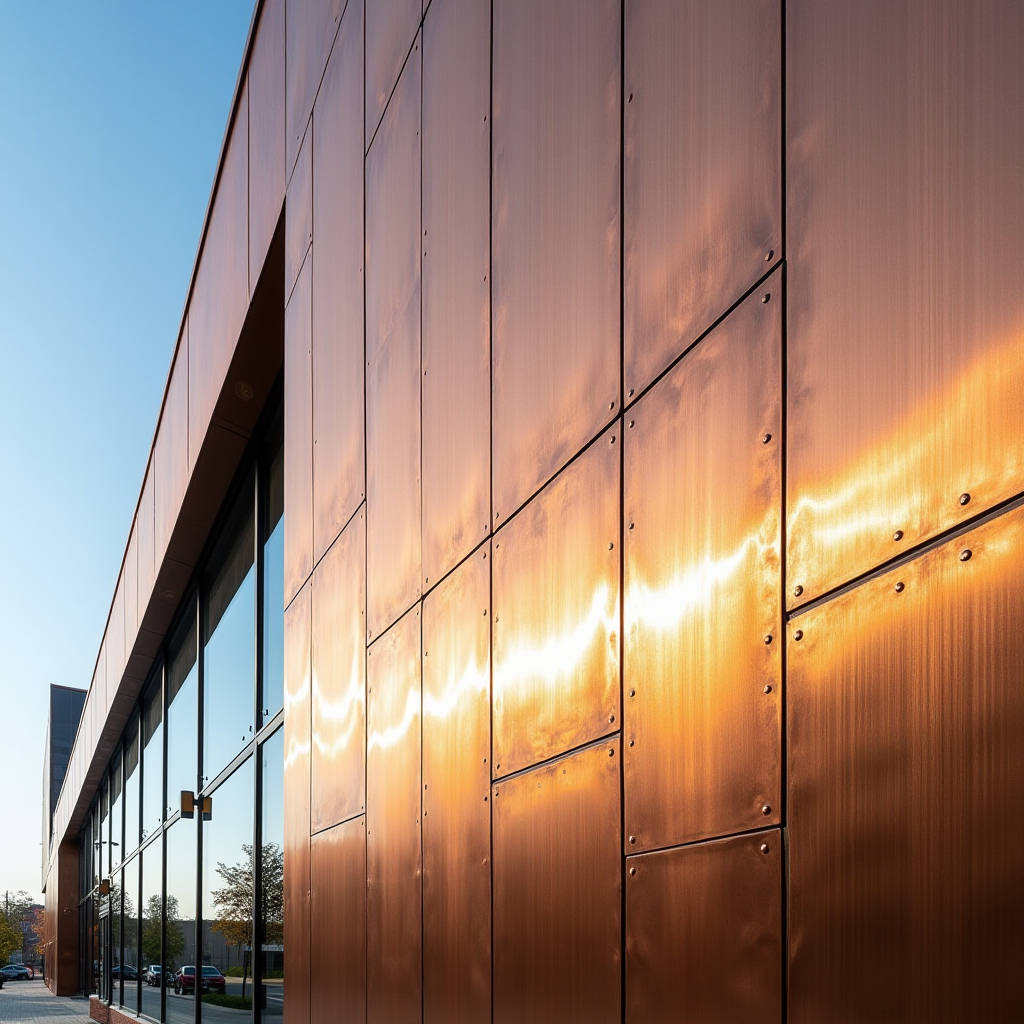
When a project specification lands on your desk calling for a copper aesthetic on the building envelope, the first question from the QS team is almost always the same: can we get the look without the six-figure material premium and the 20-year patina unpredictability? A copper texture aluminum panel answers that question directly. It is a solid aluminium cladding panel — typically 2.0mm, 2.5mm, or 3.0mm thick — factory-finished with a multi-layer PVDF coating system engineered to replicate the visual warmth and grain character of real copper, while delivering the flatness, weight advantage, and corrosion resistance that only solid aluminium can provide. No composite core. No delamination risk. Just a fully non-combustible, A1-rated metal skin that passes the kind of scrutiny curtain wall consultants bring to high-rise and public-sector jobs.
What procurement managers need to know about copper texture aluminum panel specifications
Let's cut through the marketing noise. When you're sourcing a copper texture aluminum panel, you're buying two things: the base metal and the coating system. Both need to be spelled out clearly in the purchase order, because ambiguity here is what causes courtroom disputes later.
The base metal is solid aluminium alloy — typically 3003 or 1100 series, temper H14 or H24 depending on the forming requirements. Thickness is a project-specific decision. For exterior façade applications, 2.5mm is the most common spec across Southeast Asia and the Middle East. 2.0mm works for soffit panels and low-wind-load zones. 3.0mm gets specified on high-rise curtain wall systems where span distances exceed 1,200mm between fixing points. Anything thinner than 2.0mm on an exterior wall and you're looking at oil-canning problems within the first thermal cycle.
The coating is where the copper texture aluminum panel earns its value proposition. The standard is a 3-coat or 4-coat PVDF system using Kynar 500® resin at a minimum 70% fluoropolymer content. Dry film thickness should land between 30–45 microns for the color coat, with a 5–10 micron clear topcoat if the project is within 5km of a coastline or industrial zone. The copper grain pattern is achieved through a combination of base coat pigmentation and a precision roller-transfer process — not a printed film that will fade in 36 months. Ask your supplier for accelerated weathering test data: QUV 4000-hour results should show Delta E ≤ 5.0 on the grayscale. If they can't produce that data sheet, walk away.
Field Note: On a 2023 mixed-use tower job in Kuala Lumpur, we rejected two batches of copper texture aluminum panels from a mill in Hebei because the grain pattern alignment was inconsistent across the 1,200mm × 3,000mm sheets. When panels are installed adjacent to each other on a curtain wall grid, even a 3mm grain misalignment becomes visible from street level at 20 meters. The fix was a factory jig recalibration and a 10-panel pre-production sample approval before the full run. Cost us two weeks. Worth every day.
Why solid aluminium — not composite — matters for copper-finish façades
There's a persistent procurement myth that aluminium composite panels with a copper-look finish can substitute for solid aluminium cladding panels on exterior façades. They can't. Not on any project where fire safety compliance is non-negotiable.
Solid aluminium cladding panels are classified as A1 non-combustible under EN 13501-1 and ASTM E84 Class A. That's a binary pass/fail in most jurisdictions post-Grenfell. The copper texture aluminum panel, being a monolithic metal sheet, contains zero polyethylene, zero mineral fillers, and zero combustible adhesives. The PVDF coating itself contributes negligible calorific value. When the local fire marshal or the insurer's risk engineer reviews the cladding submittal, a solid aluminium panel with test certificates from a recognized lab (Warringtonfire, Intertek, or equivalent) gets approved in hours. A composite panel — even with a fire-retardant core — triggers weeks of additional scrutiny.
Beyond fire, there's the flatness argument. Solid aluminium panels are tension-leveled at the mill and retain dimensional stability through the fabrication process — routing, folding, welding, and assembly. A 2.5mm copper texture aluminum panel fabricated into a 600mm × 2,400mm cassette will hold a tolerance of ±1.5mm across the diagonal. Try that with a 4mm ACP and you'll see ripples before the first wind load hits.
Weight is the one area where solid aluminium gives ground. A 2.5mm solid panel weighs roughly 6.75 kg/m². A 4mm ACP with 0.5mm aluminium skins weighs about 5.5 kg/m². The difference matters on retrofit projects where the existing substructure wasn't designed for the additional dead load. But that's an engineering calculation, not a reason to compromise on fire performance.
Coating technology: how the copper texture is actually produced
Procurement teams often treat the "copper texture" as a generic commodity finish. It's not. The production process separates mills that can deliver a convincing copper aesthetic from those that produce something that looks like orange paint with streaks.
The industry-standard approach uses a PVDF coil coating line or a spray line with electrostatic application. The sequence typically runs:
- Pre-treatment: Chromate conversion coating or chrome-free alternative (Ti/Zr-based) to ASTM B449 Class 1 or equivalent. This is the adhesion foundation — skip it and the coating will peel within 18 months.
- Primer coat: 5–8 microns, epoxy or polyurethane-based, color-matched to the topcoat to prevent edge creep visibility.
- Base color coat: 25–35 microns of PVDF in a warm bronze or copper-toned base. This is the dominant color layer.
- Texture transfer: A precision-engraved roller applies a secondary PVDF layer in a darker copper tone, creating the grain pattern through differential film thickness. The roller pattern must be registered to the sheet edge — otherwise adjacent panels won't align.
- Clear topcoat: Optional but recommended. 8–12 microns of clear PVDF with UV stabilizers. This is what prevents the copper tone from shifting toward chalky pink after 5 years of equatorial sun exposure.
Some Chinese mills — including the Futeng® production facility in Shandong — have invested in dedicated copper-texture roller sets calibrated for 1,220mm and 1,500mm standard sheet widths. This matters because smaller mills often use a single roller across multiple widths, which creates pattern distortion at the edges. When you're reviewing factory audit reports, ask specifically about roller inventory and width-specific calibration records.
| Coating Parameter | Standard Spec | Premium / Coastal Spec | Test Standard |
|---|---|---|---|
| Resin System | PVDF (Kynar 500® or Hylar 5000®) | PVDF (Kynar 500® or Hylar 5000®) | AAMA 2605 |
| Fluoropolymer Content | ≥ 70% | ≥ 70% | ASTM D4761 |
| Total DFT (Primer + Color + Clear) | 35–45 μm | 45–55 μm | ASTM D7091 |
| Pencil Hardness | HB–F | F minimum | ASTM D3363 |
| Impact Resistance | No cracking at 2.5 N·m | No cracking at 2.5 N·m | ASTM D2794 |
| QUV-B 4000hr Color Change | Delta E ≤ 5.0 | Delta E ≤ 3.0 | ASTM G154 |
| Salt Spray (5% NaCl, 4000hr) | No blistering, ≤ 2mm creep | No blistering, ≤ 1mm creep | ASTM B117 |
Cost structure breakdown for B2B buyers
Understanding the cost drivers behind a copper texture aluminum panel helps you negotiate intelligently — and spot quotes that are too good to be true.
The raw aluminium substrate accounts for roughly 40–50% of the ex-factory cost, depending on LME aluminium pricing at the time of order. The PVDF coating process — including the copper texture transfer — adds 25–35%. Fabrication (cutting, routing, folding, reinforcing, and any welding) makes up the remaining 15–25%. These percentages shift when you're ordering flat sheets versus fully fabricated cassette systems with integrated fixing brackets.
As a rough benchmark for Q4 2024 pricing (FOB China main port):
- 2.0mm copper texture aluminum panel, flat sheet, PVDF 3-coat: $28–34/m²
- 2.5mm copper texture aluminum panel, flat sheet, PVDF 3-coat: $32–38/m²
- 3.0mm copper texture aluminum panel, flat sheet, PVDF 4-coat (with clear topcoat): $38–45/m²
- Fabricated cassette system (2.5mm, including folded edges, rear stiffeners, and fixing brackets): $55–72/m² depending on complexity
These are indicative ranges. Actual pricing depends on order volume (MOQ typically starts at 300–500m² for custom copper texture finishes), panel dimensions, and whether the project requires third-party testing beyond the mill's standard certification package.
Freight is a separate line item. A 20-foot container can hold approximately 1,800–2,200m² of flat sheet panels, depending on packing configuration. Sea freight from Shanghai to Dubai or Rotterdam adds $3–7/m². To Jeddah or Dammam, budget $4–6/m² with current carrier rates. Always specify export-grade plywood crating with interleaving foam sheets — the copper texture finish is more susceptible to transit abrasion than solid-color PVDF because the grain pattern sits slightly proud of the base coat.
Pro Tip: When shipping copper texture aluminum panels to Middle Eastern projects, insist on desiccant packs inside the crates. The temperature swing between a Chinese factory in January (-5°C) and a Gulf port in January (+25°C) creates condensation inside the packaging. Moisture trapped between stacked panels for 3–4 weeks of transit will cause water staining on the PVDF surface that's impossible to remove without re-coating.
Installation considerations that affect your panel order
The façade contractor's installation methodology should feed back into your panel procurement decisions. Too many procurement managers order panels in isolation, then discover on site that the fabrication spec doesn't match the fixing system.
Copper texture aluminum panels are typically installed as either:
- Rainscreen cassette systems: Panels are fabricated with folded returns on all four edges and hung on a proprietary aluminum rail-and-bracket substructure. This is the dominant method in the UK, Northern Europe, and premium commercial projects globally. The panel-to-panel joint is typically 10–20mm open, with a black EPDM baffle or mesh behind the joint for weather protection.
- Direct-fix systems: Panels are secured directly to the steel or aluminium substructure using exposed mechanical fasteners or secret-fix clips. More common in industrial buildings, warehouse façades, and budget-conscious projects. The copper texture finish is directional — all panels must be installed with the grain running the same orientation, or the façade will look patchy under glancing light.
The joint width matters for your order quantity calculations. A 10mm open joint on a cassette system means the visible panel face is smaller than the overall sheet size. If your design calls for a 600mm visible module with 15mm joints, you need to order panels fabricated to 585mm face dimension. Get this wrong and the site team will be trimming panels on a circular saw — which destroys the factory-applied edge coating and voids the warranty.
Substructure tolerance is another procurement-relevant factor. The aluminium substructure should be installed to a tolerance of ±3mm across any 3-meter span. If the main contractor's steel frame is out by more than that, the cassette system will need adjustable brackets — which add cost and lead time. Raise this at the pre-order coordination meeting, not after the panels arrive on site.
Quality inspection checklist for incoming copper texture aluminum panels
Before you sign off on the shipment at the port or warehouse, run through a systematic inspection. The following checklist is based on what experienced façade contractors in Dubai, Singapore, and London actually do — not what the supplier's brochure suggests.
Visual inspection under controlled lighting: Set up a viewing area with diffuse light at approximately 500 lux. Check for color consistency across the batch. The copper texture pattern should be uniform in density and direction. Hold a reference sample (the approved A4-sized swatch from the pre-production submission) against the delivered panels. Any visible difference under daylight-temperature lighting (5000K) is grounds for rejection.
Coating thickness measurement: Use a calibrated digital coating thickness gauge (Elcometer 456 or equivalent) set to non-ferrous mode. Take readings at a minimum of five points per panel — four corners and center. Record all values. The average should meet the specified DFT, and no single reading should fall below 80% of the nominal value.
Dimensional checks: Measure panel length, width, and diagonal with a calibrated steel tape. Diagonal difference should not exceed 2mm for panels up to 1,200mm × 3,000mm. Check fold angles with a digital protractor — 90° returns should be within ±1°.
Adhesion test: Perform a cross-hatch test per ASTM D3359 Method B on one sacrificial panel per batch. Classification should be 4B or 5B — no more than 5% of the coating removed. If the supplier won't provide a sacrificial panel for destructive testing, that's a red flag.
Packaging integrity: Check that the interleaving foam is intact between panels. Look for signs of moisture inside the crating. Check for edge damage — the most common transit failure mode is crushed corners from forklift mishandling at transshipment ports.
For large projects (5,000m²+), consider engaging a third-party inspection agency — SGS, Bureau Veritas, or Intertek — to perform a pre-shipment inspection at the factory. The cost (typically $1,500–2,500 per inspection) is cheap insurance against a container of rejected panels arriving at your site.
Supply chain lead times and factory selection
Lead times for copper texture aluminum panels are longer than for standard solid-color PVDF panels. The texture transfer process adds complexity, and not every mill maintains inventory of the specialized rollers and base-coat formulations.
Realistic lead times from order confirmation to FOB shipment:
- Standard copper texture colors (from the mill's existing library): 4–5 weeks
- Custom-matched copper texture (requiring color development and sample approval): 6–8 weeks
- Fabricated cassette systems: add 1–2 weeks to the above for routing, folding, and assembly
These timelines assume the mill has aluminium coil stock on hand. If the required alloy/temper combination needs to be ordered from an upstream rolling mill, add another 2–3 weeks. Always confirm coil availability before issuing a purchase order with a penalty clause for late delivery.
Factory selection criteria should include:
- Annual production capacity (minimum 500,000m² for a mill that can handle a 20,000m² project without subcontracting)
- In-house PVDF coating line (not outsourced to a third-party coater — quality control breaks down when coating and fabrication are at separate facilities)
- Track record on copper texture projects (ask for project references with photos taken at least 3 years post-installation)
- Testing capabilities: in-house QUV chamber, salt spray cabinet, and spectrophotometer for Delta E measurement
Futeng® is one of the Chinese manufacturers that has invested in dedicated copper texture production capability, with an in-house PVDF line and documented project references across the Middle East, Southeast Asia, and Australia. Their technical team provides the full coating certification package — AAMA 2605 test reports, Kynar 500® resin certification, and batch-specific colorimetry data — which is exactly what you need to get through a consultant's material submittal review without delays.
Common failure modes and how to prevent them at the procurement stage
Most copper texture aluminum panel failures are preventable — and they're almost always traceable to decisions made during procurement, not during installation.
Pattern fading within 2–3 years: Caused by inadequate PVDF resin content or omission of UV stabilizers in the clear coat. Prevention: Specify AAMA 2605 compliance and request the resin supplier's certification letter (Kynar 500® or Hylar 5000®). The PVDF resin is the most expensive component of the coating — mills cutting corners will reduce the fluoropolymer percentage below the 70% threshold. A ASTM D4761 test report verifies resin composition.
Coating delamination at folded edges: The PVDF coating cracks and separates from the aluminium substrate along the fold line. This happens when the panel is folded after coating without proper elongation testing. Prevention: Require a 0T or 1T bend test per AAMA 2605 Section 8.5.2 — no cracking visible under 10× magnification.
Galvanic corrosion at fixing points: When stainless steel fasteners contact the aluminium panel in the presence of moisture, galvanic corrosion can occur. The copper texture finish doesn't cause this, but the visual contrast between the warm copper tone and white corrosion product is particularly unsightly. Prevention: Specify nylon or EPDM isolation washers at all fixing points, and confirm that the panel's rear side has a service coat (minimum 5 microns of epoxy primer).
Oil-canning (visible waviness): More noticeable on copper texture finishes than on solid colors because the grain pattern creates a directional visual reference that makes distortions easier to see. Prevention: Specify panel thickness appropriate to the span, use rear stiffeners on panels wider than 600mm, and ensure the aluminium substrate is tension-leveled to a flatness tolerance of ≤ 3mm per 1,000mm as per The Aluminum Association flatness standards.
Regulatory compliance and certification: what your submittal package needs
For projects in North America, the Middle East, Europe, or Australia, the copper texture aluminum panel submittal package must include specific documentation. Missing any of these will cause a Request for Information (RFI) from the consultant, which delays procurement by days or weeks.
The standard package includes:
- Material certification: Mill test certificate for the aluminium substrate showing alloy, temper, and chemical composition per ASTM B209 or EN 485.
- Coating performance test reports: AAMA 2605 (or EN 1396 for European projects) covering adhesion, impact resistance, chemical resistance, and accelerated weathering.
- Fire classification report: EN 13501-1 Class A1 or ASTM E84 Class A, issued by an accredited laboratory. The report must reference the specific product name and configuration.
- Wind load calculation: For fabricated cassette systems, a structural calculation demonstrating the panel and fixing system's capacity under the project's design wind pressure (typically based on ASCE 7, BS EN 1991-1-4, or local building code).
- Colorimetry data: Spectrophotometer readings showing L*, a*, b* values for the batch, with Delta E calculated against the approved reference sample. Acceptable tolerance: Delta E ≤ 1.0 for batch-to-batch consistency.
For projects in the Gulf region, add a UAE Civil Defence product approval certificate if the project is in Dubai, Abu Dhabi, or Sharjah. The approval process can take 4–6 weeks, so factor this into your procurement schedule.
Comparing copper texture aluminum panel to real copper: a practical decision matrix
Architects love real copper. Procurement managers love predictable budgets. The copper texture aluminum panel sits somewhere in between — and understanding the trade-offs helps you present a clear recommendation to the project team.
Real copper cladding (0.7mm–1.0mm sheet) costs $120–180/m² for material alone, depending on copper grade and market pricing. Installation labor is higher because copper sheets are typically installed by specialized roofing contractors using traditional jointing techniques — standing seam, flat lock, or shingle systems. The material will patina over time, transitioning from bright metallic to dark brown and eventually to the characteristic green verdigris. This is either a feature or a defect, depending on the architect's intent.
A copper texture aluminum panel at $32–45/m² (flat sheet, PVDF coated) delivers the visual warmth of copper at roughly 25% of the material cost. The finish is stable — no patina development, no runoff staining on adjacent materials, and no galvanic corrosion risk with aluminium substructures. The panels are installed using standard rainscreen or cassette fixing methods that any competent façade contractor can execute.
The trade-off is authenticity. A copper texture aluminum panel looks like copper from 10 meters away. From 1 meter, an experienced eye can tell the difference — the grain pattern is regularized, and the surface lacks the micro-imperfections of rolled copper sheet. Whether this matters depends on the project. For a high-end boutique hotel where guests will touch the façade, real copper might be non-negotiable. For a 40-story commercial tower, a university building, or an airport terminal, the copper texture aluminum panel delivers the architectural intent at a cost that keeps the project viable.
The sustainability argument also favors aluminium. Solid aluminium cladding panels contain an average of 40–60% recycled content (post-industrial and post-consumer), and the material is 100% recyclable at end of life. Copper mining carries a significantly higher environmental footprint per tonne of finished product. According to data from the International Aluminium Institute, primary aluminium production has reduced its carbon intensity by approximately 20% over the past decade, with further reductions expected as smelters transition to renewable energy sources.
Making the final procurement decision
When you're down to comparing quotes from three or four suppliers, the decision rarely comes down to price alone. The copper texture aluminum panel is a specification product — the quality variance between mills is significant, and the cost of replacing a failed façade is orders of magnitude higher than the initial material saving.
Focus your evaluation on:
- Coating system transparency: Can the supplier name their PVDF resin source and provide the resin certification letter?
- Copper texture consistency: Review photos of completed projects, not just sample swatches. Ask for project references you can contact directly.
- Testing documentation: A complete AAMA 2605 test report from an ISO 17025 accredited lab is non-negotiable.
- Production capacity: Can the mill handle your project volume within a single production run? Batch-to-batch color variation is a real risk when a project is split across multiple production cycles.
- Logistics capability: Experience with export packaging for your destination market, including appropriate crating, moisture protection, and documentation for customs clearance.
The copper texture aluminum panel has become a standard product category in the global façade market — and for good reason. It delivers a premium architectural aesthetic at a rational cost, with fire performance and durability characteristics that solid aluminium cladding panels have proven over decades of service. The key is sourcing from a manufacturer that treats the copper texture not as a novelty finish, but as a engineered coating system with documented performance data and a track record of successful projects.