Perforated Aluminum Tread Plate Structural Load Capacity And Slip Resistance
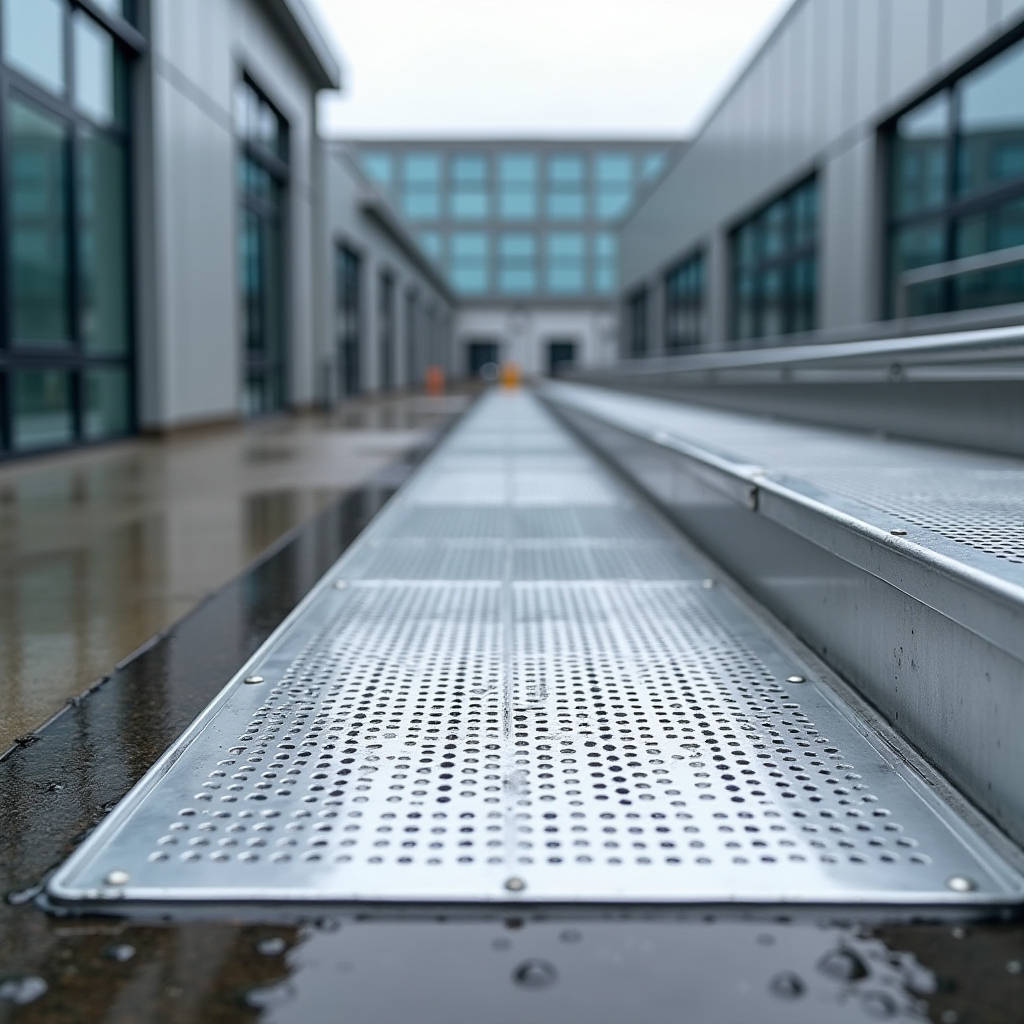
Selecting the correct perforated aluminum tread plate for industrial or commercial infrastructure demands a rigorous evaluation of mechanical properties beyond basic aesthetics. While standard diamond plate offers traction, perforated variants introduce complex variables regarding load distribution and slip resistance coefficients that directly impact project liability and long-term performance. Engineers and procurement managers must understand how hole patterns reduce effective cross-sectional area while simultaneously enhancing drainage and grip. This technical overview addresses the critical intersection of metallurgy, structural engineering, and safety compliance specific to perforated aluminum tread plate applications in heavy-duty environments. Proper specification prevents premature failure, ensures regulatory adherence, and optimizes lifecycle costs for walkways, platforms, and stair systems where solid aluminum cladding panels are adapted for functional flooring use.
Mechanical Implications of Perforation Patterns on Solid Aluminum
The transition from solid sheet to perforated aluminum tread plate fundamentally alters the material's structural behavior. Unlike embossed diamond plate which displaces metal to create raised lugs, perforated plates remove material entirely. This reduction in mass necessitates precise calculation of the remaining ligament width between holes to maintain adequate shear strength. For structural flooring applications using solid aluminum sheets typically ranging from 3.0mm to 6.0mm thickness, the open area percentage is the governing factor for load-bearing capacity. Industry standards suggest maintaining an open area below 40% for primary pedestrian walkways subject to concentrated live loads, whereas decorative or light-duty screening may tolerate up to 60% openness.
The geometry of the perforation also dictates stress concentration points. Round holes generally distribute stress more evenly than square or slotted openings, reducing the risk of crack propagation under cyclic loading conditions common in industrial vibration environments. When specifying perforated aluminum tread plate for dynamic load scenarios such as machinery platforms or vehicular ramps, engineers should reference ASTM B209 specifications for aluminum alloy sheets to verify baseline tensile strength before applying derating factors for perforation. Manufacturers like Futeng® often provide certified mill test reports alongside fabrication drawings to validate that the base substrate meets required temper designations prior to the punching process, ensuring the final product retains sufficient structural integrity despite material removal.
Alloy Selection Criteria for High-Traction Flooring
Not all aluminum alloys perform equally when converted into perforated aluminum tread plate. The choice between 1xxx, 3xxx, 5xxx, and 6xxx series depends heavily on the environmental exposure and mechanical demands of the installation site. For marine, offshore, or chemical processing facilities, 5086-H34 and 5052-H32 are superior choices due to their exceptional corrosion resistance and work-hardening characteristics. These magnesium-manganese alloys maintain ductility even after perforation, preventing brittle fracture at hole edges during installation or thermal cycling. Conversely, 6061-T6 offers higher yield strength for structural members but requires careful handling during fabrication to avoid stress corrosion cracking in aggressive atmospheres.
- 5086-H34: Optimal balance of strength and marine-grade corrosion resistance; ideal for ship decks and coastal walkways.
- 6061-T6: Highest structural strength among common tread plate alloys; suitable for heavy industrial platforms with protective coatings.
- 5052-H32: Excellent formability and fatigue resistance; preferred for complex curved ramps or formed stair treads.
- 1100-H14: Commercially pure aluminum with maximum corrosion resistance but lower strength; limited to light-duty architectural accents.
When sourcing perforated aluminum tread plate, verifying the temper designation is as critical as confirming the alloy series. H3x tempers indicate strain-hardened and stabilized conditions specifically designed for marine and architectural applications where dimensional stability matters. Using O-temper (annealed) material for flooring would result in unacceptable plastic deformation under foot traffic, while fully hard H1x tempers might crack during the perforation stamping process. Procurement specifications must explicitly state both alloy and temper to avoid receiving non-compliant material that looks identical visually but fails mechanically.
Quantifying Slip Resistance and Safety Compliance Standards
Safety is the primary driver for specifying perforated aluminum tread plate over smooth alternatives, yet "non-slip" remains a subjective marketing term without quantifiable metrics. Professional specifiers must rely on standardized tribological testing methods to validate performance claims. The pendulum test method outlined in BS EN 13036-4 provides a Pendulum Test Value (PTV) that correlates directly with slip potential. For external walkways and wet environments, a minimum PTV of 45 is generally required to satisfy insurance and regulatory bodies, while internal dry areas may accept values above 36. Perforated patterns enhance these values by providing edge biting action against shoe soles and allowing water or oil to drain through rather than forming a lubricating film on the surface.
Americans with Disabilities Act (ADA) compliance introduces additional constraints for perforated aluminum tread plate used in public access routes. Section 302.3 of the ADA Standards mandates that floor surfaces be stable, firm, and slip-resistant. Crucially, openings in walking surfaces cannot permit passage of a sphere more than 0.5 inches (13mm) in diameter to prevent cane tips or wheelchair casters from becoming trapped. This requirement effectively eliminates many large-hole perforation patterns from accessible route consideration unless covered by secondary mesh or oriented perpendicular to travel direction. Architects designing inclusive infrastructure must cross-reference perforation specifications with ADA guidelines early in the design phase to avoid costly retrofits or legal exposure post-construction.
| Test Standard | Methodology | Minimum Safe Threshold | Application Context |
|---|---|---|---|
| BS EN 13036-4 | Pendulum Friction Tester | PTV ≥ 45 (Wet) | External walkways, pool decks, marine platforms |
| ASTM E303 | British Pendulum Skid Resistance | BPN ≥ 40 | Industrial stairs, emergency egress routes |
| DIN 51130 | Ramp Angle Test (Shod Foot) | R10 - R12 Rating | Food processing, oily manufacturing floors |
| ADA / ICC A117.1 | Opening Size Limitation | < 13mm Diameter | Public access routes, wheelchair ramps |
Surface Treatments Enhancing Long-Term Traction
Bare aluminum naturally forms a protective oxide layer, but this passive film can become polished and slippery over time under heavy foot traffic. Applying specialized finishes to perforated aluminum tread plate preserves both corrosion resistance and friction characteristics throughout the service life. Powder coating with textured aggregates such as aluminum oxide or silicon carbide embedded in the resin matrix significantly boosts slip resistance ratings while adding color coding for safety zones. However, coating thickness must be controlled carefully; excessive buildup can clog perforations and reduce drainage efficiency, negating one of the primary benefits of choosing perforated over solid plate.
Anodizing represents another viable option for high-wear environments where organic coatings might degrade chemically or abrade mechanically. Type II sulfuric acid anodizing creates a porous ceramic-like surface that inherently increases micro-texture and friction compared to mill finish aluminum. Hardcoat Type III anodizing further enhances abrasion resistance for industrial catwalks subjected to steel-toed boots and equipment drag. When combining anodizing with perforated aluminum tread plate, racking considerations during the electrochemical process require strategic placement to ensure uniform current distribution across the reduced surface area. Specifiers should consult with finishing vendors regarding rack-up limitations for perforated sheets to avoid uncoated shadow zones that could become localized corrosion initiation sites.
Structural Engineering Considerations for Span and Deflection
Integrating perforated aluminum tread plate into structural assemblies requires modified engineering calculations accounting for net section properties. Standard beam formulas assume continuous material; perforations introduce discontinuities that reduce moment of inertia and section modulus proportionally to the open area ratio. For simply supported spans typical in stair treads and platform decking, deflection limits usually govern design rather than ultimate strength. Most building codes restrict live load deflection to L/360 for pedestrian comfort and L/240 for total load including dead weight. Engineers must apply correction factors derived from finite element analysis or empirical testing data provided by manufacturers to predict actual performance accurately.
Support spacing dramatically influences the viable gauge selection for perforated aluminum tread plate. While 3.0mm solid plate might span 600mm comfortably, the same thickness with 30% open area may require reducing support spacing to 450mm or upgrading to 4.0mm to meet identical deflection criteria. Edge conditions also play a vital role; fully welded perimeter connections provide rotational restraint that reduces mid-span moments compared to simple bolted attachments. In retrofit projects where existing support structures cannot be modified, selecting thicker perforated aluminum tread plate or reinforcing with underlying stiffener channels becomes necessary to achieve code compliance without compromising the desired aesthetic or functional transparency.
Fabrication Precision and Installation Best Practices
Quality control during fabrication determines whether perforated aluminum tread plate performs as engineered or becomes a maintenance liability. CNC turret punching or laser cutting ensures consistent hole geometry and ligament dimensions essential for predictable structural behavior. Manual punching or outdated tooling often produces burrs, rollover, and dimensional drift that compromise fit-up and create trip hazards. Reputable fabricators implement deburring protocols as standard practice, removing sharp edges from both top and bottom surfaces to protect installers and end users. For projects requiring tight tolerances such as interlocking stair tread nosings or modular platform systems, requesting shop drawings showing actual perforation layout relative to bend lines and fastener locations prevents field modifications that weaken the assembly.
Installation methodology must accommodate aluminum’s thermal expansion coefficient, approximately twice that of steel. Perforated aluminum tread plate installed outdoors experiences significant dimensional changes with temperature fluctuations; rigid fixation at all points induces buckling stresses that can distort the panel or tear out fastener holes. Slotted holes or floating clip systems allow movement while maintaining secure attachment. Fastener selection should match the aluminum substrate to prevent galvanic corrosion; stainless steel 316 hardware with isolating washers is mandatory for marine or deicing salt exposure. Torque specifications must account for the reduced bearing area around perforations to avoid crushing the material or stripping threads during assembly. Following manufacturer-recommended installation sequences ensures load paths transfer correctly through the structure without inducing unintended stress concentrations.
Lifecycle Cost Analysis and Maintenance Protocols
Initial material cost represents only a fraction of total ownership expense for flooring systems. Perforated aluminum tread plate typically carries a premium over steel grating due to raw material pricing, but delivers savings through eliminated painting cycles, reduced cleaning labor, and extended replacement intervals. Aluminum’s natural corrosion resistance eliminates the need for hot-dip galvanizing touch-ups at cut edges or weld zones, a persistent maintenance burden for steel alternatives in corrosive environments. Life cycle assessments spanning 25+ years frequently demonstrate aluminum’s economic superiority despite higher upfront investment, particularly when factoring in downtime costs associated with floor repairs or safety incidents caused by degraded surfaces.
Maintenance protocols for perforated aluminum tread plate focus on preventing debris accumulation that compromises drainage and hygiene. Regular pressure washing removes embedded contaminants that accelerate wear or create slip hazards. Chemical cleaning agents must be pH-neutral to avoid etching the aluminum surface or damaging protective coatings; alkaline cleaners commonly used on concrete can permanently stain or pit aluminum. Inspection schedules should include checking fastener tightness, verifying no hole elongation has occurred near supports, and assessing coating integrity if applicable. Documenting condition assessments creates a baseline for predicting remaining service life and budgeting future capital expenditures proactively rather than reactively responding to failures.
Successful specification of perforated aluminum tread plate hinges on treating it as an engineered structural component rather than generic commodity hardware. Balancing open area requirements with load capacity, validating slip resistance through standardized testing, selecting appropriate alloys for environmental exposure, and implementing proper fabrication and installation practices collectively determine project outcomes. By grounding decisions in technical data and industry standards rather than marketing assertions, architects and engineers deliver infrastructure that satisfies safety mandates, withstands operational demands, and provides durable value over decades of service. The discipline applied during specification translates directly into reduced risk and enhanced performance in the built environment.