Perforated Aluminum Sheet Lowes Versus Commercial Facade Specifications
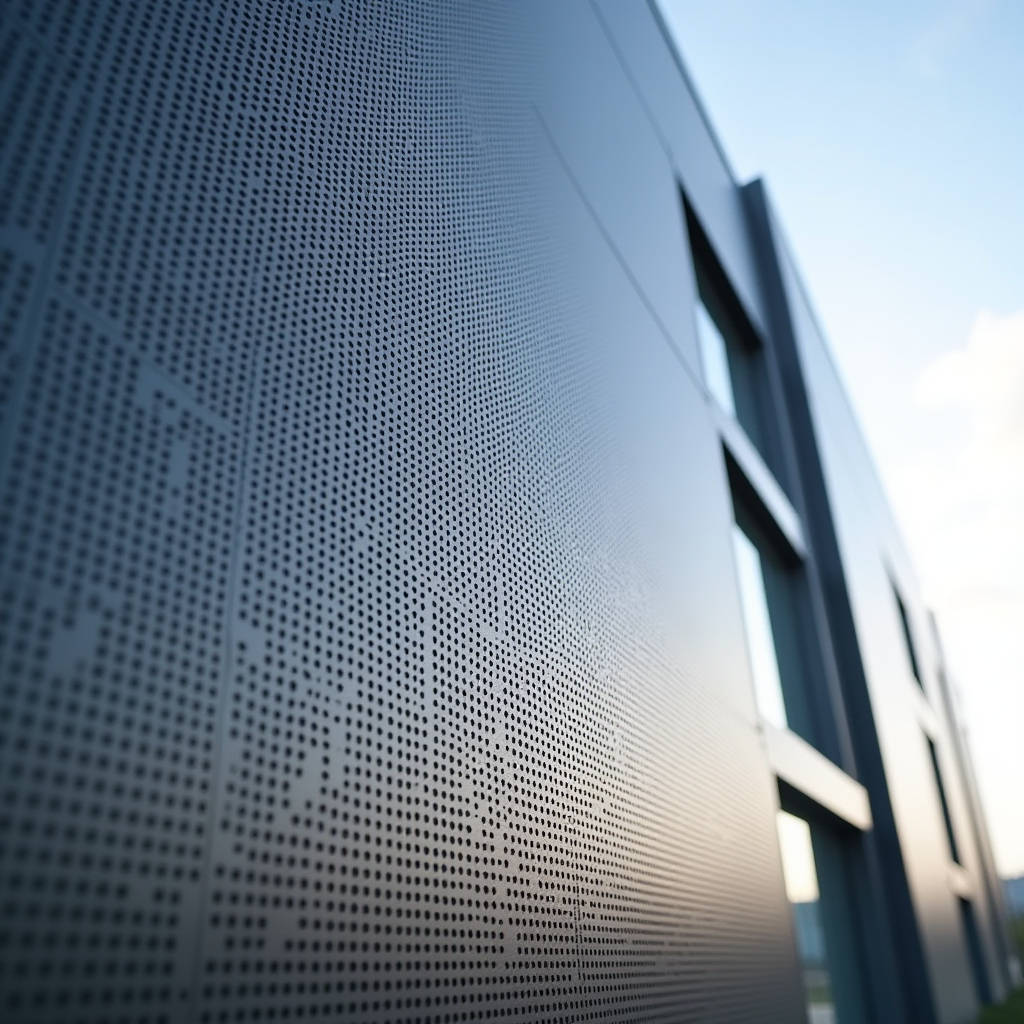
Sourcing perforated aluminum sheet lowe's inventory often serves as an initial benchmark for contractors evaluating material availability and baseline pricing for small-scale repairs or mockups. However, transitioning from retail-grade hardware to commercial façade engineering requires a rigorous technical assessment of alloy temper, coating durability, and structural flatness. Retail options typically cater to DIY applications with thinner gauges and standard polyester paints that lack the UV resistance necessary for exterior architectural cladding. Professional procurement teams must distinguish between these consumer-grade products and engineered solid aluminium cladding panels designed for long-term building envelope performance. Understanding the specific limitations of big-box store inventory prevents costly change orders and ensures compliance with international façade standards regarding wind loads, fire safety, and finish longevity in demanding environments.
Technical Divergence Between Retail Stock and Architectural Grade Panels
The primary distinction lies in the manufacturing intent. Products found when searching for perforated aluminum sheet lowe's are generally optimized for immediate shelf appeal and general-purpose utility, such as radiator covers, cabinet facings, or light-duty ventilation screens. These sheets are frequently produced from softer tempers like H14 or O-temper, which offer high formability but insufficient yield strength for large-format exterior cladding subjected to dynamic wind pressures. In contrast, commercial solid aluminium cladding panels utilize H24 or H32 tempers specifically heat-treated to balance formability with structural rigidity.
Gauge tolerance represents another critical differentiator. Retail sheet metal often carries wider thickness tolerances suitable for non-structural applications. A labeled 0.040-inch sheet may vary significantly across its surface due to rolling processes prioritized for cost over precision. Architectural specifications governed by ASTM B209 mandate strict thickness tolerances to ensure consistent engagement with concealed fastener systems and predictable behavior under thermal expansion. When fabricators receive material with inconsistent gauge, it leads to panel pillowing, oil-canning effects, and compromised clip engagement that can cause system failure during extreme weather events.
Alloy composition also varies substantially. Big-box retailers predominantly stock 3003-H14 aluminum, a manganese-alloyed grade excellent for corrosion resistance and moderate strength in generic applications. While 3003 is acceptable for certain interior or protected exterior elements, high-performance façades often specify 5005-H32 or 5754 alloys for superior anodizing response and tensile strength. The mechanical properties of these marine-grade alloys directly influence the allowable span between sub-frame supports, ultimately dictating the secondary steel budget for the entire curtain wall system.
Coating Performance Standards for Exterior Envelopes
Finish durability constitutes the most significant risk when substituting retail-sourced materials in commercial projects. Decorative sheets available through home improvement channels typically feature baked-on polyester or acrylic coatings ranging from 15 to 20 microns in total film thickness. These finishes provide adequate protection for indoor use or temporary outdoor exposure but degrade rapidly under direct UV radiation and atmospheric pollutants. Color fading, chalking, and loss of gloss become apparent within three to five years in most climate zones, triggering warranty disputes and premature replacement costs.
Commercial architectural cladding demands fluoropolymer coatings meeting AAMA 2605 specifications for superior color retention and chalk resistance. High-quality PVDF (polyvinylidene fluoride) resin-based coatings achieve minimum dry film thicknesses of 30 microns for topcoats, backed by multi-stage pretreatment processes including chromate or zirconium conversion coatings. This system provides verified performance exceeding 20 years in harsh coastal and industrial environments. Suppliers specializing in architectural metals, such as Futeng®, maintain coil coating lines calibrated specifically for these demanding fluoropolymer specifications, ensuring batch-to-batch color consistency that retail spray-painted or roll-coated consumer products cannot replicate.
The pretreatment process itself differs fundamentally. Retail decorative sheets may receive only basic cleaning and single-stage primer application before painting. Architectural panels undergo continuous multi-stage wash lines incorporating deoxidization, desmutting, rinsing, and conversion coating steps that create the chemical bond essential for coating adhesion. Skipping any stage compromises salt spray resistance, leading to sub-film corrosion that manifests as bubbling or peeling long before the coating itself fails. Specifiers should always require test reports documenting pretreatment weight and coating adhesion per ASTM D3359 cross-hatch testing methods.
Comparative Coating Performance Parameters
| Performance Metric | Retail Polyester / Acrylic | AAMA 2605 PVDF Fluoropolymer | Testing Standard Reference |
|---|---|---|---|
| Total Dry Film Thickness | 15 – 20 µm | ≥ 30 µm (Topcoat + Primer) | ASTM D7091 |
| Color Retention (Delta E) | ≤ 5.0 units @ 5 years | ≤ 5.0 Hunter units @ 10 years | AAMA 2605 / ASTM D2244 |
| Chalk Resistance Rating | Not typically rated | Maximum ASTM Chalk Rating 8 | ASTM D4214 |
| Salt Spray Resistance | 250 – 500 hours | ≥ 4,000 hours (No blistering) | ASTM B117 |
| Humidity Resistance | 500 hours max | ≥ 4,000 hours (No edge creep) | ASTM D2247 |
| Pretreatment Type | Basic Wash / Single Primer | Multi-stage Conversion Coating | ASTM D2636 / Qualicoat |
| Warranty Availability | Limited / None for Exterior | 20 – 30 Year System Warranty | Manufacturer Specific |
Perforation Geometry and Structural Integrity Considerations
When evaluating perforated aluminum sheet lowe's selections versus custom architectural fabrication, the hole pattern geometry directly impacts both aesthetics and structural capacity. Retail perforated sheets typically offer limited standard patterns: round holes in straight or staggered alignments, square openings, and occasional decorative motifs. These standardized options serve functional screening purposes but restrict design expression. Commercial projects increasingly demand variable aperture gradients, parametric imagery, and custom slot configurations that transform the façade into a dynamic visual element responding to solar angles and viewer perspective.
Beyond aesthetics, perforation reduces the effective cross-sectional area of the panel, necessitating recalculation of allowable spans and deflection limits. Engineering software must account for the open area percentage when determining wind load resistance. A panel with 40% open area possesses roughly 60% of the bending stiffness of equivalent solid sheet, requiring closer purlin spacing or increased base metal thickness to maintain serviceability limits. ISO 12494 provides guidance on atmospheric icing loads that compound this issue in cold climates, where ice accumulation within perforations adds significant dead weight and alters aerodynamic pressure coefficients.
Edge detailing around perforations also distinguishes architectural-grade products. CNC punching and laser cutting used in commercial fabrication produce clean burr-free edges that resist moisture ingress and coating delamination at hole boundaries. Consumer-grade perforated sheets manufactured via high-speed stamping often retain micro-burrs and work-hardened zones around each opening. These defects accelerate localized corrosion and create stress concentration points that propagate cracks under cyclic thermal loading. Post-perforation deburring and edge sealing add cost but eliminate these failure modes entirely.
Fabrication Precision and Flatness Tolerances
Flatness defines perceived quality in metal cladding systems. Solid aluminium cladding panels destined for prominent façade positions undergo stretcher-leveling or roller-leveling processes after perforation to relieve residual stresses introduced during hole formation. This step ensures panels lie perfectly flat against the substructure without visible waviness or distortion. Retail perforated sheets skip this leveling stage entirely, accepting inherent curl and camber as acceptable trade-offs for lower price points. Installing un-leveled perforated material on a commercial building results in shadow lines, uneven reveals, and reflective distortions that undermine the architectural intent regardless of how premium the finish appears up close.
CNC routing accuracy also separates professional fabrication from commodity production. Architectural panels require hole position tolerances within ±0.5mm to align with concealed clip systems and adjacent panel modules. Cumulative errors in hole placement cause installation delays as field crews struggle to engage fasteners or adjust bracket positions. Retail perforated sheets carry positional tolerances measured in millimeters rather than tenths, reflecting their intended use in non-critical applications where slight misalignment has no functional consequence. For unitized curtain wall systems where panels factory-assemble into frames before shipping, this precision becomes non-negotiable.
Forming capabilities further differentiate supply sources. Perforated material loses ductility proportional to open area percentage, making tight-radius bends prone to cracking along hole rows near bend lines. Experienced fabricators orient perforation patterns relative to bend axes and specify minimum bend radii accounting for reduced elongation. They may also employ relief cuts or solid border zones adjacent to formed edges to preserve integrity. Generic retail sheets lack this engineering consideration, leading to field failures when installers attempt to form them beyond safe limits without understanding the modified mechanical properties.
Supply Chain Reliability and Project Scale Economics
While perforated aluminum sheet lowe's offers convenience for emergency repairs or small sample quantities, scaling to full-building procurement introduces logistical complexities that retail channels cannot accommodate. Commercial façade projects consume hundreds or thousands of square meters, requiring coordinated mill runs to ensure color matching across all batches. Specialty metal suppliers maintain relationships with coil coaters and mills enabling consolidated production scheduling that guarantees uniformity. Purchasing equivalent volumes through retail distribution networks would involve assembling disparate lots with inevitable shade variation and inconsistent temper histories.
Lead time predictability matters equally. Architectural metal suppliers integrate perforation, finishing, and fabrication into streamlined workflows with tracked milestones. Retail inventory fluctuates based on consumer demand cycles unrelated to construction schedules, creating uncertainty for just-in-time project delivery. When a specified retail product discontinues or stocks out mid-project, substitution approvals trigger redesign reviews and potential retesting. Dedicated B2B supply agreements lock in specifications and reserve production capacity, transforming material procurement from a speculative purchase into a managed component of the critical path.
Cost analysis must extend beyond unit price to total installed value. Lower upfront material costs from retail sources frequently offset by higher labor expenses from dealing with flatness issues, alignment problems, and premature finish remediation. Life-cycle costing models consistently demonstrate that investing in properly specified architectural-grade perforated panels yields lower ownership costs despite higher initial expenditure. The true metric is cost per year of service life, not cost per square meter at point of purchase. Professional specifiers understand this calculus and select supply partners capable of delivering documented performance rather than convenient availability.
Specification Guidance for Procurement Teams
Moving forward, procurement professionals should treat retail perforated aluminum references as preliminary market indicators rather than approved material sources for commercial envelopes. Develop comprehensive specifications referencing applicable ASTM and AAMA standards explicitly, leaving no ambiguity regarding alloy, temper, coating system, and fabrication tolerances. Request mill certificates and coating test reports as mandatory submittals before approving any supplier. Engage qualified architectural metal fabricators early in design development to validate perforation patterns against structural requirements and identify opportunities for optimization that reduce waste without compromising performance.
Mockup protocols should include accelerated weathering tests comparing proposed materials against baseline samples sourced from retail channels. Side-by-side exposure reveals performance gaps that data sheets alone cannot communicate convincingly to stakeholders focused on initial budget. Document these comparisons to support value engineering discussions when pressure mounts to substitute cheaper alternatives. Ultimately, successful perforated metal façades result from deliberate technical decisions aligned with project longevity expectations, not convenience-driven sourcing shortcuts that sacrifice durability for short-term savings.