Perforated Aluminum Sheet Amazon Sourcing Risks for Facade Projects
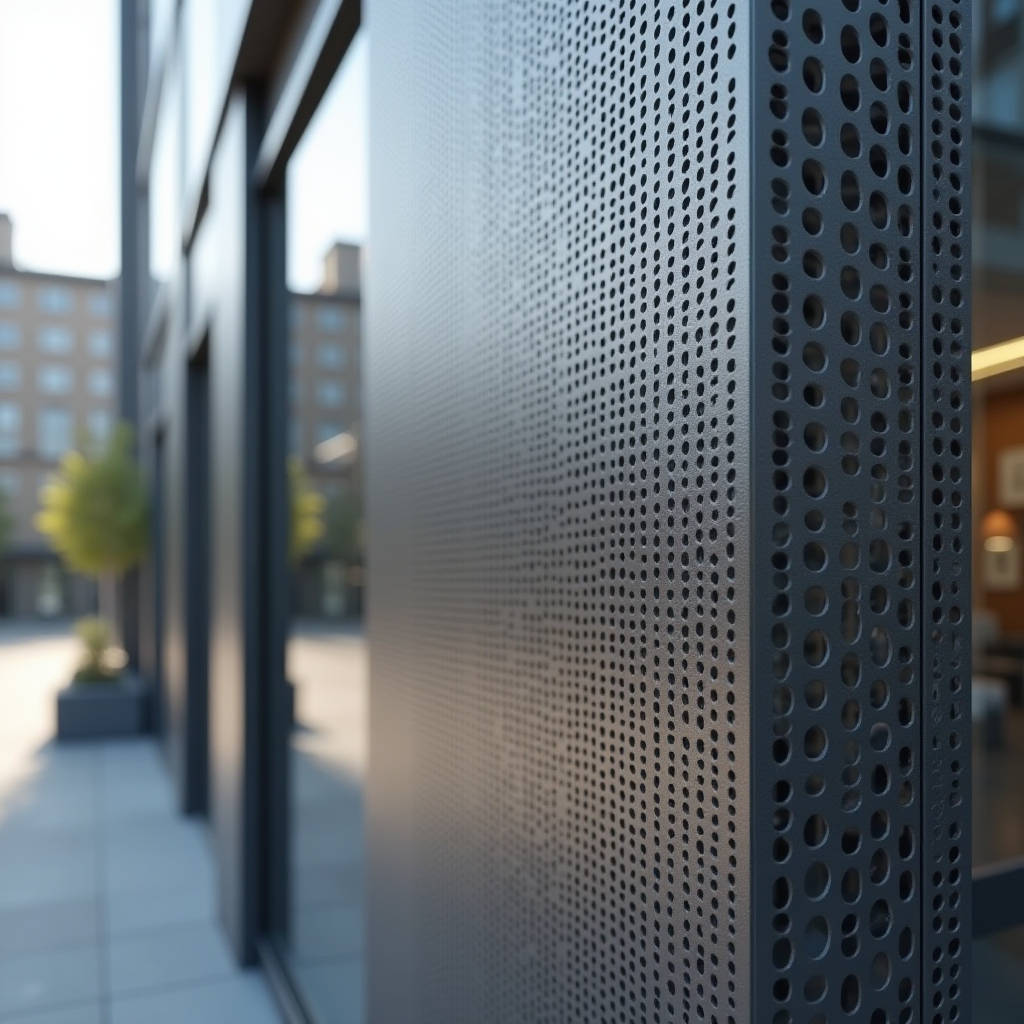
Sourcing perforated aluminum sheet amazon listings often presents a significant mismatch between available retail inventory and the rigorous technical demands of commercial facade engineering. While these marketplaces offer immediate availability for small-scale ventilation or DIY applications, they rarely stock the specific alloy temper, thickness tolerances, and fluorocarbon coating systems mandated for architectural cladding. Procurement teams searching for perforated aluminum sheet amazon must recognize that consumer-grade sheets typically lack the structural integrity and weathering resistance defined by ASTM B209 or AAMA 2605 standards. Relying on such sources for large-format solid aluminum cladding panels introduces substantial risk regarding flatness, color consistency, and long-term durability. This analysis dissects the technical discrepancies between retail marketplace offerings and professional-grade architectural metal, providing a framework for validating material specifications before issuance to fabrication.
Alloy Designation and Temper Discrepancies
The most frequent failure point when evaluating perforated aluminum sheet amazon products for construction is the ambiguity or absence of precise metallurgical data. Retail listings frequently describe material generically as "aluminum" or cite 6061-T6, an alloy optimized for machining and structural extrusions but less suitable for formed facade panels due to lower formability and higher cost. Architectural solid aluminum cladding predominantly utilizes Alloy 3003-H14 or Alloy 5052-H32. These manganese and magnesium-based alloys provide the optimal balance of strength, corrosion resistance, and ductility required for CNC perforation and subsequent folding without cracking or excessive springback.
When a project specifies 2.0mm or 3.0mm solid aluminum cladding panels, the H14 or H32 temper ensures the panel retains its shape under wind load while allowing fabricators to achieve tight bend radii. In contrast, many perforated aluminum sheet amazon results feature thinner gauges (often under 1.0mm) or incorrect tempers that cannot withstand the thermal cycling and negative pressure loads of an exterior envelope. Substituting a generic retail sheet for a specified architectural panel can lead to catastrophic oil-canning effects, where the facade appears wavy or distorted under direct sunlight. Professional suppliers adhere strictly to ASTM B209 standards for aluminum-alloy sheet and plate, guaranteeing chemical composition and mechanical properties that marketplace sellers rarely certify.
Mechanical Property Comparison: Architectural vs. Retail Grade
| Property | Architectural Grade (5052-H32) | Typical Marketplace Generic (6061-T6 / Unspecified) | Facade Performance Implication |
|---|---|---|---|
| Tensile Strength | 228 MPa (33 ksi) | 310 MPa (45 ksi) / Variable | Higher strength does not equal better facade performance; excessive hardness causes cracking at perforation edges during forming. |
| Elongation at Break | 12% | 8-10% / Unknown | Lower elongation increases risk of fracture during CNC punching and brake pressing operations. |
| Flatness Tolerance | ±0.5mm per meter | Not Guaranteed / Mill Finish Only | Poor flatness requires costly field remediation or panel rejection after coating application. |
| Surface Treatment Readiness | Chromate-free pretreatment compatible | Oil-contaminated / Oxidized | Retail sheets often lack proper cleaning, leading to PVDF coating delamination within months of installation. |
Coating System Integrity and Weathering Standards
Beyond the base metal, the coating system defines the service life of perforated aluminum facades. Search results for perforated aluminum sheet amazon overwhelmingly feature mill-finish, anodized, or basic powder-coated materials intended for indoor or non-critical use. Exterior architectural cladding requires high-performance fluoropolymer coatings, specifically PVDF (Polyvinylidene Fluoride) resin systems meeting AAMA 2605 specifications. These coatings contain a minimum of 70% Kynar 500® or Hylar 5000® resin, providing exceptional resistance to UV degradation, chalking, and fading over decades of exposure.
Applying architectural-grade PVDF to retail-sourced perforated sheets is technically hazardous. Consumer-grade aluminum often arrives with surface contaminants, rolling oils, or inconsistent oxide layers that prevent proper adhesion of the multi-stage pretreatment and primer required for PVDF systems. Even if a local coater accepts the material, the lack of certified mill test reports means there is no traceability or warranty backing. When sourcing solid aluminum cladding panels, reputable manufacturers like Futeng® integrate coil coating or validated spray processes directly into their production workflow, ensuring the substrate and finish are engineered as a unified system rather than assembled from disparate commodity components.
Open Area Calculation and Structural Implications
Perforation transforms solid aluminum into a structurally distinct material. The open area percentage directly reduces the effective cross-section available to resist wind loads and dead weight. Engineering calculations for perforated facades must account for this reduction using net-section analysis rather than gross-section properties. Many perforated aluminum sheet amazon listings provide hole size and spacing but omit critical data on ligament width—the solid material remaining between holes. Insufficient ligament width in thin-gauge retail sheets creates stress concentrations that propagate cracks during handling or thermal expansion.
For commercial projects, perforation patterns should be validated through finite element analysis or physical testing per ISO 12494 guidelines for metallic facade elements. A common rule of thumb maintains a minimum ligament width equal to the sheet thickness for round holes, though complex geometric patterns require case-specific verification. Retail platforms cannot provide this engineering validation. Procurement teams must request detailed CAD files and structural test reports from specialized cladding suppliers, confirming that the selected perforation pattern meets project-specific wind pressure requirements without compromising safety factors.
Dimensional Tolerances and Fabrication Compatibility
Architectural facade panels demand dimensional precision that exceeds commodity metal tolerances. Standard mill tolerances for aluminum sheet allow thickness variations of ±5% to ±10%, which may be acceptable for industrial grating but proves problematic for concealed-fastener cladding systems where panel-to-panel alignment is critical. Perforated aluminum sheet amazon products rarely specify whether thickness measurements include or exclude any protective film, nor do they guarantee flatness across large formats. Warped or inconsistently thick sheets cause misalignment during installation, forcing contractors to shim extensively or reject entire batches.
Solid aluminum cladding panels destined for unitized curtain wall systems or tray panel assemblies require stretcher-leveled or roller-leveled substrates to ensure dead-flat surfaces post-perforation. The perforation process itself introduces internal stresses that can distort un-leveled material. Professional fabricators source pre-leveled coil or sheet specifically graded for architectural fabrication, then employ stress-relieving techniques during CNC processing. Retail-cut sheets bypass these critical preparation steps. When evaluating suppliers, request sample coupons measuring actual thickness at multiple points and verify flatness against a reference surface plate before approving bulk orders.
Supply Chain Traceability and Certification Requirements
Commercial construction contracts universally require material traceability and certification. Specifications typically mandate Mill Test Reports (MTRs) conforming to EN 10204 Type 3.1 or equivalent, documenting chemical composition, mechanical properties, and heat treatment records for each batch. Perforated aluminum sheet amazon transactions operate outside this documentation framework. Sellers may provide generic certificates of compliance or no certification at all, creating liability exposure for contractors and design professionals who sign off on material submittals.
The absence of MTRs also complicates future maintenance and warranty claims. If a facade panel fails prematurely due to alloy substitution or improper temper, investigators need original material documentation to determine root cause and assign responsibility. Specialized architectural metal suppliers maintain comprehensive quality management systems aligned with ISO 9001, providing full lot traceability from raw coil through finished product. This documentation infrastructure represents a fundamental differentiator between commodity distribution and professional building material supply, justifying the engagement of qualified vendors even when upfront pricing appears higher than marketplace alternatives.
Cost Analysis Beyond Unit Price
Initial unit price comparisons between perforated aluminum sheet amazon listings and architectural supplier quotes often mislead procurement teams. Retail prices reflect small-quantity cutting fees, minimal packaging, and zero technical support. True project cost must incorporate yield losses from dimensional inaccuracies, rework expenses for coating failures, schedule delays from rejected submittals, and potential replacement costs for non-compliant installations. A $15 per square foot retail sheet that requires 20% additional waste allowance, fails coating adhesion tests, and delays facade closure by three weeks carries a far higher effective cost than a $22 per square foot certified architectural panel delivered ready for installation.
Quantity thresholds also invert the economics. Marketplace sellers charge premiums for cut-to-size pieces and small lots, while architectural suppliers offer volume pricing based on master coil optimization. For projects exceeding 500 square meters of perforated cladding, dedicated production runs typically achieve lower total landed costs than aggregating retail purchases, even before accounting for risk mitigation value. Financial modeling for material procurement should therefore use fully burdened cost estimates incorporating labor, waste, logistics, and contingency factors rather than isolated material unit rates.
Specification Validation Protocol
To bridge the gap between accessible retail information and professional requirements, project teams should implement a structured validation protocol when perforated aluminum enters the procurement pipeline. Begin by extracting explicit technical requirements from contract documents: alloy designation, temper, minimum thickness, coating type and thickness, perforation pattern geometry, and applicable testing standards. Cross-reference these against supplier submittals, rejecting any submission lacking complete MTRs, independent coating test reports, or structural calculations for the specific perforation pattern proposed.
Require physical samples sized to represent actual panel dimensions, not small swatches. Test these samples for bend radius capability, coating adhesion via cross-hatch method per ASTM D3359, and color match under standardized lighting conditions. Verify perforation edge quality—burrs, rollover, and fracture zones indicate tooling condition and process control. Only after successful sample validation should purchase orders be issued. This disciplined approach neutralizes the temptation to substitute convenient but inadequate retail-sourced materials, protecting project integrity and stakeholder interests throughout the facade lifecycle.
Navigating the intersection of digital marketplace accessibility and architectural performance requirements demands technical rigor. While perforated aluminum sheet amazon searches serve useful benchmarking functions for small-scale or temporary applications, commercial facade projects require verified material science, documented quality systems, and integrated manufacturing capabilities that transcend retail distribution models. By anchoring procurement decisions in published standards, validated testing, and comprehensive traceability rather than search engine convenience, construction professionals ensure their perforated aluminum cladding delivers both aesthetic intent and long-term structural reliability.