Structural Integrity of Perforated Aluminum Composite Panel Facades
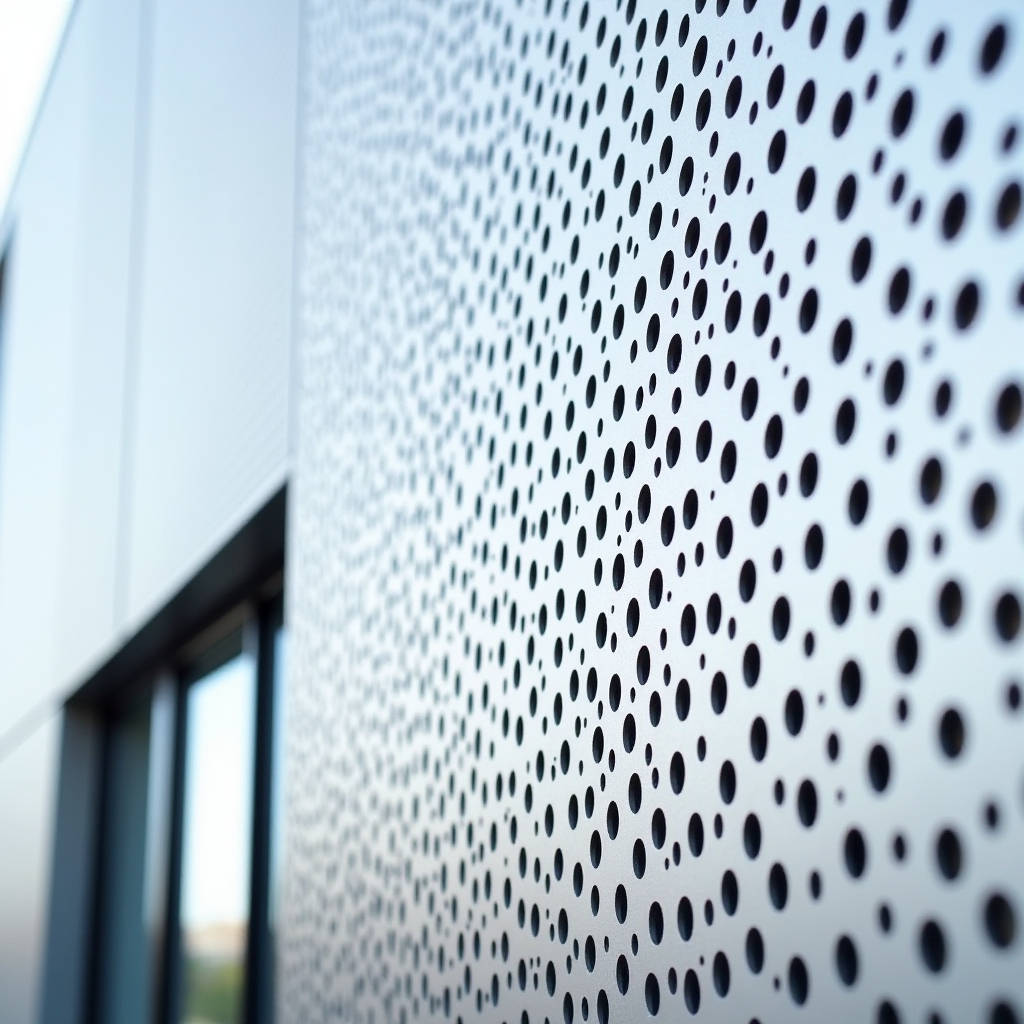
Specifying a perforated aluminum composite panel for commercial facades introduces complex structural variables that differ significantly from solid cladding systems. While architects often select this material for its visual permeability and ventilation capabilities, the introduction of voids fundamentally alters the mechanical behavior of the composite sandwich structure. Engineers must recalculate wind load resistance, verify core-to-skin adhesion at hole edges, and establish strict open area ratios to prevent panel deformation under negative pressure. Unlike solid sheets where stress distributes uniformly, perforated panels concentrate stress around apertures, demanding higher safety factors in bracket spacing and subframe design. This technical analysis addresses the critical intersection between aesthetic intent and structural reality, providing procurement teams and facade consultants with actionable data to ensure long-term performance without compromising the architectural vision for transparency and light filtration.
Mechanical Behavior Under Wind Load
The primary engineering challenge with any perforated aluminum composite panel system is maintaining structural integrity when the effective cross-sectional area is reduced. Standard wind load calculations based on ASTM E330 or ASCE 7 assume a continuous surface. When perforations are introduced, the panel no longer acts as a monolithic membrane but rather as a series of interconnected ligaments. The reduction in stiffness is non-linear; a 20% open area does not simply reduce strength by 20%. Instead, it creates stress concentrations at the tangent points of each hole, which can initiate delamination if the polyethylene core bond is insufficient.
For B2B procurement, verifying the shear strength of the core material becomes non-negotiable. In solid applications, standard PE cores may suffice, but perforated configurations demand high-density mineral-filled cores or specialized fire-retardant grades that offer superior peel strength. Testing per EN 13501-1 and ASTM D1781 (climbing drum peel test) should be mandatory for any perforated specification. Suppliers like Futeng® typically provide certified test reports showing peel strength values exceeding 7 N/mm for perforated-grade composites, ensuring the aluminum skins remain bonded even when localized stresses spike around perforation clusters during extreme weather events.
Bracket spacing must be adjusted proportionally to the open area ratio. Industry best practice suggests reducing maximum support span by the square root of the solidity ratio. For example, if a solid panel allows 1200mm spans, a panel with 40% openness (60% solidity) requires spans closer to 930mm to maintain equivalent deflection limits. Ignoring this geometric penalty leads to excessive vibration, oil-canning, and eventual fatigue failure at fastener points.
Open Area Ratios and Ventilation Performance
Balancing aesthetic porosity with physical performance requires understanding the functional thresholds of open area percentages. The term "perforated aluminum composite panel" encompasses a wide range of densities, each serving distinct environmental functions. Low-density patterns (5-15% open area) primarily serve visual screening and solar shading while retaining most of the weather barrier function. Medium density (15-30%) facilitates passive airflow for rear-ventilated cavity systems, helping manage moisture and thermal buildup behind the cladding. High-density patterns (>30%) maximize transparency and daylighting but significantly compromise acoustic insulation and rain penetration resistance.
From a building physics perspective, the open area directly influences the pressure equalization within the rainscreen cavity. According to research published by the Centre for Window and Cladding Technology (CWCT), adequate ventilation area is essential to prevent condensation and mold growth in the plenum. However, excessive openness can allow wind-driven rain to bypass the drainage plane. Procurement specifications should define open area tolerances strictly, typically ±2%, to ensure consistent airflow across large facade elevations. Variations in punching accuracy can create uneven pressure zones, leading to localized water ingress or whistling noises in high winds.
Acoustic performance degrades predictably with increased perforation. A solid aluminum composite panel might achieve an STC rating of 25-30, but introducing 20% perforation can drop this to below 15 unless backed by acoustic fleece or mineral wool. For projects near highways or airports, this trade-off must be modeled early. The perforated face then acts merely as a protective shield for the actual acoustic liner, changing the assembly from a standalone barrier to a composite system requiring coordinated detailing between metal fabricator and insulation supplier.
Coating Adhesion and Corrosion Protection
The perforation process exposes raw aluminum and core material at every hole edge, creating thousands of linear meters of vulnerable cut lines per facade. This vulnerability makes coating quality the single most critical durability factor for a perforated aluminum composite panel. Standard post-painting after perforation is generally discouraged in high-performance B2B applications because paint cannot adequately penetrate deep into narrow holes, leaving internal surfaces unprotected. Pre-finished coil stock processed through CNC punching is preferred, provided the cutting tools are sharp and clearance settings are optimized to minimize burr formation.
PVDF (polyvinylidene fluoride) coatings meeting AAMA 2605 specifications remain the industry benchmark for exterior perforated cladding due to their exceptional chalk resistance and flexibility. However, for perforated panels, the focus shifts to edge creep resistance. Salt spray testing per ASTM B117 should extend beyond the standard 3000 hours for solid panels; specifying 4000+ hours ensures that corrosion does not initiate at hole margins in coastal environments. Additionally, the use of chromate-free pretreatment enhances paint adhesion specifically on cut edges, reducing the risk of filiform corrosion spreading beneath the coating film.
Thermal expansion presents another coating stressor. Aluminum expands approximately 2.4 mm/m per 100°C temperature change. In perforated panels, the differential heating between sun-exposed faces and shaded cavities can induce cyclic strain at hole edges. Coatings with lower modulus or enhanced elastomeric properties accommodate this movement better than rigid polyester finishes. Specifiers should request dynamic bend test results on pre-perforated samples to confirm the finish survives fabrication-induced micro-cracking.
Fabrication Precision and Tolerance Control
Achieving architectural intent with perforated metal requires manufacturing discipline far exceeding solid panel production. Hole alignment, size consistency, and sheet flatness are interdependent quality metrics. Modern CNC turret presses and laser cutters can hold positional tolerances of ±0.1mm, but thermal distortion during processing remains a risk. Large-format perforated aluminum composite panels are particularly susceptible to warping because removing material releases internal rolling stresses unevenly. Fabricators must employ stress-relief techniques or sequential punching patterns to balance tension across the sheet.
Flatness tolerance for perforated cassettes is typically specified as L/300 or 2mm over 1m, whichever is less. Exceeding this causes visible waviness when viewed obliquely in raking light, undermining the premium aesthetic. Reinforcing stiffeners welded or bonded to the backside help restore rigidity lost through perforation. These reinforcements must be positioned strategically to avoid interfering with fixing brackets or drainage paths. Adhesive-bonded stiffeners are preferable to welded ones for perforated panels, as welding generates heat that can further distort thin composite skins and damage adjacent core bonds.
Pattern matching across multiple panels adds another layer of complexity. Continuous perforation designs that flow across joints require registration marks and digital templating to ensure alignment within 1-2mm. Misaligned patterns draw immediate visual attention and signal poor craftsmanship. B2B contracts should include mock-up approval clauses requiring full-scale sample panels to verify pattern continuity, color consistency, and edge quality before mass production commences. This validation step prevents costly rework and schedule delays common in bespoke facade projects.
Technical Comparison of Perforation Configurations
Selecting the optimal configuration involves balancing competing performance criteria. The following table compares three common perforated aluminum composite panel specifications against key engineering parameters relevant to commercial facade procurement.
| Parameter | Micro-Perf (Ø2-3mm) | Standard Round (Ø8-12mm) | Custom Slot/Louver |
|---|---|---|---|
| Typical Open Area | 8% - 15% | 20% - 35% | 25% - 45% |
| Wind Load Capacity Reduction | Low (~10-15%) | Moderate (~25-35%) | High (~40-50%) |
| Rain Penetration Risk | Negligible | Moderate (requires baffle) | High (requires secondary seal) |
| Acoustic Impact (STC Drop) | -2 to -4 dB | -8 to -12 dB | -12 to -18 dB |
| Fabrication Cost Premium | +15% vs Solid | +25% vs Solid | +40-60% vs Solid |
| Best Application | Solar shading, privacy screens | Ventilated facades, parking garages | Dynamic aesthetics, air intake louvers |
This comparison highlights that no single configuration suits all scenarios. Micro-perforations preserve structural and environmental performance closest to solid panels, making them ideal where ventilation needs are minimal. Standard round holes represent the economic sweet spot for general rainscreen applications. Custom slots offer maximum design expression but demand rigorous engineering validation and higher budgets. Procurement decisions should align specification with actual performance requirements rather than defaulting to visually appealing renderings that may lack constructability.
Installation Considerations for Perforated Systems
Field installation of perforated aluminum composite panel assemblies differs from solid cladding in handling sensitivity and sealing details. Panels with high open areas have reduced torsional rigidity, making them prone to bending damage during lifting and positioning. Suction lifters designed for solid glass or metal may fail on perforated surfaces due to air leakage. Mechanical clamps with protective padding or specialized vacuum cups with porous seals are necessary for safe manipulation. Storage on-site must be vertical and supported along full length to prevent sagging deformation before fixing.
Sealing perimeter joints requires careful product selection. Standard sealants can squeeze through holes during application, creating unsightly smears inside the cavity. Backer rods must be sized correctly to bridge perforations near edges, or temporary masking tape applied during caulking. Structural silicone bonding, when used for concealed fix systems, demands verified contact area calculations since adhesive only bonds to solid ligaments between holes. Bond line width may need increasing to compensate for reduced effective adhesion zone.
Maintenance access planning should account for perforation fragility. Cleaning crews using pressure washers can force water through holes at velocities damaging to interior vapor barriers or insulation. Specifications should mandate low-pressure cleaning methods (<500 psi) and soft brushes. Replacement protocols for damaged perforated panels are more complex than solid ones due to pattern alignment requirements. Keeping attic stock with matching batch numbers and documented pattern coordinates ensures future repairs remain visually invisible.
Strategic Procurement Recommendations
Sourcing perforated aluminum composite panel systems successfully requires moving beyond commodity pricing models toward value-based technical evaluation. Lowest-cost suppliers often offset cheap materials with inadequate testing, imprecise tooling, and insufficient engineering support. Total cost of ownership includes risk premiums for potential failures, rework expenses, and warranty claims. Qualified manufacturers invest in dedicated perforation lines, in-house peel testing labs, and project-specific engineering calculations that de-risk installation.
Contract documentation should explicitly reference applicable standards: ASTM E330 for structural performance, AAMA 2605 for coating durability, and EN 13501 for fire classification. Ambiguous specifications invite substitution with inferior products. Requiring shop drawings stamped by licensed engineers ensures accountability transfers appropriately from supplier to installer. Sample approvals should encompass both visual and destructive testing of perforated specimens to validate represented quality matches delivered product.
Ultimately, successful perforated facade projects result from collaborative dialogue between architect, engineer, fabricator, and supplier established early in design development. Late-stage value engineering often compromises performance to meet budget targets. Engaging specialists during schematic design enables optimization of open area, panel sizing, and support systems before costs become locked. This proactive approach transforms the perforated aluminum composite panel from a decorative afterthought into an integrated, high-performance building envelope solution delivering lasting value through informed technical execution.