ACM Facade Panels Versus Solid Aluminum Cladding Technical Comparison
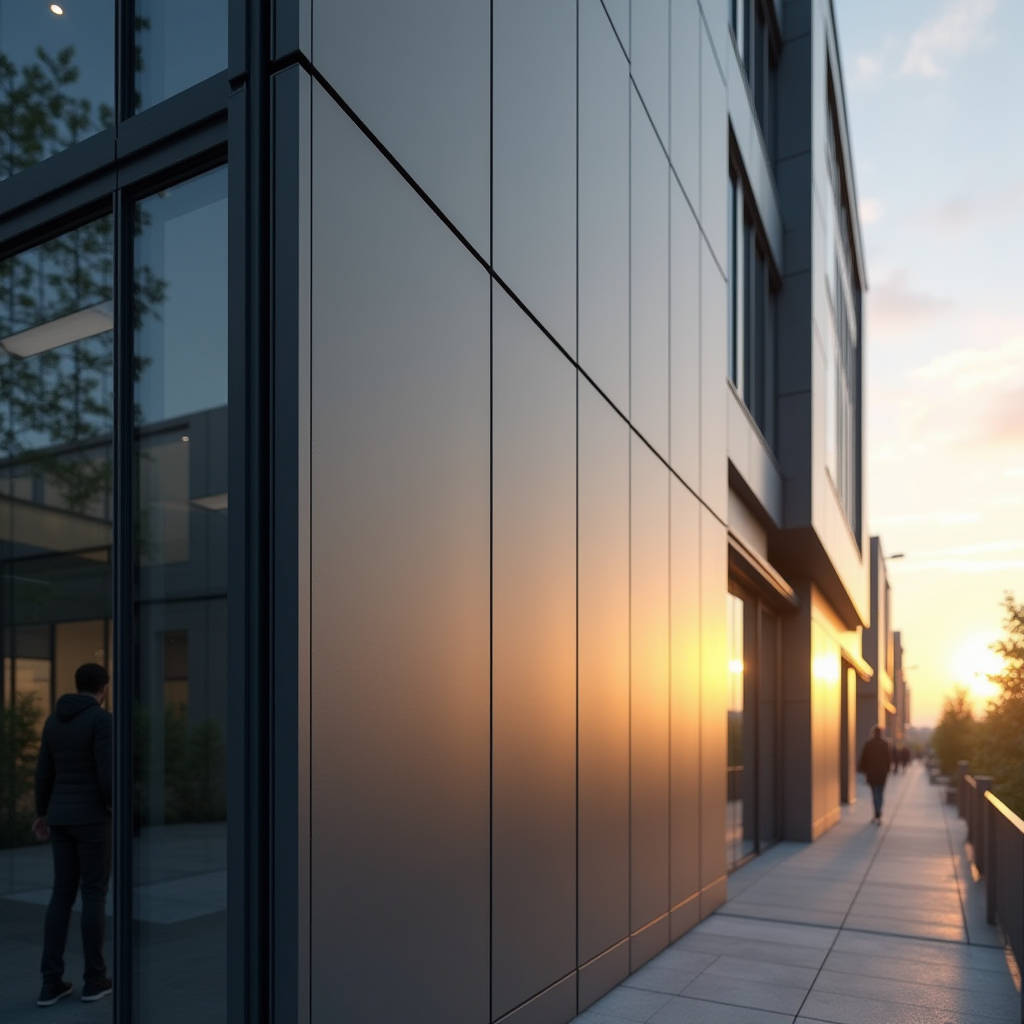
Specifiers frequently evaluate acm facade panels for commercial projects due to their initial cost efficiency and perceived flatness. However, when project requirements demand high impact resistance, non-combustible materials, or complex three-dimensional forming, solid aluminium cladding panels present a technically distinct alternative. While acm facade panels utilize a composite core structure, solid aluminum sheets rely on monolithic metal integrity and specialized stiffening engineering to achieve comparable aesthetic results without the delamination risks associated with bonded layers. Understanding the precise mechanical differences between these two systems is essential for procurement managers and architects managing long-term building envelope performance. This analysis focuses strictly on the engineering parameters, fabrication constraints, and lifecycle costs that differentiate solid aluminium solutions from standard composite options in demanding architectural applications.
Fundamental Material Composition and Structural Integrity
The primary distinction lies in the cross-sectional anatomy of the panel. Standard acm facade panels consist of two thin aluminum skins, typically 0.5mm thick, bonded to a polyethylene or mineral-filled core. This sandwich construction provides rigidity through composite action but introduces potential failure points at the bond line under extreme thermal cycling or moisture ingress. In contrast, solid aluminium cladding panels are manufactured from single-gauge aluminum alloy sheets, commonly AA3003-H24 or AA5005-H14 temper. These monolithic panels range from 2.0mm to 3.0mm in thickness for exterior facade applications, providing inherent structural mass that eliminates any risk of core debonding.
This material difference directly influences the allowable stress limits and fastener pull-through resistance. According to The Aluminum Association design manuals, solid aluminum retains consistent yield strength across the entire section, whereas composite panels rely on the adhesive shear strength between skin and core. For high-wind load zones or coastal environments subject to salt spray, the homogeneity of solid aluminum removes the variable of core degradation. Procurement teams must verify that mill certificates confirm alloy composition and temper, as these factors dictate the minimum bending radii and welding capabilities during fabrication.
Stiffening Engineering for Large Format Modules
A common misconception is that solid aluminum cannot match the flatness of acm facade panels without excessive weight. Modern manufacturing addresses this through integrated stiffening systems rather than relying solely on material thickness. Solid panels are routinely reinforced with extruded aluminum ribs or welded studs on the rear face, creating a unidirectional or grid-stiffened assembly. This engineered approach allows solid aluminium cladding to span larger distances while maintaining deflection limits within L/60 or L/90 criteria specified by AAMA 508-14 standards for pressure-equalized rain screen systems.
Unlike the uniform stiffness of acm facade panels, solid aluminum stiffening can be customized per panel based on specific wind load calculations. Areas near building corners or parapets requiring higher reinforcement receive additional ribs, while field panels remain optimized for weight. This adaptability prevents over-engineering and reduces overall dead load on the substructure. Fabricators like Futeng® utilize CNC routing and automated stud welding to ensure stiffener placement accuracy within ±0.5mm, ensuring that the enhanced structural performance does not compromise surface planarity.
Flatness Tolerances and Oil-Canning Mitigation
Oil-canning remains the most frequent aesthetic complaint in metal facade installations. While acm facade panels are marketed for their inherent flatness due to the continuous lamination process, they are not immune to thermal distortion. The differential thermal expansion between the aluminum skins and the polymer core can induce internal stresses that manifest as surface waviness when exposed to direct solar radiation. Solid aluminium cladding, being a single material, expands uniformly. When properly detailed with sliding clips and expansion joints, solid panels accommodate thermal movement without inducing visible buckling.
Achieving optical flatness in solid aluminum requires strict adherence to fabrication protocols. The rolling direction of the aluminum sheet must be consistent across all panels on a facade elevation to prevent anisotropic reflection patterns. Additionally, post-forming heat treatment or leveling passes may be necessary to relieve residual stresses introduced during braking or rolling. Industry best practices suggest limiting unsupported spans and incorporating reveal edges or shadow lines to break up large reflective surfaces. These visual breaks serve a dual purpose: they enhance the architectural articulation and mask minor deviations that would be glaringly apparent on a vast, uninterrupted plane.
Thermal Expansion Joint Design Parameters
The coefficient of thermal expansion for aluminum is approximately 23.1 × 10⁻⁶ m/m·K. For a 3-meter tall solid aluminium cladding panel experiencing a 60°C temperature differential between installation and peak summer service, linear expansion exceeds 4mm. Failure to accommodate this movement results in permanent deformation. Unlike some acm facade panels systems that rely on silicone sealants to absorb movement, robust solid aluminum systems employ mechanical sliding connections. Fixed points anchor the panel at one location, typically the top center, while slotted holes at perimeter attachments allow bidirectional translation.
Designers must calculate joint widths based on the maximum anticipated temperature range plus a safety factor for installation tolerances. A general rule of thumb for vertical joints in solid aluminum systems is 12mm to 16mm for panel heights up to 4 meters, though project-specific engineering verification is mandatory. Sealant selection must align with ASTM C920 classifications, ensuring the elastomer maintains adhesion and elasticity throughout the expected movement cycle. Neglecting these details negates the dimensional stability advantages of solid metal over composite alternatives.
Coating Systems and Long-Term Weathering Performance
Surface finish longevity is a critical value proposition. Both acm facade panels and solid aluminium cladding typically utilize PVDF (polyvinylidene fluoride) resin-based coatings. However, the substrate preparation differs significantly. Solid aluminum allows for more aggressive pretreatment processes, including multi-stage chromate-free conversion coatings that enhance paint adhesion directly to the bare metal. Composite panels often rely on primers applied during the coil coating process before lamination, which may limit post-fabrication touch-up compatibility.
For solid aluminium cladding intended for harsh environments, specifying a 4-coat system with a total dry film thickness of 40-45 microns provides superior barrier protection compared to standard 2-coat systems. The inclusion of a primer and clear coat layer significantly extends chalk resistance and color retention metrics. Testing per Qualicoat Class 3 or AAMA 2605-21 standards demonstrates that premium PVDF finishes on solid aluminum substrates maintain Delta E < 2.0 after 20 years of Florida exposure. This performance benchmark is essential for projects where facade replacement costs far exceed initial material premiums.
| Performance Parameter | Solid Aluminium Cladding (2.5mm) | Standard ACM Facade Panels (4mm PE Core) | Relevant Testing Standard |
|---|---|---|---|
| Fire Reaction Classification | Euroclass A1 / Non-combustible | Euroclass B-s1,d0 (FR Core) / D-s2,d0 (PE) | EN 13501-1 / ASTM E84 |
| Impact Resistance (Gardner) | >20 Joules (No cracking) | 8-12 Joules (Core dependent) | ASTM D2794 |
| PVDF Coating Thickness | 40-45 μm (4-Coat System) | 25-30 μm (2-Coat Coil Coat) | AAMA 2605 / Qualicoat |
| Maximum Forming Radius | 1.5x Material Thickness | Limited by Core Adhesion | Manufacturer Spec |
| Wind Load Span Capacity | Engineered via Stiffeners | Limited by Skin Yield Strength | AAMA 508 |
| Recyclability | 100% Monolithic Alloy | Complex Separation Required | ISO 14040 LCA |
Fabrication Complexity and Geometric Freedom
Architectural intent often drives material selection beyond basic performance metrics. While acm facade panels excel in producing large, flat cassettes, they struggle with tight radii and compound curves. The thermoplastic core softens during heating, making controlled forming difficult, and cold-forming risks delaminating the skin-core interface. Solid aluminium cladding offers superior ductility, particularly in H24 temper, allowing for V-groove folding, roll forming, and stretch forming into complex geometries without structural compromise.
This capability enables seamless integration of returns, reveals, and corner profiles directly into the panel form, reducing the need for secondary flashings or trim pieces that can become water infiltration paths. CNC machining centers can route solid aluminum to create variable-depth reveals or perforated patterns that would be structurally unsound in composite materials. For projects featuring organic forms or parametric facades, the isotropic properties of solid metal provide predictable springback characteristics that fabricators can compensate for digitally, ensuring installed geometry matches the BIM model within tight tolerances.
Welding and Assembly Considerations
MIG and TIG welding are routine operations in solid aluminium cladding fabrication, enabling the creation of watertight seams and structural attachments that are impossible with composite panels. Welded corners on solid aluminum trays eliminate open miters that require sealant maintenance. Post-weld grinding and polishing restore surface continuity, creating truly monolithic assemblies. This weldability also facilitates the attachment of heavy hardware, such as sunshade brackets or signage mounts, directly to the panel face with full load transfer to the backing structure.
Quality control for welded solid aluminum must include dye penetrant testing or visual inspection per AWS D1.2 standards to verify fusion and absence of porosity. Heat-affected zones around welds may exhibit reduced hardness; specifying strain-hardened tempers or conducting localized aging treatments can mitigate this effect. Proper shielding gas purity and filler wire matching are non-negotiable to prevent corrosion initiation at weld sites. These fabrication disciplines distinguish professional-grade solid aluminum systems from generic metalwork.
Lifecycle Cost Analysis and Sustainability Metrics
Initial material cost comparisons often favor acm facade panels, but comprehensive lifecycle costing reveals different economics for long-hold assets. Solid aluminium cladding eliminates recurring expenses associated with core degradation, edge sealant failure, and panel replacement due to impact damage. Insurance premiums for buildings clad in non-combustible solid aluminum may also be lower than those for composite-clad structures, particularly following recent regulatory tightening on facade combustibility in many jurisdictions.
From a circular economy perspective, solid aluminum holds significant advantages. At end-of-life, monolithic aluminum sheets are directly recyclable into new wrought products with minimal energy input, retaining high scrap value. Disposing of acm facade panels involves costly separation processes to isolate aluminum skins from polymer cores, often resulting in downcycling or landfill disposal. Environmental Product Declarations (EPDs) for solid aluminum increasingly reflect this closed-loop potential, contributing to LEED and BREEAM credits for material reuse and recycled content. Specifiers prioritizing embodied carbon reduction should request cradle-to-gate EPDs that account for regional smelting energy mixes and recycling rates.
Maintenance Protocols and Service Life Extension
Maintenance requirements differ fundamentally between the two systems. Solid aluminium cladding surfaces can be cleaned using standard architectural detergents without risk of solvent attack on a core material. Localized damage to solid panels can often be repaired in situ through filling, sanding, and spot refinishing, whereas damaged acm facade panels typically require full replacement. This reparability extends service life and reduces operational disruption for occupied buildings.
Inspection intervals for solid aluminum should focus on fastener integrity, sealant condition, and coating adhesion at formed edges. Galvanic corrosion at dissimilar metal contacts remains a primary concern; isolating aluminum from steel substructures with neoprene or PVC separators is mandatory. Anodic oxidation or powder coating of aluminum stiffeners and brackets provides additional protection in marine atmospheres. Documenting maintenance activities creates a performance history that supports warranty claims and informs future capital planning.
Technical Specification Guidance for Procurement
Drafting accurate specifications prevents substitution errors and ensures delivered products meet design intent. When specifying solid aluminium cladding as an alternative to acm facade panels, explicitly define alloy designation, temper, minimum thickness, and allowable tolerances. Reference applicable standards such as ASTM B209 for sheet and plate, AAMA 2605 for coatings, and EN 13830 for curtain walling product standards. Avoid generic descriptions like "aluminum composite equivalent" which invite non-compliant substitutions.
Require submission of shop drawings showing panel layout, stiffener spacing, connection details, and expansion joint locations prior to fabrication. Mockup testing for air/water infiltration and structural performance should be mandated for projects exceeding certain size or complexity thresholds. Factory acceptance testing protocols should include coating thickness verification, gloss measurement, and adhesion testing per ASTM D3359. Engaging suppliers with demonstrated experience in solid aluminum fabrication, verified through project references and quality certifications, mitigates execution risk. Technical submittals should include finite element analysis for custom panel shapes to validate deflection performance under design loads.
Selecting between acm facade panels and solid aluminium cladding ultimately depends on project-specific priorities regarding fire safety, geometric complexity, and lifecycle value. While composite panels serve adequately for standard flat facade applications, solid aluminum provides measurable advantages in durability, reparability, and environmental performance for demanding architectural envelopes. Successful implementation requires disciplined detailing, rigorous fabrication quality control, and specification clarity that reflects the unique properties of monolithic metal systems. By aligning material selection with long-term performance objectives rather than short-term cost minimization, project teams deliver facades that maintain integrity and aesthetics decades beyond initial occupancy.