Facade Aluminium Composite Panel Alternatives Solid Sheet Technical Specs
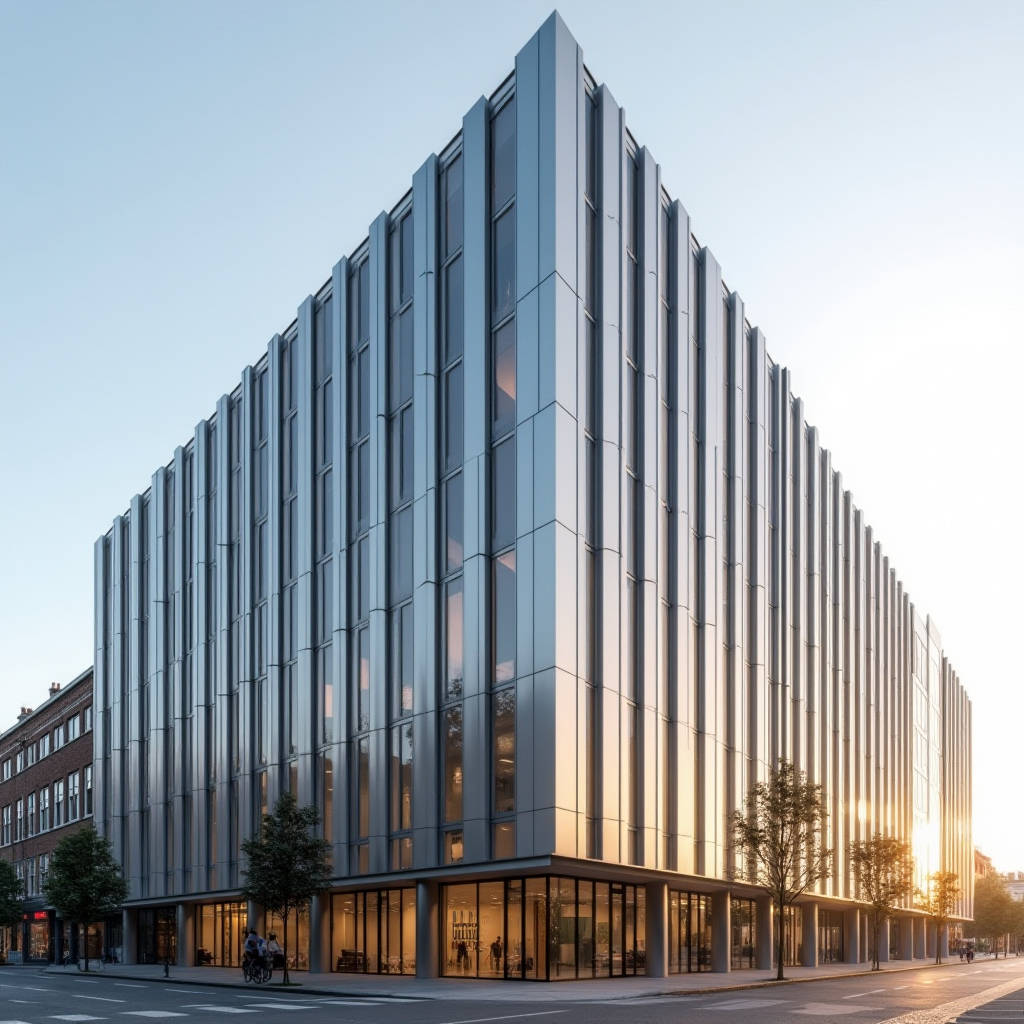
Specifying a facade aluminium composite panel often begins with evaluating cost and weight advantages for commercial envelopes. However, project teams increasingly encounter performance gaps regarding fire compliance, surface flatness under thermal load, and long-term coating integrity that composite materials cannot always satisfy. Solid aluminium cladding sheets provide a technically superior alternative for high-performance curtain walls where regulatory adherence and aesthetic precision are non-negotiable. This analysis examines the engineering distinctions between composite cores and monolithic aluminium alloys, focusing on fabrication tolerances, fire reaction classifications, and PVDF coating lifecycles. Understanding these parameters ensures procurement decisions align with building codes and lifecycle maintenance budgets rather than initial material costs alone.
Material Composition and Structural Integrity Differences
The fundamental difference lies in the core structure. A standard facade aluminium composite panel consists of two thin aluminium skins bonded to a polyethylene or mineral-filled core. While this sandwich construction offers rigidity at lower weights, it introduces potential failure points related to delamination and core degradation over decades of service. In contrast, solid aluminium cladding utilizes monolithic sheets, typically ranging from 2.0mm to 4.0mm thickness, manufactured from high-grade alloys such as AA3003-H14 or AA5005-H34 compliant with ASTM B209 specifications. These alloys provide consistent mechanical properties throughout the entire cross-section, eliminating the risk of skin separation.
Structural rigidity in solid panels is achieved through proper stiffening rather than core bonding. For panels exceeding 600mm in width, welded aluminum studs or extruded back-stiffeners are required to maintain flatness within acceptable tolerances. Engineering calculations must account for the modulus of elasticity for solid aluminium (approximately 69 GPa) versus the composite action of ACP systems. While a facade aluminium composite panel may exhibit higher initial stiffness-to-weight ratios, solid aluminium maintains its structural integrity without dependency on adhesive bonds that can degrade under UV exposure or extreme temperature cycling. This monolithic behavior is critical for buildings in seismic zones or regions with significant diurnal temperature swings where differential expansion between core and skin causes stress fatigue in composites.
Flatness Tolerances and Thermal Distortion
Aesthetic quality in metal facades is directly linked to panel flatness. Oil-canning or pillowing effects are common complaints with large-format metal cladding. Solid aluminium sheets, when properly fabricated with perimeter returns and intermediate stiffeners, achieve superior optical flatness compared to many composite alternatives. Industry standards recommend a maximum deviation of 1.5mm per meter for architectural grade solid panels. Achieving this requires precise CNC routing and controlled brake press operations during fabrication.
Thermal expansion coefficients must be calculated accurately. Aluminium expands at approximately 23.6 µm/m·°C. A 3-meter tall solid panel experiencing a 40°C temperature rise will expand roughly 2.8mm. Fixing systems must accommodate this movement through slotted holes and floating connections. Unlike a facade aluminium composite panel where the plastic core may dampen some thermal movement but also introduce creep, solid aluminium behaves predictably according to established physics. This predictability allows engineers to design expansion joints with confidence, preventing buckling or fastener pull-through over the building's lifespan.
Fire Performance and Regulatory Compliance Standards
Fire safety remains the most significant driver for specifying solid aluminium over composite materials in mid-to-high-rise construction. Following numerous high-profile facade fires globally, building codes have tightened restrictions on combustible core materials. Many jurisdictions now mandate non-combustible cladding for buildings exceeding specific height thresholds. Solid aluminium sheets inherently meet Euroclass A1 or ASTM E136 non-combustibility standards without additional testing or certification. The material melts at approximately 660°C but does not contribute fuel load or produce toxic smoke during combustion.
Conversely, even fire-retardant (FR) grades of facade aluminium composite panel contain mineral-filled cores that may still carry limited combustibility ratings depending on local testing protocols. Insurance providers and fire engineers increasingly favor homogeneous non-combustible materials to reduce liability and premium costs. When reviewing project specifications, verify whether the requirement is for "non-combustible" (A1/A2) or merely "limited combustibility." Solid aluminium satisfies the strictest interpretation universally, whereas composite products require careful verification of test reports specific to the installed configuration including fixings and insulation backing.
| Performance Parameter | Solid Aluminium Cladding (2.5mm) | Standard PE Core ACP | Fire-Retardant Mineral Core ACP |
|---|---|---|---|
| Euroclass Fire Rating | A1 (Non-combustible) | E / D-s2,d0 | B-s1,d0 (Variable by test) |
| Smoke Toxicity | None | High (Hydrocarbons) | Low to Moderate |
| Delamination Risk | Zero | Moderate to High | Low |
| Impact Resistance (Joules) | >15 J (No penetration) | 3-5 J (Core damage possible) | 5-8 J |
| Recyclability | 100% (Single stream) | Complex separation required | Landfill or specialized recycling |
| Typical Warranty Period | 20-25 Years (PVDF) | 10-15 Years | 15-20 Years |
Coating Systems and Long-Term Weathering Resistance
The longevity of any metal facade depends entirely on the coating system applied to the substrate. Both solid aluminium and facade aluminium composite panel products utilize similar fluoropolymer technologies, but the application process differs significantly. Solid panels are typically coil-coated or spray-coated after forming, allowing for thicker, more uniform film builds on edges and returns. Standard PVDF (polyvinylidene fluoride) coatings meeting AAMA 2605 specifications require a minimum dry film thickness of 25 microns for topcoat plus primer. Premium systems specify 30-35 microns total DFT for enhanced chalk and fade resistance.
Edge protection represents a critical advantage for solid aluminium. During fabrication of composite panels, cut edges expose the core material and require sealing with silicone or edge banding to prevent moisture ingress. These seals represent maintenance liabilities and potential failure points. Solid aluminium panels can be folded with continuous radii, keeping the protective coating intact around all perimeter returns. This eliminates exposed raw edges entirely. For projects in marine environments or industrial zones with aggressive pollutants, this continuity provides measurable extension of service life. Manufacturers like Futeng® emphasize this fabrication advantage when supplying pre-finished solid sheets for demanding architectural applications, noting that edge integrity correlates directly with warranty claim frequency.
PVDF vs FEVE vs Anodized Finishes
Selecting the appropriate finish requires matching environmental exposure to coating chemistry. PVDF remains the industry standard for most exterior applications due to proven 20+ year color retention data. However, newer FEVE (fluoroethylene vinyl ether) resins offer higher gloss retention and broader color palettes while maintaining equivalent weathering performance. Anodized finishes provide exceptional hardness and metallic authenticity but show greater batch-to-batch color variation and fingerprint sensitivity. When comparing against a facade aluminium composite panel specification, note that anodizing is rarely available on composite substrates due to core conductivity issues during the electrochemical process. Solid aluminium uniquely supports anodic oxidation, expanding design options for projects seeking authentic metal aesthetics without paint.
Fabrication Precision and Installation Methodologies
Successful solid aluminium facade execution demands higher fabrication discipline than composite systems. CNC machining centers must maintain positional accuracy within ±0.1mm for tray-style panels with welded corners. Weld quality directly affects both structural performance and visual appearance. TIG welding followed by grinding and polishing produces invisible seams on painted surfaces, while MIG welding suits unexposed structural attachments. Post-weld heat treatment may be necessary for certain tempers to restore mechanical properties in the heat-affected zone. This level of craftsmanship distinguishes premium fabricators from general sheet metal shops.
Installation systems for solid panels mirror those used for facade aluminium composite panel installations but with adjustments for weight and thermal movement. Rear-ventilated rainscreen principles apply equally: open joints promote pressure equalization and moisture drainage behind the cladding. Substructure spacing typically ranges from 400mm to 600mm vertically depending on panel gauge and wind load calculations per ISO 12179. Hidden clip systems allow for thermal expansion while maintaining clean sightlines. Riveted or screwed face-fixing remains acceptable for utilitarian applications but compromises the seamless aesthetic achievable with concealed fixing. Proper isolation between dissimilar metals (aluminium panels and steel substructure) prevents galvanic corrosion through use of EPDM gaskets or nylon washers.
Weight Considerations and Structural Loading
Weight comparisons frequently favor composite materials in preliminary discussions. A typical 4mm ACP weighs approximately 5.5 kg/m², while 2.5mm solid aluminium weighs 6.75 kg/m². The 1.25 kg/m² difference appears significant at scale but becomes marginal when considering total facade assembly weight including substructure, insulation, and vapor barriers. More importantly, solid aluminium's higher density contributes to acoustic damping and impact resistance. Ball drop tests demonstrate solid panels resist denting from hail or debris at energy levels that permanently deform composite skins. For ground-level zones, podiums, or areas subject to public contact, this durability justifies minor weight penalties. Structural engineers should verify dead load capacity but rarely encounter limiting constraints from switching to solid aluminium in modern steel or concrete frame construction.
Lifecycle Cost Analysis and Sustainability Metrics
Initial material cost for solid aluminium typically exceeds that of facade aluminium composite panel products by 15-30%. However, total cost of ownership calculations reveal different economics over 30-year horizons. Maintenance intervals for solid aluminium with quality PVDF coatings extend to 25 years before recoating consideration. Composite panels with exposed edge seals or lower-grade cores may require inspection and remediation every 10-15 years. Labor costs for scaffold access and sealant replacement frequently dwarf material savings. Additionally, end-of-life recycling value for solid aluminium remains high (scrap values track LME pricing), while composite disposal incurs landfill fees due to inseparable material streams.
Sustainability certifications increasingly reward material transparency and circularity. Solid aluminium achieves full EPD documentation with clear embodied carbon data. Recycled content in primary aluminium production continues improving, with many smelters offering billets containing 70%+ post-consumer recycled content. LEED v4.1 and BREEAM frameworks award credits for regional materials, recycled content, and material reuse potential. Composite panels struggle to achieve equivalent credit contributions due to proprietary core formulations and limited recycling infrastructure. Project teams targeting net-zero or WELL certification should model these distinctions early in specification development to avoid value engineering substitutions that compromise sustainability goals.
Technical Specification Guidance for Procurement Teams
Drafting robust specifications prevents substitution of inferior products. Key clauses should explicitly define alloy designation, temper, minimum thickness tolerance (±0.05mm for architectural grade), and coating system manufacturer approval. Reference relevant testing standards: ASTM D2244 for color measurement, ASTM D3359 for adhesion, ASTM B117 for salt spray resistance (minimum 1000 hours). Require submission of mill certificates and coating applicator warranties traceable to specific production batches. For projects previously specified with facade aluminium composite panel, include justification narratives addressing fire safety, edge durability, or flatness requirements that drove the material change. This documentation supports contractor buy-in and reduces RFIs during tender.
Quality assurance protocols should include factory acceptance testing for sample panels before full production runs. Verify fold radius integrity, weld penetration, and coating adhesion on formed samples. On-site inspection focuses on handling damage prevention, proper fastener torque, and sealant compatibility. Solid aluminium scratches more easily than composite during installation but repairs more successfully with touch-up paints matched to original batch numbers. Establish clear acceptance criteria for minor surface imperfections referencing Glass for Europe or equivalent metal cladding guidelines to avoid subjective disputes at practical completion.
Ultimately, the decision between solid aluminium and composite systems hinges on project-specific priorities. Where budget constraints dominate and fire regulations permit, facade aluminium composite panel retains valid applications. However, for institutional, healthcare, education, and premium commercial projects demanding decades of maintenance-free performance with uncompromised safety credentials, solid aluminium cladding delivers measurable technical advantages. Procurement teams should evaluate bids based on validated lifecycle metrics rather than unit rate comparisons alone. Engaging specialist suppliers early in design development ensures detailing optimizes material strengths and avoids costly redesigns during construction documentation phases.