Thermal Movement Management in Aluminium Standing Seam Wall Cladding Systems
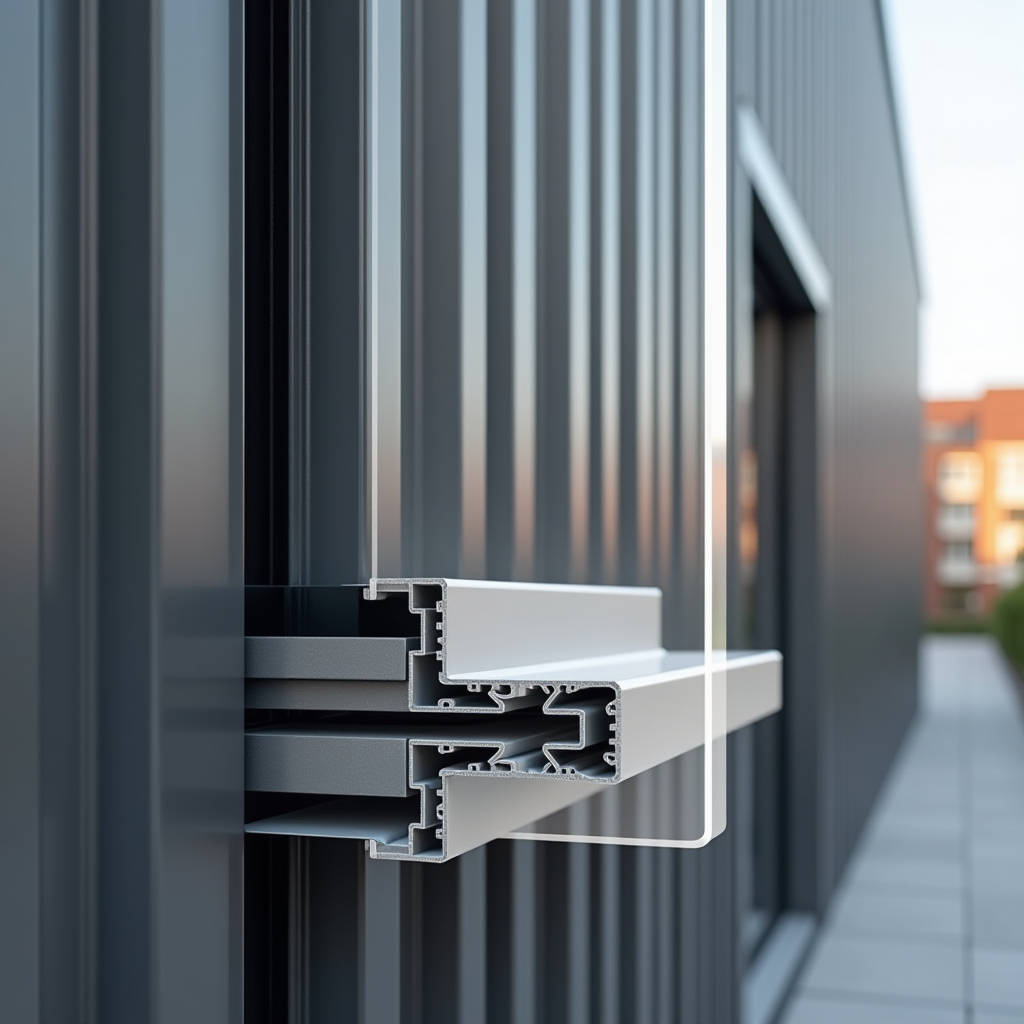
Aluminium standing seam wall cladding presents unique engineering challenges regarding thermal dynamics that distinguish it from static composite materials. Unlike rigid panels bolted directly to subframes, this system relies on a floating mechanical connection to accommodate significant dimensional changes caused by temperature fluctuations. Specifying aluminium standing seam wall cladding without accounting for the metal’s high coefficient of thermal expansion leads to oil canning, fastener back-out, and coating delamination over time. Successful facade performance depends entirely on calculating precise panel lengths relative to local climate extremes and selecting appropriate sliding clip mechanisms. This technical overview addresses the critical interface between solid aluminium metallurgy and mechanical fixing strategies required to maintain weather tightness and aesthetic flatness across large-scale commercial envelopes.
Understanding Thermal Expansion Coefficients in Solid Aluminium
The fundamental physical property governing aluminium standing seam wall cladding design is the linear coefficient of thermal expansion. Solid aluminium alloys typically used in architectural cladding, such as AA3003-H14 or AA5005-H32, exhibit a thermal expansion rate of approximately 23.8 µm/m·K (micrometers per meter per Kelvin). This value is nearly double that of steel substructures (11.7 µm/m·K) and significantly higher than concrete or masonry substrates. In practical terms, a 6-meter vertical panel subjected to a 60°C temperature differential between installation and peak summer service will expand roughly 8.5 millimeters. If the fixing system restricts this natural movement, compressive stresses accumulate within the panel profile.
These accumulated stresses manifest visibly as "oil canning," a phenomenon where flat areas of the standing seam appear wavy or distorted due to elastic buckling. While often mistaken for poor manufacturing quality, oil canning in aluminium standing seam wall cladding is primarily an installation physics failure. The solid aluminium sheet possesses inherent residual stresses from the rolling and leveling process. When external thermal forces exceed the panel's flexural rigidity, these internal stresses release unpredictably. Engineers must distinguish between acceptable visual characteristics of thin-gauge metal and genuine systemic failures caused by inadequate movement accommodation.
Material selection plays a secondary but vital role in mitigating these effects. Thicker solid aluminium sheets demonstrate greater resistance to visible distortion. A 2.0mm thick panel offers superior stiffness compared to 1.5mm alternatives, reducing the amplitude of thermal buckling waves. However, increased thickness also increases the total force exerted on clips during expansion cycles. Structural calculations must verify that the chosen gauge balances aesthetic flatness with mechanical load capacity. References to The Aluminum Association standards provide essential baseline data for alloy-specific elongation properties that inform these decisions.
Sliding Clip Mechanics and Spacing Protocols
The primary mechanism enabling functional aluminium standing seam wall cladding is the sliding clip assembly. Unlike fixed cleats that lock position, sliding clips feature a movable tab or slider housed within a stationary base. This component allows the panel to translate longitudinally while remaining securely anchored against wind uplift and gravity loads. Correct specification involves three critical parameters: travel range, friction coefficient, and spacing interval.
Travel range must exceed the calculated maximum thermal movement plus a safety margin. Industry best practice dictates providing at least 25% additional travel capacity beyond theoretical calculations to account for unforeseen micro-climate variations or installation tolerances. For a calculated movement of 20mm, a clip offering ±15mm travel (30mm total) is insufficient; a ±20mm or ±25mm unit is required. Friction characteristics determine whether movement occurs smoothly or through stick-slip cycles that generate noise and fatigue. High-performance clips incorporate low-friction polymer bearings or stainless steel rollers to ensure consistent glide under varying pressure loads.
Clip spacing directly influences both structural capacity and movement freedom. Wider spacing reduces restraint points, allowing freer thermal translation but increasing unsupported span length. Narrower spacing improves wind load resistance but introduces cumulative friction that may impede full panel movement. Engineering guidelines typically recommend spacing between 450mm and 600mm centers for vertical aluminium standing seam wall cladding applications, adjusted based on regional wind speed maps and panel rib geometry. Each clip must be installed at the neutral axis of thermal movement, meaning the slider sits centrally within its track at the mean annual temperature. Installing clips at extreme positions during hot or cold weather pre-loads the system and exhausts available travel capacity prematurely.
Fixed Point vs. Floating Zone Strategy
Effective thermal management requires establishing a defined fixed point within each panel run. This anchor location prevents uncontrolled drift and ensures predictable bidirectional movement. On vertical facades, the fixed point typically resides at mid-height or aligned with floor slab levels to coordinate with building structure movement. Above and below this anchor, all connections function as floating zones permitting unrestricted slide.
- Single Fixed Point: Suitable for panel runs up to 12 meters. All clips except one are sliding type. Panel expands/contracts symmetrically from center anchor.
- Dual Fixed Points: Required for runs exceeding 12 meters. Creates independent thermal zones separated by an expansion joint. Prevents excessive accumulation of movement at single termination points.
- Perimeter Restraint: Edge trims and flashings must never pinch panel ends. Provide slotted holes or separate receiver channels allowing free end movement while maintaining weather seal integrity.
Failure to establish proper fixed/floating hierarchy results in chaotic stress distribution. Panels may buckle randomly, pull out of end laps, or distort adjacent trim details. Coordination between cladding engineer and facade contractor during shop drawing review is essential to validate this strategy before fabrication commences.
Coating Adhesion Under Cyclic Stress
Thermal movement imposes repetitive shear stress on paint finishes applied to aluminium standing seam wall cladding. Each expansion cycle stretches the coating substrate interface; contraction reverses this strain. Over decades of service, millions of micro-cycles occur. Standard polyester coatings lack sufficient elasticity to withstand this fatigue indefinitely, leading to micro-cracking at clip engagement points and seam folds. These fractures expose bare aluminium to moisture ingress, initiating localized corrosion beneath the film.
PVDF (Polyvinylidene Fluoride) resin systems specified under AAMA 2605 standards demonstrate superior flexibility retention compared to PE or SMP alternatives. Minimum T-bend ratings of 2T or better indicate adequate formability for standing seam profiling without immediate damage. However, long-term cyclic durability requires additional verification. Suppliers like Futeng® often provide accelerated weathering test data correlating coating formulation with mechanical cycling performance. Requesting specific adhesion retention data after 2000 hours QUV exposure combined with bend testing validates suitability for dynamic facade applications.
Pre-treatment chemistry equally impacts coating longevity under thermal stress. Chrome-free pretreatments based on zirconium or titanium oxides offer comparable corrosion protection to traditional chromate systems while meeting modern environmental regulations. The key metric is wet adhesion retention after boiling water immersion tests per ASTM D3359. Systems losing more than 10% adhesion post-test risk field failure when subjected to combined thermal and moisture cycling. Specifiers should mandate third-party certification rather than relying solely on manufacturer declarations.
Wind Load Interaction with Thermal Movement
Wind pressure acts perpendicular to the facade plane, creating suction or positive forces that interact complexly with longitudinal thermal movement. Negative suction pressures attempt to pull panels away from substructure, engaging clip tensile capacity. Simultaneously, thermal forces act parallel to panel length. Vector addition of these orthogonal loads determines actual stress state at each connection point. Design codes such as ASCE 7 or EN 1991-1-4 define pressure coefficients, but application to sliding systems requires specialized analysis.
Critical vulnerability exists at panel sidelaps where interlocking seams transfer shear between adjacent units. Wind-induced racking can distort seam geometry, potentially compromising the interlock if thermal movement has already displaced panels toward tolerance limits. Testing protocols per ASTM E1592 evaluate combined uplift and shear capacity but rarely simulate concurrent thermal displacement. Conservative design practice applies reduction factors to tested ultimate capacities when specifying aluminium standing seam wall cladding for regions experiencing both high winds and extreme temperature swings.
| Parameter | Standard Specification | High-Performance Requirement | Engineering Rationale |
|---|---|---|---|
| Panel Thickness | 1.5mm - 2.0mm | 2.5mm - 3.0mm | Increased moment of inertia reduces oil-canning amplitude under thermal gradient |
| Clip Travel Range | ±15mm | ±25mm to ±40mm | Accommodates extreme delta-T events plus installation tolerance buffer |
| Coating System | AAMA 2604 (SMP) | AAMA 2605 (PVDF) | Superior elasticity retention prevents micro-cracking at stress concentration points |
| Fastener Type | Carbon Steel | 304/316 Stainless | Eliminates galvanic corrosion risk at dissimilar metal interface during movement |
| Seam Height | 25mm | 38mm - 50mm | Deeper profile enhances lateral stiffness and provides larger drainage cavity |
Installation Sequencing and Temperature Compensation
Fabrication precision means nothing without disciplined site execution. Installation temperature establishes the baseline thermal state for aluminium standing seam wall cladding. Panels manufactured and stored in heated workshops may arrive onsite significantly warmer than ambient winter conditions. Immediate installation locks in expanded dimensions; subsequent cooling generates tensile forces pulling against end fixings. Conversely, summer installation of cooled panels risks compression buckling when temperatures rise.
Best practice mandates acclimatization period allowing panels to reach equilibrium with installation environment before final clipping. Storing materials under cover with airflow circulation for 24-48 hours minimizes thermal shock. Installation teams should measure actual panel temperature using infrared thermometers, not ambient air readings, as solar gain creates substantial surface-to-air differentials. Clip positioning adjustments based on real-time measurements ensure sliders start at true neutral position regardless of calendar season.
Sequential fastening discipline prevents locked-in stresses. Workers must progress from fixed point outward toward free ends, never working inward from both edges simultaneously which traps expansion. Temporary alignment clamps should release before final clip engagement to avoid pre-loading. Regular verification checks using feeler gauges confirm slider centrality throughout installation run. Documentation of installation temperatures and clip settings creates valuable as-built record for future maintenance diagnostics.
Detailing Transitions and Penetrations
Continuous uninterrupted planes represent ideal thermal behavior; reality demands penetrations for windows, vents, and structural elements. Each interruption creates potential movement restriction. Detail design must preserve sliding continuity around obstacles. Slotted openings sized for maximum anticipated movement plus clearance prevent binding. Flexible flashing membranes bridge gaps while accommodating differential motion between cladding and penetration frame.
Horizontal-to-vertical transitions require particular attention. Corner profiles experience biaxial thermal movement conflicting with unidirectional panel slide. Separate corner extrusions mechanically isolated from field panels allow independent movement vectors. Sealant joints at these interfaces must utilize high-movement-capability structural silicones rated for ±50% strain per ISO 11600. Backer rod sizing ensures proper hourglass shape factor preventing three-sided adhesion that guarantees cohesive failure.
Base and head terminations present drainage and ventilation challenges alongside movement accommodation. Continuous slot vents maintain airflow behind cladding for condensation control while permitting vertical slide. Drip edges extend sufficiently to account for maximum downward expansion without exposing substrate. Integration with adjacent roofing or paving systems requires slip joints preventing load transfer from settling foundations or roof membrane shrinkage onto delicate aluminium standing seam wall cladding assemblies.
Maintenance Implications of Dynamic Systems
Unlike static facades, aluminium standing seam wall cladding demands maintenance protocols recognizing its kinetic nature. Inspection schedules should include verification of clip functionality, not just visual condition assessment. Signs of restricted movement include polished wear marks on clip tracks indicating metal-on-metal contact, deformed slider tabs, or panels consistently offset from neutral position. Early detection allows corrective adjustment before permanent deformation occurs.
Cleaning procedures must avoid introducing new restraints. Pressure washing nozzles directed into seams can force water past weather barriers if gaskets have aged. Chemical cleaners incompatible with PVDF coatings accelerate embrittlement reducing cyclic fatigue resistance. Access equipment anchorage points must never attach to cladding panels themselves; independent tie-off systems prevent accidental loading of thermal movement components. Maintenance manuals should explicitly prohibit modifications like adding signage brackets or cable trays without engineering review of thermal implications.
Long-term performance monitoring benefits from strategic instrumentation. Installing strain gauges or displacement transducers at representative locations during construction provides empirical validation of design assumptions. Data logging reveals actual movement ranges versus predicted values, informing future retrofit decisions. Such proactive approach transforms aluminium standing seam wall cladding from passive enclosure into intelligent building skin communicating its operational health to facility managers.
Successful implementation of aluminium standing seam wall cladding hinges on respecting material physics over aesthetic preference alone. Thermal movement is not a defect to eliminate but a characteristic to manage through intelligent detailing and disciplined execution. Engineers who master sliding clip mechanics, coating compatibility, and installation sequencing deliver facades maintaining both beauty and weathertightness across decades of environmental cycling. The margin between premature failure and enduring performance lies entirely in these technical subtleties invisible to casual observation yet fundamental to architectural longevity.