Wood Grain Aluminum Panel Procurement Guide for Façade Contractors and Specifiers
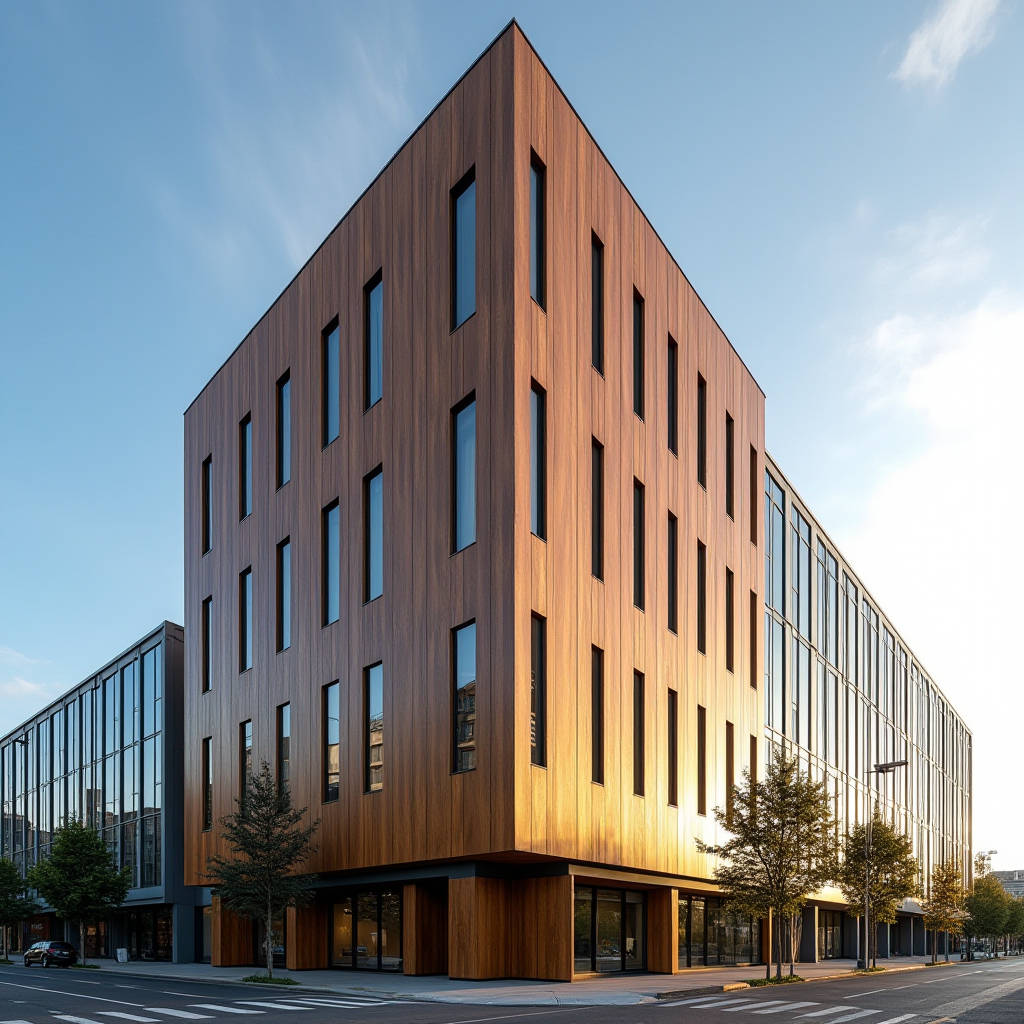
When a façade specification calls for the warmth of timber without the maintenance headaches, wood grain aluminum panel systems become the default answer. But procurement managers and curtain wall contractors quickly discover that not all wood-effect finishes are equal. The difference between a project that weathers ten years without complaint and one that fades unevenly within three comes down to three factors: the transfer process, the PVDF coating integrity, and the substrate thickness. This article breaks down what you actually need to verify before signing off on a wood grain aluminum panel order—whether you're sourcing 2,000 m² for a mid-rise office in Singapore or 15,000 m² for a mixed-use development in Dubai. No marketing fluff. Just the technical checkpoints that determine long-term performance on the building envelope.
What Actually Drives the Cost of Wood Grain Aluminum Panels
Pricing for wood grain aluminum panel systems varies dramatically across suppliers, and the reasons are rarely obvious on a quotation sheet. The raw aluminum substrate—typically AA3003 or AA5005 series—accounts for roughly 40-50% of the finished panel cost. The remaining portion splits between surface treatment, fabrication complexity, and logistics. But the real cost drivers sit deeper.
First, the wood grain transfer method matters enormously. Sublimation transfer—the most common process—involves printing wood patterns onto a transfer film, then using heat and vacuum pressure to infuse the pattern into a pre-coated PVDF surface. The quality of that transfer film, the precision of temperature control during sublimation, and the number of passes determine whether the grain looks convincing at close range or appears blurry and artificial. A single-pass transfer might save $3-5 per square meter, but the visual depth suffers noticeably.
Second, PVDF coating thickness before the wood grain transfer directly impacts UV resistance. The architectural standard calls for a minimum 25-30 microns of PVDF primer and topcoat (using Kynar 500® or Hylar 5000® resin at 70% minimum content). Some mills cut this to 18-20 microns to reduce cost. The panel will look identical on day one. After 18 months of equatorial sun exposure, the difference becomes painfully visible.
Field Note: When evaluating wood grain aluminum panel samples, request a cross-section coupon and measure the total coating thickness under a microscope. We've seen "25-micron" claims measure 19 microns in independent lab tests. The cost of a coating thickness gauge is under $300. The cost of re-cladding a completed façade is not.
Fabrication complexity adds another layer. Standard flat panels with simple edge returns are straightforward. But when your design includes perforated wood grain panels, curved sections, or large-format panels exceeding 1,500mm in width, the scrap rate climbs and the per-unit labor cost increases. A 2.0mm thick wood grain aluminum panel with a 20mm return edge is commodity-level work. A 3.0mm panel with integrated stiffeners, folded corners, and a custom wood grain pattern requires a different tier of factory capability.
Technical Standards That Separate Industrial-Grade from Decorative-Grade Panels
The distinction between panels destined for exterior cladding versus interior decorative use is not semantic. It's defined by a set of international standards that procurement teams should reference directly in tender documents.
For the aluminum substrate, ASTM B209 governs the chemical composition and mechanical properties of the sheet. For exterior wood grain aluminum panel applications, the alloy should be 3003-H14 or 5005-H14 as a minimum. Temper matters: H14 provides the right balance of formability and strength for bending operations without cracking. Thickness tolerance should reference ASTM B209 standards—typically ±0.08mm for 2.0mm sheet.
The coating system is where things get specific. AAMA 2605 is the North American benchmark for high-performance architectural coatings. It requires a minimum of 5,000 hours of salt spray resistance (ASTM B117), 4,000 hours of humidity resistance (ASTM D2247), and color retention of at least 5 Delta E units after 10 years of South Florida exposure. For wood grain finishes specifically, the additional variable is the sublimation ink's UV stability. Not all inks are created equal, and this is where supplier transparency becomes critical.
Chinese national standard GB/T 23443-2009 for architectural aluminum panels provides another reference framework, though international projects typically default to AAMA or EN standards. The key takeaway: if a supplier cannot provide third-party test reports from an accredited lab (SGS, Intertek, or local equivalent) showing compliance with AAMA 2605 for the complete wood grain coating system—not just the base PVDF layer—you're accepting unknown risk.
| Parameter | Interior Decorative Grade | Exterior Architectural Grade | Standard Reference |
|---|---|---|---|
| Aluminum Alloy | 1060/1100 (commercially pure) | 3003-H14 / 5005-H14 | ASTM B209 |
| Panel Thickness Range | 0.8mm – 1.5mm | 2.0mm – 3.0mm (typical) | Project specification |
| PVDF Coating Thickness | Not required (polyester) | ≥25μm (2-coat) / ≥30μm (3-coat) | AAMA 2605 |
| Wood Grain Transfer Method | Single-pass sublimation | Multi-pass with UV-resistant ink | Supplier QC protocol |
| Salt Spray Resistance | Not tested | ≥5,000 hours | ASTM B117 |
| Color Fastness (ΔE) | Not guaranteed | ≤5 after 10 years | AAMA 2605 / ASTM D2244 |
| Typical Warranty | 1-3 years | 10-20 years (coating) | Manufacturer warranty |
Procurement Pitfalls: What Goes Wrong Before the Panels Even Ship
Most wood grain aluminum panel failures trace back to decisions made during procurement, not manufacturing defects. Here are the patterns we see repeatedly across international projects.
Color Matching Without a Proper Control Sample
Wood grain patterns are inherently variable. Unlike solid RAL colors where a digital spectrophotometer reading provides a definitive reference, wood grain requires a physical control sample that both parties sign off on. The standard procedure: the supplier produces an A4-sized sample panel (minimum) showing the full wood grain pattern, coating thickness, and edge treatment. This sample gets sealed, signed, and stored by both the supplier and the buyer. Every production batch is then visually compared against this control under standardized lighting conditions—typically D65 daylight simulation.
Delta E measurements for wood grain are trickier than for solid colors because the pattern itself contains multiple tones. The practical approach is to measure the dominant background color and the darkest grain line color separately, establishing acceptable tolerance ranges for each. A ΔE of ≤1.0 for the background and ≤2.0 for the grain lines is a reasonable specification for architectural projects.
Packaging That Destroys the Finish Before Installation
A wood grain aluminum panel that passes factory QC with zero defects can arrive on site with scratches, abrasions, and moisture damage if packaging is treated as an afterthought. The minimum standard for ocean freight: each panel separated by PE foam or interleaving paper (minimum 0.5mm thickness), stacked on fumigated timber pallets or steel stillage, and fully wrapped with waterproof VCI (volatile corrosion inhibitor) film. For FOB shipments, the packaging spec should be written into the purchase order, not left to the supplier's discretion.
Pro Tip: For containerized shipments exceeding 500 m², specify that panels be loaded vertically on A-frame stillage rather than flat-stacked. Flat stacking concentrates weight on the bottom panels and increases the risk of pressure marks transferring through the protective film onto the wood grain finish. The incremental cost is roughly $150-200 per container. Worth every dollar.
Ignoring the Substructure Compatibility
The wood grain aluminum panel itself is one component of a system. The substructure—typically aluminum extruded profiles or galvanized steel channels—must accommodate thermal movement. Aluminum expands at approximately 2.4mm per linear meter per 100°C temperature swing. A 3-meter panel on a façade in Riyadh, where surface temperatures can swing from 5°C at night to 80°C under direct sun, will move roughly 5.4mm over its length. If the fixing system doesn't allow for this movement, the panels will buckle, the joints will open unevenly, and the wood grain pattern alignment across adjacent panels will drift.
This is why joint design matters. Open joints (typically 15-20mm) with a rear ventilated cavity provide both thermal movement accommodation and drainage. Closed joints with silicone sealant can work but require more precise fabrication tolerances and careful installation sequencing. The choice affects not just aesthetics but long-term weathertightness.
Supply Chain Realities: Lead Times, MOQs, and Regional Logistics
Understanding the production timeline helps avoid project delays that cascade into liquidated damages. A typical wood grain aluminum panel order follows this sequence:
Material procurement: 7-10 days. The aluminum coil or sheet stock must be sourced from approved mills. For projects specifying Kynar 500® resin, the coating line must use certified material. This is not interchangeable with generic PVDF, and the resin certification documentation should be traceable to the batch.
Sheet metal fabrication: 10-15 days depending on complexity. This covers cutting, punching, bending, and welding of stiffeners. CNC turret punch and press brake capacity at the factory determines throughput. A factory running two shifts can process roughly 800-1,200 m² per day of standard flat panels.
Surface treatment and wood grain transfer: 7-12 days. The chromate conversion coating, PVDF spray application, curing, and sublimation transfer are sequential processes that cannot be compressed without quality compromise. The sublimation step alone—where the wood grain pattern transfers from film to the PVDF surface—takes 3-5 minutes per panel under controlled heat and vacuum. For a 3,000 m² order, that's significant cumulative time.
QC and packaging: 3-5 days. This includes dimensional inspection, coating thickness measurement, adhesion testing (cross-hatch per ASTM D3359), and visual inspection under standardized lighting.
Total realistic lead time: 30-40 days from deposit receipt to ex-works readiness. Add shipping time—25-35 days to Europe, 20-30 days to the Middle East, 15-20 days to Southeast Asia—and you're looking at 8-12 weeks from order to site delivery. Rush orders are possible but typically come with a 15-25% premium and a higher risk of QC shortcuts.
Regarding MOQs: most industrial-scale suppliers set minimum order quantities around 300-500 m² per wood grain color and pattern. Below this threshold, the setup costs for the sublimation process (film preparation, machine calibration, color matching) become disproportionate. For custom wood grain patterns developed from a client's reference sample, the MOQ typically rises to 1,000 m² to amortize the development cost. Suppliers like Futeng® that operate dedicated wood grain transfer lines can offer more flexibility on custom patterns, but the economics of setup time remain fundamental.
Field Performance: What 5 Years of Weathering Actually Looks Like
Accelerated weathering tests (QUV, Xenon arc) provide useful data, but they don't perfectly replicate real-world conditions. Based on installed projects across Southeast Asia, the Middle East, and coastal Australia, here's what to expect from a properly specified wood grain aluminum panel after 5 years of service:
Color change: A ΔE of 1.5-3.0 is normal and visually imperceptible to most observers. The wood grain pattern should remain clearly defined with no visible fading of the darker grain lines. Gloss reduction of 5-10 units on a 60° gloss meter is typical and acceptable per AAMA 2605.
Chalking: Minimal to none. The PVDF resin system should resist chalking for 10+ years. If chalking appears within 3 years, the PVDF resin content was likely below specification.
Adhesion: No peeling, blistering, or delamination of the wood grain layer from the PVDF base. The sublimation process creates a molecular bond, not a mechanical one, so adhesion failures indicate process control problems—typically insufficient temperature or dwell time during transfer.
Dirt retention: Wood grain patterns with deeper, darker grain lines can trap airborne particulates more visibly than solid colors. This is not a coating defect but a design consideration. Specifying a slight texture (rather than a high-gloss smooth finish) on the wood grain aluminum panel can mitigate the visual impact of dirt accumulation between cleaning cycles.
For projects in aggressive environments—coastal sites with salt spray, industrial zones with sulfur dioxide exposure, or high-UV tropical locations—a 3-coat PVDF system (primer + color coat + clear topcoat) with a minimum 35-micron total thickness is strongly recommended. The incremental cost is roughly $8-12 per square meter. Against the total installed cost of a curtain wall system (typically $200-400 per square meter), this is negligible insurance.
How to Audit a Wood Grain Aluminum Panel Supplier Before You Commit
Desktop research and sample evaluation get you to the shortlist. Before placing a production order, a factory audit—whether conducted in person or through a third-party inspection service—should verify these specific points:
The PVDF coating line. Look for a clean, temperature-controlled spray booth with automated gun systems, not manual spraying. The curing oven should have temperature profiling capability and continuous monitoring. Ask to see the resin purchase records; Kynar 500® resin is traceable and the supplier should be able to show purchase invoices from authorized distributors.
The sublimation transfer equipment. Industrial-grade wood grain transfer requires vacuum membrane presses or continuous roller transfer machines with precise temperature control (±3°C). Small-scale operations using batch presses with manual temperature adjustment produce inconsistent results, particularly on large panels where even heat distribution is critical.
The QC laboratory. At minimum, the in-house lab should have a coating thickness gauge, a gloss meter, a spectrophotometer, a cross-hatch adhesion tester, and a salt spray cabinet. If the factory doesn't invest in these instruments, they're outsourcing QC—and that means they're not controlling it.
Ongoing project references. Request contact details for projects completed 3-5 years ago, not just recent installations. The projects that have weathered several seasonal cycles tell you more about long-term performance than a building clad six months ago.
The wood grain aluminum panel market has matured significantly over the past decade. Manufacturing capability has consolidated among suppliers who invest in automated coating lines and rigorous process control. The price gap between premium and budget suppliers has narrowed to roughly 15-20% on the panel cost—a margin that disappears into statistical noise when weighed against the cost of façade remediation. The smart procurement decision isn't about finding the lowest per-square-meter price. It's about verifying that the technical specifications you've written into the tender documents are actually being met in the production batch that ships to your site.
For further technical reference, consult the AAMA 2605 standard for architectural coatings, ASTM B209 for aluminum sheet specifications, and the ISO 16474 series for coating weathering test methods. The Aluminum Association also maintains current alloy designation standards relevant to architectural cladding specification.