Specifying PVDF Coatings for Exterior Aluminum Panels Facade Performance
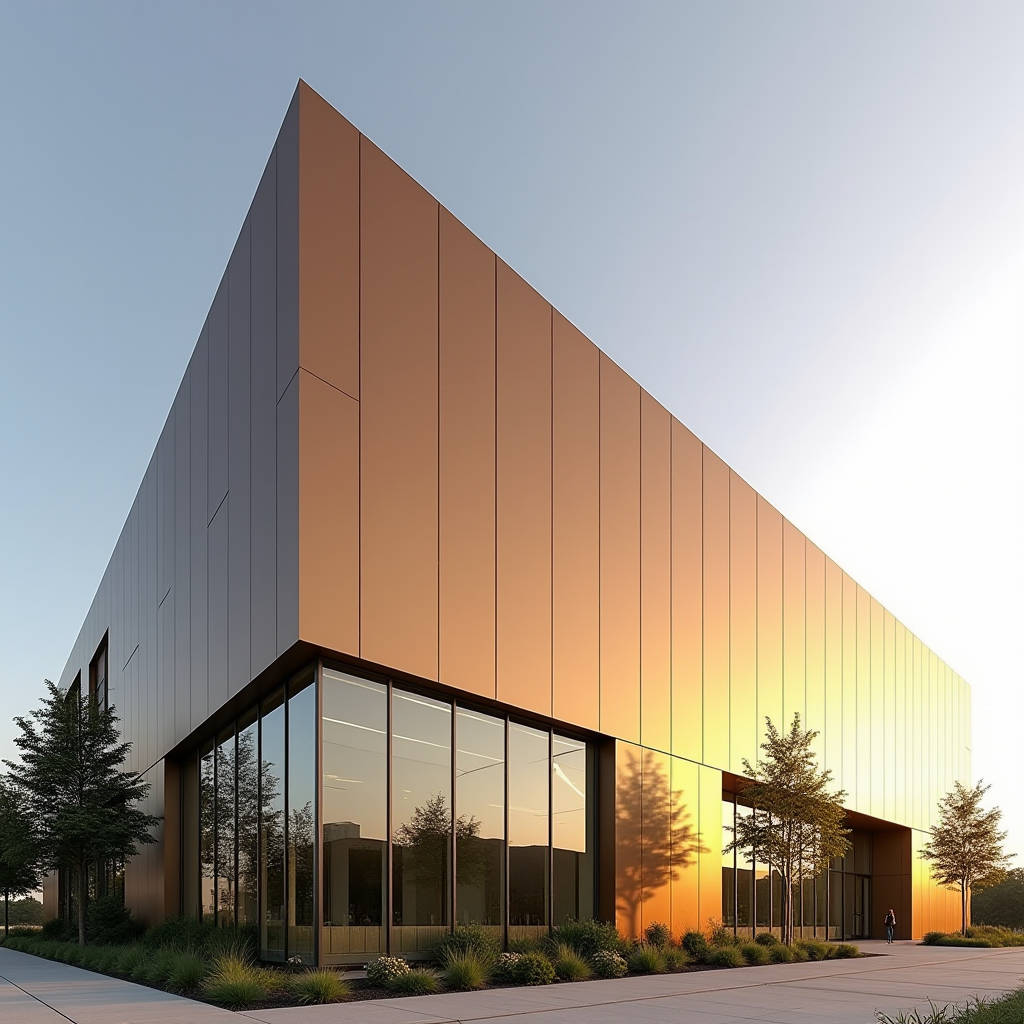
When a facade engineer specifies an exterior aluminum panels facade, the first decision is rarely about color. It is about the coating system, because that single specification determines whether the building envelope survives twenty years of UV exposure, salt spray, and thermal cycling without a single repaint. Solid aluminum panels between 2.0 and 3.0 mm thick carry the structural load, but the PVDF or powder finish carries the visual and protective contract with the owner. This article walks through the coating chemistry, film thickness tolerances, and specification language that separates a 25-year warranty from a maintenance liability, with practical data for procurement teams and contractors.
Why the Coating Spec Matters More Than the Alloy
Every solid aluminum cladding panel starts from the same 3000 or 5000 series alloy, so the metal itself rarely differentiates suppliers. The coating is where performance diverges. A PVDF resin system with 70 percent Kynar 500 or Hylar 5000 content holds its color and chalk resistance far longer than a polyester alternative, and the difference appears in the accelerated weathering data long before it shows on the building. For an exterior aluminum panels facade expected to last 40 to 50 years, the coating is the single most consequential line item in the specification.
The industry standard for PVDF film thickness is 25 microns nominal, with a dry film thickness range of 20 to 30 microns per the AAMA 2605 specification. That range is not a suggestion. Film below 20 microns risks pinholes and early chalking. Film above 30 microns can crack during bending and forming operations, which matters when panels are fabricated with returns and hemmed edges. Procurement teams should require a coating thickness report from the coil coater, not just a certificate of conformance.
Comparing PVDF, Powder, and Anodized Finishes
Three finish families dominate the market for solid aluminum cladding. PVDF is the workhorse for large commercial and institutional projects because it delivers the longest weatherability. Powder coating offers a thicker film, typically 60 to 80 microns, with excellent impact resistance, but its organic resin base degrades faster under intense UV. Anodized finishes are not coatings at all; they are an electrochemical conversion of the aluminum surface that produces a metallic, non-chalking finish with a film thickness measured in microns rather than tens of microns.
The table below summarizes the practical trade-offs for a specifier evaluating an exterior aluminum panels facade.
| Finish System | Typical Film Thickness | Chalk/Fade Resistance | Impact Resistance | Typical Warranty | Relative Cost Index |
|---|---|---|---|---|---|
| PVDF (70% Kynar 500) | 25 µm (20–30 µm) | Excellent (AAMA 2605) | Good | 20–25 years | 1.0 |
| Polyester | 25–35 µm | Fair (AAMA 2603) | Good | 5–10 years | 0.7 |
| Powder (polyester TGIC) | 60–80 µm | Moderate (AAMA 2604) | Excellent | 10–15 years | 0.9 |
| Anodized (Class I) | 18–25 µm | Excellent (no chalking) | Moderate | 15–20 years | 1.1 |
These numbers come from the AAMA 2605, 2604, and 2603 voluntary specifications, which remain the reference framework for architectural coatings in North America. The AAMA documents define the accelerated weathering cycles, salt spray exposure, and adhesion testing that a coating must survive to earn each classification.
Film Thickness and the Real Cost of Under-Specification
Coating thickness drives cost in a linear way, but the cost of failure is exponential. A panel coated at 18 microns instead of 25 microns saves roughly 4 to 6 percent on the coil cost. That saving disappears entirely when the building owner files a chalking claim at year seven. Repainting a facade in place costs between 40 and 80 USD per square meter including scaffolding, masking, and labor, which is several times the original coating cost on a per-panel basis.
For a 10,000 square meter exterior aluminum panels facade, the arithmetic is straightforward. A 5 percent coating saving on a panel cost of roughly 45 USD per square meter represents about 22,500 USD. A single repaint of that same facade at 60 USD per square meter costs 600,000 USD. The asymmetry explains why experienced procurement teams write film thickness into the purchase order as a measured, verified requirement rather than a marketing claim.
Verification Methods in the Fabrication Shop
Coating thickness should be verified at three points: at the coil coater, at the panel fabricator after forming, and at the site before installation. A magnetic or eddy-current gauge reads the dry film thickness in microns, and the measurement should be taken on flat areas and near bends. Bending stretches the outer surface and thins the film, so a reading at the bend radius is the honest test of the coating's flexibility and the fabricator's process control.
Futeng® maintains its own in-house coating verification line for solid aluminum panels, which lets a contractor audit film thickness on every production batch rather than trusting a single certificate. That level of traceability matters when a project carries a 25-year coating warranty and the owner expects the paperwork to match the physical product.
Surface Pretreatment: The Layer Nobody Sees
Before any finish is applied, the aluminum surface must be cleaned and chemically converted. Chromate conversion coatings, historically the industry default, are being phased out under environmental regulation in favor of chromium-free zirconium or titanium-based pretreatments. The pretreatment is the adhesion bridge between the metal and the organic coating, and its quality determines whether the finish delaminates in five years or holds for thirty.
The ISO 12944 series and the ISO 9001 quality framework both emphasize that surface preparation is the foundation of coating performance. A specifier should ask a supplier for the pretreatment chemistry, the bath concentration controls, and the salt spray test results from the specific production line, not just the generic product data sheet.
Wood Grain and Metallic Finishes: The Print Layer Question
Wood grain and brushed metallic finishes are increasingly popular on solid aluminum cladding, but they introduce an extra printed layer that sits between the primer and the clear topcoat. The print layer is applied by digital or gravure transfer, and its UV stability depends on the ink chemistry and the clear coat thickness above it. A wood grain finish on an exterior aluminum panels facade needs a clear topcoat of at least 15 to 20 microns to protect the print from fading, and the whole stack must still meet the AAMA 2605 weathering cycle.
Suppliers that offer wood grain at a steep discount are usually thinning the clear topcoat. The visual result looks identical at delivery and fades within a few years. Verifying the total film stack, including the clear coat, is the only reliable way to compare quotes.
Specification Language That Protects the Project
Weak specifications are the most common source of coating disputes. A specification that says "PVDF finish" without film thickness, resin content, or test method leaves room for a low-bid supplier to substitute a polyester coating with a PVDF-sounding name. The corrective language is specific and testable.
- Require 70 percent Kynar 500 or Hylar 5000 resin content, verified by the resin manufacturer's certificate.
- Specify a dry film thickness of 25 microns, measured per ASTM D7091 with a tolerance of 20 to 30 microns.
- Require the coating to meet AAMA 2605 for color retention, chalk resistance, and adhesion.
- Demand salt spray performance per ASTM B117 with a minimum of 4,000 hours for the specified coating class.
- Ask for the pretreatment chemistry and the production-line salt spray report, not a generic brochure.
These five clauses turn a marketing claim into a contractual obligation. The ASTM test methods referenced here are the same ones used by the AAMA specification, so the verification path is consistent across the supply chain.
Cost Drivers Beyond the Coating
Coating is not the only cost variable in a solid aluminum panel system. Panel thickness, fabrication complexity, and installation method all move the budget. A 3.0 mm panel carries roughly 50 percent more metal than a 2.0 mm panel, which raises material cost while improving flatness and wind-load resistance. The choice belongs to the structural engineer, not the procurement team, but the cost impact belongs to the owner.
Installation method is the second major driver. A rainscreen system with concealed clips and a ventilated cavity costs more than a direct-fix system, but it delivers better moisture management and thermal performance. The table below compares the typical installed cost ranges for three common configurations of an exterior aluminum panels facade.
| Installation Method | Panel Thickness | Typical Installed Cost (USD/m²) | Moisture Management | Thermal Performance |
|---|---|---|---|---|
| Direct-fix (screw fixed) | 2.0 mm | 90–130 | Poor to moderate | Low |
| Rainscreen with concealed clips | 2.5 mm | 140–190 | Excellent | Moderate |
| Rainscreen with insulated subframe | 3.0 mm | 180–240 | Excellent | High |
These ranges reflect typical commercial project pricing in 2024 and 2025, and they vary with region, labor rates, and panel complexity. The rainscreen premium is usually justified on high-rise or coastal projects where moisture and thermal performance are non-negotiable.
Coastal and High-UV Environments
Coastal sites and high-altitude locations impose the harshest duty on a facade coating. Salt-laden air accelerates corrosion at cut edges and fastener locations, while intense UV breaks down organic resin binders faster than in temperate inland climates. For these projects, the coating specification should be the most conservative version of the AAMA 2605 requirement, and the edge treatment deserves specific attention.
Cut edges on solid aluminum panels expose bare metal unless they are sealed or the panel is fabricated with a returned hem. A specifier should require edge sealing on coastal projects, and the sealant must be compatible with both the aluminum and the coating chemistry. The AAMA 2605 document itself notes that edge and cut areas are the most vulnerable points in a coated panel system.
Practical Guidance for Procurement and Contractors
The coating decision on an exterior aluminum panels facade is a long-term financial commitment disguised as a short-term line item. The practical guidance for a procurement team is to verify three things before awarding a panel supply contract: the coating specification in writing, the production-line test reports, and the film thickness verification protocol. A supplier that cannot document all three is pricing a risk that the owner will pay for later.
For contractors, the installation phase is where coating damage happens. Panel handling, lifting, and fastening all create opportunities for scratches and dents that void the coating warranty. A clear protocol for touch-up painting with the correct coating chemistry, not a generic spray paint, should be part of the site quality plan. Futeng® supplies a matched touch-up kit with every solid aluminum panel order, which closes the gap between factory coating and site repair.
The final recommendation is to treat the coating as a system, not a surface. Resin content, film thickness, pretreatment, and edge treatment are interdependent, and weakening any one of them undermines the whole. A specification built around AAMA 2605, verified with ASTM test methods, and enforced with production-line documentation gives the building owner the 40-year performance that solid aluminum cladding is capable of delivering.