Carved Aluminum Panel Procurement Guide for Façade Contractors and Specifiers
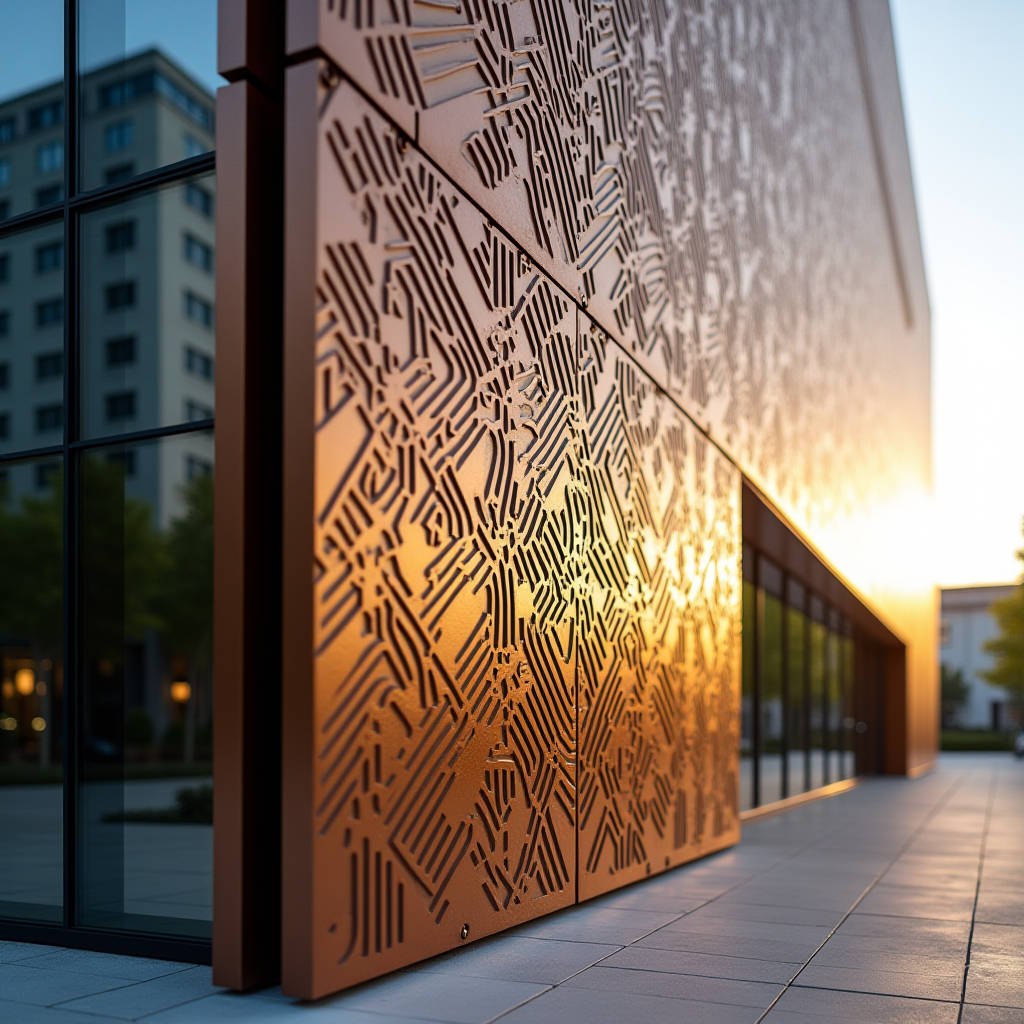
When a façade specification calls for carved aluminum panel systems, procurement managers and cladding contractors face a distinct set of technical and commercial challenges that go far beyond standard flat sheet ordering. These panels carry deeply routed geometries, perforated patterns, or bas-relief motifs machined into solid aluminium sheet—typically 2.5mm or 3.0mm gauge material—and the entire supply chain from CNC programming to export crating demands precision that generic metal fabricators rarely deliver. A carved panel order can easily run 800 to 3,000 square meters on a single tower podium or cultural façade, and getting the material flow wrong means site delays, cost overruns, and installation teams standing idle. The core question is not whether carved aluminum panels look impressive—they do—but whether the factory you select can hold ±0.5mm edge tolerance across hundreds of uniquely routed panels while meeting your project's PVDF coating warranty and shipping deadline.
What a Carved Aluminum Panel Actually Is in Engineering Terms
In procurement documentation and shop drawings, a carved aluminum panel is a solid aluminium cladding panel—typically 5052 or 3003 alloy—that has been machined using CNC routing or waterjet cutting to create recessed channels, geometric voids, or textured surface relief. The carving process removes material from the face of the sheet, leaving behind a three-dimensional pattern that reads differently under changing light conditions. This is not embossing, not perforation alone, and certainly not an ACP routed face. The base material is monolithic aluminum, usually 2.5mm or 3.0mm thick, and the carving depth is engineered to preserve structural integrity. Most projects specify a minimum remaining thickness of 0.8mm to 1.0mm at the deepest carved trough to prevent buckling under wind load.
The distinction matters because carved panels carry different structural behavior than flat solid sheets. When you route 30% to 50% of the surface area away, the panel's effective stiffness drops. Competent fabricators run finite element analysis on the carved geometry before production, particularly for large-format panels exceeding 1,200mm in any dimension. The ASTM E330 wind load test data for carved panels will differ from the same alloy in flat configuration—something that specifiers sometimes overlook until the third-party review flags it.
Alloy Selection and Gauge Decisions
Most carved aluminum panel work uses 5052-H32 alloy. The magnesium content gives it better workability than 3003 during the routing process, and the post-carve flatness is easier to maintain. For interior applications where fire rating drives material choice, some projects shift to 3003-H14, but the trade-off is slightly higher tool wear on the CNC heads and marginally more burr cleanup. 6061-T6 occasionally appears in carved panel specifications for high-traffic areas where impact resistance governs, but the material cost premium—typically 18% to 25% over 5052—makes it a hard sell for large-area façades.
Gauge selection deserves attention. A 2.0mm sheet can work for small-format carved panels under 600mm × 600mm with shallow relief, but most commercial façade work starts at 2.5mm. For panels spanning 1,200mm or more with deep carving, 3.0mm is the practical minimum. The cost delta between 2.5mm and 3.0mm material is roughly 12% to 15% on raw sheet, but the downstream savings in reduced stiffener framing and lower rejection rates often justify the heavier gauge.
Field Note: On a recent museum façade project in Southeast Asia, the contractor ordered 2.5mm carved panels for 1,500mm × 900mm modules. After CNC routing removed up to 1.7mm of material in the pattern troughs, the remaining 0.8mm web exhibited visible oil-canning under morning sun. The fix involved bonding aluminum stiffener ribs to the rear face of every panel—adding roughly $22 per square meter in labor and material. The lesson: specify your minimum residual thickness and test it on a full-size prototype before releasing the production batch.
CNC Machining Tolerances and Production Bottlenecks
The carved panel production workflow is fundamentally different from standard cladding fabrication. A typical flat solid aluminium cladding panel moves through shear, punch, bend, weld, grind, and coat. A carved panel inserts a CNC routing step between shear and bend—and that single step often becomes the capacity choke point. A 3-axis CNC router running a complex carved pattern on a 1,200mm × 2,400mm sheet can take 18 to 35 minutes per panel depending on pattern density, tool diameter, and feed rate. A factory with four CNC tables running single shifts produces roughly 40 to 70 carved panels per day. For a project requiring 1,200 panels, that means three to four weeks of dedicated machine time.
Edge tolerance on carved features is typically specified at ±0.5mm, but the practical reality varies with tool condition. A fresh carbide end mill cuts clean and holds tolerance easily. After 40 to 60 panels, tool wear opens the kerf and the carved edges develop a slight radius that can push dimensional variance toward ±0.8mm. Quality-focused fabricators track tool life by panel count and replace bits on a schedule rather than waiting for visible degradation. This adds roughly $0.80 to $1.50 per panel in tooling consumables—a cost that should be visible in the factory's quotation breakdown.
Waterjet vs. Router: When the Choice Matters
For carved patterns that include sharp internal corners or intricate filigree work, waterjet cutting offers advantages over conventional routing. The waterjet produces no heat-affected zone, so the aluminum's temper around the carved edges remains unchanged. This matters for 5052-H32 where localized heating from a dull router bit can partially anneal the material, creating soft spots that may telegraph through the PVDF finish as subtle surface distortion. Waterjet also handles stacked sheets—some shops cut two or three panels simultaneously—which can offset the slower per-sheet cutting speed. The trade-off is higher equipment cost and more complex wastewater management, which not every factory is set up to handle.
| Production Parameter | CNC Router (3-Axis) | Waterjet Cutting | Laser Cutting (CO₂) |
|---|---|---|---|
| Typical feed rate on 2.5mm 5052 | 1,500–3,000 mm/min | 800–1,500 mm/min | 4,000–8,000 mm/min |
| Heat-affected zone | Moderate (tool-dependent) | None | Significant (requires post-cleanup) |
| Minimum internal corner radius | Tool diameter (typically 3mm) | 0.8mm practical | 0.3mm practical |
| Edge quality post-carve | Good; light burr | Excellent; no burr | Oxidized edge; requires grinding |
| Stack cutting capability | Single sheet only | 2–3 sheets possible | Single sheet only |
| Tooling cost per panel (approx.) | $0.80–$1.50 | $1.20–$2.50 (abrasive + nozzle) | $0.40–$0.90 |
| Best application | Broad carved relief, medium detail | Fine filigree, sharp corners | Thin-gauge interior decorative |
Surface Finish and PVDF Coating on Carved Geometry
Coating a carved aluminum panel is more demanding than coating a flat sheet. The routed channels, undercuts, and recessed pockets create shadow areas where electrostatic spray guns struggle to achieve uniform film build. A standard PVDF line running 35–45μm on flat surfaces may deliver only 20–25μm inside deep carved recesses—below the 25μm minimum that AAMA 2605 requires for architectural warranty. The solution is either manual touch-up spraying post-automation or a two-pass coating strategy that adds roughly 15% to finishing cost.
Color consistency across carved and flat panels on the same façade is another variable. The carved surface scatters light differently than a flat panel, and even with identical PVDF formulations, the human eye perceives the carved areas as slightly darker or lighter depending on viewing angle and sun position. This is not a coating defect—it is an optical effect of the geometry. Smart specifiers request a mock-up assembly that places a carved panel adjacent to a flat panel from the same batch, viewed under natural light at the project's latitude, before signing off on color approval. The Delta E tolerance (typically ≤1.5 on flat panels per ASTM D2244) should be measured on a flat reference coupon from the same coating run, not on the carved surface itself.
Pro Tip: When reviewing PVDF warranty documents for carved panel projects, confirm that the coating applicator's warranty explicitly covers the carved geometry. Some applicators include fine print excluding coverage for "recessed or textured surfaces where film thickness cannot be verified by standard eddy-current measurement." If the warranty language is ambiguous, request a written clarification before the first production batch enters the coating line.
Structural Engineering and Wind Load Performance
A carved aluminum panel behaves differently under wind load than a flat solid aluminium cladding panel of the same gauge. The carved pattern creates stress concentration points at the base of each routed groove, and the panel's overall stiffness is a function of the remaining web thickness rather than the original sheet gauge. For projects in hurricane-prone regions or high-rise exposures where design wind pressure exceeds 2.5 kPa, a structural calculation package should include finite element modeling of the specific carved geometry—not just a generic flat panel analysis with a safety factor applied.
The attachment system also requires rethinking. Standard aluminum extrusion clips and perimeter framing work for most carved panels, but the clip spacing may need to tighten from 600mm centers to 400mm or even 300mm centers depending on the carving pattern's impact on panel rigidity. Some fabricators weld aluminum stiffener ribs to the panel rear face before coating; others use structural adhesive bonding to avoid weld distortion. Both approaches are valid, but adhesive bonding requires surface preparation and curing time that adds a day to the production cycle per batch.
Thermal Movement and Joint Design
Carved panels expand and contract at the same coefficient as any aluminum sheet—roughly 2.4mm per meter per 100°C temperature swing—but the carved geometry can concentrate thermal stress at the thinnest remaining sections. Joint design should accommodate the full calculated movement range without relying on the panel itself to absorb differential displacement. Open-joint rain screen systems work well with carved panels because the joints are naturally wider (typically 15mm to 20mm), and the carved surface pattern helps mask the visual impact of the gap. For sealed-joint systems, the sealant must be selected for adhesion to PVDF-coated aluminum in carved recesses, which can be trickier than bonding to a flat surface. Silicone sealants with primer generally perform better than polyurethane on carved PVDF surfaces.
Packaging, Logistics, and Site Handling
Shipping carved aluminum panels internationally—whether FOB Shanghai, CIF Jebel Ali, or DDP to a European jobsite—requires packaging that flat panels simply do not need. The carved face is vulnerable to abrasion where routed edges can catch on adjacent panels during transit vibration. Standard interleaving with polyethylene foam sheets (3mm to 5mm thickness) works for flat panels but is insufficient for carved surfaces. The industry practice for carved panel export packing involves custom-cut EPS foam inserts that fill the carved recesses, preventing panel-to-panel contact at the most vulnerable points. This adds $3 to $6 per square meter in packing cost and increases crate volume by roughly 15% to 20%.
Site handling is another dimension. Carved panels cannot be stacked flat on a standard pallet without risking deformation of the routed features. Vertical A-frame storage racks are the norm, and installation crews need to be briefed on handling procedures—a carved panel dropped on its corner will deform differently than a flat sheet and is often unrepairable on site. Spare panel allowance should be calculated at 3% to 5% of total quantity, higher than the 1% to 2% typical for flat cladding, to account for the increased risk of handling damage and the impossibility of field-modifying a carved panel to fit an unexpected dimension.
Factories with established export workflows for carved architectural products—including those operating under the Futeng® brand's quality management system—typically provide a packing protocol document as part of the pre-production submittal. This document should specify foam density, crate construction standard (ISPM 15 for timber), maximum panels per crate, and lifting point markings. If your supplier cannot produce this document before the first shipment, treat it as a red flag.
Cost Structure and Procurement Strategy
Carved aluminum panel pricing breaks down into several cost drivers that procurement managers should isolate in their bid comparisons. Raw aluminum sheet cost is the baseline—typically 40% to 50% of the total panel cost for standard flat panels but dropping to 30% to 35% for carved panels because the machining and finishing labor dominates. CNC programming is a one-time cost that should be amortized across the project quantity; expect $800 to $2,500 for pattern digitization and toolpath generation depending on complexity. Per-panel machining cost scales with carve time, which is a function of pattern density, panel size, and material gauge.
For budget estimation, a moderately carved 2.5mm 5052 panel with PVDF coating typically lands in the range of $85 to $145 per square meter FOB, compared to $45 to $65 for a flat PVDF panel of the same gauge. Deep carving with high pattern density can push the upper end toward $180 per square meter. These are indicative ranges based on order quantities of 800 square meters and above; smaller orders carry setup cost premiums that can add 20% to 30%.
Lead Time Realities
A realistic production lead time for a carved panel order of 1,000 to 2,000 square meters is 6 to 8 weeks from approved shop drawings and color sign-off. The critical path runs through CNC capacity, not coating or packing. If the factory is running multiple carved panel projects simultaneously, lead time can stretch to 10 weeks. Procurement schedules should build in two weeks for sample panel production and courier delivery to the project site for physical approval before the main production batch starts. Rushing this step almost always leads to disputes later.
Specification Compliance and Testing
Carved aluminum panels for exterior façades must comply with the same core standards as any solid aluminium cladding panel system. The key references include ASTM B209 for aluminum sheet, AAMA 2605 for high-performance PVDF coatings, and ASTM E330 for wind load performance of the assembled system. For projects in the Middle East, the specification may also reference BS EN 13501 for fire classification or local civil defense requirements that dictate minimum aluminum thickness and coating properties.
Testing requirements should be clearly defined in the bid documents. At minimum, request coating thickness test reports (eddy-current method on flat reference areas), adhesion test results (cross-hatch per ASTM D3359), and impact resistance data (ASTM D2794). For carved panels specifically, a full-size mock-up tested to the project's design wind pressure provides the most reliable validation of the system's structural performance. The cost of this test—typically $3,000 to $6,000 depending on the test lab and panel size—should be allocated in the procurement budget and scheduled early enough that results can inform production if adjustments are needed.
Some specifiers reference ISO 12944 for corrosion protection of steel support structures behind aluminum cladding, which is relevant for carved panel systems where the rear support frame may be exposed to moisture ingress through the carved openings. The aluminum itself does not rust, but the galvanized steel or aluminum subframe behind it can corrode if drainage and ventilation are inadequate.
Supplier Evaluation Beyond the Price Quote
Selecting a carved aluminum panel supplier requires evaluating factors that do not appear on a standard bid form. Visit the factory or commission a third-party audit. Look at the CNC equipment: the number of tables, the age of the machines, and whether the factory owns them or subcontracts the routing work. A factory running three or more CNC tables with dedicated carved panel workflow is a different proposition from a shop with one multi-purpose router shared across furniture and signage jobs.
Ask for references from completed carved panel projects of similar scale and complexity. Request photographs of the panels in fabrication, not just the finished building—shop-floor images reveal more about quality control than architectural photography. Check whether the factory has experience with the specific PVDF system specified for your project, whether it is PPG Duranar, AkzoNobel Trinar, or a qualified equivalent. Coating applicator certification from the paint manufacturer is a minimum requirement; verify it directly with the paint supplier rather than relying on the fabricator's claim.
For international procurement, the supplier's export documentation capability matters as much as their CNC capability. Bills of lading, certificates of origin, packing lists with crate-level detail, and mill test certificates for each batch of aluminum sheet should be standard deliverables. A supplier that struggles to produce these documents on time will create customs clearance problems that delay the entire project.
Industry data from Statista indicates that global aluminum demand in construction continues to grow at roughly 4% annually, driven in part by the increasing architectural specification of custom-fabricated solid aluminum products. The American Architectural Manufacturers Association (AAMA) provides updated technical standards that are referenced in most North American cladding specifications. For projects in Asia-Pacific markets, the Aluminum Association publishes alloy and temper reference data that procurement teams can use to verify material certifications.
Common Pitfalls in Carved Panel Procurement
Several recurring problems surface in carved panel projects, and most are preventable during the procurement and submittal phase. The first is underestimating the sample approval timeline. A carved panel sample is not a color chip—it is a fully fabricated, coated, and crated panel that represents the production standard. Producing and shipping three to five sample panels to an overseas project site typically takes three to four weeks. Build this into the master schedule.
The second pitfall is ordering carved panels without confirming the installation team's experience. Carved panels require different handling, alignment, and fixing techniques than flat cladding. If the installation contractor has never worked with carved panels, factor in a learning curve that will affect the first week of installation productivity. Some suppliers offer on-site supervision during the initial installation phase; this is worth negotiating into the supply contract.
The third pitfall involves pattern registration across panel joints. When a carved pattern is designed to flow continuously across multiple panels, the joint alignment tolerance becomes critical. A ±1.5mm panel-to-panel misalignment that is invisible on a flat joint becomes glaringly obvious when carved lines are supposed to match. The shop drawing review should include a detailed joint alignment study, and the fabrication tolerance should be tightened to ±0.5mm on panels that participate in continuous pattern runs.
Carved aluminum panel procurement rewards technical diligence. The factories that produce excellent carved work are not necessarily the lowest bidders, but they are the ones that can demonstrate CNC capacity, coating process control, and export packing competence through verifiable project histories rather than brochure claims. When the specification package is tight, the sample approval is thorough, and the production schedule accounts for the real-world pace of CNC routing, carved panel projects deliver the architectural impact that justified the investment in the first place.