Perforated Aluminum Sheet Price Factors for Facade Procurement Teams
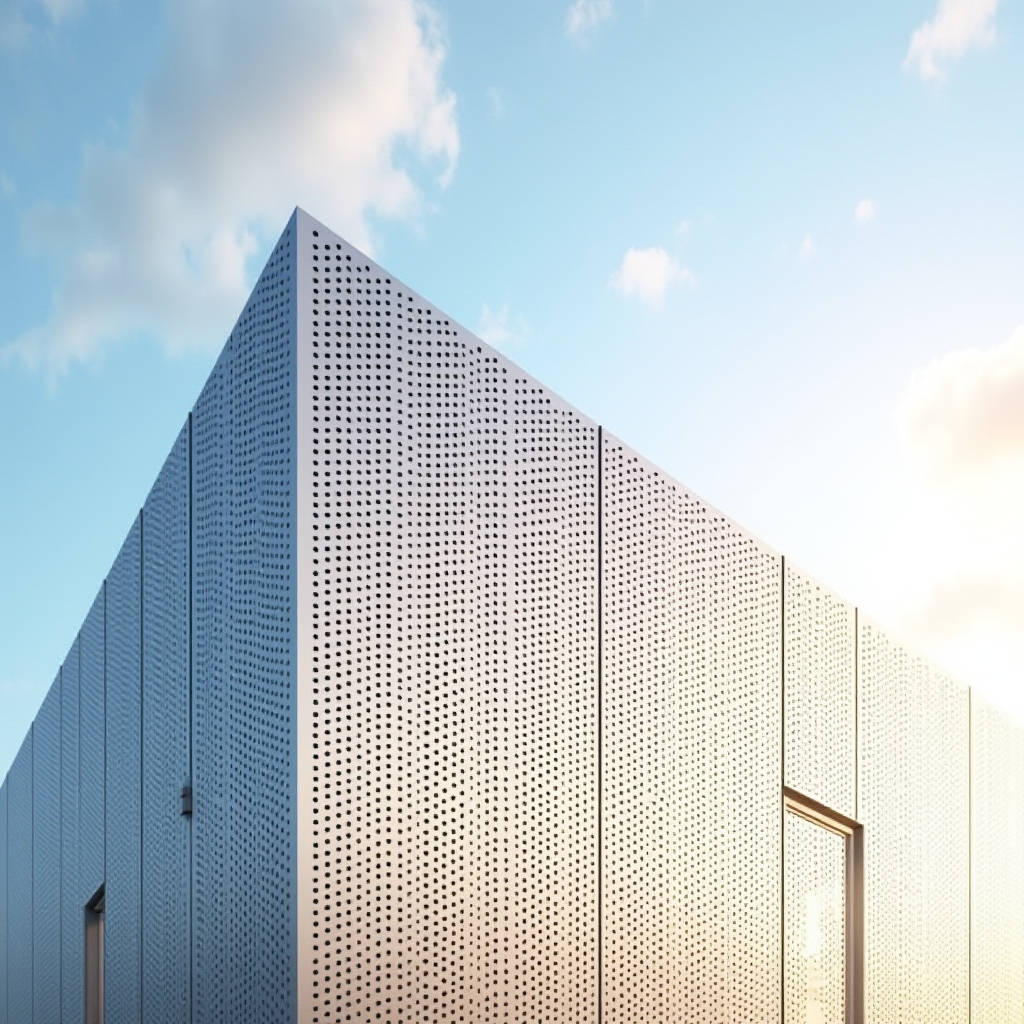
For procurement teams and facade contractors, the perforated aluminum sheet price is rarely a single number. It is a compound of raw material cost, hole geometry, open area percentage, coating specification, and the fabrication tolerances your project actually demands. Most buyers compare catalog prices and miss the variables that inflate a quote by 30 to 40 percent. This article walks through the engineering factors that drive pricing, how to read a quote correctly, and where to set realistic budget expectations for curtain wall, sunshade, and architectural screen applications using solid aluminum panels.
What Really Drives the Perforated Aluminum Sheet Price
Base alloy cost is only the starting point. A solid 3003-H14 aluminum sheet in 2.0 mm thickness carries a commodity value that fluctuates with LME aluminum prices, but the perforated aluminum sheet price you receive is built on five distinct cost layers. Each layer responds to different production realities, and understanding them lets you negotiate from a position of technical knowledge rather than guesswork.
1. Hole Pattern and Open Area
Open area percentage is the single largest multiplier in fabrication cost. A pattern with 23 percent open area removes nearly a quarter of the sheet's material, which lowers the base weight you pay for. However, the punching process itself, die wear, and the increased handling time push the conversion cost upward. The relationship is not linear. As open area climbs past 40 percent, the sheet loses structural rigidity and requires thicker starting stock or stiffening ribs to hold flatness, which pushes the perforated aluminum sheet price back up.
- Round hole, 60-degree stagger: most economical, standard dies available
- Square or slotted patterns: higher die cost, slower cycle times
- Custom decorative patterns: tooling amortization adds a fixed charge per project
- Micro-perforation below 1.5 mm diameter: requires precision tooling and raises scrap rates
2. Sheet Thickness and Flatness Control
Architectural facades demand flatness that industrial perforated stock does not guarantee. After punching, residual stress distorts the sheet. A 2.0 mm panel that leaves the press flat can develop a bow of several millimeters, which is unacceptable on a curtain wall line. Suppliers that run a flattening or leveling pass, and that hold tolerance to ASTM B209 flatness limits, carry a higher cost structure. That cost is visible in the perforated aluminum sheet price, but it is the difference between a clean installation and a rework claim.
3. Coating System
Uncoated perforated stock is the cheapest option, but it has no place on an exterior facade. The coating specification dominates the finished price. A two-coat PVDF system at 25 microns total film thickness is the industry baseline for exterior aluminum, while a three-coat system with a primer, color coat, and clear coat reaches 35 to 40 microns and commands a premium. The coating cost scales with surface area, and perforation increases the effective surface area by the open area ratio, so a 30 percent open panel carries roughly 30 percent more coating than a solid panel of the same footprint.
4. Fabrication and Edge Treatment
Cut-to-size blanks, routered edges, and formed returns all add labor. Panels destined for a rainscreen system typically need a hemmed or folded edge, which is a separate operation from perforation. Every additional fabrication step extends the production queue and raises the quoted perforated aluminum sheet price. Panels that arrive as flat blanks with raw cut edges are cheaper but shift the finishing burden to your site crew.
5. Volume and Lead Time
Perforation tooling is amortized across the order. A 50-panel run carries full tooling cost per panel, while a 2,000-panel run spreads that charge thin. Lead time also matters. Rush orders force a supplier to preempt other production lines, and that premium is real. Planning your facade package early and locking the hole pattern before release is the cheapest negotiation you will ever make.
How to Read a Perforated Aluminum Sheet Price Quote
A quote that lists only a per-square-meter figure hides the variables that decide your final landed cost. Compare these line items before you accept any number:
| Quote Line Item | What It Should Include | Common Hidden Charge |
|---|---|---|
| Base alloy | 3003-H14 or 5052 temper, documented mill cert | Swapping to cheaper 1100 alloy without notice |
| Perforation | Hole diameter, pitch, stagger, open area % | Wider pitch than specified to speed up the press |
| Coating | PVDF film thickness, color match to AAMA 2605 | Two-coat applied where three-coat was quoted |
| Flatness | Leveling pass, tolerance to ASTM B209 | No leveling, panels bow on arrival |
| Fabrication | Edge hemming, routing, cut tolerances | Raw cut edges left for site to finish |
| Packaging | Interleaving, edge protection, crate design | Bare stacking that scratches coated faces |
Ask the supplier to separate these line items in writing. A transparent breakdown lets your engineering team verify that the perforated aluminum sheet price matches the specification, not just the square meterage.
Coating and Weathering: The Cost That Pays Back
Exterior perforated panels sit in direct sun, wind-driven rain, and salt-laden air near coastal sites. The coating is your only defense. AAMA 2605 is the highest performance specification for architectural aluminum coatings, covering PVDF finishes with a 10-year warranty against chalking and fading beyond defined limits. AAMA 2604 covers a lower performance tier, and AAMA 2603 applies to interior or less demanding exterior use. The gap between these specs is a measurable difference in the perforated aluminum sheet price, and it is also the difference between a facade that looks new for a decade and one that needs a premature refinish.
For a coastal facade, specify AAMA 2605 three-coat PVDF. The added film thickness and primer system justify the higher perforated aluminum sheet price by extending the maintenance-free service life well past the payback point.
ASTM B209 governs the tolerances for aluminum sheet and plate, and it is the reference your supplier should cite for thickness and flatness compliance. When you verify the mill certificate against the alloy and temper, you close the door on substitution that silently erodes panel performance.
Structural and Wind Load Considerations
Perforation removes material, so the effective section modulus of a panel drops as open area rises. Wind load calculations must use the net section, not the gross sheet thickness. The ASCE 7 load provisions and the Aluminum Design Manual published by the Aluminum Association provide the framework for checking deflection and stress on perforated panels. A panel that is structurally sound as solid stock can exceed deflection limits once 30 percent of its area is removed. Your engineer should model the perforated panel as a reduced-thickness equivalent, or run a finite element check, before you lock the pattern.
This is where a supplier with real facade experience earns its keep. A vendor that only sells commodity perforated stock will not flag a pattern that risks flutter or fatigue at your building height. A facade-focused fabricator such as Futeng® will review the open area against your wind load report and recommend a thicker starting gauge or a revised stagger before you commit tooling. That upstream review is worth more than any per-panel discount.
Budget Benchmarks for 2025 Procurement
As a planning reference, a 2.0 mm 3003-H14 solid aluminum panel with a 23 percent round-hole pattern, three-coat AAMA 2605 PVDF, leveling pass, and hemmed edges typically lands in a range that reflects roughly a 15 to 25 percent premium over an equivalent solid panel of the same gauge and coating. That premium is the price of the perforation operation, the added coating surface, and the flatness control. A 3.0 mm panel with a heavier pattern and tighter tolerances moves the premium higher. These figures are directional, not a quote, and they shift with LME aluminum and regional labor rates.
For a realistic budget, request the quote in three tiers: uncoated stock, two-coat AAMA 2604, and three-coat AAMA 2605. The spread between the tiers tells you what you are paying for durability, and it makes the trade-off explicit for your client.
Practical Sourcing Advice
Order perforated panels as a complete facade package rather than buying stock and subcontracting perforation separately. A single responsible party for alloy, pattern, coating, and flatness eliminates the finger-pointing that slows down facade projects. Confirm the open area percentage in writing, because it affects both the price and the structural check. Verify the coating spec against AAMA 2605 documentation, and request a sample panel that matches your exact pattern and finish before you authorize full production.
Lead time planning is the cheapest lever available. Tooling and coating queues are the long poles in the schedule. Lock the pattern and color early, and you remove the rush premium from your perforated aluminum sheet price entirely. A facade package that is specified, verified, and scheduled in advance consistently lands within budget, while a last-minute order always carries a premium that no negotiation fully removes.
Closing Recommendation
The perforated aluminum sheet price is a function of decisions you control, not a fixed market number. Specify the open area, gauge, coating tier, and flatness tolerance before you solicit quotes, and compare suppliers on the completeness of their breakdown rather than the headline figure. Verify alloy and temper against the mill cert, confirm the coating against AAMA 2605, and model the perforated panel against your wind load report. A facade supplier with engineering review capability, such as Futeng®, adds value at the specification stage that pays back many times over the life of the building. Plan the package early, and the price you pay will reflect the performance you actually receive.