Perforated Aluminium Sheet Price for Facades What Actually Drives the Cost
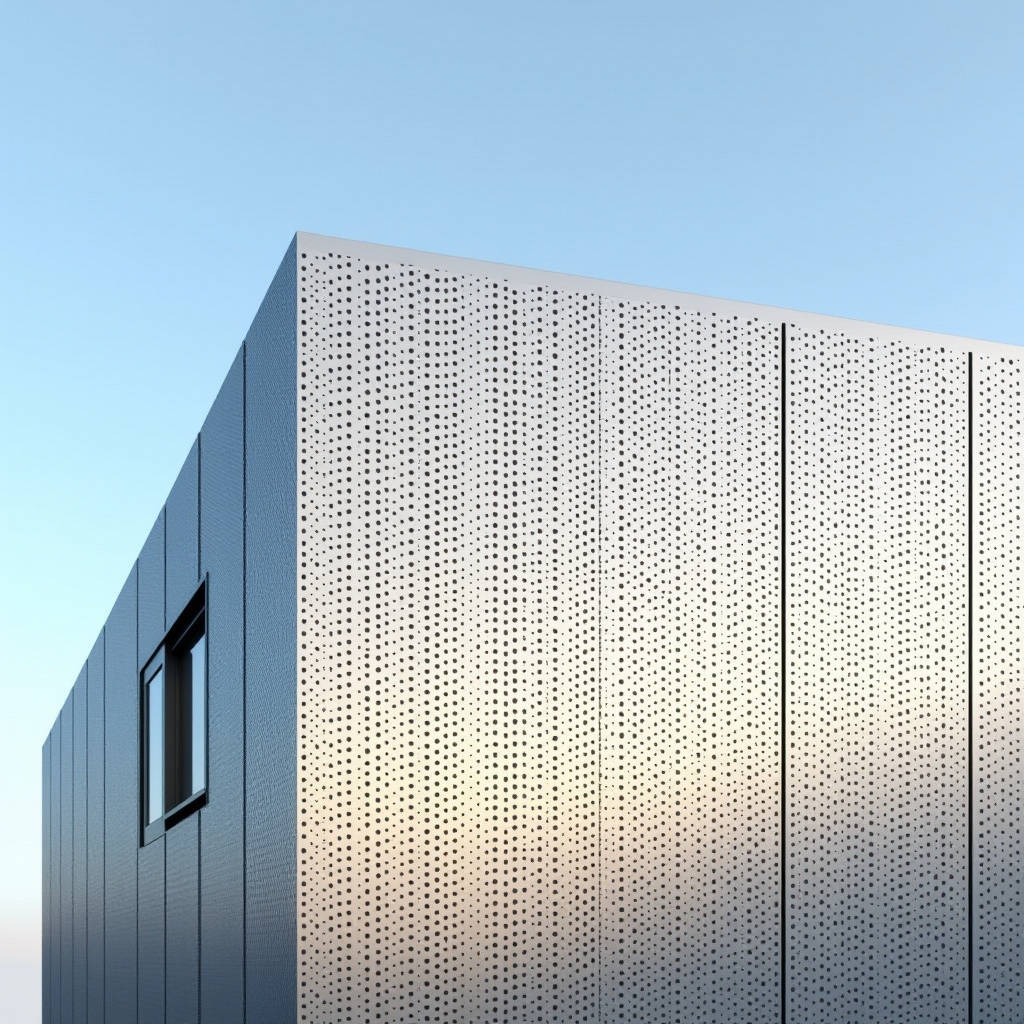
Perforated aluminium sheet price is rarely a single number on a quotation. For a facade contractor, the figure that lands on a purchase order reflects a chain of engineering decisions: hole pattern, open area, sheet thickness, coating specification, and the fabrication tolerance that governs how the panel behaves under wind load. The search results above confirm that most suppliers treat perforated aluminium as a stocked commodity, quoting per square metre for standard 1.0 mm to 1.5 mm sheets. That pricing model breaks down when a project needs a 3.0 mm structural panel with a custom 60-degree stagger pattern and a PVDF finish tested to AAMA 2605. This article walks through the variables that actually move the perforated aluminium sheet price, provides a framework for comparing quotes, and gives a realistic cost model for a ventilated rainscreen facade.
Why the commodity quote misleads facade budgets
Retail metal suppliers such as Online Metals, McMaster-Carr, and MetalsDepot price perforated aluminium by the sheet, with a surcharge for custom cutting. Their catalogues list round-hole patterns in 0.045-inch to 0.125-inch material, and they publish prices that look attractively low. Those numbers are useful for a prototype or a small screen, but they are not transferable to a curtain wall or a rainscreen assembly. A stock perforated sheet is sold flat, with a mill finish or a single-side polyester coat, and it is not certified for structural use. Once you add a specified alloy, a minimum thickness, a two-coat or three-coat PVDF system, and a fabrication tolerance that keeps the hole pattern within 0.5 mm across a 1500 mm panel, the perforated aluminium sheet price rises by a factor that no retail list can predict.
The first mistake contractors make is comparing retail prices against engineered panel quotes. The second is assuming that open area is the only driver. Open area matters, but it interacts with hole size, sheet thickness, and the punch tooling that a fabricator already owns. A pattern that requires a new die set adds a one-off tooling charge spread across the order. A pattern with a very high open area (above 45 percent) forces the fabricator to use a thicker sheet to keep the panel stiff, which pushes the perforated aluminium sheet price up through material cost rather than through the punching step itself.
The five variables that dominate the price
Break down any engineered quote and the same five inputs appear. Understanding them lets you audit a supplier's arithmetic instead of accepting a headline number.
1. Sheet thickness and alloy
Facade panels are normally specified at 2.0 mm, 2.5 mm, or 3.0 mm in 5000-series alloys such as 5052 or 5083, selected for corrosion resistance and weldability. Most retail stock is 1.0 mm to 1.5 mm in 1100 or 3003. The alloy change alone can move the perforated aluminium sheet price by 15 to 25 percent, and doubling the thickness roughly doubles the material weight. For a 3.0 mm panel, the metal content is the single largest line item on the quote.
2. Hole pattern, size, and open area
Round holes are cheapest because the tooling is standard and the punching speed is high. Square, slotted, or decorative shapes increase tooling cost and reduce throughput. Open area is the ratio of hole area to panel area; most rainscreen designs run between 20 and 40 percent. Above 40 percent, the sheet loses stiffness and the fabricator must step up the gauge, which raises the perforated aluminium sheet price more than the extra punching does.
3. Coating specification
This is where quotes diverge most. A polyester (PE) coat is the budget option and suits internal screens. A two-coat PVDF system meets AAMA 2605 for exterior weathering and holds colour for decades. A three-coat PVDF with a primer, a colour coat, and a clear topcoat adds cost but improves chalk and fade resistance on dark colours. The coating line also charges per panel face, so a double-sided coat roughly doubles the finishing cost. The coating specification can account for 30 to 40 percent of the final perforated aluminium sheet price on a fully finished panel.
4. Fabrication and tolerances
Cutting to net size, punching the pattern, deburring every hole edge, and adding returns or stiffening breaks all add labour. A rainscreen panel with a 20 mm return on all four edges and a hidden fixing system costs more than a flat blank. Tolerances matter for pattern registration: if the holes must align across adjacent panels, the fabricator holds a tighter punch registration, which slows the line and raises the perforated aluminium sheet price.
5. Order volume and tooling amortisation
Punch tooling is a fixed cost. A 50-sheet order spreads the die cost thinly; a 500-sheet order nearly eliminates it. Volume also lets the fabricator negotiate better coil pricing and run the coating line in one batch. This is why a project-specific quote for a large order can come in below the retail list price per square metre, despite the higher specification.
Cost model for a ventilated rainscreen facade
To make the discussion concrete, the table below models a typical 3.0 mm 5052 perforated panel with a 30 percent open area and a three-coat PVDF finish, supplied flat and cut to net size. Figures are indicative for budgeting in USD per square metre and will vary with region, coil price, and exchange rates.
| Cost component | Share of panel price | Notes |
|---|---|---|
| 3.0 mm 5052 coil, net weight | 38–45% | Dominant line item; moves with LME aluminium |
| Punching and deburring | 12–18% | Rises with open area and non-round holes |
| Three-coat PVDF (AAMA 2605) | 30–38% | Single-sided; double-sided adds roughly 10 points |
| Cutting, returns, stiffening | 8–12% | Depends on edge profile and fixing system |
| Tooling amortisation | 1–5% | Falls sharply with order volume |
Read the table as a diagnostic tool. If a quote shows a coating share far below 30 percent, question whether the finish actually meets AAMA 2605. If the material share looks low, check whether the supplier has substituted a thinner alloy. The perforated aluminium sheet price is only meaningful when every component is itemised.
Open area versus structural performance
Architects often push for high open area to maximise daylight and ventilation, but the structural consequences are real. A perforated panel with 40 percent open area loses roughly 40 percent of its bending stiffness compared with a solid panel of the same gauge. The wind load on a rainscreen is carried by the panel and transferred to the subframe through the fixings, so a high-open-area design either demands a thicker sheet or a tighter fixing grid. Both raise the perforated aluminium sheet price. The Eurocode EN 1991-1-4 and the American ASCE 7 wind load provisions both require the designer to account for the net pressure coefficient on a perforated facade, which is different from a solid facade because air passes through the holes and modifies the pressure distribution.
For a typical high-rise in a 40 m/s basic wind speed zone, a 3.0 mm panel with a 600 mm fixing grid works for open areas up to about 35 percent. Beyond that, either the gauge steps up to 4.0 mm or the fixing grid tightens to 400 mm, and the cost impact is immediate. A reliable supplier will flag this during the design review rather than silently quoting a panel that will flutter in service. When we at Futeng® review a perforated facade package, we run the open-area and wind-load check before pricing, because a panel that fails in the field costs far more than any price premium at the quoting stage.
Coating options and their real cost difference
The coating decision is the fastest way to change the perforated aluminium sheet price without touching the metal. For exterior facades, the practical choices are a two-coat PVDF system meeting AAMA 2605 and a three-coat system with a clear topcoat. The three-coat option adds roughly 8 to 12 percent to the finished panel price but delivers measurably better colour retention on dark and metallic shades, where the clear coat protects the pigment from UV degradation. Light colours perform well with two coats. If the project is a coastal installation, the specification should also confirm that the edge cuts are sealed, because the punched hole edges expose bare aluminium and become the first site of corrosion if left uncoated.
ASTM B209 covers the aluminium sheet itself, while AAMA 2605 governs the PVDF coating performance. Insisting on both in the specification removes the ambiguity that lets a supplier substitute a cheaper polyester coat and call it equivalent. The test data for a compliant coating will show a chalk rating and a colour-difference value measured after years of accelerated weathering, and those numbers are worth more than a verbal assurance.
Hidden costs that appear after the quote
Several costs never appear on the unit price but belong in the total installed cost. Freight is the first: perforated panels are lighter than solid panels of the same gauge, but they are bulky, and the open area does not reduce the shipping volume. Crating and edge protection add weight and cost. Installation is the second: a perforated facade needs a subframe with the same structural integrity as a solid one, and the fixing pattern must match the hole grid, which can complicate the layout. Cleaning and maintenance are the third: the holes trap dust and need a maintenance plan, and the panels must be washable without damaging the coating. A contractor who compares only the perforated aluminium sheet price per square metre and ignores these three will underbid the job.
How to compare quotes fairly
When three suppliers return prices for the same facade, lay the quotes side by side on the five variables above. Confirm the alloy and gauge, the exact open area and hole pattern, the coating standard with its test certificate, the fabrication tolerance, and the tooling charge. Ask each supplier to state the open-area percentage explicitly, because a quote that omits it is hiding a variable that directly affects structural performance. Ask for the AAMA 2605 certificate and the coil mill certificate. Then compare the total cost of the order, including freight and crating, rather than the unit price alone.
A supplier that cannot document the coating or the alloy is offering a price that will not survive a site inspection. In our experience, the cheapest quote on a perforated facade is usually the one that substitutes a thinner sheet or a polyester coat, and the difference shows up within the first few years of weathering. The perforated aluminium sheet price that matters is the one that holds up over the design life of the building, not the one that wins the tender.
Practical guidance for specifying a perforated facade
Start the specification with the structural and environmental requirements, not with a pattern from a catalogue. Fix the wind load from EN 1991-1-4 or ASCE 7, choose the gauge and fixing grid to carry it, then select the open area that the architecture needs. Only then compare coating systems against AAMA 2605. This order of decisions prevents the common mistake of choosing a pretty pattern first and discovering that the panel cannot carry the load without a costly gauge increase. For most projects, a 3.0 mm 5052 panel with a 25 to 35 percent open area and a three-coat PVDF finish is a sound, cost-effective baseline, and it is the configuration that most engineered suppliers, including Futeng®, can quote competitively at volume.
Finally, treat the perforated aluminium sheet price as a starting point for a conversation, not the end of one. The number on the page reflects a set of engineering choices that you control. Specify the alloy, the coating standard, the open area, and the tolerance, and the price follows predictably. Leave any of them open and the price becomes a guess, which is exactly the situation that produces cost overruns and facade failures. A disciplined specification, verified against the standards referenced above, is the cheapest insurance a facade contractor can buy.