Punched Aluminum Sheets Structural Alloy Coating and Tolerance Decisions for Facade Specifiers
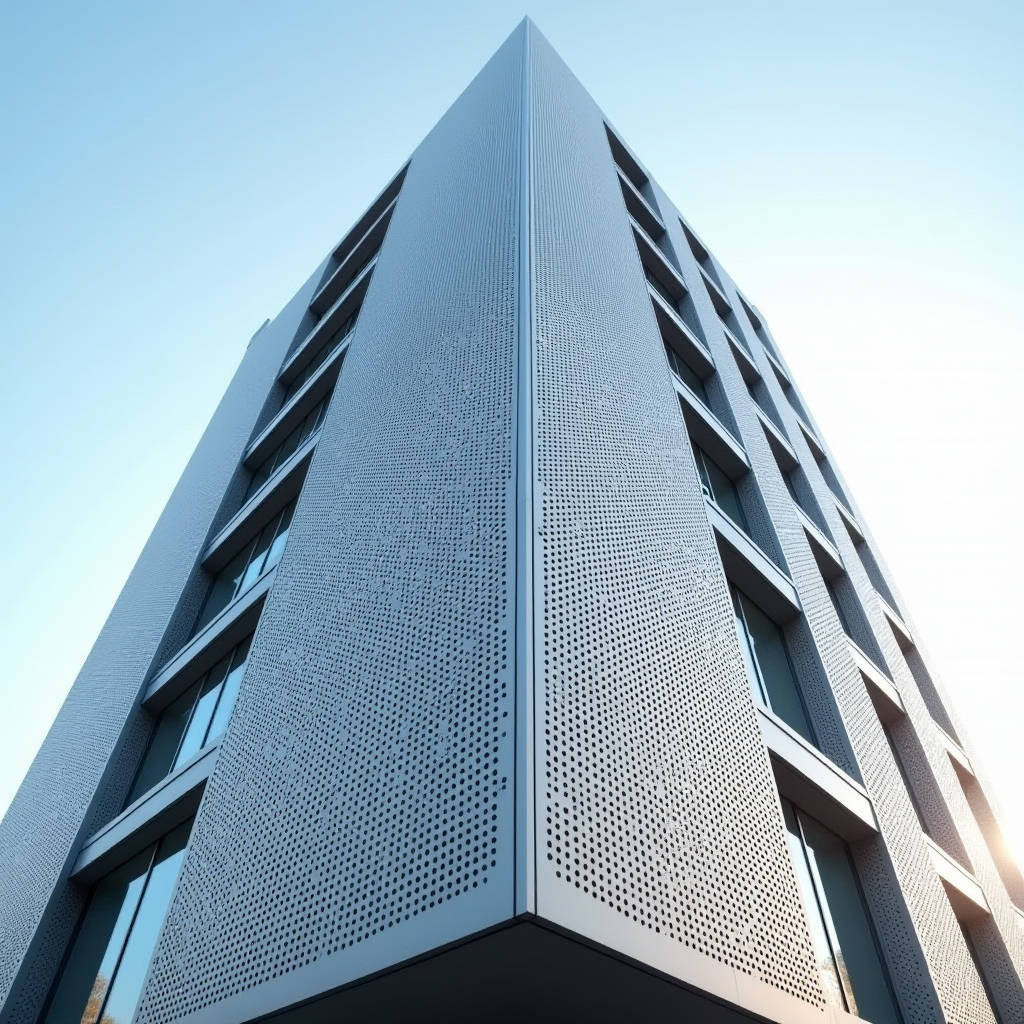
Punched aluminum sheets have moved far beyond decorative screening into a structural and performance role on modern building envelopes, and the engineering decisions behind them are more consequential than most specifiers assume. The open area, hole geometry, alloy temper, and coating system each influence wind load transfer, acoustic absorption, daylight penetration, and long-term corrosion behavior. A facade that performs beautifully on a mock-up can fail on site if the perforation pattern was selected without checking its structural interaction with the substructure. This article walks through the load path, the alloy and temper choices, the coating constraints around punched edges, and the fabrication tolerances that separate a reliable architectural panel from a maintenance liability. The goal is practical: give contractors, glazing subcontractors, and procurement teams a clear framework for specifying, verifying, and installing punched aluminum sheets on real projects.
Why the Perforation Pattern Is a Structural Decision
Every hole in a punched aluminum sheet removes load-carrying material, and the way those holes are arranged changes how the panel behaves under wind suction, thermal cycling, and point loads. A staggered round-hole pattern with 60 percent open area is not simply a lighter version of the same panel with 30 percent open area. The remaining ligament between holes carries the stress, and the stress concentration at each hole edge is significant. For a solid 3.0 mm aluminum panel, the design wind load is transferred across the full section. For a punched panel, the effective section modulus drops roughly in proportion to the open area, and the stress concentration factor at the hole boundary can push local stresses well above the nominal value.
Specifiers should ask the fabricator for the open area percentage and the ligament width for every pattern, not just the hole diameter and spacing. The open area is the ratio of hole area to total panel area, and it drives both the aesthetic and the structural performance. A pattern with 50 percent open area on a 2.0 mm panel will have roughly half the bending stiffness of the same solid panel, and the deflection under wind load will increase accordingly. For tall facades or high wind zones, that deflection can exceed the allowable limits for the chosen joint detail, causing the panel to bow or the sealant to tear.
Wind load calculations for perforated panels also need to account for air permeability. Unlike a solid panel, a punched panel allows some pressure equalization across the facade, which can reduce net wind load in some cases but also changes the design assumptions for the cavity behind the panel. The structural engineer should model the perforated panel with its actual open area rather than treating it as a solid plate. Refer to the wind load provisions in ASCE 7 for the applicable pressure coefficients, and confirm the panel deflection limits with the project's structural engineer before ordering material.
Alloy and Temper Selection for Punched Aluminum Sheets
The alloy and temper of the aluminum sheet determine how well the punched edges hold their geometry, how the panel resists corrosion at the cut edges, and how the fabricator can form the panel into returns, flanges, and stiffening ribs. The two alloys that dominate architectural punched aluminum sheets are 3003 and 5052, with 6061 appearing in structural and heavier-duty applications.
3003 aluminum is softer and more formable than 5052, which makes it easier to punch clean holes and to bend tight flanges without cracking. It offers a good balance of formability, weldability, and strength for general sheet metal work, and it is a common choice for panels that will be roll-formed or brake-pressed into complex profiles. The trade-off is lower strength, so 3003 panels in thinner gauges may need more stiffening on large spans.
5052 aluminum is stronger and offers better fatigue resistance, which matters for panels subject to repeated wind loading and thermal movement. It is the more common choice for exterior architectural panels where structural performance and corrosion resistance are the priority. The higher strength of 5052 allows a thinner gauge to carry the same load as a thicker 3003 panel, which can reduce weight and cost on large projects. The trade-off is reduced formability, so tight bends and deep draws are more difficult, and the fabricator must account for the higher springback when setting up the press brake.
6061 aluminum is heat-treatable and offers the highest strength of the three, but it is less common for punched architectural panels because the higher strength makes punching and forming more difficult and increases tool wear. It appears in structural members, mullions, and frames that support the punched panels rather than in the panels themselves. For most facade applications, 3003 and 5052 cover the practical range, and the choice should be driven by the span, the wind load, and the forming complexity.
Coating Systems and the Punched Edge Problem
The punched edges of a panel are the most vulnerable part of the coating system. When a hole is punched, the aluminum is sheared and the protective oxide layer is broken, exposing fresh metal at the cut edge. If the coating does not fully cover that edge, corrosion can initiate and creep under the coating film, causing blistering and delamination over time. This is a critical difference between punched panels and solid panels, where the coating is applied to a continuous surface with fewer exposed edges.
For exterior architectural panels, the coating system should be specified to the same standard as the rest of the facade. The industry benchmark is a two-coat or three-coat PVDF (polyvinylidene fluoride) system applied to a primed surface, with a total dry film thickness in the range of 25 to 30 microns for a two-coat system and 35 to 40 microns for a three-coat system. The PVDF resin content should be at least 70 percent to meet the AAMA 2605 performance specification for high-performance exterior coatings. AAMA 2605 is the most demanding of the AAMA coating specifications and covers color retention, chalk resistance, and adhesion after accelerated weathering, making it the appropriate reference for punched panels on high-rise facades.
The coating application method matters as much as the coating chemistry. Spray-applied coatings can leave the inside of small holes under-covered, while a properly applied coating with adequate surface preparation and edge coverage will protect the cut edges. Ask the fabricator how the coating is applied to the punched surface and whether the edges are verified for coverage. Some fabricators apply the coating after punching, which allows the coating to cover the cut edges, while others punch after coating, which leaves bare edges exposed. For exterior use, coating after punching is generally the safer approach, and the specification should state this requirement explicitly.
Anodizing is an alternative to paint for some punched panels, and it offers excellent corrosion resistance because the anodic layer is grown from the aluminum itself and covers the cut edges uniformly. The anodic film thickness for architectural use should be at least 18 microns to meet the requirements of the relevant anodizing standard, and the natural aluminum color is preserved. The trade-off is that anodizing offers limited color options compared to PVDF, and it is less forgiving of surface scratches and handling damage on site.
Fabrication Tolerances and Quality Control
The quality of punched aluminum sheets depends heavily on fabrication tolerances that are easy to overlook in a drawing but hard to correct on site. Hole diameter, hole spacing, and the straightness of the hole rows all affect both the appearance and the structural performance. Inconsistent hole spacing creates a visible moiré effect when the panel is viewed through a glazing system or against a patterned background, and it can cause the panel to fail an aesthetic review even when the structural performance is acceptable.
For architectural panels, the hole diameter tolerance should be held to a tight range, typically within a few tenths of a millimeter, and the hole spacing should be consistent across the entire panel. The fabricator should verify these dimensions on a sample panel before full production and again on a random sample from each production batch. Burrs on the punched edges are another common defect. A burr is a raised lip of metal at the hole edge, and it can catch on cleaning tools, snag on adjacent materials, and create a sharp edge that is a safety hazard on site. The specification should require deburring of all punched edges, and the finished panel should be inspected for burrs before the coating is applied.
Flatness is a third tolerance that matters for punched panels. The punching process can introduce distortion, especially in thin gauges with high open area, and a panel that is not flat will not sit flush in its frame, causing shadow lines and uneven joint gaps. The fabricator should use a flatness check on a surface plate or a calibrated straightedge, and the panel should be flattened or re-stretched if it exceeds the specified flatness tolerance. For large panels, a stiffening strategy such as a return flange, a brake-formed edge, or a bonded stiffener may be necessary to control flatness and deflection.
Acoustic and Daylight Performance
Beyond structure, punched aluminum sheets deliver measurable acoustic and daylight benefits that architects specify deliberately. The open area and hole geometry determine how much sound is absorbed and how much daylight passes through the panel. For acoustic absorption, a perforated panel with a backing layer of acoustic insulation acts as a resonant absorber, and the absorption coefficient depends on the open area, the hole diameter, and the depth of the air cavity behind the panel. A pattern with 20 to 25 percent open area and a 50 mm cavity can achieve a noise reduction coefficient in the range of 0.6 to 0.8, which is meaningful for facade treatments adjacent to busy roads or mechanical equipment.
Daylight control is a separate consideration. A punched panel with a high open area allows substantial daylight into the space behind it, which can reduce artificial lighting loads but also introduces glare and solar heat gain. The solar transmittance of the panel is roughly proportional to the open area, so a 40 percent open area panel transmits about 40 percent of the incident solar radiation. For sun-shading applications, the specifier should balance the open area against the shading coefficient and the visual comfort of the occupants. The panel can also be positioned to create a dappled light effect on interior walls, which is a common architectural intent, but the pattern and spacing should be reviewed for the specific light angle and the distance to the interior surface.
Cost and Weight Comparison Across Configurations
Procurement teams need a clear picture of how the alloy, gauge, coating, and open area affect cost and weight. The table below summarizes typical comparative values for common architectural configurations of punched aluminum sheets. These are planning estimates, not quotes, and actual values depend on the fabricator, the order volume, and the specific pattern.
| Configuration | Alloy / Temper | Gauge (mm) | Open Area (%) | Coating | Relative Weight | Relative Cost |
|---|---|---|---|---|---|---|
| Light interior screen | 3003-H14 | 1.5 | 35 | Powder coat | 0.7 | 0.8 |
| Standard exterior panel | 5052-H32 | 2.0 | 25 | Two-coat PVDF | 1.0 | 1.0 |
| High-rise wind zone panel | 5052-H32 | 3.0 | 20 | Three-coat PVDF | 1.5 | 1.4 |
| Acoustic absorber panel | 5052-H32 | 2.0 | 22 | Anodized 18 µm | 1.0 | 1.1 |
| Sun-shading screen | 3003-H14 | 2.0 | 40 | Two-coat PVDF | 0.9 | 1.0 |
The weight figures are relative to the standard exterior panel, and the cost figures are relative to the same baseline. Note that a higher open area does not always mean lower cost, because the punching tooling and the pattern complexity can offset the material savings. A custom pattern with a non-standard hole shape or a variable spacing will carry a tooling charge that a standard staggered round pattern avoids. For projects with a large panel count, the tooling cost is amortized across the order, but for a small custom batch, the tooling can dominate the unit price.
Specification Checklist for Procurement
Before placing an order for punched aluminum sheets, the procurement team should confirm the following items in writing with the fabricator. First, the alloy and temper, with a mill certificate verifying the chemical composition and mechanical properties. Second, the open area percentage and the hole pattern geometry, with the hole diameter and spacing tolerances. Third, the coating system, including the coating type, the dry film thickness, the PVDF resin content, and whether the coating is applied before or after punching. Fourth, the flatness tolerance and the deburring requirement. Fifth, the fabrication tolerance for the panel overall dimensions and the hole placement. Sixth, the stiffening strategy for large panels, if any. Finally, the sampling and inspection plan, including the number of panels to be checked and the acceptance criteria.
For contractors working on a tight schedule, a reliable supplier with established fabrication capability and a consistent quality control process reduces the risk of rework and site delays. Futeng® has supplied punched aluminum sheets and solid aluminum cladding panels to facade projects across multiple markets, and their engineering team can review a pattern for structural and coating suitability before production. A fabricator that flags a potential issue with a pattern before cutting is worth more than one that delivers a non-conforming panel after the schedule has slipped.
Practical Guidance for the Specifier
The decisions that matter most for punched aluminum sheets are made early: the open area and pattern, the alloy and temper, the coating system, and the fabrication tolerances. Each of these interacts with the others, and changing one late in the process can force a rework of the others. Start with the structural requirement, because the wind load and the span determine the minimum gauge and the alloy. Then select the pattern and open area to meet the acoustic and daylight goals without exceeding the structural capacity. Specify the coating system to the AAMA 2605 standard for exterior use, and require coating after punching so the cut edges are protected. Finally, set the fabrication tolerances and the inspection plan before production, and verify a sample panel before approving full production.
On site, handle punched panels with care to avoid scratching the coating and bending the thin ligaments between holes. Store panels flat on a protected surface, and lift them with spreader bars or suction lifters rather than dragging them across the stack. Inspect the panels on delivery for flatness, burrs, and coating damage, and reject any panel that does not meet the specified tolerances. A punched panel that looks acceptable in the crate can still fail the aesthetic review once installed, so the inspection should be done in the same lighting conditions as the installed facade.
Punched aluminum sheets are a proven and versatile material for modern facades, but their performance depends on engineering discipline from specification through installation. By treating the perforation pattern as a structural decision, specifying the alloy and coating for the punched edge condition, and holding the fabricator to measurable tolerances, the project team can deliver a facade that performs structurally, absorbs sound, controls daylight, and stays maintenance-free for decades. The material rewards the specifier who asks the right questions early, and punishes the one who treats it as a simple decorative panel.