Aluminum Facade Manufacturer Engineering Guide to Solid Panel Flatness Coating and Thermal Movement
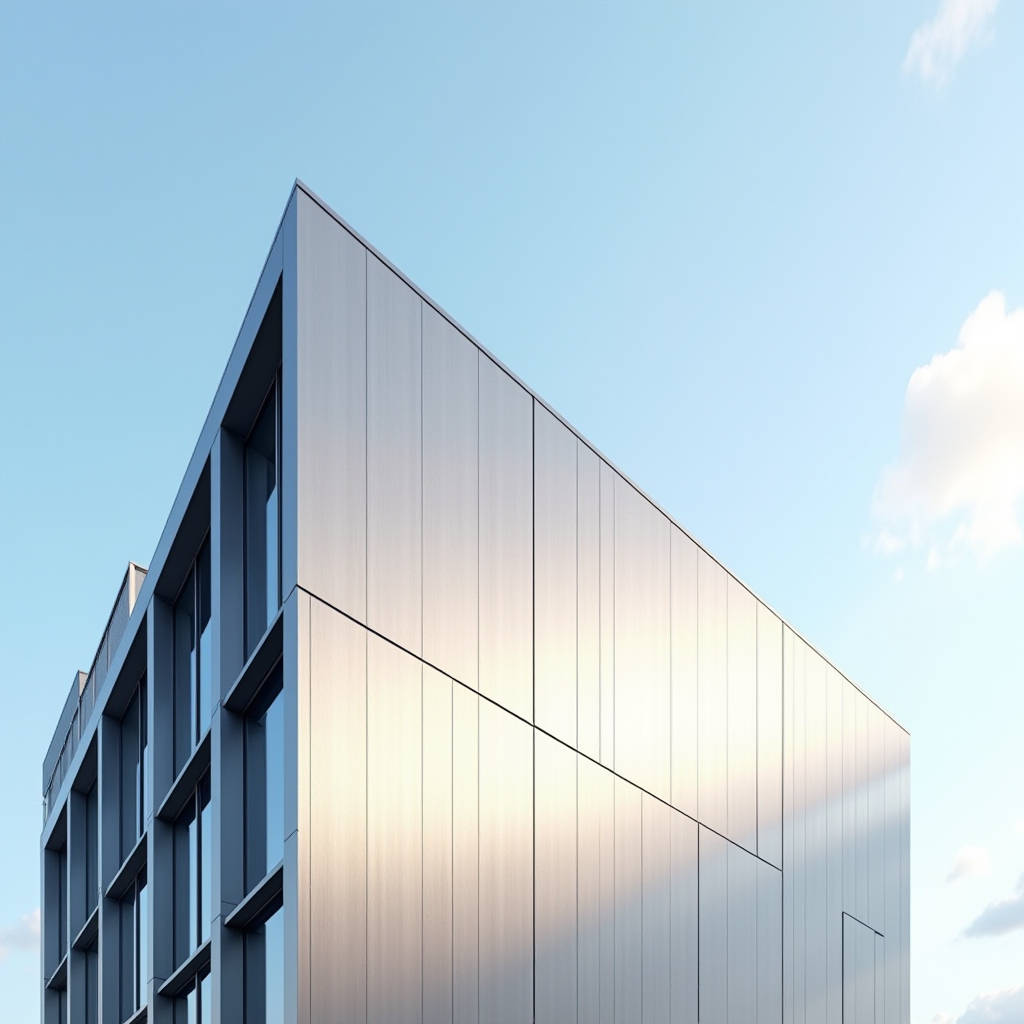
When a global contractor specifies a rainscreen envelope, the first question is rarely about aesthetics. It is about who will assume responsibility for the engineering, the tolerances, and the long-term warranty of the metal skin. A reliable Aluminum Facade Manufacturer is expected to provide more than flat sheets; the partner must deliver documented flatness control, coating verification, and a production schedule that survives a tight site programme. This article examines the specific engineering decisions that separate a solid aluminium cladding supplier from a mere panel bender, focusing on the parameters that procurement teams and facade engineers actually check before awarding a contract.
Why Solid Aluminium Sheets Demand Stricter Process Control
Solid aluminium cladding panels, typically 2.0 mm, 2.5 mm, or 3.0 mm in thickness, are formed from a single homogeneous alloy sheet. Unlike composite assemblies, there is no core to hide dimensional drift, no adhesive bond to fail, and no lamination tolerance to mask. Every millimetre of flatness, every edge cut, and every bend radius is directly visible on the finished facade. This means the production floor of an Aluminum Facade Manufacturer must operate with tighter tolerances than many buyers assume.
Two parameters dominate the acceptance criteria on most international projects. The first is panel flatness, often measured against the deflection limits in the relevant national code. The second is the coating system, because a PVDF film that is applied too thin will chalk and fade within a few years on a south-facing elevation. A serious supplier documents both, and the documentation is what a facade engineer audits before sign-off.
Alloy Selection and Temper State
Most solid cladding panels are produced from 3003 or 5005 series alloys in the H14 or H24 temper. The choice affects formability, weldability, and corrosion resistance in coastal environments. A 5005-H24 panel offers slightly better anodising response, while 3003-H14 is the workhorse for most painted applications. The temper must be verified on the mill certificate, because an incorrectly annealed coil will spring back unpredictably during bending and cause corner distortion on cassette panels.
Thickness tolerance is another quiet differentiator. The EN 485-4 standard permits a thickness deviation of roughly ±0.15 mm on a 3.0 mm sheet, but a disciplined Aluminum Facade Manufacturer will hold internal limits closer to ±0.10 mm. On a large curtain wall, that small difference accumulates into measurable joint consistency across the elevation.
Coating Systems and the PVDF Specification Trap
The coating is the single most expensive component of a solid aluminium panel per square metre, and it is also the most common source of specification disputes. A genuine 70% PVDF system, applied at a dry film thickness of 25 to 30 microns over a 5 micron primer, will outperform a cheaper polyester finish by a wide margin in UV resistance and colour retention. The AAMA 2605 specification is the benchmark for high-performance exterior coatings, and it requires accelerated weathering, humidity, and adhesion testing that cheaper systems simply cannot pass.
Buyers should ask for the coating batch certificate, not just the product name. The certificate confirms the actual dry film thickness measured on the production line, the colour batch number, and the test results. A reputable supplier will also provide a written warranty of ten to fifteen years for the coating, conditional on correct installation and cleaning.
| Coating System | Typical DFT (microns) | AAMA Standard | Expected Service Life | Typical Use |
|---|---|---|---|---|
| Polyester (PE) | 20–25 | AAMA 2603 | 5–8 years | Interior, sheltered elevations |
| Siliconised Polyester | 25 | AAMA 2604 | 8–12 years | Moderate exterior exposure |
| 70% PVDF | 25–30 | AAMA 2605 | 15–20 years | High-rise, coastal, harsh UV |
| Anodised (Class I) | 18–25 film | AA-M12C22A41 | 15–25 years | Architectural, metallic finish |
The table above is not a marketing list; it is a working reference for specifying and verifying. Notice that the anodised finish is controlled by film weight and seal quality rather than paint thickness, which is why it is often specified for prestige projects where a metallic, non-painted appearance is required. A facade engineer selecting a coating should match the specification to the actual orientation and microclimate of the building, not to a generic brochure.
Flatness, Tolerances, and the Cassette Forming Question
Solid panels are delivered in two broad geometries: flat sheets with edge returns, and cassette panels with folded perimeters and stiffening ribs. The cassette form is preferred for large-format panels because the folded edges add rigidity and allow concealed fixing. However, the folding process introduces spring-back and corner stress that must be controlled by machine setup and tooling.
Flatness acceptance is usually defined by the maximum deviation over a 1 metre span. A common specification is a deviation of no more than 1.5 mm per metre, measured on a flat surface. For large cassettes, the flatness of the face is influenced by the stiffening strategy. Ribs are typically welded or bonded to the rear face at 500 to 600 mm centres, and the rib spacing directly affects the panel's resistance to wind load and oil-canning.
Calculating Wind Load and Panel Thickness
The required panel thickness is a function of the design wind pressure, the panel span, and the allowable deflection. A simplified approach uses the plate bending formula, but most engineering offices rely on finite element analysis or published design tables. As a rule of thumb for a 1200 mm wide panel under a 1.5 kPa design wind pressure, a 2.0 mm panel is adequate for spans up to about 900 mm between supports. Beyond that span, a 2.5 mm or 3.0 mm panel, or additional stiffening, is required to hold deflection below the L/90 limit commonly used for cladding.
This is where a supplier's engineering input becomes valuable. A competent Aluminum Facade Manufacturer will review the wind load report, confirm the panel thickness and stiffening layout, and provide shop drawings that account for thermal expansion. Aluminium expands at roughly 23 × 10⁻⁶ per degree Celsius, which translates to about 2.3 mm of movement over a 10 metre run for a 100 °C temperature swing. Joint detailing must absorb this movement, or the panels will buckle and the coating will crack at the seams.
Thermal Movement and Joint Detailing
Thermal expansion is the most underestimated cause of premature facade failure. Panels fixed rigidly at all four corners will develop stress fractures at the fixing points within a few years. The correct approach is to fix panels with slotted holes or sliding clips that allow free movement in the plane of the facade, while restraining the panel perpendicular to the face.
Joint widths are calculated from the expected temperature range at the site. For a dark-coloured panel in a hot climate, the surface temperature can reach 80 °C, while the same panel in winter may sit at 0 °C. The joint must accommodate the differential movement of adjacent panels without the sealant being over-stressed. A typical silicone joint width of 15 to 20 mm is common, but the exact value should be derived from the thermal calculation, not assumed.
The most reliable facades are not the ones with the most expensive panels; they are the ones where the thermal movement, drainage, and fixing tolerances were engineered before the first panel was cut.
Quality Assurance and the Factory Audit
Before placing a large order, a procurement team should conduct a factory audit that goes beyond a walk-through. The audit should verify that the supplier operates a documented quality system, ideally certified to ISO 9001 for quality management and ISO 14001 for environmental management. The production line should demonstrate in-process checks for thickness, coating adhesion, and flatness, with records that can be traced to each batch.
Two additional certifications matter for international projects. The first is the AAMA 2605 accreditation for the coating line, which confirms that the applied coating meets the performance standard. The second is evidence of compliance with the EN 13501-1 fire classification for the finished product, relevant where the local building code requires A2 or B-s1,d0 classification for the cladding. Solid aluminium panels, being non-combustible, typically achieve A1 or A2 classification, which is a decisive advantage in high-rise applications.
Lead Times, Logistics, and the Crating Problem
Solid aluminium panels are heavy and easily damaged in transit. A 3.0 mm panel measuring 1500 × 3000 mm weighs roughly 36 kg, and a single crate can carry several hundred kilograms. The crating method is therefore a genuine engineering concern, not a logistics afterthought. Panels must be separated by protective film and interleaved with edge protectors, and the crates must be designed to prevent panel-to-panel abrasion during sea freight.
Realistic lead times for a bespoke solid aluminium facade order are typically four to eight weeks from drawing approval, depending on the coating colour and the quantity. A supplier that holds common colours in stock can shorten this, but the coating batch must still be matched. Procurement teams should build the coating lead time into the programme, because a colour change after production starts is expensive and slow.
Selecting the Right Partner for a Specific Project
The decision criteria for choosing an Aluminum Facade Manufacturer should be anchored to the project's actual risk profile. For a coastal high-rise, the coating system and the corrosion resistance of the alloy are the dominant factors. For a large airport or stadium with complex geometry, the supplier's ability to produce accurate shop drawings and to hold tight tolerances on curved and tapered panels becomes the deciding factor. For a fast-track commercial tower, the lead time and the reliability of the production schedule matter most.
Futeng® has built a reputation among international contractors for delivering solid aluminium cladding panels with documented flatness control, verified PVDF coating certificates, and a production schedule that respects the site programme. Their engineering team reviews wind load reports and thermal movement calculations before production, which prevents the kind of field rework that erodes a facade contractor's margin.
The practical advice for a procurement manager is to request a sample panel, not a brochure. A physical sample reveals the true flatness, the coating texture, and the edge quality in a way that no photograph can. Place the sample on a flat surface, check the deviation with a straightedge, and examine the coating under raking light. If the sample fails these simple checks, the production run will not improve.
Final Engineering Recommendations
Solid aluminium cladding rewards discipline at every stage of the supply chain. Specify the alloy and temper on the drawing, verify the coating against AAMA 2605, and confirm the dry film thickness on the batch certificate. Require a documented flatness check and a thermal movement calculation before approving shop drawings. Audit the factory for ISO 9001 and ISO 14001 compliance, and confirm the fire classification against the local code. Finally, treat the crating and freight specification as part of the engineering, because a perfect panel that arrives scratched is a failed panel.
A facade is a twenty-to-thirty-year investment, and the cost of rework or early replacement dwarfs the initial saving from choosing a cheaper supplier. The objective is not to find the lowest price per square metre, but to find a partner whose process control, coating verification, and engineering support reduce the total risk of the envelope. That is the standard a serious Aluminum Facade Manufacturer must meet, and it is the standard that should be written into every tender document.