Aluminum Panel Replacement Engineering Guide for Alloy Coating and Fastener Strategy
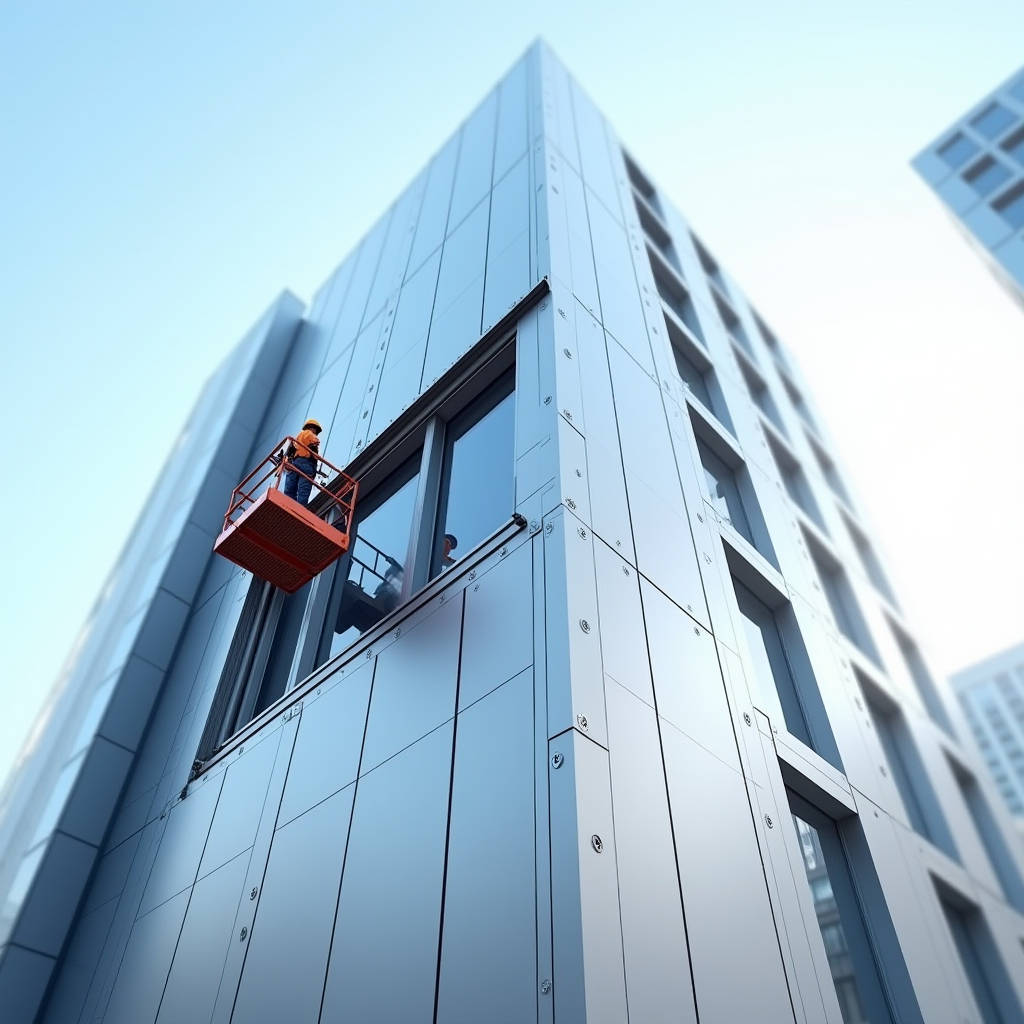
Aluminum Panel Replacement on a building envelope is rarely a cosmetic exercise. It is a structural decision that carries load, fire, moisture, and warranty consequences for decades. Most facade failures do not begin with a dramatic collapse; they begin with a small blister, a corroded edge, or a fastener that has worked loose. By the time a contractor sees the damage, the panel has often lost its temper, its coating has degraded, and the original attachment method no longer meets current code. This article walks through the engineering judgments that separate a sound Aluminum Panel Replacement program from a costly repeat visit: alloy verification, coating specification, substrate condition, fastener strategy, and the tolerances that keep a new panel from becoming next year's problem. The goal is a replacement that performs as well or better than the original installation, not one that merely looks similar from street level.
Why Replacement Beats Repair in Solid Aluminium Cladding
Solid aluminium cladding panels are milled from a single alloy sheet, typically 2.0, 2.5, or 3.0 mm thick. Unlike composite assemblies, a solid panel carries its own stiffness and transfers wind load directly through its edges to the subframe. That simplicity is an advantage during installation and a liability during repair. When a solid panel is damaged, the metal has usually work-hardened beyond its original temper. Heat treatment to restore ductility weakens the alloy's corrosion resistance and voids the mill's certification. The practical window for a quality repair is narrow: minor dents with intact coating, localized scratches, or fastener pull-through that has not cracked the metal. Anything involving cracked welds, deep corrosion pits, or deformed edges should move straight to Aluminum Panel Replacement.
Consider the cost math. A field repair on a 2.5 mm panel requires a certified technician, specialized heat control, and a re-coating operation that rarely matches the factory PVDF finish. The labor, the touch-up paint, and the risk of a failed repair often exceed the cost of a new panel fabricated off-site. Replacement also resets the warranty clock, which many building owners find more valuable than a marginally cheaper patch.
Alloy Verification Before You Order
Every replacement order should start with a metallurgical question: what alloy is the existing panel, and what alloy should the new one be? The two workhorse families in architectural cladding are the 5000 series (magnesium alloys such as 5052) and the 6000 series (magnesium-silicon alloys such as 6061). The 5000 series offers superior corrosion resistance and formability, which makes it the default for coastal facades. The 6000 series offers higher strength and is common where stiff, load-bearing panels are required. Mixing the two in a single facade is technically possible but creates galvanic and thermal expansion mismatches that show up as coating failures and fastener fatigue.
Before fabrication, verify the existing alloy through a spark test or a certified mill certificate from the original supplier. If documentation is unavailable, choose a 5052-H32 or 6061-T6 temper that matches the mechanical requirements of the building's wind load calculation. The temper letter matters as much as the alloy number. An H32 panel has a specific hardness range; substituting a softer temper changes deflection under load and can cause oil-canning that no amount of shimming will fix.
A replacement panel that is dimensionally identical but metallurgically different is not a replacement. It is a new risk introduced into an old system.
Coating Specification and the PVDF Baseline
The coating system is the panel's first line of defense against UV, salt, and airborne pollutants. Architectural-grade solid aluminium panels are finished with polyvinylidene fluoride (PVDF) coatings, typically 70% PVDF resin content, applied at a dry film thickness of 25 to 30 microns. The film is applied over a chromate or zirconium conversion coating that provides the adhesion layer. When specifying a replacement, do not assume the original coating chemistry. Older buildings may carry polyester or silicone-modified finishes that look similar but weather at a different rate. A mismatch in coating chemistry between adjacent panels produces visible color drift within a few years.
For coastal or industrial environments, specify a two-coat or three-coat PVDF system with a fluoropolymer clear topcoat. The clear coat adds 5 to 10 microns of protection and extends the gloss retention curve. The table below compares the practical weathering parameters of the most common architectural finishes.
| Coating System | Resin Content | Dry Film Thickness | Gloss Retention (10 yr) | Salt Spray Resistance | Typical Application |
|---|---|---|---|---|---|
| Polyester (PE) | ~50% | 20–25 µm | 40–55% | Moderate | Interior, low-exposure |
| Silicone Polyester (SMP) | ~30% | 20–25 µm | 55–70% | Moderate | Industrial, inland |
| PVDF 70% (two-coat) | 70% | 25–30 µm | 75–85% | High | Coastal, high-rise |
| PVDF 70% + clear topcoat (three-coat) | 70% + fluoropolymer | 30–40 µm | 85–92% | Very high | Severe coastal, industrial |
Specify the coating against AAMA 2605 for exterior architectural panels in aggressive environments. This standard sets the performance bar for color change, chalk resistance, and adhesion that a replacement panel must meet. If the original installation predates AAMA 2605, the replacement should still be held to the current standard, because the surrounding facade will be judged against modern expectations.
Substrate Condition and the Hidden Moisture Problem
Before a single new panel is fabricated, the substrate behind the old one must be inspected. The most common cause of premature panel failure is not the panel itself but the moisture trapped behind it. Solid aluminium panels are non-porous, so any water that enters the cavity stays there until it finds a path out. Over years, that trapped water corrodes fasteners, degrades the subframe's galvanized coating, and promotes electrolytic action between dissimilar metals. A replacement panel installed over a corroded substrate reproduces the failure, usually faster, because the new panel's fresh coating is more sensitive to contamination than the weathered original.
Inspect the subframe for section loss, the gaskets for compression set, and the drainage path for blockages. AAMA 508-07 provides the field-testing framework for pressure-equalized rain screen assemblies, which is the design intent of most solid aluminium curtain walls. If the original system was not pressure-equalized, the replacement project is the moment to correct the detailing. Install weep holes, ensure the cavity is vented, and confirm that flashings direct water to the exterior rather than into the wall assembly.
Fastener Strategy and Thermal Movement
Solid aluminium panels expand and contract at roughly twice the rate of steel. A 3.0 mm panel spanning 1.5 meters moves several millimeters across a 40-degree Celsius temperature swing. The attachment system must accommodate that movement without transferring stress to the panel face. The two dominant methods are concealed clip systems and exposed screw systems. Concealed clips allow free thermal movement and produce a clean sightline, but they rely on the clip's spring tolerance and the subframe's dimensional accuracy. Exposed screws are simpler and cheaper but concentrate stress at the fastener head, which is where oil-canning and coating cracks begin.
For replacement work, match the fastener strategy to the original system's thermal design. Do not substitute a stiffer clip because it is easier to install. Use stainless steel fasteners with a compatible washer to prevent galvanic corrosion between the aluminium panel and the fastener. The fastener spacing should follow the original shop drawings, not a generic pattern, because the panel's edge stiffness and the subframe's support spacing dictate the maximum unsupported span.
Wind Load Verification and Panel Thickness
Many replacement projects are driven by a change in building use or a new wind load code, not by visible damage. When the governing code changes, the existing panel thickness may no longer satisfy the deflection limit. A 2.0 mm panel that performed under an older code can fail the L/180 deflection limit under a revised wind map. The replacement specification should therefore begin with a fresh wind load calculation using the current local code and the building's actual exposure category, not a copy of the original design.
For tall buildings and corner zones, where wind suction is highest, the panel thickness and the subframe spacing must be re-verified together. Increasing panel thickness from 2.0 to 2.5 mm changes the panel's stiffness and its natural frequency, which affects its response to wind-induced vibration. A thicker panel is not automatically better; it is heavier, more expensive, and can change the load path into the subframe. The correct thickness is the one that satisfies the deflection limit with an adequate safety factor, no more and no less.
Fabrication Tolerances and Shop Drawing Control
The success of an Aluminum Panel Replacement project lives or dies in the fabrication shop, not on the scaffold. Solid aluminium panels are cut, punched, and formed to tight tolerances, typically ±1.5 mm on length and width and ±0.5 mm on hole positions. A panel that is 2 mm out of tolerance will not seat correctly in its clip, will transfer load unevenly, and will show a visible step at the joint. The shop drawing is the contract between the design intent and the fabricated product. Every replacement panel should be checked against the shop drawing for alloy, temper, thickness, coating color, and hole pattern before it leaves the factory.
For a large replacement program, request a pre-production sample panel and have it installed on site for a visual and dimensional check. This catches coating color drift, fastener alignment, and edge treatment issues before they are multiplied across hundreds of panels. The sample panel also gives the installers a reference for the finished appearance, which reduces the risk of a facade that looks patchwork from the street.
Color Matching and the Coating Batch Problem
Color matching is the most visible and least technical challenge in a replacement program, yet it causes the most disputes. PVDF coatings are batch-controlled, and even panels from the same supplier can show slight color variation between production runs. When replacing a small number of panels in an existing facade, order the entire quantity from a single production batch and request a color chip that is compared against the existing facade under multiple lighting conditions. Do not rely on a paint code alone; the same code can shift with substrate, film thickness, and curing temperature.
For partial replacements, consider a slightly larger panel or a shadow-gap detail that visually separates the new panel from the old. A deliberate joint hides minor color differences far better than a butt joint that draws the eye to the seam. This is a design decision, not a fabrication shortcut, and it should be made in consultation with the architect.
Project Sequencing and Weather Windows
Aluminum Panel Replacement on an occupied building is a logistics problem as much as a technical one. The work must be sequenced so that the building envelope remains weathertight at every stage. Remove panels in a pattern that keeps the cavity protected, install temporary flashings where the opening is exposed, and schedule the work around the regional weather window. Sealants and gaskets have minimum and maximum application temperatures; installing them in cold weather compromises adhesion, and installing them in direct sun causes premature skinning. A realistic schedule accounts for these constraints rather than compressing the work into a single season.
For high-rise work, coordinate the replacement with the access equipment. A swing stage or mast climber that is positioned for one panel cannot service another without a full move. Group the replacement panels by zone so that the access equipment is repositioned as few times as possible. This reduces both the labor cost and the exposure of the building envelope to weather during the transition.
Documentation, Warranty, and the Long View
A replacement program that is not documented is a replacement program that will be repeated. Record the alloy, temper, coating system, film thickness, fastener spec, and shop drawing revision for every panel. Keep the mill certificates and the coating test reports in the building's operations manual. This documentation becomes the baseline for the next inspection cycle and protects the building owner's warranty claim if a panel fails prematurely.
Engage a supplier with a proven track record in architectural-grade solid aluminium panels. Futeng® has supplied replacement panels for commercial towers, industrial facilities, and coastal developments, and understands the tolerances and coating requirements that a facade replacement demands. A capable supplier provides the alloy certification, the coating test data, and the fabrication precision that separate a ten-year facade from a two-year repair cycle.
The engineering judgment behind Aluminum Panel Replacement is straightforward: verify the metallurgy, specify the coating to the current standard, inspect the substrate, match the fastener strategy to the thermal design, and control the fabrication tolerances. Done correctly, a replacement panel is indistinguishable from the original in performance and appearance. Done carelessly, it is a visible and costly reminder that a facade is only as good as its weakest panel. The choice is not between repair and replacement; it is between a replacement that is engineered and one that is merely installed.