Engineering the Aluminum Facade Maintenance Unit With Your Solid Cladding Envelope
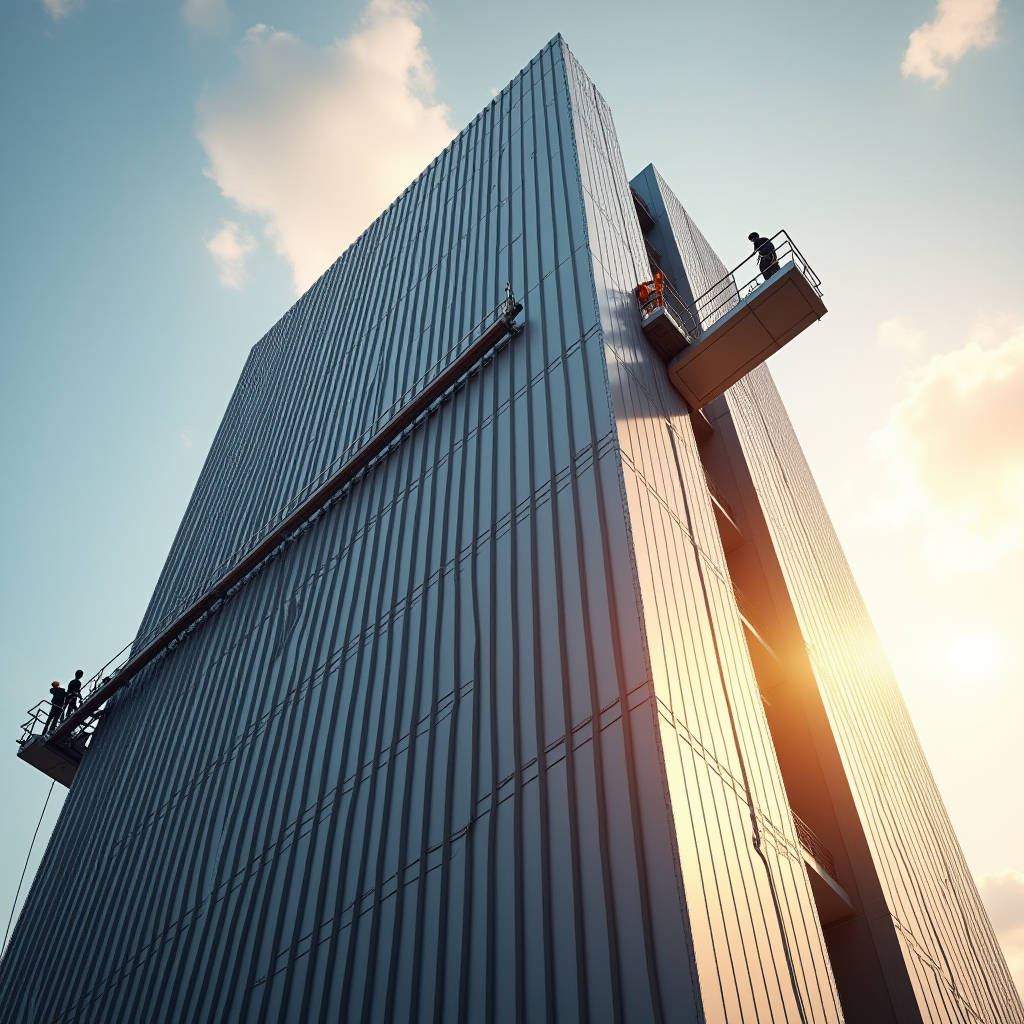
An Aluminum Facade Maintenance Unit is far more than a window-cleaning crane. For a curtain wall contractor or building owner, it is the permanent engineering link between a high-performance solid aluminium cladding envelope and the long-term safety of the people who must service it. The most common mistake in facade procurement is treating the BMU as an afterthought, specified only after the panel geometry and PVDF coating are locked. That sequence produces costly retrofits, undersized monorails, and access dead zones on complex facades. This article walks through how the structural weight of solid aluminium panels, the layout of a monorail track, and the anchorage of a roof-mounted unit interact, and how these decisions should be made together rather than in isolation.
Why the Cladding System and the BMU Share One Design Cycle
Solid aluminium cladding panels in 2.0 mm, 2.5 mm, and 3.0 mm thickness behave differently from lightweight composite boards. A 3.0 mm panel with a deep back-pan stiffener carries real mass, and that mass is transferred to the subframe and ultimately to the building structure. When you anchor a monorail track to that same structure, you are placing live loads, a cradle, two workers, and dynamic wind forces onto a system that must also hold the cladding. Designing the Aluminum Facade Maintenance Unit in the same load envelope as the cladding prevents the two systems from fighting each other.
Structural engineers commonly model the BMU reaction loads at the roof parapet and at each track bracket. If the cladding subframe was sized only for wind and self-weight, the added point loads from a monorail bracket can exceed the local capacity of the mullion or the concrete edge beam. The practical answer is to share the structural model early, so the facade engineer and the BMU supplier work from one set of reactions.
Monorail Geometry vs. Panel Geometry
Most modern high-rise envelopes are not flat. Recessed windows, protruding fins, sloped caps, and curved corners all create zones a straight monorail cannot reach. A monorail system follows a single rail track, so the track layout must mirror the cladding envelope with enough standoff to let the cradle clear every projection. The standoff distance is a direct function of the panel reveal depth and the fin geometry. Specify the standoff after the cladding profile is final, and you will either lose access to recessed areas or add expensive offset arms.
For interior curtain wall surfaces and for facades with heavy horizontal banding, a monorail with a powered trolley and a relay-controlled hoist is the preferred solution. The relay control keeps the cradle movement predictable, which matters when workers are cleaning around sharp panel edges or replacing a glass unit beside a 3.0 mm aluminium panel.
Load Cases That Drive the Specification
Every BMU specification begins with load cases. The governing scenarios for a facade maintenance unit on a solid aluminium cladding building are:
- Dead load: cradle, two workers, tools, and the aluminium platform structure itself.
- Wind load: the cradle acts as a sail; the track and brackets must resist both positive and negative pressures at the parapet height.
- Seismic and thermal: the track must accommodate building drift and thermal movement of the aluminium structure without binding.
- Impact load: a worker or tool striking a panel edge during positioning.
For a typical 12-metre cradle, a reasonable working load budget is 450 kg to 500 kg including two workers and equipment. The wind load on that cradle at a 150-metre parapet can easily exceed 3 kN, which is why the track anchorage, not the cradle, is usually the critical element.
Coating and Corrosion Interfaces
The BMU structure is itself commonly built from aluminium alloy, chosen for its corrosion resistance and weight advantage over steel. That choice is sound, but it creates a galvanic interface wherever an aluminium bracket meets a steel embed or a stainless steel bolt. The cladding panels next to these interfaces are protected by a PVDF coating, typically 25 to 30 microns total dry film thickness over a chromate or non-chromate pretreatment. The maintenance unit must not compromise that protection. Specify non-conductive isolation washers at every dissimilar-metal joint and keep fasteners away from the coated panel edges.
Industry guidance from the AAMA on aluminium finishing and from ISO 12944 on corrosion protection of steel structures applies directly to the BMU anchorage. A well-specified unit will carry a coating system that matches the building's environmental exposure zone, from a mild urban C2 zone to a marine C5 zone.
Practical Engineering Data
To size a monorail BMU for a solid aluminium cladding tower, the following estimates provide a working baseline. These figures are indicative and must be verified by a structural engineer for each project.
| Parameter | Typical Value | Design Note |
|---|---|---|
| Solid panel thickness | 2.0 / 2.5 / 3.0 mm | Thicker panels increase subframe and track bracket loads |
| Panel weight (3.0 mm) | ~8.1 kg/m² | Excludes stiffeners and subframe |
| Cradle working load | 450–500 kg | Two workers plus tools and materials |
| Parapet wind load on cradle | 3–5 kN | Governing case for track anchorage |
| Track standoff from facade | 300–600 mm | Set by panel reveal and fin projection |
| PVDF coating thickness | 25–30 microns | Per AAMA 2605 for high-performance finishes |
| Bracket spacing on monorail | 1.5–2.5 m | Reduced near corners and heavy loads |
These figures show why the cladding and the Aluminum Facade Maintenance Unit cannot be specified independently. A 3.0 mm panel envelope with deep fins will push the track standoff and bracket spacing to the upper end of the range, which in turn raises the reaction loads at the parapet.
Compliance and Standards
Every facade maintenance unit on a commercial building should be engineered to recognised standards. The most relevant references are the EN 1808 standard for suspended access equipment, which governs the design and safety of BMUs in Europe, and the ASME A120.1 standard for safety requirements for powered platforms in the United States. For the cladding side, AAMA 2605 covers the high-performance PVDF coating that protects the panels adjacent to the BMU. These documents are available from the respective standards bodies and should be cited in the project specification.
For North American projects, OSHA and ANSI requirements for powered platforms add another layer of controls, including emergency descent systems and load-test certification. A unit that meets EN 1808 but not ASME A120.1 will not pass inspection on a US site, so the governing standard must be confirmed before procurement.
Maintenance Planning for the Unit Itself
A facade maintenance unit is a mechanical system with moving parts, and it needs its own maintenance programme. The monorail track, the trolley wheels, the hoist, and the relay control panel all require scheduled inspection. On a solid aluminium cladding building, the BMU is often the only way to reach the upper panels, so a failed unit leaves the facade unserviceable. Plan for annual inspection of the hoist and wire rope, quarterly checks of the track and brackets, and a documented load test after any major repair.
Suppliers such as Futeng®, who work across both solid aluminium cladding fabrication and facade access, can align the panel production schedule with the BMU delivery so that the track brackets are embedded correctly during the subframe installation. This coordination avoids the common failure of drilling into a finished panel to mount a bracket that was never planned for.
Cost and Procurement Considerations
The cost of a monorail BMU is driven less by the cradle than by the track length, the number of brackets, and the complexity of the roof anchorage. A simple flat-roof tower with a straight monorail will cost a fraction of a curved envelope with a powered trolley and offset arms. When comparing quotes, compare the total installed system, including the roof steel, the track, the cradle, and the certification, not just the unit price of the machine.
For a building owner, the BMU is a 25-to-40-year asset that must outlast several coating cycles on the cladding. Spending marginally more on a heavier track section or a corrosion-resistant finish at the parapet returns lower lifetime maintenance cost and fewer facade access failures.
Closing Engineering Advice
Bring the facade maintenance unit into the structural model at the same time as the solid aluminium cladding. Share the reaction loads, set the track standoff from the final panel geometry, and confirm the governing standard for the project location before procurement. Treat the BMU as a permanent part of the envelope system, not as a piece of equipment bolted on later. That single decision removes the most common sources of access dead zones, overloaded brackets, and costly retrofits on modern aluminium-clad towers.