Engineering the Aluminum Facade Cleaning System for Solid Panel Coating Life and Warranty Compliance
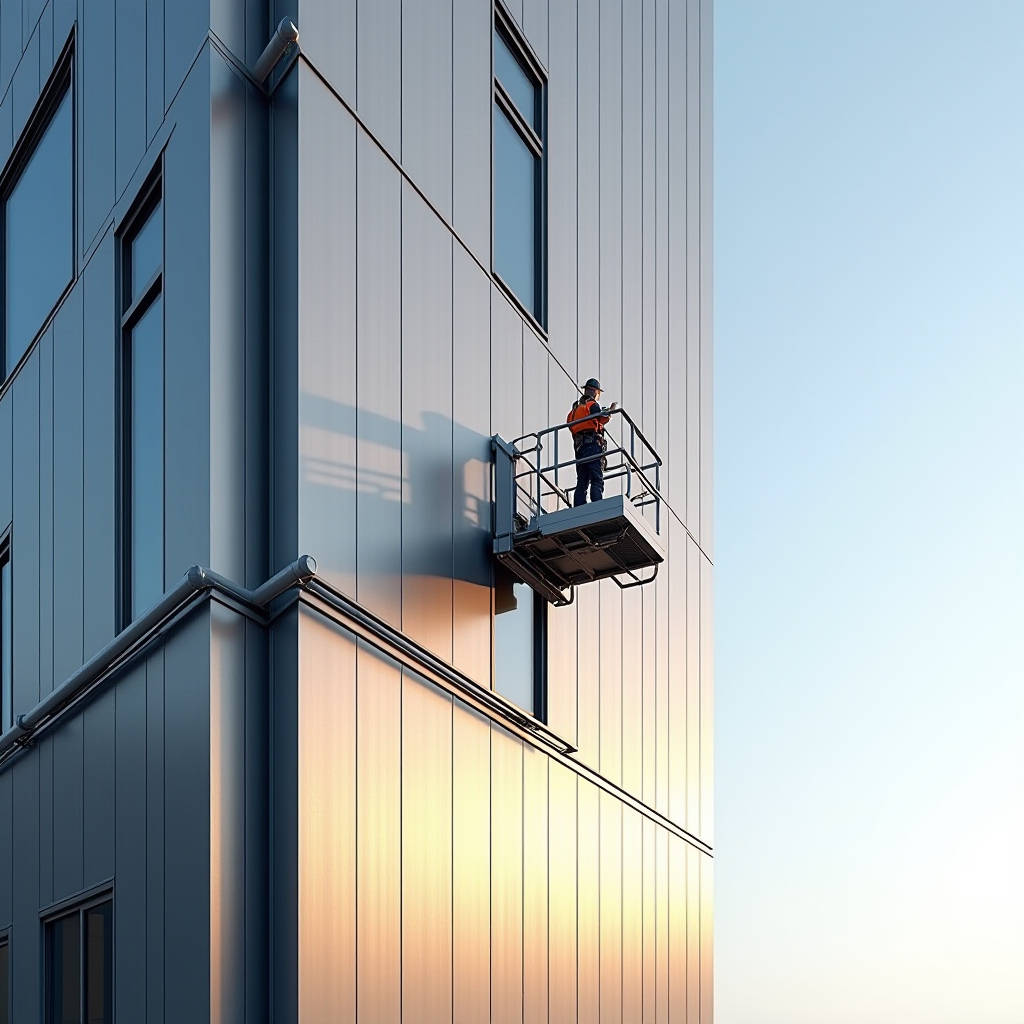
Every solid aluminium cladding panel on a high-rise carries a maintenance obligation that most procurement teams underestimate until the first warranty dispute arrives. An Aluminum Facade Cleaning System is not a janitorial accessory; it is a structural asset that protects the PVDF coating, preserves the anodic oxide layer, and determines whether a 2.0 mm or 3.0 mm solid sheet retains its appearance for twenty years or fails within five. This article examines the engineering reality behind facade cleaning for solid aluminium panels, from water chemistry and detergent pH to the mechanical access platforms that put cleaners on the wall. We cover the technical parameters that matter, the inspection cadence that keeps warranties valid, and the cost trade-offs between manual rope access, monorail BMU systems, and automated robotic platforms.
Why Solid Aluminium Panels Require a Different Cleaning Discipline
Solid aluminium cladding panels differ from painted steel or glass in one fundamental way: the substrate itself is the finish. A 2.5 mm or 3.0 mm solid sheet carries a factory-applied PVDF (70/30) coating of roughly 25 to 30 microns, or alternatively a 15 to 20 micron anodic oxide layer. Both are engineered surfaces, not sacrificial skins. The cleaning method therefore directly controls the life of the coating. Abrasive pads, alkaline degreasers, and high-pressure washers that are routine on concrete or brick will strip the PVDF topcoat, expose the primer, and accelerate chalking and colour fade.
Industry guidance from the American Architectural Manufacturers Association (AAMA) and the ASTM standards on coil-coated aluminium finishes sets a clear boundary: cleaning agents must be neutral to mildly alkaline, pH 7 to 9, and free of chlorides and fluorides. Anything stronger voids the coating warranty. This is where a disciplined Aluminum Facade Cleaning System becomes a contractual requirement, not a cosmetic preference.
The Chemistry That Protects the Coating
For solid panels in coastal or industrial environments, the dominant contaminant is not dust but airborne salts and sulphur compounds that settle as a film. A cleaning programme built on plain water and a soft non-abrasive cloth removes roughly 60 percent of surface dirt. To lift bonded grime without attacking the PVDF resin, the cleaning solution should be a mild detergent with a pH between 7 and 9, applied at low pressure and rinsed with clean water within minutes. The sequence matters more than the chemical: pre-rinse, gentle wash, immediate rinse, and a final wipe to prevent mineral spotting.
What should never touch a solid aluminium panel is a long list: hydrochloric acid, muriatic acid, caustic soda, ammonia-based glass cleaners, steel wool, and any pad rated above 1800 grit. Each of these either dissolves the anodic layer or embeds micro-scratches that trap future dirt. The AAMA 2605 specification for high-performance organic coatings is the reference point for what the finish can tolerate, and cleaning protocols should be written against that document.
Access Platforms: The Mechanical Backbone of the System
The chemistry is useless if the crew cannot reach the wall safely. For buildings above four or five storeys, the cleaning system is inseparable from the access equipment. Three families dominate the market, and each carries a different capital cost, maintenance burden, and cleaning quality ceiling.
Manual Rope Access and Suspended Cradles
Rope access remains the most flexible and lowest-capital option for irregular facades and retrofit projects. A two-person team can clean a modest elevation in a single shift, and the equipment footprint is minimal. The trade-off is labour intensity, weather sensitivity, and a quality ceiling set by human consistency. For large continuous facades, suspended cradles on roof-mounted davits improve throughput but still depend on operator skill.
Monorail BMU Systems
For curtain walls and solid panel facades above 30 metres, a permanent monorail building maintenance unit (BMU) is the engineering standard. These systems run on an aluminium alloy rail fixed to the roof or parapet, with a powered platform that traverses the entire elevation. The better units incorporate polyurethane bumpers on the platform front to prevent the cradle from striking the cladding, double safety wire ropes, and a tensioning system that keeps the platform stable in wind. Relay control simplifies operation, and the aluminium alloy construction resists corrosion far better than painted steel in coastal exposure.
A monorail BMU is a capital investment, but it converts facade cleaning from a recurring contractor cost into a scheduled, repeatable operation with predictable quality. Most serious building managers treat it as part of the facade's permanent infrastructure, with a design life matched to the cladding itself.
Automated and Robotic Cleaners
The newest category is the automatic facade cleaner, a hybrid that mounts onto an existing BMU, cradle, or roof rail and drives a robotic cleaning head across the wall. These systems combine intelligent navigation with the mobility of a traditional platform, reducing the number of operators on the wall and improving consistency across large elevations. They are particularly attractive for high-rise towers where manual cleaning is slow, costly, and exposed to wind limits. The capital cost is higher, but the per-square-metre cleaning cost drops sharply once the system is amortised over a large facade area.
Engineering Cost Comparison Across Access Methods
Procurement teams need a defensible basis for choosing between access strategies. The table below compares the three approaches for a 25,000 square metre solid aluminium facade on a 40-storey tower, using typical market figures for equipment, labour, and maintenance over a ten-year horizon.
| Parameter | Rope Access | Monorail BMU | Robotic Hybrid |
|---|---|---|---|
| Capital equipment cost (USD) | 15,000–30,000 | 180,000–350,000 | 400,000–700,000 |
| Annual labour hours per cycle | 1,800–2,400 | 900–1,200 | 350–500 |
| Cleaning quality consistency | Variable | High | Very high |
| Wind operating limit | ≤ 12 m/s | ≤ 15 m/s | ≤ 18 m/s |
| Maintenance burden | Low | Medium | High |
| Ten-year total cost (USD) | 420,000 | 510,000 | 560,000 |
| Best fit | Retrofit, irregular facades | Mid-rise to high-rise | Large continuous towers |
The figures reveal a counter-intuitive result: rope access is not always the cheapest. Once labour rates, insurance, and the slower cycle time are included, a monorail BMU can match or beat rope access on total cost for a sufficiently large facade, while delivering more consistent results. The robotic hybrid only wins on economics when the facade area and cleaning frequency are both high.
Inspection Cadence and Warranty Compliance
Cleaning frequency is not a cosmetic choice; it is a warranty condition. Most PVDF coating manufacturers require a documented cleaning schedule to keep the finish warranty valid. A typical regime for a solid aluminium facade in a moderate urban environment is two cleanings per year, increasing to four in coastal or heavily polluted zones. Each cycle should be paired with a visual inspection of the panel edges, the gaskets, the drainage weep holes, and the sealant joints, because water trapped behind a panel is the fastest route to corrosion at the cut edges.
Anodic oxide finishes, being more porous than PVDF, accumulate grime faster and may need quarterly attention in aggressive environments. The inspection should look specifically for chalking, which appears as a white powdery residue, and for colour drift, which signals topcoat erosion. Both are early indicators that the cleaning chemistry or frequency is wrong.
What the Inspection Checklist Must Cover
- Panel surface for chalking, blistering, and colour fade
- Cut edges and fasteners for corrosion or staining
- Sealant joints for cracking, adhesion loss, or water ingress
- Weep holes and drainage paths for blockage
- Gaskets and pressure plates for compression loss
- BMU rails, wire ropes, and brakes for wear
Documenting each inspection with dated photographs creates the audit trail that protects both the building owner and the cladding supplier when a coating claim arises. A cleaning system without a documentation protocol is, in practice, an uninsured asset.
Supplier-Side Prevention: Engineering Cleanliness In
The most effective cleaning system is the one that minimises the need for cleaning. On the manufacturing side, this means controlling the panel's surface finish and edge treatment so that dirt has fewer anchor points. Futeng® supplies solid aluminium panels with precisely milled edges, consistent PVDF film thickness, and factory-applied protective film that stays in place until after installation, preventing construction-site contamination from becoming permanent staining. Selecting a supplier that treats edge sealing and finish consistency as engineering parameters, rather than afterthoughts, reduces the cleaning burden for the entire service life of the facade.
Design decisions also matter. A facade with adequate drainage, correct weep hole placement, and a positive pressure differential behind the panels will shed water and dirt more effectively than a flat, sealed assembly. The cleaning system should be designed in parallel with the cladding, not bolted on after the building is finished.
Practical Recommendations for Procurement Teams
When specifying a cleaning system for a solid aluminium facade, the conversation should start with three questions. First, what is the coating specification, and what does its warranty require for cleaning chemistry and frequency? Second, what access method matches the building height, facade area, and wind environment, and what is its true ten-year cost? Third, who owns the documentation trail that proves the cleaning was done to specification?
For most mid-rise to high-rise projects, a permanent monorail BMU paired with a neutral-pH detergent programme is the defensible engineering choice. For very large towers, the robotic hybrid deserves a serious cost model. For retrofit and irregular facades, disciplined rope access remains legitimate, provided the chemistry and inspection protocol are enforced. In every case, the cleaning system should be treated as part of the facade's structural and financial life, specified with the same rigour as the panel thickness and the coating film, and documented with the same discipline as the structural calculations.
A solid aluminium cladding panel is a low-maintenance product, but low maintenance is not no maintenance. The difference between a facade that looks new at year twenty and one that is prematurely faded and corroded is almost always the quality of the cleaning system that was specified, budgeted, and enforced from day one.