Powder Coated Aluminum Panel Specs Every Façade Contractor Must Verify Before Ordering
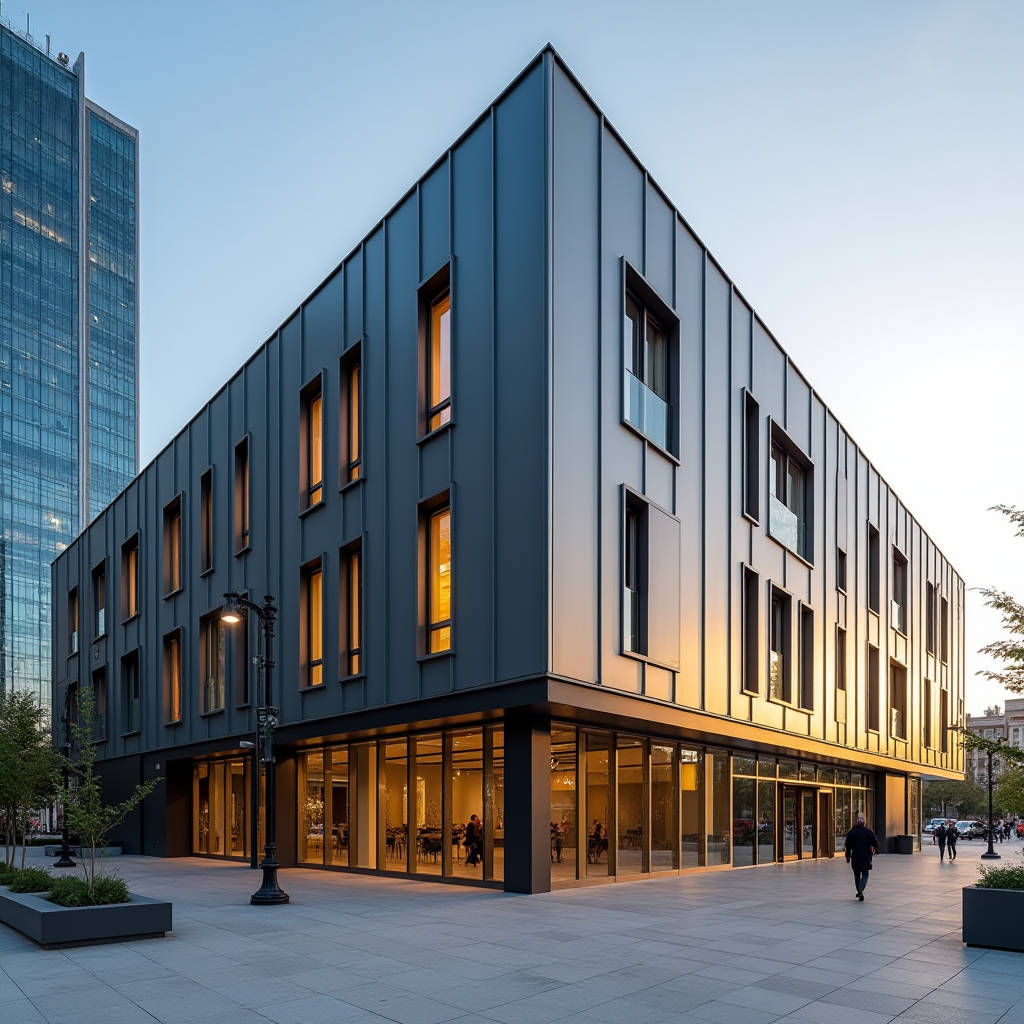
When a façade contractor specifies a powder coated aluminum panel, the first question from the procurement desk is rarely about aesthetics. It is about whether the coating will still look the same five years after installation. Powder coating on aluminum has been around for decades, but applying it to architectural-grade solid aluminium panels—the kind that go onto high-rise curtain walls, airport terminals, and hospital exteriors—is a different discipline altogether. The stakes are higher. The film thickness tolerances are tighter. And the supply chain needs to deliver consistency across 5,000 square meters, not just a few sample swatches.
This article breaks down what procurement managers, façade engineers, and project architects need to verify before signing off on a powder coated aluminum panel specification. We cover coating chemistry, mechanical prep standards, thickness measurement protocols, and the factory-side quality controls that separate a 15-year façade from one that chalks in three.
What "Powder Coated" Actually Means for Architectural Aluminum Panels
Powder coating is an electrostatic deposition process. Dry polymer powder—typically polyester, polyurethane, or a hybrid—is sprayed onto a grounded aluminum substrate, then cured in an oven at 180–200°C. The powder melts, flows, and cross-links into a continuous film. Unlike liquid PVDF coatings that require a primer and clear coat, powder coating is a single-layer system in most architectural applications. That matters for cost, but also for long-term performance trade-offs.
The key specification for architectural use is not just "powder coated." It is whether the powder meets Qualicoat Class 2 or AAMA 2604 standards. These are the benchmarks for exterior durability. A powder coated aluminum panel carrying Qualicoat Class 2 certification has passed 1,000 hours of neutral salt spray testing (ISO 9227) and 1,000 hours of condensation resistance (ISO 6270). Without these certs, the coating is decorative-grade—fine for interior partitions, but a liability on a south-facing façade in Dubai or Singapore.
Field Note: We've seen projects where the spec called for "powder coated aluminum panel to AAMA 2604," but the supplier delivered panels with a generic polyester powder that barely met AAMA 2603 (interior-grade). The tell? No Qualicoat license number on the mill certificate. Always cross-check the coating supplier's license against the Qualicoat or AAMA online database before accepting the first shipment.
Polyester vs. PVDF: When Powder Coating Makes Sense
There is a persistent assumption in the industry that PVDF (Kynar 500-based liquid coating) is always superior to powder coating. That is not accurate. It depends on the project's geography, budget, and performance requirements.
Super-durable polyester powders—formulated with TGIC-free or Primid cross-linkers—now offer UV resistance that rivals mid-tier PVDF systems. The difference shows up in gloss retention and color stability over time. A Qualicoat Class 2 super-durable powder will hold 50% gloss retention after 3 years of Florida exposure (per AAMA 2604). A standard PVDF Kynar 500 system will hold 50% gloss after 10 years (per AAMA 2605). That gap is real, but for projects in temperate climates or with 15-20 year renovation cycles, super-durable powder is often the rational choice—especially when the cost delta is 25-35% lower than PVDF.
The table below lays out the decision factors that matter for procurement.
| Parameter | Super-Durable Powder (Qualicoat Class 2) | PVDF Kynar 500 (AAMA 2605) |
|---|---|---|
| Minimum film thickness | 60–80 µm | 30–35 µm (3-coat) |
| Gloss retention (5 yr Florida) | ~50% | ~70% |
| Color range | Wide; metallics limited | Full range including bright metallics |
| Typical cost index (per m²) | 1.0 (baseline) | 1.35–1.50 |
| Repairability on site | Difficult; requires re-baking | Touch-up kits available |
| Best application | Mid-rise, temperate zones, interior | High-rise, coastal, tropical |
Substrate Preparation: The Step Most Factories Skip
Even the best powder chemistry fails if the aluminum surface is not prepared correctly. The standard pretreatment for architectural aluminum is a chrome-free conversion coating applied via a multi-stage immersion or spray line. The process sequence: degreasing → rinsing → conversion coating → rinsing → deionized water rinse → drying. This creates a nano-ceramic or titanium-zirconium layer that bonds the powder to the metal and prevents filiform corrosion.
Ask your supplier for the pretreatment line specification. A proper architectural pretreatment line has at least 7 stages. Anything less than 5 stages is a red flag. The conversion coating weight should be 0.5–1.0 g/m², verified by XRF measurement. This is not academic. We have seen powder coated aluminum panel failures where the coating peeled in sheets because the pretreatment bath concentration was never calibrated after the initial setup.
The aluminum sheet itself must meet EN 485-2 or ASTM B209 for alloy 3003, 5005, or 5052—the standard architectural grades. Thickness is typically 2.0mm, 2.5mm, or 3.0mm for solid aluminium cladding panels. This is not ACP. There is no polyethylene core. The panel is solid aluminum through and through, which means edge corrosion is not a concern, and the panel can be bent, welded, and perforated without delamination risk.
Film Thickness Control and Why It Determines Warranty Terms
Powder coating film thickness is measured with a calibrated eddy-current gauge (ISO 2360). For architectural applications, the minimum dry film thickness on any single measurement point should be 60 µm, with an average across the panel surface of 70–80 µm. The "minimum" rule is what matters: a panel with an average of 75 µm but a spot reading of 42 µm at a recessed corner will fail first at that thin spot.
Quality-focused suppliers—including mills like Futeng® that run dedicated architectural lines—perform thickness checks at 5 points per panel (four corners and center) and record the data in the batch inspection report. This report should ship with the panels. If your supplier cannot provide per-batch DFT data, you are buying on trust, not on evidence.
Overspecifying thickness is also a problem. Film thickness above 120 µm on a powder coated aluminum panel can cause orange peel texture, poor edge coverage, and cracking during bending. The sweet spot is 70–90 µm. This is where the coating flows evenly, covers edges, and passes the 3mm cylindrical mandrel bend test (ISO 1519) without micro-cracking.
Color Consistency Across Production Batches
Architects specify RAL, Pantone, or NCS colors. The factory matches them. But the real challenge is maintaining that match across 20 production batches over 8 weeks of fabrication. Powder coating is particularly sensitive to batch-to-batch variation because the pigment is dispersed in the powder during extrusion, and slight differences in dwell time or oven temperature shift the final color.
The industry standard for color tolerance is Delta E ≤ 1.0 measured with a spectrophotometer (CIE Lab, D65 illuminant, 10° observer). Anything above Delta E 1.5 is visible to a trained eye under daylight. For large-format powder coated aluminum panel installations—think 3-meter-tall spandrel panels on a continuous façade—even a Delta E of 0.8 can create a visible banding effect if the panels are installed adjacent to each other.
Pro Tip: Before production starts, require the factory to submit 3 sample panels from 3 different powder batches. Measure Delta E between them under both D65 (daylight) and A (incandescent) illuminants. If any pair exceeds Delta E 1.0, reject the powder lot. This 3-batch sampling protocol costs the factory about $200 in materials but saves $20,000 in site rectification if a color mismatch is caught after installation.
Packaging, Logistics, and Site Handling for Powder Coated Panels
Powder coated surfaces are harder than PVDF—pencil hardness is typically 2H–3H versus H–2H for liquid coatings—but they are not scratch-proof. The biggest risk is transit damage. Panels rubbing against each other in a shipping container for 30 days will develop abrasion marks that are visible under glancing light.
Standard export packaging for powder coated aluminum panel shipments includes:
- Interleaving with PE foam sheets (minimum 1.5mm thickness) between each panel face
- Edge protectors on all four corners, taped in place
- Wooden crating with moisture barrier (marine-grade plywood for sea freight)
- Desiccant packs inside crates for shipments exceeding 4 weeks in transit
For FOB and CIF contracts, specify the packaging standard in the purchase order. Reference ISO 2248 for drop test requirements and ASTM D4169 for distribution simulation testing. If the supplier pushes back on packaging costs, remind them that a 2% damage rate on a 3,000 m² order equals 60 m² of replacement panels—and the lead time for replacements can delay façade completion by 4–6 weeks.
Factory Audit: What to Check Before Placing a Container Order
Procurement managers evaluating a new powder coated aluminum panel supplier should audit the coating line, not just the sales office. The checklist below covers the non-negotiables.
- Pretreatment line stage count: Minimum 7 stages. Verify chemical supplier and bath monitoring logs.
- Oven temperature profiling: Ask for the last 3 months of oven temperature charts. The curing window must be within ±5°C of the powder manufacturer's specification.
- DFT gauge calibration records: Gauges should be calibrated daily against certified foils traceable to NIST or equivalent.
- Batch traceability system: Each panel should be marked with a batch number linking to the aluminum coil certificate, pretreatment date, and powder lot number.
- Qualicoat or AAMA certificate validity: Check the expiration date. These certs require annual renewal with unannounced plant audits.
Suppliers like Futeng® that maintain dual certification (Qualicoat and AAMA) and run in-house spectrophotometer testing provide a level of quality assurance that simplifies the procurement process. But the audit still matters. Certificates on a wall do not guarantee that the night shift is running the same process as the day shift.
Cost Structure: What You Are Paying For
The price of a powder coated aluminum panel breaks down into roughly four components: aluminum sheet (50–55%), fabrication including cutting, bending, and routing (20–25%), powder coating (15–20%), and packaging/logistics (5–10%). These ratios shift with panel complexity. A flat panel with simple edges will have a lower fabrication share. A panel with perforations, folded returns, and welded corners will push fabrication above 30%.
Powder coating cost is driven by three factors: powder type (super-durable polyester is 20–30% more expensive than standard polyester), color (bright reds and oranges require more pigment and sometimes multiple passes), and panel geometry (deep recesses require manual touch-up spraying). For budgeting, assume $8–12 per m² for super-durable powder coating on flat panels, and $12–18 per m² for complex shapes with returns.
Minimum order quantities (MOQ) vary by factory. For custom-colored powder coated aluminum panel orders, expect an MOQ of 300–500 m². The constraint is the powder manufacturer's minimum batch size—typically 20–25 kg of custom powder, which covers approximately 200–250 m² at 80 µm DFT. Stock colors (RAL 9010, 9006, 7016, etc.) have no effective MOQ beyond the factory's production minimum.
Specification Writing: What to Put in the Tender Document
A well-written specification prevents substitution. When writing a tender for powder coated aluminum panel systems, include these mandatory requirements:
- Aluminum alloy: EN AW-3003, 5005, or 5052 to EN 485-2; thickness 2.0/2.5/3.0mm as per engineering
- Coating standard: Qualicoat Class 2 or AAMA 2604 minimum; super-durable polyester powder
- Minimum DFT: 60 µm at any point, 70 µm average
- Color tolerance: Delta E ≤ 1.0 per ISO 11664-4
- Pretreatment: Chrome-free conversion coating, 0.5–1.0 g/m² coating weight
- Warranty: Minimum 15 years against chalking, peeling, and color change exceeding Delta E 5.0
Reference the full standards documents in the spec. Qualicoat specifications are publicly available. AAMA documents can be obtained from the American Architectural Manufacturers Association. For European projects, also reference ISO 12944 for corrosion protection classification and ASTM B209 for aluminum sheet specifications.
Common Failure Modes and How to Prevent Them
Most powder coated aluminum panel failures fall into four categories. Understanding them helps procurement teams write better specs and factory auditors catch problems before panels leave the plant.
Filiform corrosion: Thin, thread-like corrosion filaments creeping under the coating, usually starting at cut edges or fastener holes. Root cause: inadequate pretreatment or insufficient coating thickness at edges. Prevention: specify minimum 60 µm DFT at edges, verified by eddy-current measurement on the edge return.
Chalking: White, powdery residue on the coating surface caused by UV degradation of the resin binder. Standard polyester powders chalk within 2–3 years in high-UV environments. Prevention: specify super-durable polyester powder with Qualicoat Class 2 or AAMA 2604 certification.
Color fading: Distinct from chalking. The pigment itself degrades, shifting the color. Inorganic pigments (iron oxides, titanium dioxide) are stable. Organic pigments (bright yellows, reds, some blues) fade faster. Prevention: for high-UV façades, select colors using inorganic pigments where possible. Ask the powder supplier for the pigment type declaration.
Delamination: The coating separates from the aluminum in sheets. Almost always a pretreatment failure. The conversion coating was either not applied, applied at the wrong concentration, or contaminated. Prevention: audit the pretreatment line, not just the coating booth.
Lead Times and Production Planning
A realistic lead time for a powder coated aluminum panel order of 2,000–5,000 m² is 4–6 weeks from deposit to FOB. The critical path is usually not the coating itself—powder coating is fast, with curing times of 10–15 minutes per panel—but the fabrication steps: CNC routing, bending, welding, and assembly. Complex panels with folded returns and stiffeners can take 3–4 times longer to fabricate than flat panels.
Custom powder colors add 1–2 weeks for the powder manufacturer to formulate and ship the batch. Stock colors eliminate this delay. For projects on tight schedules, consider specifying a stock RAL color that matches the design intent closely enough to avoid the custom powder lead time.
Shipping from major manufacturing hubs in China to the US West Coast takes 14–18 days port-to-port, plus 3–5 days for customs clearance and drayage. East Coast shipments add another 10–14 days via Panama Canal or 7–10 days via rail from West Coast ports. Plan for 8–10 weeks total from order to site delivery for a typical container-load project.
Making the Right Call on Powder Coated Aluminum Panels
Powder coating is not a commodity finish. The difference between a panel that performs for 20 years and one that fails in 5 comes down to pretreatment quality, powder chemistry, thickness control, and factory discipline. These are variables that procurement teams can control—through specification writing, factory audits, and incoming inspection protocols.
For projects in temperate climates with moderate UV exposure, a super-durable powder coated aluminum panel to Qualicoat Class 2 delivers excellent value. The cost savings versus PVDF can fund better aluminum alloys, thicker panels, or more complex geometries. For coastal high-rises and tropical projects, PVDF remains the benchmark, but powder technology is closing the gap every year.
The most important document in any powder coated panel procurement is not the quotation. It is the batch inspection report. If your supplier cannot provide it, find one that can.