PVDF Aluminum Panel Specification Guide for Façade Contractors and Procurement Teams
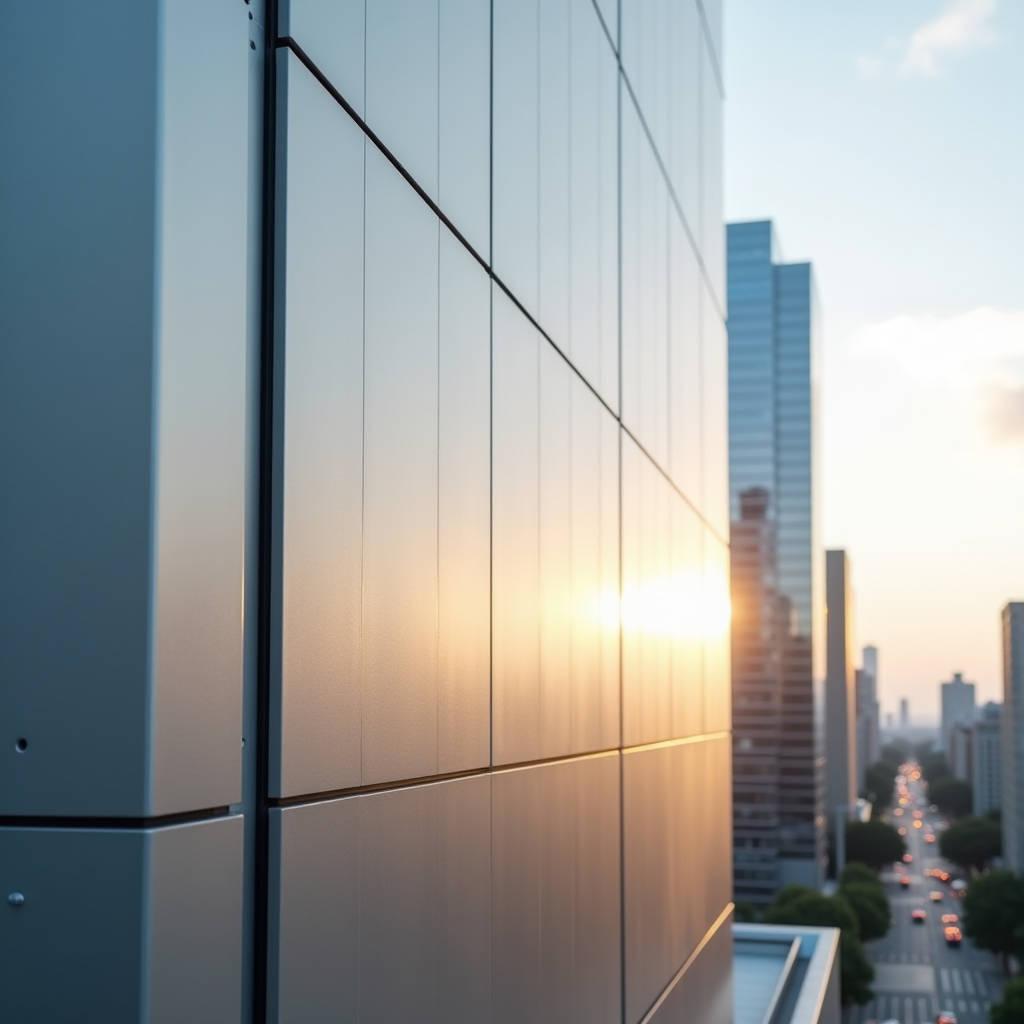
When a façade contractor in Dubai or a procurement manager in Frankfurt asks for a "PVDF aluminum panel," they're not just naming a material. They're specifying a coating system that will determine whether the building envelope still looks factory-fresh after 15 years of UV exposure, sand abrasion, and urban pollutants. The wrong call on PVDF specification—resin percentage, film thickness, bake cycle—can turn a landmark project into a warranty liability. This article walks through what actually matters when sourcing PVDF aluminum panels for large-scale commercial exteriors, from coating chemistry to packaging specs that prevent site rejection.
What "PVDF" Actually Means on a Solid Aluminum Panel
PVDF stands for polyvinylidene fluoride. In the architectural coatings industry, the term is shorthand for a fluoropolymer-based paint system where PVDF resin accounts for a minimum 70% of the total resin content by weight. The remaining 30% typically comes from acrylic resin, which aids pigment dispersion and adhesion. This ratio isn't arbitrary—it's the threshold established by AAMA 2605, the most stringent performance specification for architectural coatings on aluminum.
For a solid aluminum cladding panel (not ACP, not honeycomb composite), the PVDF coating is applied via a multi-stage spray line. The standard sequence: chromate conversion coating pretreatment, followed by a primer coat, a color coat, and a clear topcoat. Each layer is baked separately. The total dry film thickness (DFT) for a 3-coat PVDF system on a solid aluminum panel should land between 30–40 microns, measured per ASTM D7091. Some projects specify a 2-coat system (primer + color) at 25–30 microns DFT for interior applications or soffit panels where UV exposure is minimal.
Field Note: We've seen site inspectors reject entire pallets because the DFT measured 22 microns on a spec calling for 35 microns. Carry a calibrated coating thickness gauge. Don't rely on the mill certificate alone—spot-check 5% of panels randomly at the receiving dock. The cost of a rejected shipment in demurrage fees at Jebel Ali or Long Beach dwarfs the cost of a $400 gauge.
Kynar 500 vs. Hylar 5000: Does the Resin Brand Matter?
Both Kynar 500 (Arkema) and Hylar 5000 (Solvay) are PVDF resin grades that meet AAMA 2605 requirements. In practice, the two are functionally interchangeable for architectural applications. What matters more is whether the coating manufacturer actually uses the licensed resin at the stated percentage. Some lower-cost PVDF coatings reduce PVDF content to 50–60% and make up the difference with acrylic, which compromises long-term gloss retention and chalk resistance.
Ask for the coating manufacturer's AAMA 2605 test report—not just a certificate, but the full test data including 10-year Florida exposure results for gloss retention and color change (Delta E). A legitimate PVDF system on a solid aluminum panel should show Delta E under 5.0 after 10 years of south-facing Florida exposure at 45° tilt, per AAMA 2605 Section 5.2. If the supplier can't produce this data, walk away.
Panel Thickness and the PVDF Coating Interface
Solid aluminum cladding panels for exterior façades typically range from 2.0mm to 3.0mm thickness. The choice of substrate thickness affects more than structural performance—it influences how the PVDF coating behaves during fabrication.
A 2.0mm panel (common for interior feature walls or low-wind-load soffits) is more susceptible to thermal expansion and contraction, which can micro-crack the PVDF coating at fold lines if the bend radius is too tight. The rule of thumb: minimum inside bend radius should be 1.5x the material thickness for PVDF-coated aluminum. For a 2.5mm panel, that means a 3.75mm minimum radius. Tighter bends risk coating delamination that won't show up until the first thermal cycle on site.
For curtain wall spandrel panels and high-rise exterior cladding, 2.5mm and 3.0mm are the workhorse thicknesses. At 3.0mm, the panel has enough inherent stiffness to reduce oil-canning (visible waviness under certain light conditions), which is a persistent aesthetic concern with PVDF-coated panels because the high-gloss finish amplifies any surface irregularity.
| Thickness | Typical Application | Weight (kg/m²) | PVDF Coating Recommendation | Oil-Canning Risk |
|---|---|---|---|---|
| 2.0mm | Interior cladding, soffits, low-rise façades | 5.4 | 2-coat or 3-coat, 25-30μm DFT | Moderate; requires careful substructure alignment |
| 2.5mm | Standard curtain wall, spandrel panels, mid-rise | 6.75 | 3-coat, 30-35μm DFT | Low; standard for most commercial projects |
| 3.0mm | High-rise curtain wall, high-wind zones, column covers | 8.1 | 3-coat or 4-coat, 35-40μm DFT | Minimal; preferred for large-format panels |
Color Consistency and the Delta E Problem
Architects specify PVDF aluminum panels because they want a precise color—RAL 9010, Pantone 426C, or a custom metallic finish. The problem is that PVDF coatings, especially metallic and mica-based colors, are notoriously difficult to reproduce consistently across production batches.
The industry standard for acceptable color variation is Delta E ≤ 1.0 when measured with a spectrophotometer (CIE L*a*b* color space, D65 illuminant, 10° observer angle). This is tighter than the AAMA 2605 requirement of Delta E ≤ 5.0 after weathering, because we're talking about initial batch-to-batch consistency, not long-term fade.
Here's what happens in practice: a factory produces 2,000m² of PVDF aluminum panels for a project. The first batch of 500m² is approved. The second batch, produced three weeks later, shows a Delta E of 1.8 against the approved sample. The contractor installs both batches on adjacent elevations. Under overcast sky, the difference is invisible. Under direct sunlight at a 30° viewing angle, the two elevations look like different buildings.
The solution isn't just better quality control—it's production planning. For any project exceeding 500m², specify that all PVDF-coated panels for a single visible elevation must come from the same coating batch. This means the coil or sheet coating line runs the entire quantity in one continuous production cycle. Reputable suppliers like Futeng® enforce this as standard procedure for large-scale commercial projects, maintaining batch traceability from aluminum ingot to finished panel.
Metallic and Mica Finishes: The Hardest Colors to Control
Metallic PVDF coatings contain aluminum flakes that orient themselves during spraying. The orientation depends on spray gun distance, air pressure, viscosity, and even ambient humidity. A 5% change in relative humidity can shift the flake orientation enough to produce a visible "cloud" effect on the finished panel.
For metallic finishes, always request a wet sample panel (sprayed on the actual substrate, not a lab coupon) measuring at least 300mm × 300mm. Approve the sample under three lighting conditions: direct sunlight, overcast daylight, and the artificial lighting specified for the building interior. Document the approval with dated photographs and spectrophotometer readings. This becomes the contractual reference standard for the entire project.
Durability Testing: What AAMA 2605 Actually Requires
Many procurement specs simply state "PVDF coating to AAMA 2605." That's a good start, but incomplete. AAMA 2605 is a performance specification, not a material specification. It defines minimum performance thresholds across multiple test categories. Understanding what those tests measure helps you evaluate whether a supplier's PVDF aluminum panel will survive your specific project environment.
The key tests under AAMA 2605 include:
- South Florida Exposure (10 years, 45° south): Minimum 50% gloss retention on standard colors, 30% on metallic colors. Color change Delta E ≤ 5.0. This is the gold standard for weatherability validation.
- Salt Spray Resistance (ASTM B117, 4,000 hours): No blistering, no creepage from scribe exceeding 1/16 inch. Critical for coastal projects where airborne chlorides attack the aluminum substrate.
- Humidity Resistance (ASTM D2247, 4,000 hours): No blistering. Tests coating integrity under continuous condensation conditions—relevant for tropical climates like Singapore or Miami.
- Chemical Resistance (ASTM D1308): 10% HCl and 10% NaOH spot test for 24 hours. No visual change. Tests resistance to acid rain and industrial pollutants.
- Abrasion Resistance (ASTM D968): Minimum 40 liters of falling sand per mil of coating thickness. Relevant for ground-floor panels subject to pedestrian contact and wind-blown sand.
For projects in the Middle East, add a custom requirement: combined UV-condensation cycling per ASTM G154 (Cycle 1, 1,000 hours minimum) followed by adhesion testing per ASTM D3359. Standard AAMA 2605 doesn't explicitly require this, but the combination of extreme UV and thermal shock in desert climates justifies the extra test.
Fabrication Sequencing: When to Apply the PVDF Coating
There are two production routes for PVDF aluminum panels, and the choice affects cost, lead time, and quality:
Post-fabrication coating (spray coating): The aluminum sheet is cut, punched, routed, and folded into the final panel shape. Then the fabricated panel goes through the PVDF spray line. This is the most common method for custom architectural panels. Advantages: the coating covers all exposed edges and fold lines, providing complete corrosion protection. Disadvantages: more complex masking requirements, and the 3D geometry of folded panels can create spray shadows (areas with thinner coating) on inside corners.
Pre-coated sheet (coil coating): The PVDF coating is applied to flat aluminum sheet on a continuous coil coating line. The coated sheet is then fabricated into panels. Advantages: extremely uniform coating thickness (±2μm across the entire sheet), lower cost for large volumes, and faster production. Disadvantages: cut edges and fold lines are uncoated and must be protected by design (hidden edges, sealant joints) or post-fabrication touch-up.
For most curtain wall projects, post-fabrication spray coating is the safer choice because it eliminates the risk of bare aluminum edges exposed to weather. The cost premium is typically 8–12% compared to coil-coated sheet, but the long-term corrosion risk reduction justifies the expense.
Pro Tip: If you're importing PVDF aluminum panels from overseas suppliers, specify that all panels must be coated post-fabrication and that the supplier must include edge coating thickness measurements in the inspection report. We've seen pre-coated sheet passed off as post-fabrication coated—the giveaway is consistently thin or absent coating on the panel returns (the folded edges).
Packaging and Logistics for PVDF Aluminum Panels
The PVDF coating is tough, but it's not indestructible. A 35-micron coating can be scratched by a single grain of sand trapped between two panels during shipping. For international shipments—whether FOB Shanghai, CIF Rotterdam, or DDP Sydney—the packaging specification is as critical as the coating specification.
Standard export packaging for PVDF aluminum panels should include:
- Each panel individually wrapped in PE protective film (minimum 50 microns thick, UV-stabilized if outdoor storage is anticipated).
- Interleaving with foam or corrugated paper between panels in the same crate.
- Wooden crates with fumigation certification (ISPM 15 for international shipments).
- Crate internal dimensions allowing minimum 50mm clearance from panel edges to crate walls.
- Maximum crate weight of 1,500kg for forklift handling at destination.
- Moisture barrier: VCI (volatile corrosion inhibitor) paper or desiccant packs inside each crate for sea freight exceeding 30 days.
A common failure mode: panels are packed perfectly at the factory, but the crate is stored outdoors at the destination port for three weeks before the contractor collects it. The PE film degrades under UV, condensation forms inside the crate, and the panels arrive with water staining between the film and the PVDF surface. Specify that the protective film must be removed within 30 days of installation and that the crates must be stored under cover at the destination.
Warranty Structure and What It Actually Covers
PVDF coating warranties in the architectural aluminum industry typically run 15–20 years for film integrity, and 10–15 years for color retention and gloss retention. The warranty is issued by the coating manufacturer (e.g., PPG, AkzoNobel, Sherwin-Williams, Beckers), not the panel fabricator. This is important: if the panel fabricator goes out of business, the coating warranty survives because it's backed by the paint company.
What the warranty covers: peeling, cracking, blistering, and excessive color fading or gloss loss beyond the stated thresholds. What it doesn't cover: damage from improper installation, lack of maintenance (PVDF panels should be cleaned annually with mild detergent and water), chemical attack from incompatible sealants, or mechanical damage during handling.
Before accepting a PVDF aluminum panel warranty, verify:
- The warranty is issued by a recognized coating manufacturer with a track record in architectural projects.
- The warranty explicitly references AAMA 2605 as the performance standard.
- The warranty covers the specific color and finish (metallic colors sometimes have reduced gloss retention warranties).
- The warranty is project-specific and names the building owner as the beneficiary.
According to data from the American Architectural Manufacturers Association, properly specified and maintained PVDF coatings on aluminum can exceed 30 years of service life in temperate climates, though the formal warranty period is shorter. For procurement managers, the warranty is a floor, not a ceiling, on expected performance.
Cost Drivers Beyond the Per-Square-Meter Price
The unit price of a PVDF aluminum panel—typically quoted per square meter, FOB or EXW—is only part of the total cost equation. Several factors can swing the installed cost by 20–30%:
Color complexity: Standard solid colors (RAL, Pantone solids) are the baseline. Metallic colors add 10–15% to the coating cost. Custom-matched colors requiring multiple lab iterations add 5–8% one-time setup fees. Three-coat metallic systems with a clear topcoat can push the coating cost 25% above a standard 2-coat solid color.
Panel size and geometry: Large-format panels (over 1.5m in any dimension) reduce the number of panels and joints but increase material waste and handling complexity. Complex folded geometries with multiple returns, perforations, or curved profiles increase fabrication time and coating difficulty. A simple flat rectangular panel might cost $X per square meter; the same material with four folded returns, radiused corners, and a perforated pattern could cost 2.5X.
Order quantity: Most PVDF aluminum panel manufacturers have a minimum order quantity (MOQ) of 100–300m² per color. Below that threshold, setup costs for the coating line are amortized over a smaller area, pushing up the unit price. For projects with multiple colors in small quantities, consider consolidating colors where possible or negotiating a "small batch surcharge" rather than paying the full MOQ penalty.
Testing and documentation: If your project requires independent third-party testing, full AAMA 2605 test reports, or factory inspection by an owner's representative, budget an additional $2,000–5,000 depending on the scope. This is money well spent on projects exceeding $500,000 in panel value.
Specifying PVDF Aluminum Panels for Tender Documents
A tight specification in the tender package prevents the classic race-to-the-bottom where three bidders offer three different products under the same description. Here's a framework for a defensible PVDF aluminum panel specification:
- Substrate: Solid aluminum alloy, grade AA 3003, 3105, or 5005 (H14 or H24 temper). Thickness 2.5mm or 3.0mm as indicated on the drawings. No composite materials, no honeycomb cores.
- Coating system: PVDF fluoropolymer coating, minimum 70% PVDF resin by weight (Kynar 500 or Hylar 5000). 3-coat system: primer + color coat + clear topcoat. Total DFT 30–40 microns per ASTM D7091.
- Performance: Coating system shall meet or exceed AAMA 2605-20 requirements. Provide full test reports including 10-year Florida exposure data for the specified color family.
- Color: [Specify color standard and code]. Batch-to-batch Delta E ≤ 1.0. All panels for a single elevation shall be from a single coating batch.
- Warranty: 20-year film integrity, 15-year color and gloss retention. Warranty issued by the coating manufacturer, project-specific, naming the building owner.
- Fabrication: Post-fabrication spray coating required. Edge coating thickness shall be measured and reported for each production batch.
- Packaging: Per export packaging specification above. ISPM 15 certified crates. PE protective film, UV-stabilized, minimum 50 microns.
This specification gives you a defensible baseline. Bidders who propose alternatives must demonstrate equivalency, not just claim it. The ISO 12944 series on corrosion protection of steel structures by protective paint systems provides a useful framework for evaluating coating durability claims, even though it's primarily a steel standard.
Supplier Evaluation: What to Look for Beyond the Quote
When evaluating PVDF aluminum panel suppliers—whether domestic or international—the quoted price per square meter is the starting point, not the decision point. A supplier at $45/m² who delivers panels with inconsistent coating, late shipments, and poor documentation will cost far more than a supplier at $52/m² who gets it right the first time.
Key evaluation criteria:
- Coating line capability: Does the supplier have an in-house PVDF spray line, or do they outsource coating to a third party? In-house coating generally means better quality control and shorter lead times. If outsourced, who is the coating partner and what is their AAMA certification status?
- Color matching capability: Ask for a sample match of your specified color on the actual substrate. Evaluate it under multiple lighting conditions. Measure the Delta E yourself if possible.
- Production capacity: What is the weekly output capacity for PVDF-coated panels? Can they handle your peak demand period? A supplier running at 90% capacity will struggle to accommodate schedule changes.
- Export experience: For international procurement, verify that the supplier has experience with the documentation requirements of your destination country—CE marking for Europe, ASTM compliance for North America, or local building code approvals for the Middle East.
- Reference projects: Ask for three completed projects of similar scale and complexity, with contact information for the contractor or architect. Actually call them. Ask about coating consistency, delivery reliability, and how the supplier handled any quality issues.
Suppliers like Futeng® that maintain integrated production lines—from aluminum sheet processing through PVDF coating to final fabrication—offer traceability advantages that fragmented supply chains cannot match. When a quality issue arises, there's one point of accountability, not a chain of finger-pointing between the sheet supplier, the coater, and the fabricator.
Maintenance and Long-Term Performance
PVDF aluminum panels are low-maintenance, not zero-maintenance. The coating resists dirt adhesion due to its low surface energy, but atmospheric pollutants, bird droppings, and construction dust will accumulate over time. An annual cleaning cycle—mild detergent, soft brush or sponge, low-pressure water rinse—is sufficient for most environments. Coastal or industrial locations may require semi-annual cleaning.
What to avoid: abrasive cleaners, pressure washers exceeding 500 psi, strong alkaline or acidic cleaners, and cleaning under direct sunlight (which can cause streaking as the cleaning solution dries too quickly). These precautions are not unique to PVDF; they apply to any architectural coating, but the high-gloss PVDF finish shows cleaning damage more readily than matte or textured coatings.
The long-term value proposition of PVDF aluminum panels rests on this maintenance profile. Compared to anodized aluminum (which is difficult to repair and shows fingerprints), painted steel (which requires repainting every 10–15 years in aggressive environments), or composite panels (which can delaminate), solid PVDF-coated aluminum offers a 30+ year service life with minimal intervention. The Aluminum Association notes that aluminum building products have an average recycled content of 85% for post-consumer scrap, adding a sustainability dimension that matters for LEED and BREEAM certifications.
For the procurement decision-maker, the calculation is straightforward: the incremental cost of a properly specified PVDF aluminum panel over a lower-grade alternative is recovered within the first avoided maintenance cycle. The real cost isn't the panel—it's the access equipment, labor, and business disruption required to repair or replace a failed cladding system on an occupied building.