Fluorocarbon Aluminum Panel Procurement Guide for Façade Contractors and Specification Writers
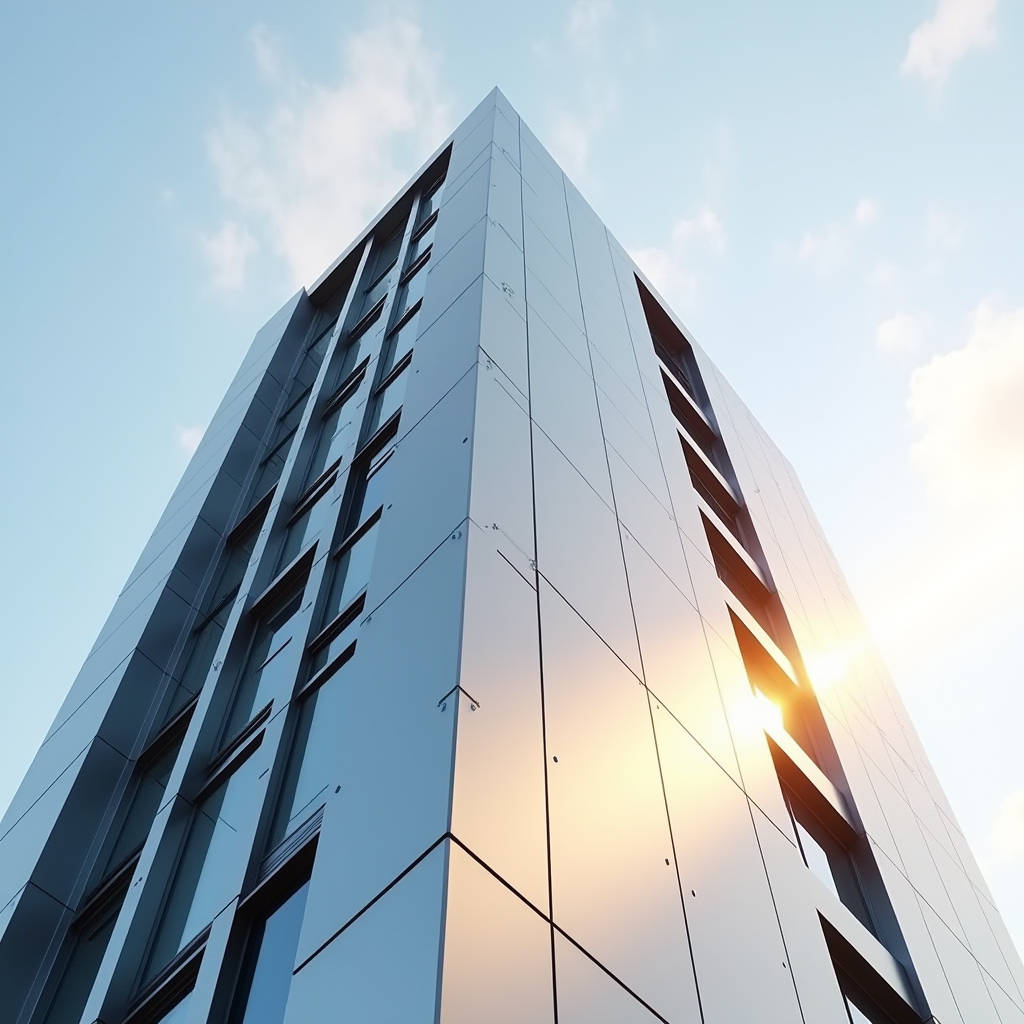
When a façade specification calls for a fluorocarbon aluminum panel, the procurement team isn't just ticking a box on a finish schedule. They're committing to a 20-to-30-year performance promise. A fluorocarbon aluminum panel combines a solid aluminium substrate—typically 2.0mm, 2.5mm, or 3.0mm thick—with a PVDF (polyvinylidene fluoride) coating system that resists UV degradation, chemical attack, and color fade in ways polyester coatings simply cannot match. The stakes are high. One wrong substitution on a curtain wall project in Dubai or Singapore, and you're looking at re-cladding costs that can exceed the original façade budget. This article breaks down what procurement managers, façade contractors, and architects actually need to verify: coating chemistry, film thickness tolerances, factory qualification, and the supply chain realities that determine whether your panels arrive on-site ready to install—or ready to reject.
What Makes a Fluorocarbon Aluminum Panel Different from Standard Coated Aluminium
The distinction sits in the resin chemistry. A genuine fluorocarbon aluminum panel uses a PVDF-based coating where the fluoropolymer resin accounts for at least 70% of the total resin solids by weight. The industry benchmark is the Kynar 500® resin system, though competitors like Hylar 5000® also meet the same ASTM thresholds. Why does that 70% figure matter? Because below that ratio, UV resistance drops off sharply. In accelerated weathering tests per ASTM G154, panels with sub-70% PVDF resin content show measurable Delta E color shifts after 3,000 hours—well within a building's early service life. Full-spec fluorocarbon aluminum panel coatings routinely pass 10,000+ hours with Delta E under 5.0.
For procurement teams, the practical question is always: "How do I verify this on a factory audit?" The answer is straightforward. Ask for the coating supplier's batch certificate. Kynar 500®-licensed applicators receive traceable documentation for every drum of paint. If the factory can't produce that paperwork, the coating on your panels is almost certainly a blended system with lower fluoropolymer content. I've seen this play out on projects in Southeast Asia where the spec said "PVDF coating" but the delivered panels used a 50/50 PVDF-acrylic blend. The savings were around $8–12 per square meter. The replacement cost three years later was north of $400 per square meter.
Field Note: When specifying a fluorocarbon aluminum panel, always require the applicator's AAMA 2605 certification number in the submittal package. AAMA 2605 is the highest performance standard for architectural coatings on aluminium. Don't accept AAMA 2604 (which covers 50% PVDF systems) unless your project is a low-rise interior application with no direct sun exposure. The two standards look similar on paper but represent fundamentally different durability tiers.
Coating Thickness: The 30–40 Micron Rule That Actually Matters
Here's a number that gets quoted in specs but rarely understood on the procurement side: a fluorocarbon aluminum panel requires a minimum total dry film thickness (DFT) of 30–40 microns for a three-coat system, per AAMA 2605. That breaks down to a primer layer (5–10 microns), a color coat (20–25 microns), and a clear topcoat (10–15 microns). Two-coat systems skip the clear coat and run 25–30 microns total. Which one should you specify? If the panel faces direct sun in a coastal or high-UV environment—think Miami, Jeddah, or Brisbane—the three-coat system is non-negotiable. The clear coat isn't decorative; it's the sacrificial layer that absorbs UV before it reaches the pigment.
On a recent high-rise in Manila, the contractor discovered that the delivered fluorocarbon aluminum panel batch had DFT readings averaging 22 microns. The factory had skimped on the color coat. The panels looked fine on installation day. Twelve months later, the color had shifted by Delta E 8.3—visibly patchy from street level. The entire south elevation had to be replaced. The lesson: don't just check the spec sheet. Check the panels with a calibrated DFT gauge during a pre-shipment inspection. At Futeng®, for example, in-line DFT measurement is integrated into the coating line, and every panel gets logged before it enters the curing oven. That kind of process control is what separates reliable suppliers from the ones who'll ship you a problem wrapped in protective film.
Aluminium Substrate Grades and Why Alloy 3003 and 5005 Dominate
The coating gets all the attention, but the substrate is the structural backbone. For a fluorocarbon aluminum panel used in exterior cladding, two alloys dominate: 3003 (manganese-alloyed) and 5005 (magnesium-alloyed). Both are non-heat-treatable wrought alloys with excellent corrosion resistance and formability. The key difference is strength. 5005 offers roughly 15–20% higher tensile strength than 3003, which matters when you're fabricating large-format panels—say, 1,500mm x 4,000mm—that need to resist wind load deflection without oil-canning.
Temper designations are equally important. H14 (half-hard) is the most common temper for flat panels. H24 (half-hard, strain-hardened and partially annealed) provides slightly better flatness for critical applications. If your project involves curved or folded geometries, you'll want H12 or even O-temper for maximum formability. The wrong temper on a folded panel leads to micro-cracking at the bend radius—invisible at installation, but a corrosion initiation point within years.
| Alloy | Typical Temper | Tensile Strength (MPa) | Best Application | Relative Cost |
|---|---|---|---|---|
| 3003 | H14 | 140–180 | Standard flat panels, interior cladding | Baseline |
| 3003 | H24 | 150–190 | Large-format panels requiring superior flatness | +3–5% |
| 5005 | H14 | 170–215 | High-wind zones, large spans, marine environments | +8–12% |
| 5005 | H24 | 175–220 | Premium architectural façades, perforated panels | +10–15% |
| 5052 | H32 | 210–260 | Heavy-duty industrial cladding, high-impact zones | +15–20% |
How a Fluorocarbon Aluminum Panel Factory Actually Qualifies for Your Project
Pre-qualifying a supplier isn't about brochures and sample boxes. It's about production line capability and quality infrastructure. Here's what a serious procurement evaluation should cover:
1. Pretreatment Line: The Step You Can't Skip
Before a single micron of PVDF hits the aluminium, the substrate must go through a multi-stage pretreatment process: degreasing, alkaline etching, de-smutting, and chromate or chrome-free conversion coating. The conversion coating—typically meeting ISO 10546 or ASTM B449 standards—is what creates the molecular bond between metal and paint. A factory running a 3-stage pretreatment (degrease, rinse, conversion) is adequate for interior applications. For exterior fluorocarbon aluminum panel production, you want a minimum 5-stage line, and 7-stage is the gold standard. Ask to see the line during a site visit. If the pretreatment tanks look like they haven't been cleaned in weeks, walk away.
2. Spray Booth Environment: Temperature and Humidity Control
PVDF coatings are sensitive to application conditions. The spray booth should maintain 20–25°C and relative humidity below 70%. Electrostatic spray equipment—whether manual or robotic—must be calibrated to the specific paint viscosity. A factory that can't show you temperature and humidity logs for the spray booth is a factory that can't guarantee coating consistency across a 10,000-square-meter order.
3. Curing Oven: The 230–250°C Window
PVDF coatings require a peak metal temperature (PMT) of 230–250°C for proper cross-linking. Under-cure by 10°C and the coating won't achieve full chemical resistance. Over-cure by 15°C and the resin can degrade, leading to premature chalking. Quality-oriented manufacturers like Futeng® use multi-zone curing ovens with continuous temperature profiling. Ask for the oven temperature charts from the last three production batches. If the data isn't available, the quality probably isn't either.
Color Consistency and the Delta E Problem That Haunts Large Projects
Architects specify RAL, Pantone, or custom-matched colors with the expectation that every fluorocarbon aluminum panel on the building will read the same. Reality is messier. Even with automated spraying, color variation between batches is a known challenge. The industry standard for acceptable color deviation on architectural PVDF coatings is Delta E ≤ 2.0 (CIE LAB, D65 illuminant, 10° observer). But here's the nuance: Delta E measured on a flat coupon in the lab is not the same as Delta E perceived on an installed façade at a 30-meter viewing distance under varying daylight conditions.
The practical approach is to require a physical mock-up. Not a 300mm x 300mm sample—a full-scale mock-up panel installed on-site at the correct orientation. Evaluate it at morning, noon, and late afternoon. If the color holds across those lighting conditions, you've got a viable match. For projects exceeding 5,000 square meters, negotiate a batch-to-batch Delta E guarantee of ≤ 1.5 in the supply contract. This forces the factory to manage their paint inventory and application parameters aggressively.
Pro Tip: Metallic and mica fluorocarbon aluminum panel finishes amplify color variation issues. The orientation of the metallic flakes during spraying creates a "flop" effect—the color shifts depending on viewing angle. For metallic finishes, specify that all panels for a single elevation must come from the same production batch. Even then, insist on a directional installation diagram so every panel is hung with the same grain orientation. It sounds obsessive. It's also the difference between a façade that reads as uniform and one that looks like a patchwork quilt.
Supply Chain Realities: Lead Times, MOQs, and Packaging for Export
Procurement timelines for fluorocarbon aluminum panel orders typically run 4–6 weeks from deposit to ex-factory, assuming standard colors and panel sizes. Custom color matching adds 7–10 days for lab formulation and approval. Peak season—usually Q2 and Q3 when construction activity surges across the Northern Hemisphere—can push lead times to 8–10 weeks. Build that buffer into your project schedule.
Minimum order quantities vary by factory, but the industry norm is 300–500 square meters for standard specifications. Below that, setup costs for the coating line make the per-unit price unattractive. Some manufacturers will accept smaller orders at a surcharge of 20–30%. For large-scale projects exceeding 10,000 square meters, negotiate partial shipments aligned with your installation sequence. This reduces on-site storage requirements and the risk of handling damage.
Export packaging deserves its own paragraph because it's where too many orders go wrong. A fluorocarbon aluminum panel is a finished architectural product. It can't arrive with scratches, dents, or protective film adhesive residue. Standard export packaging should include: a PE protective film (minimum 60 microns thick, UV-stabilized if outdoor storage is anticipated), interleaving with foam or kraft paper between panels, and wooden crates with steel strapping. For FOB and CIF shipments, verify that the crate design allows forklift access from all four sides. One project in Doha lost 12% of the panel shipment to handling damage because the crates were pallet-type with only two-way entry. The forklift operators had to tilt the crates to access them, and panels slid and scratched.
Testing and Certification: What to Demand in Your Submittal Package
Before accepting a fluorocarbon aluminum panel shipment, the submittal package should include at minimum:
- AAMA 2605 certification for the coating system, issued by a recognized third-party laboratory
- ASTM B117 salt spray test results (minimum 4,000 hours with no blistering or creep beyond 2mm from scribe)
- ASTM G154 accelerated weathering results (minimum 10,000 hours, Delta E ≤ 5.0)
- ASTM D3359 cross-hatch adhesion test (classification 5B—no peeling or removal)
- Mill test certificates for the aluminium substrate, confirming alloy and temper
- DFT measurement reports for the specific batch being shipped
If the supplier pushes back on any of these, treat it as a red flag. Established manufacturers maintain these records as standard practice. The American Architectural Manufacturers Association maintains a directory of certified applicators. Cross-check the supplier's claims against that database.
Cost Structure: Where the Money Goes in a Fluorocarbon Aluminum Panel
Understanding the cost breakdown helps procurement managers negotiate intelligently rather than just pushing for the lowest square-meter price. A typical fluorocarbon aluminum panel breaks down roughly as follows:
- Aluminium substrate (40–50%): The biggest variable. Alloy 5005 costs more than 3003. Thickness is the primary driver—moving from 2.0mm to 3.0mm adds roughly 30–35% to the substrate cost alone.
- PVDF coating system (20–30%): Three-coat systems cost 25–40% more than two-coat. Metallic and mica colors carry a premium over solid colors. Custom color matching adds a one-time lab fee of $300–800.
- Fabrication (15–20%): Cutting, folding, routing, perforating, and reinforcing. Complex geometries with multiple folds or welded corners increase fabrication cost significantly.
- Packaging and logistics (5–10%): Sea freight, crate construction, protective film. For projects in landlocked regions, factor in trucking from the port.
- Quality assurance and testing (2–5%): Third-party lab fees, on-site DFT measurement, mock-up production.
Prices for a standard 2.5mm fluorocarbon aluminum panel with a three-coat PVDF system typically range from $45–75 per square meter FOB, depending on volume, alloy, and color complexity. This is not a commodity product where the lowest bid wins. The cost of a coating failure—measured in reputation damage, liquidated damages, and re-cladding expense—dwarfs any upfront savings.
When a Fluorocarbon Aluminum Panel Is the Right Specification—and When It Isn't
PVDF-coated solid aluminium panels are the right call for projects where long-term appearance retention is non-negotiable: high-rise curtain walls, airport terminals, museum façades, corporate headquarters, and any building where the cladding is a primary architectural statement. The 20–30 year service life with minimal color change justifies the premium over polyester or powder-coated alternatives.
There are situations where a fluorocarbon aluminum panel is over-specification. Interior wall cladding in controlled environments. Low-rise industrial buildings where the façade is primarily functional. Temporary exhibition structures. In these cases, a high-quality polyester powder coat meeting ASTM D7803 standards may be perfectly adequate at 60–70% of the cost. The key is making that decision consciously, not accidentally through a vague specification that a contractor interprets as "any coated aluminium panel."
The specification language matters. Write "fluorocarbon aluminum panel with PVDF coating meeting AAMA 2605, minimum 70% PVDF resin, three-coat system, 35 microns minimum DFT." That's specific. That's enforceable. That's what gets you a 30-year façade instead of a 5-year warranty claim.
FAQ: Procurement Questions on Fluorocarbon Aluminum Panel
Q: Can a fluorocarbon aluminum panel be bent or folded after coating?
Yes. PVDF coatings are formulated to withstand post-forming operations. The coating remains flexible enough to handle bend radii as tight as 2T (twice the material thickness) without cracking, provided the substrate temper is appropriate. Always conduct a bend test on a sample panel before committing to production parameters.
Q: What's the difference between Kynar 500® and generic PVDF?
Kynar 500® is a specific PVDF resin manufactured by Arkema. Generic PVDF resins may use different polymerization processes and molecular weight distributions. Kynar 500®-licensed applicators must meet Arkema's quality standards and use approved paint formulations. The license provides an additional layer of supply chain traceability. That said, Hylar 5000® (Solvay) is an equivalent alternative that also meets AAMA 2605 requirements.
Q: How do I handle touch-up repairs on-site for a fluorocarbon aluminum panel?
On-site touch-up of PVDF coatings is always a compromise. Air-dry touch-up paints—even those marketed as "PVDF-compatible"—will not match the durability of factory-cured coatings. For minor scratches, a two-component acrylic urethane touch-up kit is the practical solution, but expect color and gloss differences to become visible within 3–5 years. For panels with significant damage, replacement is the only reliable long-term fix. Specify 2–3% spare panels in your order to cover installation damage and future repairs.
Q: What fire performance can I expect from a fluorocarbon aluminum panel?
Solid aluminium panels are classified as non-combustible (Euroclass A1 per EN 13501-1) because the aluminium substrate itself does not contribute to fire load. The PVDF coating is a thin organic layer that will burn but contributes negligible fuel. This is a critical distinction from aluminium composite panels (ACP) with polyethylene cores, which can be combustible. Always verify the specific fire test reports for the complete panel assembly, including any insulation backing.
Q: How long does a fluorocarbon aluminum panel actually last?
Under normal exterior exposure conditions, a properly specified and applied PVDF coating on a solid aluminium panel will maintain color stability (Delta E ≤ 5.0) and gloss retention (≥ 50% of original) for 20–30 years. The aluminium substrate itself has an indefinite service life—it doesn't rust, rot, or degrade. Real-world performance data from buildings clad in the 1980s and 1990s confirms these projections. The limiting factor is typically the coating, not the metal.
The decision to specify a fluorocarbon aluminum panel is ultimately a decision about risk allocation. You're paying upfront for a coating system that eliminates the risk of premature façade degradation. In markets where building envelope performance is increasingly scrutinized—by regulators, by tenants, by the public—that's a risk worth managing with a specification that leaves no room for interpretation.