Anodized Aluminum Panel Specification Guide for Façade Contractors and Procurement Teams
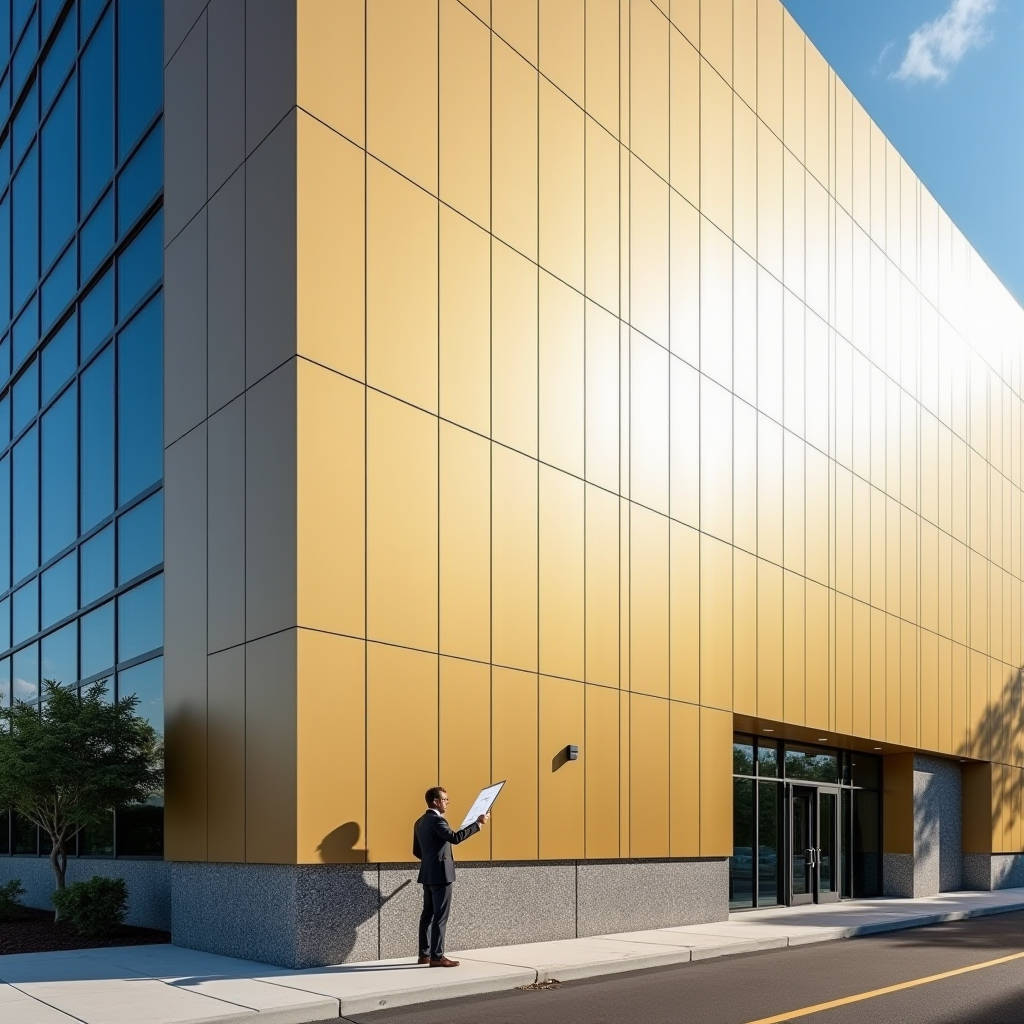
When a project specification calls for an anodized aluminum panel, the procurement team isn't just checking a box on a finish schedule. They're committing to a specific electrochemical process that fundamentally alters the aluminum surface at a molecular level—growing a controlled oxide layer that becomes part of the metal itself. Unlike organic coatings that sit on top of the substrate, anodizing integrates with the aluminum. For façade contractors and cladding specialists, this distinction matters the moment you start evaluating durability guarantees, color consistency across large batch runs, and what happens to the panel surface after five years of UV exposure on a south-facing elevation. Getting the specification right at the tender stage determines whether the installed façade still looks uniform in year eight—or whether you're fielding callback requests by year three.
What Actually Happens During the Anodizing Process
Anodizing isn't a coating. It's controlled corrosion—electrochemically accelerated and precisely managed. The aluminum panel is submerged in an acid electrolyte bath (typically sulfuric acid) and subjected to direct current. Oxygen ions released at the anode react with the aluminum surface, forming aluminum oxide (Al₂O₃). The oxide layer grows inward and outward simultaneously, penetrating roughly two-thirds into the substrate and building one-third above the original surface.
The standard for architectural anodizing in most international specifications is AA-M12C22A31 (Class I architectural anodized coating), which mandates a minimum oxide thickness of 18 microns (0.7 mils). For coastal or high-pollution environments, many consultants upgrade this to Class I with a minimum 25 microns. The oxide layer's hardness typically falls between 65-70 on the Rockwell C scale—comparable to hardened tool steel at the surface.
What this means for the cladding contractor: an anodized aluminum panel won't peel, flake, or chalk the way organic coatings eventually degrade. The failure mode is different. You're looking for pitting, localized corrosion at cut edges, or color shift from the original batch—all of which trace back to alloy selection, pretreatment quality, or sealing parameters, not the anodizing chemistry itself.
Alloy Selection: The Decision That Determines Everything
You can't anodize just any aluminum alloy and expect consistent architectural results. The 5005 and 5052 alloys dominate the solid aluminium cladding panel market for anodized finishes because their magnesium content (0.8-2.5%) produces a clean, uniform oxide layer without the grayish cast or streaking common in high-copper or high-silicon alloys.
Here's the procurement reality: 6061 and 6063 extrusions anodize beautifully for mullions and framing members, but for flat sheet panels in 2.0mm, 2.5mm, or 3.0mm thicknesses, 5005-H14 or 5052-H32 are the standard calls. Some fabricators will offer 3003 alloy as a cost-saving alternative, but the anodized finish on 3003 tends toward a slightly warmer, less uniform tone. If your specification requires tight color matching between flat panels and extruded trim, you need to lock down the alloy grades in the submittal package before production begins.
Field Note: On a 2022 mixed-use tower project in Southeast Asia, the contractor approved 3003 alloy panels to save approximately 8% on material cost. The anodized finish showed visible color variation against the 6063-T6 extruded sunshades under low-angle morning light. The entire west elevation panels were rejected during a site walkthrough. The replacement order with 5005 alloy added 14 weeks to the schedule and consumed the original contingency budget. Alloy substitution is never just a material swap—it's a finish risk decision.
Color Consistency and the Delta E Problem
Anodized aluminum doesn't use pigments suspended in a resin carrier. The color—whether clear silver, champagne, light bronze, dark bronze, or black—comes from the interaction between the oxide pore structure, metallic ions deposited during electrolytic coloring (if tinted), and the sealing process. This makes batch-to-batch color consistency fundamentally harder to control than with PVDF liquid coatings.
For clear anodized finishes, the panel takes on the natural tone of the base alloy. 5005 alloy yields a soft, consistent silver-white. For colored anodized finishes, the two-step electrolytic process deposits tin, cobalt, or nickel ions into the oxide pores before sealing. The concentration, bath temperature, and current density all influence the final color.
Most architectural specifications for anodized aluminum panel installations reference a Delta E tolerance of ≤2.0 when measured with a spectrophotometer under D65 illuminant. In practice, experienced cladding contractors know that Delta E ≤1.5 is achievable for a single production batch from the same alloy coil, but matching across separate production runs requires the anodizer to maintain exhaustive bath chemistry logs and color reference standards.
Procurement teams should request a color range panel—typically three panels showing the lightest, darkest, and target color—approved and signed off before the full production run begins. This physical reference, not a digital rendering, governs final acceptance on site.
Sealing Quality: The Parameter Nobody Inspects Until It Fails
The anodic oxide layer is porous. Without proper sealing, those pores become pathways for contaminants, moisture, and pollutants to reach the aluminum substrate. Hot water sealing (96-100°C deionized water for 2-3 minutes per micron of oxide thickness) hydrates the aluminum oxide, swelling the pore walls closed. Cold nickel fluoride sealing offers faster cycle times but introduces a slight greenish tint that can shift the perceived color of clear anodized finishes.
The quick field test for seal quality is the ASTM B136 chromic-phosphoric acid immersion test, but on a job site, a simple dye spot test (ASTM B136 modified) can flag poorly sealed panels before installation. If the dye stain doesn't wipe clean within the specified time, the seal is inadequate. Reject the panel.
| Parameter | Class I Architectural Anodized | Class II Commercial Anodized | PVDF Coating (for reference) |
|---|---|---|---|
| Minimum oxide/coating thickness | 18-25 microns | 10-18 microns | 25-35 microns (3-coat) |
| Color mechanism | Electrolytic metal ion deposition | Electrolytic or organic dye | Pigment in fluoropolymer resin |
| UV resistance | Excellent (inorganic color) | Moderate to poor (dyes fade) | Excellent (Kynar 500/Hylar 5000) |
| Surface hardness | 65-70 Rockwell C | 55-65 Rockwell C | F-H pencil hardness |
| Typical warranty (exterior façade) | 10-20 years | 5-10 years | 20-30 years |
| Repairability on site | Difficult; requires re-anodizing | Difficult | Touch-up possible with liquid coating |
| Cost index (per m², 2.5mm panel) | 100 (baseline) | 70-85 | 110-130 |
Fabrication Sequence: Why Anodizing Comes After Cutting
The fabrication workflow for an anodized aluminum panel follows a specific sequence that differs from pre-painted PVDF panels. With PVDF-coated sheet, the fabricator starts with coil-coated material and performs all cutting, routing, and bending on already-finished stock. With anodized panels, the sequence is reversed: fabrication first, anodizing last.
The reason is straightforward. Any cutting, routing, or welding operation after anodizing exposes raw aluminum at the cut edge and destroys the oxide layer in the heat-affected zone. The panel must be fully fabricated—including all perimeter returns, stiffener attachment, and corner joinery—before it enters the anodizing bath. The entire fabricated panel, welds and all, gets anodized as a single unit.
This has practical implications for the curtain wall panel supply chain:
- Anodizing tanks have dimensional limits. A typical architectural anodizing line can handle panels up to 7-8 meters in length, but the tank width and depth constrain the panel's folded geometry. Deep return legs or complex 3D forms may require custom racking.
- Welding filler rod must match the base alloy. Using 5356 filler on 5005 base alloy produces a weld zone that anodizes to a slightly different shade than the parent metal. The specifier needs to accept this or specify mechanical fastening instead of welding.
- Racking marks are inevitable. The electrical contact points where the rack holds the panel leave small unanodized spots. The racking plan should position these marks on the panel's rear face or in locations concealed after installation.
Packaging and Logistics: Protecting the Oxide Layer
An anodized surface is hard but brittle at the micro level. The oxide layer can microfracture under point loading or abrasion. International shipping of anodized aluminum panel orders requires interleaving—typically with acid-free kraft paper or PE foam sheets between each panel face. Wooden crates must be lined with moisture barrier film, and the crate design should prevent panel movement during transit.
For FOB shipments, the standard packaging specification should reference ASTM D3951 for commercial packaging practices. For CIF deliveries to project sites, the crate should be marked with handling instructions in the destination country's language and include a desiccant pack if the shipping route passes through humid tropical zones. Condensation trapped between tightly packed panels will cause water staining on anodized surfaces—a cosmetic defect that won't affect structural integrity but will trigger a rejection from the architect.
Futeng®, a solid aluminium cladding panel manufacturer with in-house anodizing capability, runs dedicated packaging lines where each panel receives edge protectors and full-face interleaving before crating. For projects requiring batch traceability, each crate carries a QR code linking to the anodizing bath log, alloy mill certificate, and QC inspection report.
Specifying Anodized Panels for Curtain Wall and Rainscreen Systems
The specification section for anodized aluminum panels typically falls under 07 42 13 (Metal Wall Panels) in MasterFormat or the equivalent CSI division. The spec should clearly distinguish between solid aluminum panels and aluminum composite materials, as the anodizing process is fundamentally incompatible with ACP products—the polyethylene core cannot survive the anodizing bath chemistry or temperature.
Key specification clauses to verify during submittal review:
- Alloy and temper: Specify 5005-H14 or 5052-H32 for flat sheet panels. Include the mill certificate requirement.
- Anodizing standard: Reference AA-M12C22A31 (Class I) or AAMA 611-14. State the minimum oxide thickness.
- Seal quality: Require ASTM B136 seal test results for each production batch.
- Color range: Define the acceptable Delta E tolerance and the requirement for physical range panel approval.
- Fabrication tolerance: Panel dimensions ±1.5mm, diagonal tolerance ±2.0mm, flatness within 0.5% of the panel's longest dimension.
- Racking mark policy: State that racking marks are permitted only on the panel's concealed rear face.
According to the Aluminum Association's Designation System for Aluminum Finishes, the architectural anodizing designation breaks down as AA-M12 (material preparation), C22 (chemical finish type), A31 (anodic coating Class I clear). Understanding this nomenclature helps procurement teams verify that submittals match the specification language precisely.
Cost Structure: What Drives the Price per Square Meter
The cost of an anodized aluminum panel order breaks down into four main components: base metal (aluminum sheet), fabrication labor, anodizing processing, and packaging/logistics. The aluminum sheet cost fluctuates with LME pricing and typically represents 35-45% of the total ex-works price for a standard 2.5mm panel.
Anodizing itself adds roughly 15-25% to the fabricated panel cost compared to a mill-finish panel, depending on the color. Clear anodizing is the least expensive option. Champagne and light bronze add a moderate premium. Dark bronze and black require longer electrolytic coloring times and tighter process control, pushing the cost premium higher. The per-square-meter price for a 2.5mm 5005-H14 panel with Class I clear anodized finish typically falls in the range of $55-75/m² ex-works, but this varies significantly by region, order volume, and panel complexity.
For projects exceeding 2,000 m², the anodizing setup charge gets amortized across a larger area, reducing the per-unit cost. Small orders under 300 m² often carry a minimum batch charge that disproportionately increases the unit price. Procurement teams should consolidate anodized panel requirements across project phases where possible.
Pro Tip: When tendering an anodized aluminum panel package, request the anodizer's bath chemistry logs for the past 30 days. Consistent bath temperature, acid concentration, and aluminum ion content indicate a well-maintained line. Anodizers running near their dissolved aluminum saturation limit (typically 12-15 g/L for sulfuric acid baths) will produce inconsistent results. This is a leading indicator of quality problems before they show up in the finish.
Common Failure Modes and How to Prevent Them
Anodized finishes fail differently than organic coatings, and understanding these failure modes helps the project team write better specifications and conduct more meaningful factory inspections.
Bloom or sealing smut: A white, powdery residue on the panel surface caused by improper sealing bath chemistry or inadequate rinsing. It's a cosmetic defect that can be cleaned, but its presence indicates the anodizer's process control is weak. If bloom appears on the first production panels, reject the batch and audit the anodizer's rinse tank conductivity logs.
Color banding: Visible horizontal or vertical stripes across the panel face, caused by inconsistent current distribution during anodizing or variations in the alloy's grain structure. This is often visible only after installation when the panels are viewed from a distance under uniform lighting. The fix is at the anodizer's rack design and cathode placement—not something the contractor can remedy on site.
Pitting corrosion: Localized breakdown of the oxide layer, typically initiated by chloride ions in coastal environments. The risk increases when the oxide thickness is below specification or the seal quality is marginal. For projects within 5 km of a coastline, the anodized aluminum panel specification should mandate Class I with 25-micron minimum oxide thickness and a seal quality verified by ASTM B136.
Fingerprint etching: Human skin oils are acidic enough to etch anodized aluminum if left on the surface for extended periods. This is a site handling issue. Installers must wear clean, dry gloves when handling anodized panels. If a panel is touched with bare hands, the surface should be cleaned with a pH-neutral detergent and rinsed with deionized water within the same shift.
The American Architectural Manufacturers Association (AAMA) publishes AAMA 609.1 and 610.1, which cover cleaning and maintenance of architectural anodized aluminum. These documents should be included in the project's closeout package and handed to the facility management team.
Anodized vs. PVDF: Choosing the Right Finish for the Application
The finish selection decision usually comes down to three factors: desired aesthetic, project location, and maintenance expectations. An anodized aluminum panel delivers a metallic depth that PVDF coatings cannot replicate because the color lives within the oxide layer rather than on top of it. For architects seeking a "metal look" rather than a "painted look," anodizing is the default choice.
But anodized finishes have a narrower color palette—essentially silver, champagne, bronze, and black, with subtle variations within each family. PVDF coatings offer virtually unlimited color matching, including bright whites, vivid reds, and custom corporate colors. If the design calls for a specific RAL or Pantone color, PVDF is the practical choice.
On durability, the comparison is nuanced. Anodized surfaces are harder and more scratch-resistant than PVDF coatings. They won't chalk or fade from UV exposure because the color is inorganic. But PVDF coatings offer superior chemical resistance—important in industrial areas with acid rain or chemical fallout—and are easier to repair on site. A scratched PVDF panel can be touched up; a scratched anodized panel generally cannot be restored to its original appearance without re-anodizing.
According to market data from Statista, the global architectural aluminum market continues to grow at approximately 5-6% annually, with anodized finishes maintaining a stable share in the high-end commercial and institutional segments where the metallic aesthetic and long-term durability justify the process complexity.
Cleaning and Maintenance on Completed Façades
Anodized aluminum panels require different cleaning protocols than painted or PVDF-coated surfaces. The key rules:
- Use pH-neutral cleaners (pH 6-8). Alkaline cleaners above pH 9 will attack the oxide layer.
- Never use abrasive pads, steel wool, or wire brushes. The oxide layer is hard but can be scratched by materials harder than aluminum oxide.
- Rinse thoroughly with clean water after cleaning. Residual cleaning solution drying on the surface can leave visible streaks.
- For coastal buildings, schedule rinsing every 3-6 months to remove chloride deposits before they can initiate pitting.
The International Organization for Standardization provides relevant guidance through ISO 7599, which specifies methods for specifying decorative and protective anodic oxidation coatings on aluminum. Referencing this standard in the project's maintenance manual gives the facility manager a clear, internationally recognized benchmark for cleaning product selection and frequency.
Making the Procurement Decision
Ordering anodized aluminum panels for a building envelope isn't a commodity purchase. The specification chain—from alloy grade through anodizing class, seal quality, and packaging—determines whether the installed façade meets the architect's visual intent and performs over the building's service life.
The most reliable approach is to qualify the anodizer, not just the panel fabricator. Many fabricators outsource anodizing to third-party job shops. The procurement team should audit the anodizing facility directly, reviewing bath chemistry records, racking capabilities, and the quality manager's rejection rate data. A fabricator that owns and operates its anodizing line—controlling the entire process from sheet metal to finished panel—eliminates the finger-pointing that occurs when the fabricator blames the anodizer and vice versa.
For international procurement, request a pre-production sample panel (not a small coupon) that demonstrates the full fabrication and finishing sequence. This sample becomes the contractual color and quality reference. If the production panels don't match the approved sample, the rejection is objective and documentable—not a matter of subjective opinion.
The anodized aluminum panel, specified correctly and sourced from a qualified supply chain, remains one of the most durable and architecturally distinctive cladding options available. The oxide layer that forms in that acid bath, properly sealed, will outlast most of the building systems it protects.